
Robert Hanssen – The FBI agent who spied for the Russians
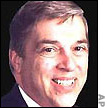
Bob Hanssen was about to retire from his life’s work. But instead of receiving a gold watch or a modest pension like most employees, he would instead be getting $50,000 in non-sequential $100 bills. And he would have to pick it up in a local park. In five more weeks he would also be retiring from his day jobas an FBI agent. His first job was trading American secrets to the Russians for cash.
Just before daybreak, alone in the gloom of his basement office, he tapped out a letter to his Russian “handlers” while still dressed in his jet-black pajamas. It was virtually the only color he would wear over his bulky 6-foot-3-inch frame.
The spy thought he could feel something or somebody getting close. He had begun to believe his Ford Taurus was bugged. The radio was making strange crackling sounds.
He was right. His phone was tapped, an FBI surveillance squadron had bought a house across the street, and he was being followed.
Hanssen tapped out his resignation letter on an IBM laptop 365E. He encrypted it, copied it on to a disk, and added it to the package he would be delivering late that afternoon.
Dear Friends:
I thank you for your assistance these many years. It seems, however, that my greatest utility to you has come to an end, and it is time to seclude myself from active service.
I have been promoted to a higher do-nothing Senior Executive job outside of regular access to informaiton (sic) within the counterintelligence program. I am being isolated. Further, I believe I have detected repeated bursting radio signal emanations from my vehicle. The knowledge of their existence is sufficient. Amusing the games children play.
Something has aroused the sleeping tiger. Perhaps you know better than I.
Life is full of its ups and downs.
I will be in contact next year, same time, same place. Perhaps the correlation of forces and circumstance then will have improved.
Your friend,
Ramon Garcia
Ramon Garcia was one of his code names. He thought he had been cautious, never giving Moscow his real name and never meeting with the KGB. But he had not been careful enough. His biggest mistake had been leaving his fingerprints on the plastic garbage bags in which he delivered state secrets. When his file was sold by a former KGB higher-up in September 2000, the FBI lab had asked for everything. Surprisingly, the Russians had kept the Hefty bags and once the prints had been dusted and traced, his fate was sealed.
Bob Hanssen had a friend staying at his house in Northern Virginia that weekend. On this Sunday he took that pal, Jack Hoschouer, to church with the family. The Hanssen brood was large. There were six kids, though only two, Lisa and Gregg, were still living at home. The other four had either married or were in college. The Hanssen family members were Catholic conservatives. They belonged to Opus Dei, a small but powerful faction of Catholicism that many called a cult. The Hanssen family displayed their conservative beliefs prominently, marching in pro-life rallies, slapping anti-abortion stickers on the family van, and attending gun shows. Bob collected guns; there were 14 in the house ranging from an Uzi semiautomatic rifle to Walther PPK pistols. The Walther PPK was James Bond’s weapon of choice and Hanssen, a Bond fan, had two in his collection.
Despite Hanssen’s conservatism, he and Hoschouer, buddies since high school in Chicago, had done some kinky things together. Bob had once taken nude photos of his wife Bonnie and mailed them without her knowledge to Hoschouer when he was in the Army and stationed in Vietnam. Years later, he topped that by hiding a miniature video camera in his bedroom where he photographed himself making love to Bonnie. Hoschouer and Bob later watched the homemade sex film together in the family den.
After church Hanssen changed from his black suit to a black turtleneck sweater with a black collared shirt over it. The monotony was broken by a pair of dark gray slacks. He drove Hoschouer to nearby Dulles Airport but surprised his friend by not coming in with him to wait for the plane. There were some errands to run, he said, and drove off.
“It struck me as odd that Bob didn’t come in for a Coke,” Hoschouer would say later. “I may have been the last friendly face he saw.”
But Hanssen was already speeding back down the Dulles Access Road towards a strip mall near the Washington Beltway. The team in the FBI surveillance vehicle was right behind him and watched as he walked around to the trunk of his car. He was photographed taking out documents from the FBI’s intelligence files that were each stamped SECRET. There were seven in all. Some detailed the bureau’s current surveillance results in recent foreign counterintelligence operations. He added his farewell letter and wrapped everything in the sturdy plastic Hefty bag.

Bob was being tailed by the FBI’s Special Surveillance Group and it knew exactly where he was going: Foxstone Park. The 14-acre flood plain-turned-recreation area was less than a mile from his home in Vienna, Va. The group had already watched him drive by the entrance to the park four times in December trying to catch a glance of a white strip of tape that would signal that his Russian handlers were ready to receive his package. In January, his drives by the entrance increased. The agents were certain that this would be the day. They had already intercepted the $50,000 cash dropped at a nearby nature center.
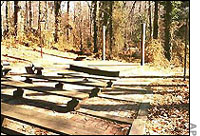
They were right. As the sun fell below the horizon, the agents followed him back to the park and watched him walk into the wood. He stopped at a footbridge and put a package under the trestle. It was the last drop he would ever make.
“Freeze! FBI!,” yelled one of 10 young men who surrounded him. Another agent began reading him his rights. A third cuffed his wrists behind his back.
One of the agents later recalled, “After viewing the arrest video, you could tell that Hanssen knew it was over. You could literally see his shoulders slump.”
Robert Philip Hanssen was born April 18, 1944, in Chicago. His father, Howard, was away in the Navy when he was born and his mother, Vivian, was alone. Both parents were in their 30s when their son, and only child, was born.
Howard Hanssen was a Chicago cop before going into the Navy. After World War II he rejoined the police force and made a 30-year career of it. The Hanssen family bought its first and only Chicago house in the Norwood Park section of the city. It was a modest two-bedroom bungalow on North Neva Avenue and considered a safe, cop neighborhood. Soon after the family began living there, Howard’s mother moved in with them. Bob Hanssen, called Bobby in his childhood, was fussed over by the two women, with his father behaving somewhat coldly toward his son. Bobby Hanssen was remembered as a silent, non-talkative child, who was eager to please.
“He would say hello,” recalled neighbor Pauline Rutledge, “but he was so quiet. He wouldn’t say much else.”
Bob’s passion was reading the satirical magazine “Mad” and comic books that featured action heroes. His subscription to “Mad,” which had a regular back-page feature called Spy vs. Spy, continued through college.
Was he beaten by his father?
“Oh, no,” Vivian Hanssen said. “Of course his father {was} strict. I was always the easy one. But aren’t most families like that?”
In the early 1950s, Howard Hanssen became part of the Chicago Police Department’s famed “Red Unit.” It was the McCarthy era, and Howard’s mission was to uncover politicians inside the city government who had communist leanings. Some neighbors viewed the Hanssens as secretive.
“They were a real policeman’s family,” neighbor Ruth Kremske remembered. “I don’t think they wanted anyone nosing around in their business.”
Following high school, where he was remembered as “a bit of a geek,” Hanssennow going by Bobwent off to Knox College in Galesburg, Ill. He matriculated in chemistry. As a requirement of graduation he had to take a foreign language for two years. Bob chose Russian, a popular choice among college students in the mid-1960s. The Cold War had many of them believing that the language could come in handy if a shooting war broke out with the Soviet Union. Bob also studied the masters of Russian writing: Tolstoy and Dostoyevsky.
After getting his B.S. degree from Knox, Bob applied unsuccessfully for a position as a cryptographer at the National Security Agency just north of Washington, D.C. An NSA official explained to him that the rejection was due to budget cutbacks. It was the middle of the Vietnam War, and Hanssen wasn’t anxious to be drafted. He again turned to higher education, enrolling in Northwestern University’s Dental School. At Northwestern, just north of Chicago, Hanssen shared a dormitory room with a Hawaiian classmate, Jerry Takesono, who remembers a quirky, introverted youth who sometimes behaved a bit strangely, always wearing a black suit, white shirt and tie to class when everyone else wore sweaters and jeans. Hanssen also wore the black suit to his cadaver class, carving up the dead bodies without even taking off the jacket. He continued to wear the same black suit after the dissections, something Takesono hasn’t forgotten.
“The suit smelled of formaldehyde and he was hanging it up each night in our room. Our place reeked of the cadaver. I finally had to ask him to get it drycleaned.” Takesono recalled.
Another classmate, Marty Zeigner, said it was impossible to miss Hanssen’s brilliant mind, however disturbed. He recalled an episode that demonstrated his ability to retain information.
“I sat across from Bob in a lecture on tooth structure. The professor was someone called Dr. Chasen, who liked to hear himself talk. He was a bit long-winded. Everyone but Bob was fervently taking notes. Instead, he had a single sheet of paper and had used it to doodle a bird and had also drawn a sketch of an anatomically correct nude woman. He had written just one word on the page: bicuspid.
“The professor walked around the room as he talked. It was hard for him to miss Bob’s naked lady. He came over to his desk and just lost it. He began reaming Bob outsomething about how Northwestern was a professional school and how he was lucky to get in. Bob sat there, but you could see he was pissed off. Finally, he couldn’t take it anymore and interrupted him.
“He told the professor he had accused him of not listening and didn’t appreciate it. Bob said, ‘Why don’t you go back in front of the class and start over and I’ll pick it up from there.’ When the professor began, he interrupted and began repeating the lecture word-for-word. It was like he had a tape recorder inside his brain. Afterwards he told me, ‘I can remember every conversation I have ever had.'”
Despite good grades, Hanssen tired of dental school, saying, “I don’t think I want to spend my life picking pieces off of someone’s teeth.” Instead he began telling his classmates that he had decided to be a psychiatrist.
Howard Hanssen helped his son test the waters by getting him a weekend job as an orderly at a city-run mental hospital. There Bob delighted in pretending he was a doctor, calling mental patients into an office and interviewing them. A Northwestern classmate, John Sullivan, often sketched the inmates as Bob talked to them.
“He loved showing people the control he had over them,” Sullivan said. “They were mostly bonkers, but he would perform for his friends, putting the patients through their paces. He wasn’t mean; he just quietly interrogated them.”
Another college friend, Robert Lauren, tells an anecdote indicating Hanssen had traitorous leanings long before he joined the FBI. Though the episode occurred three decades ago it now must be considered remarkable.
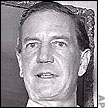
“I was leaving his houseI think it was 1968 or 1969and Bob handed me the memoirs of a British traitor who had spied for Moscow over a 20-year period,” Lauren said. “The book was My Silent War by Kim Philby. He thought the book was terrific. After a few weeks I returned the book and he asked me if I liked it and I said it was very interesting. Bob then saidand I’ve never forgotten it, particularly nowhe said, ‘You know, someday I’d like to pull off a caper like that.'”
Bob Hanssen eventually rejected the psychiatry profession. Although he had given up on three careers, he persevered, returning to Northwestern where he eventually got an MBA degree in accounting. Perhaps he had no choicehe was in love and the soon-to-be spy was married, with a child on the way.
Bernadette “Bonnie” Wauck was as different from Bob Hanssen as day is from night. She was one of eight; he was an only child. She was Catholic; he was Lutheran. His father was a cop; her father was a University professor. She lived in upscale Park Ridge, just outside the Chicago city limits. Norwood Park, three train stops away, was working class. And Bonnie was also a member of Opus Dei, an organization that required going to mass daily and confession weekly.
Bob and Bonnie were married on August 10, 1968. By the time Howard Hanssen retired in 1972, Bob was ready to fill his father’s shoes. He entered the Chicago Police Department as a rookie three months after his father retired and moved, with Hanssen’s mother, to a modest subdivision house just south of Sarasota, Florida. With an MBA degree, Hanssen was a marked man and was soon pulled out of his training class and asked if he would like to be in a new secret unit called C-5. Bob leaped at the chance.
The special elite corps had been set up to infiltrate its own kind. Cops were taking bribes from drug dealers and then looking the other way. Bob’s unit’s job was to bust fellow officers.
John Clarke, his boss, soon began to believe that Hanssen was a double agent working inside the unit.
“He was brilliant and he looked like an altar boy,” Clarke remembered. “But I always thought he was a spy, a counterspy, when he worked for us. I thought he was working for the police brass who wanted to know what we were doing. I always felt something was wrong, so we held Hanssen on a short leash. At one point I thought he might be working for the Feds because he was so inquisitive about Mayor Daley.”
Later Clarke gave his theory of how Bob Hanssen came to use the alias of Ramon Garcia. “I told him the story of an Irish kid from Rhode Island. I had hired him as an undercover agent to infiltrate the Mexican mafia. His code name was Ramon.”
Hanssen’s job as a Chicago cop who existed only to arrest other cops was stressful. Bonnie was under stress as well. By 1974 they’d had two young girls and one miscarriage. And her husband was trying to establish himself as the authoritarian in the household. It is Hanssen family lore that shortly after they were married Bonnie served Bob a big breakfast of ham, eggs and coffee. Midway through the meal Bob fell totally silent and stared into his empty cup. Eventually she asked him why.
“That’s the way my father let my mother know he was ready for his second cup of coffee,” he told her.
“Well, I’m sorry, but you’re going to have to speak up around here,” she shot back.
“Bob told me he was training Bonnie,” his friend Marty Zeigner recounted. “He would try to do things like tip over a glass slowly and she was supposed to catch it before anything spilled. I don’t think Bonnie put up with it for long.”
He appeared to be a devoted father, yet some of his actions, which once appeared charmingly eccentric, now have different connotations.
A story that the Hanssen children used to laugh about concerned his wanting to give his eldest daughter Jane a head start in life. He told Bonnie he wanted to teach their Jane to read just after she reached her third birthday. When she was four, he also helped her through her first novelWar and Peace.
By 1975 John Clarke wanted Bob Hanssen out of the department. His protegee wanted out too. C-5 had made him controversial and when he had grabbed a defendant in a Chicago courtroom who was trying to escape, his feat wasn’t recognized with a citation or a promotion. He began looking elsewhere, and Clarke was only too glad to help.
“I told him to get his fanny over to the FBI and he did. But he didn’t get accepted the first time around,” Clarke said.
The second time was the charm and on January 12, 1976, Bob Hanssen was sworn in. The fox was in place and inside the hen house.
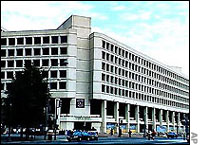
Bob Hanssen’s first assignment was investigating white-collar crime in Gary, Indiana. Gary, a decaying rust belt town, was just 40 miles from Chicago and the Hanssens didn’t have to move. But the FBI wasn’t about to waste an agent who had an MBA from a topflight university and who also had Chicago Police Department experience in Indiana’s second city. As soon as they thought he was seasoned, he was assigned to the bureau’s field office in New York City, a plum assignment considered second only to headquarters in Washington.
The Hanssens purchased a three-bedroom house in Scarsdale, a suburb in Westchester County. By now the Hanssen family had grown to two girls and two boys. Money was tight, and with Bob barely making $40,000 a year, life revolved around church and family.
So it was surprising that when Bob and Bonnie went out to dinner with John and Loretta Donovan, the couple who had sold them the house, Bonnie revealed that they had a Swiss bank account. And when Bob later said this line, the Donovans thought he was talking about his job with the FBI: “I’ve wanted to be a spy ever since I was a child.”
He may, however, have been talking about working for the other side. During their three-year stay in Scarsdale, Bob approached several Russian agents in New York and offered them secrets in exchange for money. Exchanges were made, but while he was counting out $20,000 in $100 bills in the basement of the Hanssen house, Bonnie walked in and Bob boasted about the deal, saying he had tricked them and given them worthless information. His wife was horrified but instead of asking him to turn himself in she asked that he stop playing the grown-up Spy vs. Spy game and confess the act to an Opus Dei priest and ask for guidance. The cleric, Robert Bucciarelli, told Bob to give his ill-gotten gains to the Mother Teresa charities.
That appeared to be the end of it. Back at the FBI’s New York offices in the Jacob Javits building, Bob displayed a certain competence, even brilliance, but the kind that would take him only so far.
“He was different,” his boss, Richard Alu remembered. “I thought he was an intelligent guy, but he was an introvert. Most agents, they’re introverts. But the ideal agent is a used-car salesmanyou’ve got to be able to sell yourself. Hanssen simply didn’t have any interpersonal skills. He was able to see problems, see solutions, and implement them. His solutions were not always easy for his peers to follow. He would have to explain them, and he did not suffer fools gladly.
“You can only go so far on brains alone,” Alu concluded. “You still have to have personal skills to rise up in management.”
By the time Robert Hanssen was assigned to Washington in 1981 he had begun to realize that any dreams he had of becoming part of the FBI’s hierarchy were not going to be realized. Silent Bob was considered an odd duck among his fellow agents who had begun calling him “the mortician” and “Dr. Death” behind his back because of his dour demeanor and continued penchant for black suits.
The Hanssens continued pinching pennies. Summer vacations meant packing five kids into a car and driving to Florida to visit Bob’s parents where part of the family would have to sleep on the floor. Bonnie saved by making duvet covers out of bedsheets and limiting the children to just two of her homemade chocolate-chip cookies with walnuts per day.
In Washington, Bob was at first assigned to plan and justify the bureau’s multibillion-dollar budget for Congress. In 1983 he was bumped up to the Soviet Analytical Unit. His clearance was raised to a classification above Top Secret. After four years in Washington the family was uprooted again when Bob was reassigned to New York.
Not enough of the FBI’s multibillion-dollar budget was going to the agents in those days. Many had to use food stamps to get by. In costly places like New York it was particularly tough. The Hanssens had to move farther from New York City this time; it now could be an hour-and-a-half commute if rush hour was heavy.
Hanssen’s new boss, Thomas Sheer, was concerned. He told Washington that a beginning agent in his office made less than a New York City trash collector. His men were vulnerable, he said. If the Russians made a good offer there would be agents who couldn’t resist the money. When the bureau ignored the warning, Sheer quit.
But Hanssen didn’t quit. Instead, he did what he had been preparing for all of his life. He went over to the other side.
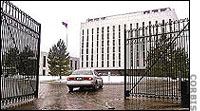
On October 4, 1985, Bob Hanssen mailed a letter to Viktor Degtyar, a KGB colonel living in Alexandria, Va. Inside was another envelope which said, DO NOT OPEN. TAKE THIS LETTER TO VICTOR I. CHERKASHIN. Cherkashin headed the Soviet espionage operation in Washington. His letter read:
Dear Mr. Cherkashin:
Soon, I will send a box of documents to Mr. Degtyar. They are from certain of the most sensitive and highly compartmentalized projects of the U.S. Intelligence community. All are originals to aid verifying their authenticity. Please recognize for our long-term interests that there are a limited number of persons with this array of clearances.
As a collection they point to me. I trust that an officer of your experience will handle them appropriately. I believe they are sufficient to justify a $100,000 payment to me.
In his letter Bob named three Soviet KGB officersSergey Motorin, Valeriy Martynov and Boris Yuzhinwho were working as double agents for the U.S. In the next three years, the first two would be executed and Yuzhin would receive a long prison term. He also told Cherkashin that he would never reveal to them his identity or ever meet with his Soviet handlers. He also added a simple code for dates that he asked them to follow.
The die had been cast. Hanssen was calling the shots. He believed he was going to be a master of two worlds.
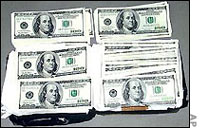
After sending the Soviets a coded note, Bob Hanssen made good on his promise, dropping off his package of secrets in Nottoway Park, a recreational area, which happened to be across the street from the Hanssens’ first house in Northern Virginia. A few days later, the KGB responded by dropping off $50,000 in $100 bills at the same drop site. Bob reciprocated with a note promising more information.
Thank you for the $50,000.
I also appreciate your courage and perseverance in the face of generically reported bureaucratic obstacles. I would not have contacted you if it were not reported that you were held in esteem within your organization, an organization I have studied for years.
I did expect some communication plan in your response. I viewed the postal delivery as a necessary risk and do not wish to trust again this channel with valuable material. I did this only because I had to so you would take my offer seriously, that there be no misunderstanding as to my long-term value, and to obtain appropriate security for our relationship from the start.
Over the next five years, Hanssen would deliver more than 6,000 pages of secret documents to his KGB handlers. Some of them contained nuclear deployment plans and satellite positions. Many were simply downloaded from FBI computers and the discsa total of 26 were made part of the package. In return he received $600,000 in $100 bills, some jewelry and a Rolex watch. The Russians also claimed to have deposited another $800,000 in funds in a Moscow bank for his retirement. The cash allowed him to put his six children through Opus Dei-affiliated schools that were more than 30 miles away in the adjoining state of Maryland.
There is a greater-good theory that partly explains Hanssen. Although he was betraying his country, he was using the money from the Russians to put his six children through approvedand expensiveprivate schools. His children were good students, and he believed they might in the future be part of a holy war that would remerge God and country, whose leaders would then ban abortion, divorce and other evils of the world that he and Opus Dei opposed.
A 1998 research paper from Brigham Young University studied 139 spies and concluded that half of them did it for the money. “People usually spy for some combination of emotional gratification and remuneration,” John Pike, a specialist in intelligence issues, said, “but in all cases, money is how they keep score.”
Hanssen, always the loner, always unable to fit in, was Walter Mitty squared. His hero, Kim Philby, may have explained his mind best. Just before his death in 1988, Philby said, “To betray, you must first belong. I never belonged.”
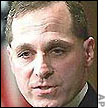
If there were one place that Hanssen did belong, it was Opus Dei. The group, founded in 1928, had just 84,000 members worldwide3,000 in the U.S.but its new $55 million, 17-story building in midtown Manhattan reflected a power far beyond its numbers. At least one member of the U.S. Supreme Court was said to be a member and the head of the FBI, Louis Freeh, was also rumored to belong. Still, even Catholics conceded that the group was controversial. Many members practiced self-flagellation, beating themselves while praying. Others wore the cilice, a spiked bracelet worn two hours a day around the thighs. Though the pain was supposed to replicate the agony of Christ at his crucifixion, most had difficulty understanding why such practices were necessary in a modern world. And since the group was private if not secret, rumors abounded. What was its goal? One of them, critics said, was to elect Opus Dei members as heads of countries and establish new governments where church and state are one.
Bonnie Hanssen’s brother is an Opus Dei priest in Rome whose office is mere steps away from the pope. One of Bob and Bonnie’s daughters is an Opus Dei numerary, a woman who has taken a vow of celibacy while remaining a layperson.
Bob Hanssen befriended best-selling espionage author James Bamford, and after pumping him for information about interviews he had had with Soviet leaders, would invite him to join him at Opus Dei meetings. “He was a little obsessed about it. Bob would rant about the evil in organizations like Planned Parenthood and how abortion was immoral,” Bamford recalled. Bamford, himself a Catholic, wrote this about his preoccupation with Opus Dei in the New York Times:
“Hanssen squeezed religion into most conversations and hung a silver crucifix above his desk. Occasionally he would leave work to take part in antiabortion rallies. He was forever trying to get me to go with him to meetings of Opus Dei.
After weeks of urging, I finally agreed. At the meeting, Hanssen was in his element. He reveled in that closed society of true believers like a fraternity brother exchanging a secret handshake. His faith seemed too sincere to be a ruse.”
One of Bob’s bosses at FBI headquarters agreed. “He was a religious person who put the Soviets into a religious context. He would say that the Soviet Union is bound to fail because it is run by communists and communists don’t have God in their life. He said to me, ‘Without religion, man is lost.'”
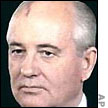
Did Hanssen believe that giving our most vital secrets to the Soviet Union was a moot issue because they were about to collapse? If so, he was a true seer. Mikhail Gorbachev would declare communism dead in 1991. “Ramon Garcia” went to ground a few months later.
Hanssen betrayed not only his country and his wife and children, but himself. Toward the end he would spend hours in his basement cruising Internet porn sites, even posting masturbatory fantasies online and using the real name of his wife and friends.
He later became friends with a stripper who became addicted to cocaine, but he believed he was absolved since no sex ever took place. To him she was a Bond girl come to life on the arm of a real 007.
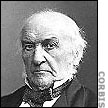
The 19th-century British Prime Minister William Gladstone liked to walk the streets of London after dark and seek out prostitutes to reclaim for Christ. Hanssen tried to do the same with his stripper, Priscilla Sue Galey. They met in a seedy strip club in Washington called Johanna’s in early 1990.
Galey’s trick was to stride on stage looking like a librarian, wearing unflattering glasses, a starched blouse and a gray pin-striped skirt. But as soon as the spotlight shone on her, she tore that clothing off, then bumped and grinded for 15 minutes while the business executives stared, slack-jawed. Hanssen sent her a note with his FBI business card, a $10 bill and a request for lunch after taking in her act.
“He was dressed in a dark suit, not a hair out of place, not a piece of lint, not a wrinkle,” Galey recalled. “I was a little afraid of him at first.”
Within days Hanssen was giving her stacks of the KGB’s $100 bills. The first $2,000 went to getting her teeth fixed. Then he gave her an American Express card, which he paid. Just before Christmas, he gave her a diamond and sapphire gold necklace. After that came a slightly used silver-gray Mercedes even while wife Bonnie still drove an old minivan.
“When you drive up in a Mercedes, they don’t ask you if you’ve been to college,” was her admirer’s reasoning.
“I thought he was my personal angel,” remembered Galey.
At one point Bob asked the stripper to guess how much he had spent on her. When she said $50,000, he immediately corrected her and told her it was more like $80,000.
Still, according to Galey, no sex of any kind ever took place though she was more than willing. Rather, she said, he tried to get her to attend church. The closest they came to a liaison was when he took her on a two-week trip to Hong Kong. Even then, he insisted on separate rooms and different flights, but one night in a hotel bar, Galey coaxed him to dance with her. The music they waltzed to was As Time Goes By, the anthem for the ultimate film of espionage, Casablanca.
“She would ask him about where he got all that money,” her mother, Linda Harris, said. “He would always laugh and say, ‘I could tell you but then I would have to kill you.’ Priscilla kept trying to advance the relationship, but when she tried to reach out to him, he would push her back and tell her he was a family man.”
The relationship fell apart after two years when a former lover talked Galey into returning to her hometown of Columbus, Ohio. There, she became addicted to crack cocaine and began using the American Express card to buy cartons of cigarettes for herself and clothing for relatives. Hanssen took umbrage at the extra spending and personally drove from Washington to Ohio to snatch the card away. A year later when Galey was arrested on drug charges, Hanssen wouldn’t help in any way when she phoned him.
He said that Priscilla had made her bed and now she had to lay in it,” her mother remembered. “It was like she never existed.”
The years that followed were not good. Galey began working as a prostitute to pay for her crack habit and wound up in a squalid group house. She wrecked the Mercedes, pawned the jewelry and a laptop computer Hanssen had given her and in 1999 spent a year in an Ohio prison for “complicity to aggravated trafficking,” when she assisted a drug kingpin. By 2000, she was trading sexual favors for drugs and on one morning, after a night-long binge, she lost the upper plate of false teeth that Hanssen had given her.
After reading of Hanssen’s arrest for espionage, Galey said she believed that Hanssen may have wanted to use her in his spying activities. “He had to have wanted me for something,” she said. “I trusted him completely, and if he had asked me to do anything, I would have.”
Hanssen was a misogynist of the first order. He generally distrusted women; for him they were objects to reform or mold into something that fit his view of the world. How else does one explain his altercation in 1993 with a blonde, 21-year-old secretary at FBI headquarters?
The administrative assistant, Kim Lichtenberg, was called into a meeting by Hanssen on February 5 without warning. The subject was petty and revolved around someone whispering to someone else that she was about to be fired. He thought that Litchenberg was the source of the rumors. Lichtenberg said she wasn’t and the others in the meeting backed her up. Bickering on this matter continued for nearly 30 minutes until Litchenberg, noticing that it was almost time to catch her carpool, left the meeting abruptly and began securing her desk. While she was doing so, Hanssen came up behind her and pushed her to the floor.
“I’m your unit chief and you’ll do what I say. I want you back in the meeting.”
He began shaking her as she lay on the floor and then attempted to drag her back to his office. Lichtenberg called to a friend for help and then punched her boss in the chest until he let go.
“He twirled me around and I fell to the ground. He just dragged me along the ground back to his office,” she said.
Lichtenberg checked herself into a hospital and was treated for bruises. The next day she went to the police, but the FBI told them it was an internal matter, and the case wasn’t prosecuted. In the end, Hanssen was merely suspended for five days without pay for the assault. Lichtenberg claims that Hanssen would try to grab “a feel” with the women at FBI headquarters.
“I never had anyone make me feel like he made me feel,” she said. “He was creepy. He tried to belittle women and would rub up against them just to get cheap thrills.
“Everyone knew Dr. Death was strange, but nobody ever did anything about him. He was always hacking into someone’s computer hard drive and then pointing out how easy it was to get their classified information. I feel badly that nobody figured it out. There was a lot of reasons to look into Bob Hanssen,” Lichtenberg said.
When Hanssen failed to return home on February 18, his wife Bonnie became worried and drove to Dulles Airport to look for him. There she was surrounded by FBI agents who took her to a nearby hotel and interrogated her for eight hours. At first she didn’t believe the charges despite catching her husband spying for the Russians two decades before. She thought Moscow had blackmailed him.
The next morning there was yellow police tape around the perimeter of their property in Northern Virginia and the word spread. On a leafy, sylvan cul de sac in a small town there was a spy living next doorthe most damaging spy in history.
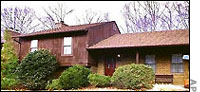
The children rushed home from their universities to offer support. They too, were incredulous.
“She is obviously devastated,” said Richard McPherson, a headmaster at one of the Opus Dei-affiliated schools attended by the Hanssen children. “She has known this man for 35 years. She is praying it turns out to be blackmail because if it turns out he got himself into a bind and couldn’t get out of it, then that would be some comfort.”
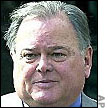
Bonnie hired famed lawyer Plato Cacheris to take the case. Cacheris had represented a who’s who of notables: CIA spy Aldrich Ames, White House intern Monica Lewinsky, Iran-contra scandal figure Fawn Hall, and Watergate defendant John Mitchell were a few.
At first, Cacheris seemed to be mounting a defense. “They always talk like they’ve got a great case,” he said of the government. “We’ll see.” But after seeing the government’s case he began working toward a deal. The Feds were pressing for the death penalty and to spare Hanssen lethal injection would be a victory in itself.
In June 2001, Cacheris and the FBI cut a deal. Hanssen would receive life imprisonment without possibility of parole. Bonnie would receive a widow’s pension, about $38,000 a year. In return, his client would tell everything he knew and agree to take polygraph tests on demand, which would verify whether he was telling the truth. In his 25 years at the FBI, Hanssen had never taken one.
While he was being debriefedat a detention center that later held September 11 figures John Walker Lindh and Zacarias MoussaouiBonnie and the children visited every week. Hanssen will spend the rest of his life at a federal prison in Lewisburg, Penn. It is a three-hour drive from Washington and his family has promised to be there each weekend. Bonnie Hanssen’s Catholic faith does not allow her to waver, and when asked the inevitable questions about the future she always answers the same way.
“I’ll never divorce him. I love him and I’ll pray for the salvation of his soul every day for the rest of my life.”
* * * *
Adrian Havill is the author of The Spy Who Stayed Out In The Cold: The Secret Life of Robert Hanssen, which the Washington Times recently called “a meticulous account.” He lives just six miles from the Hanssen family’s Northern Virginia house and interviewed more than 100 people for his account of Robert Hanssen’s life.
Many agents in the FBI privately grumbled about the pension payments to Hanssen’s wife, pointing out that at the very least Bonnie Hanssen was guilty of obstructing justice. After all, they said, she did not report her husband to authorities when she first noticed he was selling secrets to the Soviets in 1979. In a defense, Bonnie told the New York Times in an interview that she had passed a polygraph test that proved she had no additional knowledge of her husband’s activities.
Others in the Bureau lamented the timing of his capture. “If Hanssen had been arrested after September 11, 2001, there would have been no question of a deal or pension and he would be on death row now,” one official said.
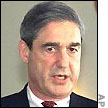
The agreement reached by Cacheris and the prosecution appeared orchestrated. The understanding was announced on the day before the American Independence celebrationJuly 4th, 2001. Then, 24 hours later, President Bush announced a new head of the FBI, Robert S. Mueller III. (In talks before his appointment, Mueller had argued for the death penalty.) Next, Bob Hanssen appeared in a hushed Alexandria, Virginia courtroom on July 6th and admitted he was guilty of 15 of the charges against him.
After entering the chambers that Friday, he scanned the room looking for friends or family. There were none, but many in the first two rows were FBI employees and some were his former colleagues. They got a smirky sort of grin as he recognized them. They grimaced back as if smelling a foul odor. Plato Cacheris tried to explain why the Hanssen family was absent.
“They visit him each week,” he said, “but they value their privacy.”
In the months that followed, Bob Hanssen was interviewed for 200 hours over 75 different days and polygraphed twice. In spite of the exhaustive interrogations, the government was largely unsatisfied with his answers.
“I have a poor memory,” he shrugged as way of explanation. When a polygraph examiner told him he was being evasive, a physical altercation ensued between the two men. The interrogation team became angry.
“His claim of a poor memory was an excuse for not engaging fully in the debriefing or was a means to hide facets of his activity,” a government assessment concluded. “Hanssen’s answers were often contradictory, inconsistent, or illogical. His cooperation concerning his finances, the significance of his espionage and his motives were problematic.”
Many government officials wanted to renege on the agreement, but Plato Cacheris’s skills ultimately carried the day and the deal remained in place. With so many fingers pointed at the Bureau after the terrorist attacks of 9-11-01, the FBI was understandably distracted and unable to change the understanding. Still, many agents believed satisfaction was just ahead.
“Hanssen won’t adjust well to life in prison,” an FBI agent predicted. “His arrogance will have to be knocked out of himeither by correctional officers or the other prisoners.”
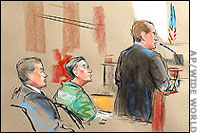
At his sentencing on May 10th, 2002, Bob appeared to have aged 10 years. Gaunt, pale, slender, and stooped over, he said he regretted committing his crimes. He also apologized to his absent wife and children who he said were innocent and had been slandered in the press. He was responding to reports that he had photographed himself having sex with Bonnie and then had allowed his pal, Jack Hoschouer, to view the results.
Another “revelation,” which claimed that Bonnie’s brother, Mark Wauck, informed FBI headquarters that $5000 was lying around the Hanssen household in 1990 and that the Bureau failed to act may also be untrue. In her lie detector test, Mrs. Hanssen both denied the story and passed the polygraph question.
Despite the personal sexual reports, Bonnie and the children continued their weekly visits. In an act of solidarity, his mother, Vivian Hanssen, moved from Florida to Virginia and now lives with the family.
Finally, in what may be a cryptic warning, Plato Cacheris assessed the espionage skills of Robert Hanssen following his client’s sentence: “He was as artful a spy as we’ve ever seen. Except for the one who’s out there now and hasn’t been caught.” he said.
Following Mueller’s appointment, the disgraced Louis Freeh joined a Delaware credit card company, MBNA. Many of the firm’s executives are former FBI employees.
* * * *
Adrian Havill is the author of The Spy Who Stayed Out In The Cold: The Secret Life of Robert Hanssen, which the Washington Times recently called “a meticulous account.” He lives just six miles from the Hanssen family’s Northern Virginia house and interviewed more than 100 people for his account of Robert Hanssen’s life.