
The Good Shepherd: Matt Damon thriller part fact, part Hollywood — Screenwriter Meets Spy-catcher — Crime Library
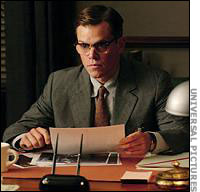
The American traitor John Walker Jr. once said the best way to hide a lie is by wrapping it in layers of truth. It’s a trick that not only serves spies, but also clever Hollywood scriptwriters. Such is the case with The Good Shepherd, a cloak-and-dagger thriller that purports to tell the story of the Central Intelligence Agency’s early days as seen through the eyes and career of Edward Wilson, the movie’s main character. Played by Matt Damon, Wilson is patterned after the legendary spy-catcher, James Jesus Angleton.
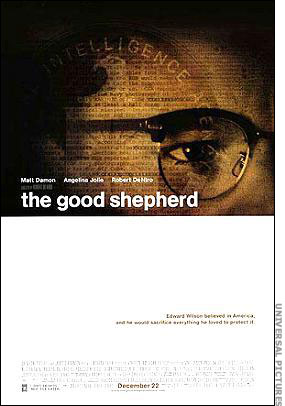
But how much of the movie is true and how much is Hollywood sizzle?
Few CIA spooks have received as much attention as Angleton. None has ever been as controversial. His critics claim his paranoid-fueled hunt for a Soviet KGB mole burrowed inside the CIA almost destroyed the agency when Angleton ran its counter-intelligence operations from 1948 until he was forced to resign in 1975. His admirers insist Angleton’s unflinching eye kept the CIA from being penetrated by skilled KGB agents during the height of the Cold War.
A tall, stooped chain-smoker, who usually dressed in black and whose hobbies were writing poetry and growing orchids, Angleton was known by the codename “Mother” and has been the inspiration behind characters in numerous spy novels. His controversial career has been recounted in a half dozen nonfiction books too, so it is not surprising that veteran scriptwriter, Eric Roth, turned to Angleton’s life story when penning The Good Shepherd.
Since winning an Oscar for writing Forrest Gump, Roth has become Hollywood’s expert at spinning news-making events into blockbusters. His more recent endeavors include The Insider and Munich, which showcased his talent at blending facts with fiction. Contacted at his Los Angeles home, Roth agreed to talk about The Good Shepherd for this Crime Library article. He said his interest in espionage dated back to his childhood when he used to pluck “decoder rings out of boxes of cereal” in the 1950s. While in college, he was approached by a CIA recruiter. It was during the Vietnam era and Roth, who considered himself a political liberal, rejected the invitation but was surprised by how intrigued he had been by the offer. Deep down many men still harbor a small boy’s fantasy about becoming a secret agent, he decided.
“After Forrest Gump, I was getting all sorts of ideas thrown at me,” Roth said. “People were asking: ‘What do you want to do?’ I’d always had this idea of doing a Godfather-type movie about a family only set inside the CIA.”
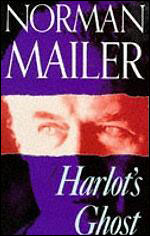
Roth spoke with Godfather director, Francis Ford Coppola, and they discussed adapting Norman Mailer’s fictional book about the CIA, Harlot’s Ghost, but decided against it. Instead, Roth wrote an original script and during his research, he became interested in Angleton. Roth soon began picturing him as his Michael Corleone character. “I get nervous when I mention the Godfather because critics immediately begin comparing The Good Shepherd to it and it has to live up to those same standards or you’re in trouble,” Roth said. “But I am referring to the Godfather in the sense of this being a family story of focusing on one individual and telling a larger story through his eyes and experiences. The character arch between Edward Wilson and Michael Corleone has certain similarities. You start with a somewhat innocent guy who is as smart or smarter than anyone else involved with him and then you see him progress until he is better than anyone else at what he does and you then see what getting there has done to his personality.”
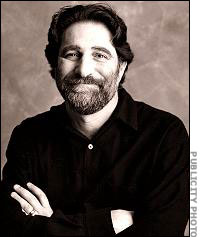
Although Roth drew heavily on Angleton’s life for his portrait of Edward Wilson, he quickly pointed out that The Good Shepherd was not meant to be a biography. Several characters and scenes were invented to add drama. However, Roth said that when he invented a scene, he tried to base it on a historical fact “something the CIA has done in the past.”
“The way I do research is different from a biographer,” Roth explained. “I think along thematic lines and then I write toward that and shape my characters to fit those themes. Angleton was clearly a huge influence but I didn’t feel bound just by Angleton’s story.”
Let’s breakdown the movie’s most important scenes to separate Angleton’s life from Roth’s fiction. (Spoiler warning: if you have not seen the movie and want to be surprised by it, stop reading now.)
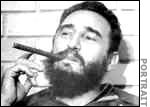
*The movie begins on April 16, 1961, the day before the CIA’s failed attempt to topple Fidel Castro by launching a surprise invasion into Cuba. A confident Wilson (Damon) is stunned when the CIA-trained exiles are defeated in less than 72 hours and he quickly concludes that Castro’s forces were tipped-off. Wilson spends the rest of the movie searching for the traitor who gave Castro and his Soviet military advisors the name of the beach where the invaders were destined to come ashore. He’s guided by clues in an envelope slipped under his door. They include grainy black-and-white photographs of a couple making love and a doctored tape recording of their pillow talk.
Fact: After the blotched invasion, the White House asked General Maxwell Taylor to investigate what had gone wrong. His report, which was delivered in June 1961 to President John F. Kennedy, placed blame entirely on the CIA. Among other things, the general said CIA officials had mistakenly believed Cubans would join the invaders in rising-up to overthrow Castro. (A mistake CIA analysts would repeat prior to the US invasion of Iraq.) Taylor also reported that the Soviet Union and Cuba had known about the attack in advance. Initially, the CIA-trained, Cuban exile leaders were blamed for leaking the invasion date. A CIA official told General Taylor that the Cubans had “no conception whatsoever of security.” The official added: “I’ve never encountered a group of people that were so incapable of keeping a secret.”
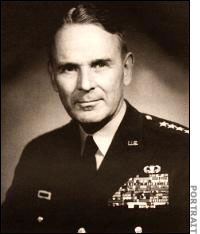
However, portions of Taylor’s 1961 report that had been kept classified for national security reasons were finally made public in April 2000, and they revealed a more disturbing story. The disclosed paragraphs revealed that the Soviet Union had first learned about the invasion on April 9th eighteen days before it happened. Because the CIA was worried that its Cuban invasion force couldn’t keep a secret, the agency didn’t tell the exile leaders the date for the invasion until April 12th three days after the Soviets had already learned about it. This meant the leak had not come from the Cubans, but was from someone inside the CIA. The source of that leak has never been identified.
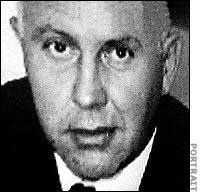
James Angleton was not in charge of the invasion as The Good Shepherd suggests. The CIA operations chief who oversaw the invasion was Jacob D. Esterline. As head of counterintelligence, Angleton might have been asked to investigate how the Soviets learned about the invasion in advance, but he would not have taken part in planning the attack or known about it beforehand.
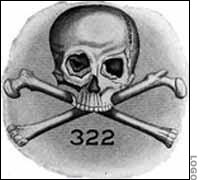
*In the film, Wilson’s childhood and career are told during a series of flashbacks. The first reveals that he entered the secretive Order of Skull and Bones while attending Yale University. As part of the initiation rite, he was required to tell a secret to his Skull and Bones’ brothers. Wilson discloses that his father committed suicide on July 4th, 1925, after he betrayed his friends’ trust. As the movie continues, members of Skull and Bones move on to become the stalwarts of the Office of Strategic Services (OSS), the forerunner of the CIA during World War Two.
Fact: Angleton did, indeed, attend Yale, where he studied Italian literature, specializing in Dante, and gained a reputation as a poet. He and his roommate founded the poetry quarterly “Furioso” — a fact referenced in the film. But there are no records that show Angleton ever belonged to Skull and Bones. Because the society’s membership is secret, it’s possible that he did belong. However, Tom Mangold, the author of Cold Warrior: James Jesus Angleton — CIA’s Master Spy Hunter, said he didn’t believe it. Mangold’s book is considered the most-thorough biography written about Angleton and the English journalist said during an interview for this story that he found no evidence during his research that showed Angleton had belonged to a secret group.
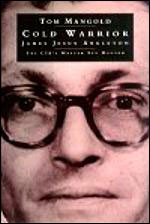
Jesus Angleton – CIA’s Master Spy Hunter
Yale University, however, did play a major role in assisting military intelligence during World War Two and a large percentage of Yale graduates were recruited into the OSS. The book, Cloak and Gown: Scholars in the Secret War, 1939-1961, by author Robin Winks, describes how Yalies were drafted by their crew coach, Skip Walz, for service in the OSS and how many of them later slipped effortlessly into the CIA. The Good Shepherd’s depiction of the early members of the OSS and the CIA as being white, male, protestant Anglophiles also is historically accurate.
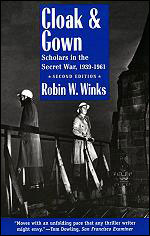
Scholars in the Secret War, 1939-1961
“In the early days of the CIA,” Mangold explained, “the Americans copied entirely the manners of MI-6 (British intelligence.) They copied their manners, their dress, their shoes, even their Savile Row tweed jackets and pipe smoking — all of that gentlemanly stuff was picked up by the Americans.”
In the movie, Wilson’s father shoots himself after hurrying his six-year old son from the room. In real life, Angleton’s father, James Hugh Angleton, did not commit suicide. The elder Angleton had an exciting career of his own. As a cavalry officer, he helped General John “Black Jack” Pershing chase after the outlaw Pancho Villa in 1916-1917 in Mexico. While there, he fell in love and married a seventeen-year-old beauty, Carmen Mercedes Moreno, who belonged to an aristocratic Mexican family. Angleton’s middle name, Jesus, came from his maternal grandmother. The couple moved to Rome where the senior Angleton bought the NCR Italian franchise.
Screenwriter Roth said the suicide screen was written purely for story telling purposes and not based on Angleton’s life.
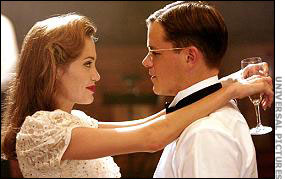
*While studying at Yale, Wilson falls in love with Laura (Tammy Blanchard) who has a hearing loss. She loves him, but innocently refuses to consummate their relationship. A Skull and Bones classmate introduces Wilson to Clover/Margaret Russell (Angelina Jolie) who immediately beds him, becoming pregnant. Wilson is forced to do “right” by her and they marry. Wilson later has a sexual encounter with a Soviet spy masquerading as his secretary in Berlin. He realizes her skullduggery when he notices that she can hear perfectly without a hearing aide that she had earlier claimed was needed — a subtle reminder of his relationship with the hearing-impaired Laura. The Soviet spy is executed by the OSS. Years later, Wilson is reunited with Laura, but their illicit affair is secretly photographed and the snapshots are turned over to Clover/Margaret. She confronts him during a public dinner and moves out of their Washington DC home to live with her mother.
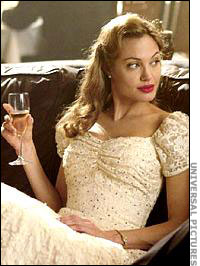
Fact: The idea of Angleton being a Don Juan caused biographer Mangold to erupt in laughter. Mangold recalled that Matt Damon came to England and spent three hours talking to him about Angleton. (Mangold is thanked in the film credits.) “Matt is short, blue-eyed, blonde-headed and handsome,” Mangold said, “but Jim was tall, gaunt, and half-Mexican with dark features. I never heard that he screwed around and I spoke to real enemies of Jim’s — people who loathed every fiber in his body — and nobody ever told me anything bad about his personal life apart from the booze. He was an alcoholic. I interviewed his wife, Cicely, (Cicely d’Autremont Angleton ) and I was not privy to any tensions in their marriage at all. In fact, she stuck by him and I think he relied on her heavily. After he became an alcoholic and developed clinical paranoia, he depended on her more and more.”
The sexual affairs, romance with Laura, and battles with his wife were all Hollywood flourishes, screenwriter Roth said.
While studying poetry at Yale, Wilson meets Dr. Fredericks (Michael Gambon,) a professor who tries to seduce him sexually and recruit him into a Nazi sympathizer group. Unknown to Fredericks, the FBI already had recruited Wilson to spy on his activities. Dr. Fredericks is forced to resign from Yale, but re-enters the movie after Wilson arrives in London to be trained as an OSS officer. Wilson discovers his former professor actually was an MI-6 officer working undercover. Dr. Fredericks becomes Wilson’s mentor and teaches him the nuances of counterintelligence work. In the film, the professor lets his homosexual libido get the best of him and MI-6 asks Wilson to intervene. Unless Dr. Fredericks retires from the service, he will be murdered because he “knows too much.” An unrepentant Dr. Fredericks urges his young protege “to get out” before it is too late and then ends up getting murdered by the OSS and tossed into the River Thames.
*Fact: Screenwriter Roth said Dr. Fredericks was a composite creation. Although fictional, he was partly based on Guy Francis de Moncy Burgess, a member of the infamous Cambridge spies, which included Anthony Blunt, Donald Maclean, John Cairncross, and Harold A.R. (Kim) Philby. Burgess was flagrantly homosexual. Neither the CIA or MI-6 have ever been known to murder one of their own simply because they “know too much.” Given that thousands of persons in Washington, DC have top secret clearances, the streets would run with blood if the CIA began murdering them simply because they had read secrets and might someday reveal them.
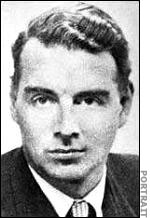
*Wilson’s Best Friend: While in London, Wilson is introduced to Arch Cummings (Billy Crudup), a dapper British MI-6 officer who reappears several times in the film, always as a close and trusted pal until a final scene where he is shown speaking to Wilson on the telephone from Moscow. Cummings has fled there after being identified as a KGB mole.
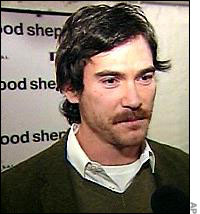
*Fact: Cummings is modeled after “Kim” Philby who is believed to have done the most damage of all the Cambridge spies. The movie’s fictional portrayal is deadly accurate, according to biographer, Mangold. “Kim became the only man Jim ever let into his house and into his heart.” In London, Angleton was trained by Philby, who already was a Soviet mole. The two men then went their separate ways, but were reunited in 1949 when Philby became the First Secretary at the British Embassy in Washington DC and served as the MI-6 liaison with the CIA. “The logs at Langley (CIA headquarters) showed there were forty to fifty visits by Philby — so you can only imagine what Jim was letting him in on. When it turned out that Philby was a betrayer and was the biggest double agent of all time, Jim was absolutely devastated. He considered him a close friend and I’m sure you can date the beginning of his clinical paranoia to that betrayal.” Philby escaped to Moscow in 1963 and died there at age 76 in May 1988. He outlived Angleton, who died at age 69, in May 1987.
*Spreading Disinformation: Wilson is shown in London getting the BBC to read a news bulletin that claimed Adolf Hitler had contracted syphilis.
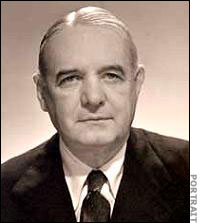
*Fact: Angleton may or may not have penned disinformation in London, but he did prove to be an apt operative. In 1948, he obtain correspondence between Yugoslav leader Josip Broz Tito and Stalin that foreshadowed Yugoslavia’s defection from Moscow, the first historic rift in the communist world. His talents and work ethic impressed Gen. William “Wild Bill” Donovan, the head of the OSS, who called him the OSS’s “most professional counterintelligence officer.”
*Protecting Nazis. After the war, Wilson moves to Berlin where he interviews Nazi scientists who the CIA secretly move into the US.
Fact: There is no evidence that Angleton played any role in helping Nazis enter the US. After London, he was sent to Italy where he took charge of counter-intelligence in the Army and developed a close-working relationship with the Israeli secret intelligence service. However, US intelligence was actively involved in extricating Nazi scientists from Germany in a secret project called Operation Paperclip that has spawned several books.
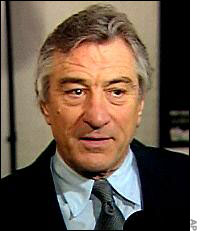
*Defection of Valentin Mironov. After the war ends, Wilson returns home and is drafted by William “Wild Bill” Sullivan (Robert De Niro) to help found the CIA. One of his first cases involves Valentin Mironov (John Sessions) a Soviet KGB defector. Wilson accepts Mironov’s bona fides, even when a second KGB defector appears and claims that the first is a fraud. Both insist that they are the real Valentin Mironov (the second character in the film is played by Mark Ivanir.) Wilson must decide who is lying and who is the real defector. Wilson sticks with the first defector and coldly watches as the second is beaten and tortured in an attempt to force a confession. When those tactics don’t work, he is given a dose of LSD and during a psychedelic trip flings himself out the window of a hotel, falling to his death. Later in the movie, Wilson learns that he backed the wrong man. The Valentin, who he has steadfastly supported, is actually a KGB mole and the long dead second defector was legitimate.
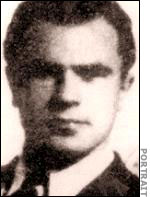
FACT: Screenwriter Roth has blended three actual events into his script. A few days before Christmas in 1961, Anatoli Mikhaylovich Golitsin, a high-level KGB officer defected to the US via Helsinki. When he was interviewed, Golitsin identified a number of Soviet agents working in the West. He also fed Angleton’s growing paranoia by revealing that the KGB had successfully planted a mole inside the CIA whose name began with the letter “K.” Golitsin warned Angleton that the KGB would attempt to discredit him by sending a fake defector to the West who would challenge the truthfulness of Goltisin’s stories.
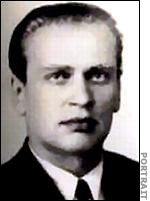
Sure enough, in June 1962, Yuri Ivanovich Nosenko, a KGB officer defected out of Geneva and immediately made two sensational claims. Nosenko said he had important information about Lee Harvey Oswald’s role in the assassination of President John F. Kennedy (Oswald lived in the Soviet Union briefly) and he claimed Golitsin was not a genuine defector, but was a double agent.
In his book, Molehunt: The Secret Search For Traitors that Shattered the CIA, author David Wise describes how Angleton became absolutely convinced that Golitsin was a genuine defector and Nosenko was a liar. Because of suspicions about Nosenko, the head of the CIA’s Soviet Russian Division had the Soviet held for nearly three years in a windowless room, with only a bed, chair and washbasin, in a house a few miles from downtown Washington. Nosenko was issued only military fatigues and was forced to submit to unrelenting interrogation. When that endless questioning didn’t cause him to change his story, the agency experimented with disorientation techniques, such as gradually setting watches back and manipulating lighting conditions, to convince him it was day when it was really night. The CIA stepped up the pressure by leaving a light burning in his cell, turning off the heat, giving him nothing to read and ordering his guards not to speak to him. But Nosenko didn’t crack. Eventually, FBI Director J. Edgar Hoover and CIA Director Richard Helms believed Nosenko, but Angleton never did. The CIA apologized to him and he was paid a lump sun of $150,000 and hired as an advisor for $35,000 per year.
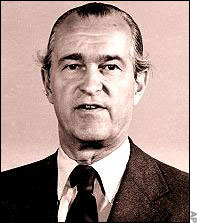
Roth said that he and DeNiro were able to visit Golitsin at his home during a visit arranged by Milton Bearden, a former CIA officer who was paid to be an advisor to the movie. They did not meet Nosenko, who also lives in the US.
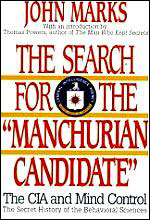
Nosenko was never given LSD. The LSD scene came from a completely different episode in CIA history unrelated to Angleton. In the 1950s and early 1960s, the CIA gave mind-altering drugs to hundreds of unsuspecting Americans in an effort to determine if a person’s mind could be controlled. Many of the human guinea pigs were mental patients, prisoners, drug addicts and prostitutes. The program was run by Sidney Gottlieb and the definitive book about the experiments is The Search for the ‘Manchurian Candidate’ written by John Marks. On Nov. 18, 1953, a civilian researcher who worked for the Army, was secretly slipped LSD by the CIA while he was attending a conference in New York City. Frank R. Olson became withdrawn and either “jumped or fell” to his death from the 10th floor of a New York hotel. His widow and children were not told that he had been given LSD until 1975 when an oversight commission made the CIA’s secret drug program public.
The mystery about Golitsin and Nosenko has never been fully resolved. Golitsin was not unmasked and deported, as suggested in the movie. Angleton’s belief of Golitsin — that a mole with the initial “K” was lurking at CIA headquarters — led to him ruining the career of Peter Karlow, an innocent employee. Karlow spent 26 years trying to clear his name and finally succeeded when he was awarded a medal and paid close to $500,000 under a special act of Congress, jokingly called the “Mole Relief Act” inside the agency.
*Unmasking the Bay of Pigs traitor. At the conclusion of the movie, Wilson discovers the identity of the spy who tipped-off the Soviets about the location of the invading forces. It is his own son, Edward Wilson Jr. (Eddie Redmayne) who has fallen in love with a Soviet spy. The son refuses to believe his father and moves forward to marry his true love. While flying to the wedding, the bride is tossed out of an airplane to her death to prevent her from joining the Wilson family.
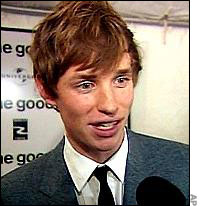
FACT: Roth said these scenes were written as part of his Godfather/family theme and not based on any actual persons. Angleton had three children, James Charles Angleton, Guru Sangat Kaur, and Lucy d’Autremont Angleton. None ever worked for the CIA.
–
*Face-to-Face meetings with his KGB Counterpart. In the movie, Wilson meets with his Soviet rival, Stas Siyanko, codename Ulysses, several times. During their last scene together, Wilson tells the Soviet that he will not be blackmailed into helping the KGB. (Ulysses was behind the seduction of Wilson’s son and was responsible for sending Wilson the photographs and tape recording that proves the younger Wilson betrayed his country.)
Fact: While there are documented cases of the CIA and KGB both using “honey traps” to seduce officers and blackmail them, there is no evidence that Angleton ever was blackmailed. Roth admits that this was make-believe that he included in the script for dramatic reasons. Angleton was in charge of ferreting out moles inside the CIA and did not have any contact with KGB officers except those who had defected. Top CIA officials never met with any of their Russian counterparts until after the collapse of the Soviet Union.
–
*Helps Found the CIA. In the closing scenes, Wilson is called the heart and soul of the CIA and credited with helping found it.
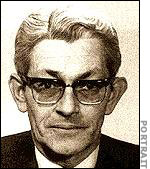
Fact: While Angleton ran counterintelligence, he did not help found the CIA. The agency was created in 1947 with passage of the National Security Act of 1947 signed by President Harry S. Truman. It succeeded the OSS which had been dissolved in October 1945. Interestingly, the Pentagon, FBI and State Department all opposed creating the CIA. After the war, Angleton remained in the Army, attaining the rank of major while running intelligence operations in Italy. He did not join the CIA until a year after it was formed.
*Roth’s personal touches. At the start of the film, a young boy asks Wilson to give him change for a dollar while they are riding on a bus. Wilson and his cohort, Ray Brocco (John Turturro) match the serial numbers on the dollar to a set of numbers next to the codenames of spies working for the CIA. The numbers match a spy known as “the Cardinal.” At the end of the movie, Wilson’s Soviet nemesis is asked by his aide, Sasha (Sandro Tecsy) for change because he wants to buy a souvenir. Wilson intervenes and offers Sasha a dollar, explaining that it is his “Cardinal duty” to help out. Roth included the dollar bill exchange so that careful viewers would realize that Sasha was a CIA mole. Roth said he also had Sam Murach (Alec Baldwin), who was Wilson’s long-time, cigarette smoking FBI pal, mention while seated in a diner that he was dying from cancer. “It was a political statement something I carried over from The Insider,” Roth said, referring to his script about Big Tobacco’s fight to hide evidence about the evils of smoking.
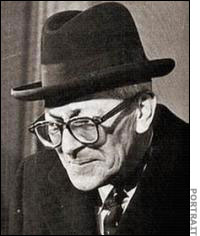
Biographer Mangold said he understood that Roth was doing more than telling Angleton’s story in The Good Shepard screenplay. He hoped, however, that someday Hollywood would produce a movie based on Angleton’s biography. “You don’t have to create anything when it comes to Jim Angleton and his life,” Mangold said. “You don’t need to add the Hollywood flourishes because his real story is much more remarkable than fiction.”
Continuing, Mangold explained, “The CIA changed the rules after Jim died. They will not allow anyone to be head of counterintelligence for more than two years because that job is simply too dangerous. Your job is to assume that you are surrounded by traitors and liars and spies. There is an old CIA joke that says when Angleton was shaving in the morning, he would look in the mirror and say, ‘I wonder who that man is working for.’ That sort of paranoia eventually destroyed Jim. It will destroy anyone.”