
Jessica Lunsford, Death of a 9-Year-Old — Please Knock — Crime Library
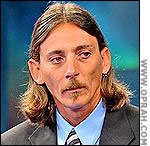
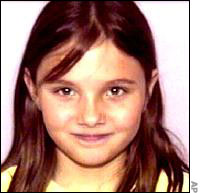
On Friday, February 24, 2005, Mark Lunsford’s alarm clock went off at 5:00 A.M., his usual work-day wake-up time. Lunsford, 42, drove a dump truck for a company called the Dirt Boys. He lived in a double-wide trailer on Sonata Avenue in Homosassa, Florida, which he shared with his parents, Ruth and Archie, and his 9-year-old daughter, Jessica.
Before he got out of bed, he reached over to the clock radio and turned off the alarm. He could hear the alarm going off in Jessica’s room. She usually got up around the same time he did to get ready for school.
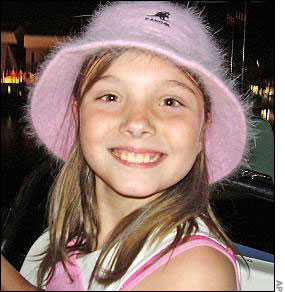
Lunsford went about his normal morning routine. According to the St. Petersburg Times, he’d gotten in late the previous night from a date with his girlfriend. But before he’d gone out for the evening, Jessica had made sure that she’d said good night to him. Jessica’s grandmother, Ruth Lunsford, remembers Jessica telling her dad: “In case that you’re not here when I get done with my bath, I just want to give you a hug and tell you I love you.” Jessica was a very affectionate daughter and would often call her father at work just to tell him that she loved him.
As Mark Lunsford continued to get ready for work, he noticed that Jessica’s alarm was still buzzing. She wasn’t getting up, he thought, so he went to her room to wake her. A construction paper sign with pink Magic-Marker lettering taped to her door asked visitors to Please Knock before entering. Jessica had made it with her grandmother’s help. Lunsford opened the door, expecting to find his daughter fast asleep, clutching the stuffed toy tiger she always slept with, but her bed was empty. The tiger was there, but Jessica wasn’t.
He looked around the house for her, calling out her name, but there was no answer. Jessica was gone, and the front door was unlocked.
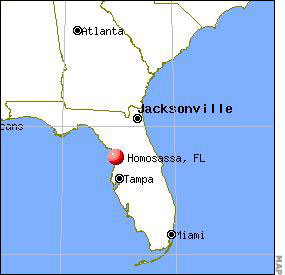
Mark Lunsford immediately called 911 and reported that his daughter was missing. The local police soon started an investigation as friends and family searched for the little girl. Trained police with dogs attempted to track her down, but by the end of the day, all efforts failed to locate Jessica.
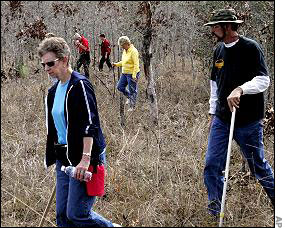
The next day state and federal agencies joined the search, and hundreds of volunteers traveled to Homosassa to help comb the area. Days passed. After a week of searching, there was still no sign of Jessica. Mark Lunsford and his parents were sick to death with worry, trying to hold out hope and dispel their worst fears.
Jessica was born on October 6, 1995, in Gastonia, North Carolina. Her parents divorced when she was a year old, and her father was granted custody. Nearly everyone who knew Jessica described her as a quiet girl with a radiant smile. Her pastor, William LaVerle Coats of Faith Baptist Church, told the St. Petersburg Times that “she was very outgoing and friendly but also kind of shy in some respects.” Besides her stuffed tiger, she always slept with a night light and a flashlight on her night table because she didn’t like the dark. Her grandmother told Citrus County investigators that Jessica was very particular about her room and didn’t like people entering without her permission. According to Ruth Lunsford, she never wandered far from home “because she don’t trust people.”
Jessica adored her father and loved spending time with him. According to the St. Petersburg Times, together they would go riding on his motorcycle, and he often brought her to the Saloon Bar and Grill on U.S. 19 to sing karaoke. Well-behaved and conscientious about her school work, Jessica told people that she wanted to become a singer, an Olympic swimmer, or a fashion designer. She had just started to experiment with wearing makeup. Her favorite color was purple.
Jessica belonged to a church youth group, King’s Kids, and had attended a meeting the night before she disappeared. She’d been preparing for a contest, memorizing a passage from the Bible, Philippians 4:13: “I can do all things through Christ who strengthens me.”
She loved dolls and stuffed animals, and her room was crowded with them. After she disappeared, her family noticed that one of her favorite toys was missing, a stuffed purple dolphin that her father had won for her at a county fair.
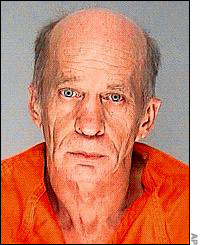
When a child is reported missing, the police typically check on all the known sex offenders in the area, and detectives from the Citrus County Sheriff’s Office did just that in the days following Jessica Lunsford’s disappearance. In the course of their investigation, detectives discovered that one known offender, John Evander Couey, 46, was not living at the address where he was registered. A convicted sex offender is required by law to notify local authorities if he intends to change his place of residence.
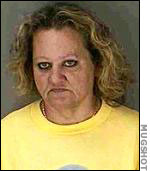
Couey had a long list of convictions of his rap sheet. He had been arrested on many occasions for drug violations and was a habitual user of crack cocaine. According to the Citrus County Sheriff’s Office, past charges against Couey included “burglary, carrying a concealed weapon, disorderly intoxication, driving under the influence, indecent exposure, disorderly conduct, fraud, insufficient funds, and larceny.” His driver’s license had been “suspended for 99 years.” In 1991 he had been arrested and charged with “fondling a child under the age of 16.”
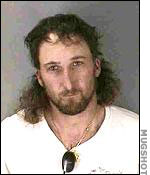
Detectives learned that Couey had moved in with his half-sister, Dorothy Marie Dixon, 47. Dixon’s boyfriend, Matthew Oley Dittrich, 31, and her daughter and son-in-law, Madie Catherine Secord, 27, and Gene Allan Secord, 35, also lived at Dixon’s residence, a trailer at 6647 Snowbird Court, which is miles from Couey’s registered address and within sight of the Lunsford home. Investigators drove to Dixon’s trailer, looking for Couey.
When detectives arrived at Dorothy Marie Dixon’s home, they found Dixon, her boyfriend, and her daughter at home. When asked where John Couey was, the trio said they didn’t know and denied that he had been living with them.
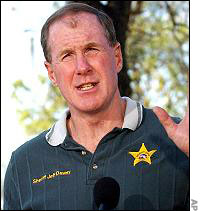
Citrus County Sheriff Jeff Dawsy would later characterize the residents of that trailer as “a bunch of cracked-out individuals. Just a bunch of druggies.”
The detectives did a cursory search of the premises, looking for signs of either Couey or Jessica. Unfortunately they failed to check the closet in the room where Couey had been staying.
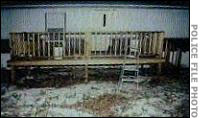
been staying
Detectives returned to Dixon’s home on March 14, a full 19 days after Jessica Lunsford was first reported missing. Authorities were still trying to locate John Couey. They searched the trailer again, and this time they checked the closets but found nothing incriminating. However, in the bedroom where Couey had slept, they found blood on the mattress. Suddenly John Couey’s status was elevated to “person of interest.”
The search for Couey intensified, but the residents of 6647 Snowbird Court held to their story that they didn’t know where he was. He had in fact left the area two weeks earlier, fleeing to Georgia with a bus ticket purchased under an assumed name. It was a one-way ticket to Savannah.
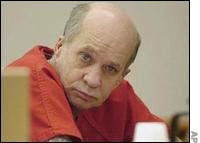
Bald with watery blue eyes, John Couey stands five feet four, weighs 125 pounds, and looks older than his age. He’s been in trouble with the law for most of his adult life, having been arrested 24 times in a 30-year period. His arrival in Savannah, Georgia, proved no exception to his pattern. Sometime after he checked into a homeless shelter, Savannah police questioned him regarding a possible marijuana-possession violation, but unaware of Florida’s interest in him, the police did not hold him.
Sensing that it was time to move on, Couey hit the road and found his way to Augusta, Georgia, 100 miles away, where he found lodging at a Salvation Army shelter. By this time the disappearance of Jessica Lunsford had become national news. In some reports Couey was identified as a suspect, his face displayed on television with pleas to the public to come forward if they thought they saw him. A secretary who worked at the Salvation Army shelter happened to see a photo of Couey on TV. She called the police and told them that a recent arrival at the shelter looked an awful lot like the man wanted for questioning in the kidnapping Jessica Lunsford.
Augusta police picked up Couey and held him for failing to register as a sex offender in Georgia. In the meantime Augusta authorities contacted the Citrus County Florida Sheriff’s Office. Citrus County Detectives Scott Grace and Gary Achison arrived in Augusta on March 17 to interview Couey. Distraught and agitated, Couey endured several hours of questioning. Throughout the interview he maintained that he knew nothing about the disappearance of Jessica Lunsford.
Detectives Achison and Grace, with assistance from an FBI special agent, began interviewing John Couey at 2:30 in the afternoon on March 17. Transcripts of the interview show that Grace pressed Couey hard for information that would lead to the recovery of Jessica Lunsford. Achison took a softer approach, trying to appeal to Couey, in Achison’s own words, “human being to human being.”
At one point in the interview, Detective Grace asked Couey if he would take a lie-detector test.
Couey responded by saying, “I guess. I’m just… I want a lawyer, you know.”
Achison would later describe what happened next as a quick and garbled exchange, but in the transcripts Couey plainly asks for a lawyer seven times.
“I want a lawyer here present,” Couey said. “I want to talk to a lawyer ’cause I mean, if people are trying to accuse something I didn’t do, I didn’t do it… I just want to talk to a lawyer to get this thing straight.”
The detectives continue to question Couey, but he’s not provided with a lawyer. Later in the interview, tired and frustrated, Couey stated, “Y’all got my brain fried here now.”
In a sworn deposition, Detective Achison would later explain that Couey had not made his wishes clear when he asked for a lawyer. Achison had tried to determine whether Couey wanted the questioning to stop until he had a lawyer present, or if the interview could continue until a lawyer arrived. It was also possible, according to Achison, that Couey wanted a lawyer present only for the polygraph test that he had agreed to take.
The next day Couey took a polygraph test administered by FBI Special Agent John Whitmore. During the test, Couey broke down and confessed to the abduction and murder of Jessica Lunsford. He also revealed where they could find her.
In his video-taped confession, Couey admitted that had entered the Lunsford home at around 3:00 a.m. on February 24 and found Jessica asleep in her bed. He woke her and ordered her to be quiet. “Don’t yell or nothing,” he said and told her to follow him back to his sister’s house. According to Couey, she was compliant, and in fact the police found no signs of struggle in her room.
Couey admitted to raping Jessica after taking her to his room at his half-sister’s home, keeping her in bed with him for the rest of the night, then raping her again in the morning. Afterward he put her in his closet and ordered her to stay there and not say a word while he went to work at “Billy’s truck lot.” Again, she complied with his order and stayed put the whole day. According to the America’s Most Wanted website, Couey turned on a television set for her to watch through the slightly opened closet door. Couey told detectives that she had seen televised news reports about herself and the efforts to find her.
Couey told authorities that he had been drinking and getting high the night he abducted Jessica, saying he had been “drug-hazed.” He remembered cooking her a hamburger at some point during her capture and making her urinate in the closet, so that his housemates wouldn’t know she was there. He kept her in the closet for three days. During that time, investigators came to the trailer looking for him but did not check his closet.
When he learned that detectives were searching for him, he panicked. He felt he had to do something with Jessica right away before he was caught so he decided to bury her… even though she wasn’t dead.
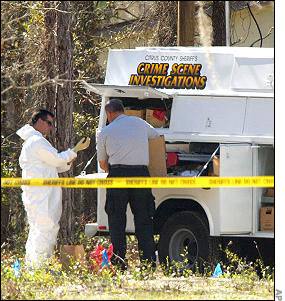
The details of Couey’s confession were immediately relayed to the authorities in Homosassa, and shortly after midnight on Saturday, March 19, a team of investigators arrived at Couey’s half-sister’s trailer on Snowbird Court. They located a shallow grave where Couey had said it would be. Jessica’s clothed body was found inside two tied plastic garbage bags. Her wrists were bound, but she had managed to poke two fingers through the plastic in an attempt to free herself. When the bags were completely removed, investigators saw that she had died clutching her prized purple dolphin.
Her body was transported to the morgue in Leesburg, Florida, where Dr. Steven Cogswell, Medical Examiner for the Fifth Judicial District, performed an autopsy. In unwrapping Jessica’s body, Dr. Cogswell noted that she had been placed feet first into the first garbage bag, head first into the second. There was no indication that she had tried to kick through the bags. Both bags were securely knotted, and in all likelihood the cause of death was suffocation, which he believed took from 3 to 5 minutes.
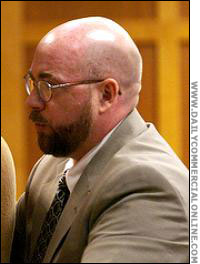
for the Fifth Judicial District
Dr. Cogswell reported that the body was in a state of “medium decomposition.” Though he could not pinpoint the time of death, the degree of decomposition suggested that she had died about three weeks earlier.
Her fingernails had been painted with peach-colored nail polish, and the two exposed fingers were partially mummified. The fact that she was able to claw through the bag indicated that Jessica was alive when she was buried.
Dr. Cogswell found vaginal lacerations at the six o’clock position, which indicated sexual assault. He estimated that these lacerations had occurred “probably not more than six hours prior to death.”
Jessica’s gastro-intestinal tract was “basically empty.” Dr. Cogswell estimated that the last time she ate was between “twelve hours and three to four days before death.”
Traces of cocaine were found on her body. She had not ingested cocaine herself but had been “in an environment” where crack cocaine had been smoked.
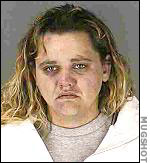
On Sunday, March 20, John Couey was booked into the Citrus County jail in Lecanto, Florida, and put on suicide watch. Three of his housemates—Dorothy Dixon, Madie Secord, and Matthew Dittrich—were charged with obstruction of justice for lying to the police. The fourth housemate, Gene Secord, who had not been at the house when detectives came by looking for Couey, was charged with failure to pay child support. The citizens of Homosassa were outraged, and everyone who had followed the case demanded justice.
“He will pay,” Jessica’s mother, Angela Bryant, told CNN after she learned that John Couey had confessed to killing her daughter. “He will pay for hurting those children out there and my daughter… He deserves everything he gets coming to him.”
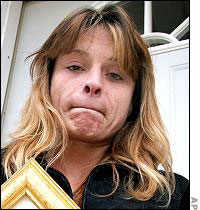
Jessica’s father, Mark Lunsford, vacillated between vengeance and sorrow. “She’s home now,” he told the St. Petersburg Times, his voice breaking. But when later interviewed by CNN, he looked into the camera and spoke directly to Couey: “I hope you rot in hell,” Lunsford said, “I hope you get the death penalty.”
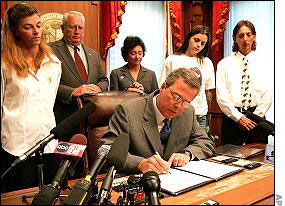
Lunsford knew something had to be done to protect other children from sexual predators, like Couey. In the weeks after Jessica’s body was found, he lobbied the Florida state legislature to enact tougher laws. With the help of Representatives Charlie Dean and Nancy Argenziano, a bill was written that would require increased prison sentences, electronic tracking of all convicted sex offenders on probation, and the mandatory use of state databases by all local probation officials so that known sex offenders could not avoid the scrutiny of law enforcement. The Jessica Lunsford Act was quickly approved and signed into law by Governor Jeb Bush on May 2, 2005. The law took effect on September 1.
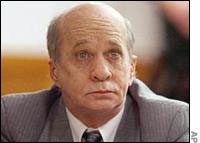
On April 1, 2005, a grand jury indicted John Couey on charges of first-degree murder, kidnapping, sexual battery, and burglary. The various charges against his housemates were dropped. Five days later Couey appeared in court and pleaded not guilty to the charges. The state declared that it would be seeking the death penalty in this case. Couey was sent back to the county jail and held without bail.
Couey was isolated from other inmates at the Citrus County jail and kept on suicide watch. His guards reported that he spent much of his time reading Christian religious material, but not the Bible itself, and keeping a journal.
On the night of March 5, 2006, over a year after Jessica Lunsford’s murder, two corrections officers were making small talk in the vicinity of Couey’s cell. A television set was on, and neither guard thought that Couey could overhear their conversation. As they were talking, Kenneth Slanker, the guard charged with watching Couey, asked the other guard, Sheri Johnson, about her family and asked why she wouldn’t let her children go to a day-care center.
Johnson said she was afraid of what might happen at a day-care center and pointed toward Couey.
After Johnson left to attend to other duties, Couey called Slanker over to his cell. Couey said that he had overheard their conversation and that his feelings were hurt.
According to Slanker’s sworn statement, Couey said, “I don’t appreciate people talking about me like that. I didn’t mean to do what I did. I didn’t mean to kill her… I never saw myself as someone who could do something like this.”
Despite his not-guilty plea, Couey once again admitted to killing Jessica Lunsford.
In the spring of 2006 as Couey’s trial date approached, Judge Ric Howard of the Fifth Judicial Circuit faced the daunting task of finding a fair and impartial jury. The case had received extensive national and regional media attention, and it would be virtually impossible to find a panel of jurors who hadn’t heard anything about the rape and murder of Jessica Lunsford. Nevertheless, Judge Howard did think he could find jurors who had not already formed an opinion as to the guilt or innocence of John Couey, but he decided to avoid residents of the Homosassa area where the crime had occurred. Instead he ordered that the jury pool be made up of residents of Lake County, which is the farthest community from Homosassa in the Fifth District. Judge Howard’s plan was to transport those selected to serve on the jury to his courtroom in Inverness and have them live in an unnamed motel for the length of the trial.
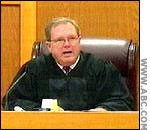
In June Judge Howard heard pretrial testimony regarding the investigation of Couey and ruled that Couey’s confession to Detectives Grace and Achison in Augusta had to be thrown out because Couey’s rights had been violated when the detectives did not comply with his repeated requests for legal representation. While the judge’s ruling did not torpedo the state’s case against Couey, it did deal the prosecution a serious blow.
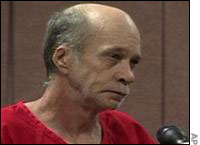
Finding suitable potential jurors proved to be more difficult than anyone had anticipated. By July 13, fifty-eight prospective jurors had been selected, but Judge Howard suddenly decided that an impartial jury could not be assembled in the Fifth District in a timely manner, and he cancelled further jury selection. Some potential jurors reported that they had been threatened with physical harm if they eventually got on the jury and did not find Couey guilty. Also, several expert witnesses scheduled to testify at the trial would not be able to fit a delayed trial into their schedules, so the judge decided that a change of venue would be the best solution. Moving the trial to the small town of Tavares in Lake County was considered, but ultimately it was decided that John Couey would be tried at the other end of the state in Miami-Dade County on February 12, 2007.
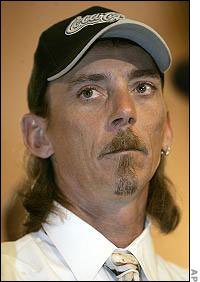
There was a possibility that the change of venue could help Couey’s case. Urban jurors are generally considered more sympathetic to the defense, but as the St. Petersburg Times pointed out, serial killer Ted Bundy’s trial for the murders of two Florida State University coeds had been moved from Tallahassee to Miami, and the Miami jury found Bundy guilty and sentenced him to death.
In the meantime, Mark Lunsford continued his lobbying efforts to bolster laws that will protect children from sex offenders. He organized a group of bikers, Jesse’s Riders, who wear matching leather jackets and baseball caps in memory of his daughter. He also has an image of Jessica’s face tattooed to his chest. He told the St. Petersburg Times that he preferred to have his daughter’s picture on his skin rather than in a paper photograph. “I can still touch her face now,” he said. “It’s the flesh that she came from.”
By Cora Van Olson
Couey’s trial began in Miami on February 12, 2007. Evidence presented by the prosecution included DNA from Jessica’s blood, Couey’s semen on the mattress from his bedroom, and Jessica’s fingerprints found inside a closet in the trailer.
Investigators and guards from the jail where Couey had been held before the trial testified that after his arrest Couey repeatedly admitted to details of the slaying and insisted that he had not meant to kill the third-grade girl but had panicked as police searched for her.
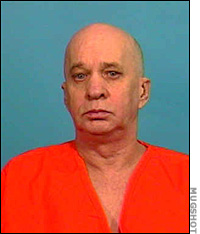
The defense called experts who testified to Couey’s chronic drug and alcohol abuse, longstanding mental illness and his suffering a lifetime of emotional abuse. The defense argued that Couey’s below-average IQ rendered him mentally handicapped, which according to a 2002 Supreme Court ruling would disqualify him from the death penalty. However the judge ruled that Couey’s IQ results were more around 78, eight points higher than the standard score for mental retardation.
Couey mostly passed the time at trial drawing with colored pencils.
On March 7, the jury found Couey guilty of all charges relating to the death of Jessica Lunsford, including first degree murder, kidnapping, burglary, and sexual battery.
On August 11, a Miami jury voted 10 to 2 that Couey be eligible for the death sentence and, in accordance with Florida law, on August 24 a Florida circuit court judge heard arguments for and against Couey’s receiving the death penalty.
Judge Richard Howard, who had to stop more than once to compose himself as he read a graphic description of the crime, ruled that the facts of the crime “vastly outweighed” mitigating arguments put forward by Couey’s attorneys who, citing Couey’s mental capacity, were requesting a sentence of life without the possibility of parole instead of death
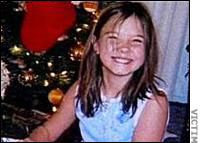
According to the judge, “Sentencing is about a final accounting, it is a closure, it is a reckoning.” He sentenced John Evander Couey to to die for the brutal 2005 rape and murder of Jessica Lunsford, only nine years old at the time of her murder.
After the hearing Jessica’s father, Mark Lunsford took questions from reporters. When asked about the verdict he said, “I’m grateful that the outcome was what it was.”
***
On September 30, 2009, John Evander Couey died in prison of natural causes. According to CNN, “A source close to the case told CNN that Couey’s death was not unexpected and he had been ill for some time.”
Citrus County Sheriff Jeff Dawsy called a news conference after hearing of Couey’s death. Dawsy said that both he and Jessica’s grandmother Ruthie Lunsford felt as though a 1,000-pound weight had been lifted from their shoulders. Mark Lunsford, he said, was on an emotional roller coaster because of Jessica’s upcoming October 6 birthday.
Dawsy said that in addition to relief and satisfaction he felt disappointment, “There was true disappointment on my end that I couldn’t be there when John Couey was put to death. That was always one of my goals — to be there and watch him take his last breath.” The cause of Couey’s death has been kept confidential; but, when asked if he knew, Dawsy said he heard it was anal cancer, and said it was “fitting.”
Frank, John. “Jury Selection Off to Slow Start.” St. Petersburg Times. 11 July 2006.
Frank, John. “Miami-Dade Gets Couey Trial.” St. Petersburg Times. 13 Sept. 2006.
Frank, John. “Task: Find a Fair Jury for Couey.” St. Petersburg Times. 10 July 2006.
Frank, John and Elena Lesley. “Where Can the Couey Trial Go?” St. Petersburg Times. 13 July 2006.
George, Justin. “So Near Home, Body Found.” St. Petersburg Times. 20 March 2005.
Kruze, Michael. “Only the Few Could Know and Love Her.” St. Petersburg Times 11 July 2006.
Lesley, Elena. “Potential Jury Bias Was Even in Dreams.” St. Petersburg Times. 18 July 2006.
“Prospective Juror in Couey Case Details Threat.” St. Petersburg Times. 15 July 2006.
Ramirez, Eddy. “Guard: Couey Said He Killed.” St. Petersburg Times. 31 March 2006.
“Sheriff: Evidence points to sex abuse.” CNN.com. 21 March 2005. www.cnn.com/2005/LAW/03/20/lunsford.case/index.html.
“Suspect in 9-year-old’s death booked into Florida Jail.” CNN.com. 20 March 2005. http://www.cnn.com/2005/US/03/19/missing.girl/.
Vansickle, Abbie. “Jessica’s Voice.” St. Petersburg Times. 15 January 2006.
Vansickle, Abbie. “Parents Watch Birth of Law to Spare Others Their Agony.” 3 May 2005.
Vansickle, Abbie and Justin George. “Was Jessica Lunsford a Captive for 3 Days?” St. Petersburg Times. 27 May 2005.
Watson, Brendan, John Frank, and Elena Lesley. “Judge Halts Couey Trial.” St. Petersburg Times. 13 July 2006.