
All about Team Killers, Part Three, by Katherine Ramsland — Sudden Death — Crime Library
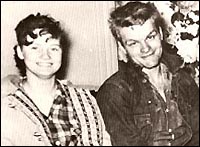
Before the murderous couples depicted in Badlands, True Romance and Oliver Stone’s Natural Born Killers, there were Charles Starkweather, 19, and Caril Ann Fugate, 14. These real-life killers, who in part inspired all three films, cut a swath of murder through Nebraska in 1958. They killed family, friends and strangers. At times they did it for utilitarian reasons and at other times there was no apparent reason at all.

True Romance
The couple became a cultural archetype of youthful alienation and random violence. Between them, they had 11 victims, and from their respective confessions, it’s difficult to tell who actually did what. But there’s little doubt that, although neither was raised in an abusive family, Charles was angry and trigger-happy, while Caril Ann was young and indulgent, so together they made for a dangerous team.
“I had hated and been hated,” Starkweather once said, “I had my little world to keep alive as long as possible and my gun. That was my answer.”
The male-female couple who indulges in random violence against family and strangers is a particular sort of team killers. In Natural Born Killers the protagonists kill to satisfy their anger and their inclination to exercise power over those they consider their inferiors. The female, abused by a dominating and disgusting father, appears to engage in the violence as an extension of her eroticism and her freedom, while the male simply likes to exercise power. They are predators who love to kill.
Two other films featuring murderous couples, Badlands and True Romance, demonstrate how the pair can develop a murderous drive together, partly from individual impulses to act out and partly because there’s someone next to them who sees them at their worst and who nevertheless loves and encourages them. A woman with low self-esteem feeds off any positive attention and a “lone wolf” male is happy to have an admirer. The violence is rewarded, the more the better. Sometimes in these couples the female is merely a passive presence, and sometimes she is as active and mean as the male. Unlike in these movies, however, somewhere along the line, “true love” typically breaks down.
The following account of Starkweather and Fugate is largely culled from three books: Michael Newton’s Wasteland: The Savage Odyssey of Charles Starkweather and Caril Ann Fugate, J. M. Reinhardt’s The Murderous Trail of Charles Starkweather and J. Sargeant’s Born Bad: The Story of Charles Starkweather and Caril Ann Fugate. These authors provide a detailed picture of what happened with these two, before, during and after their spree.
Born in 1938, the third of seven children, Charles R. Starkweather lived all of his young life in abject poverty in Lincoln, Nebraska. His father worked as a handyman. Even worse than having no money was the fact that young Starkweather was short, myopic, red-headed, and bowlegged. He also had a speech impediment. Inevitably taunted by classmates with nicknames like “Red Headed Peckerwood,” he lapsed into what he later described as “black moods,” developing “a hate as hard as iron” against anyone who humiliated or ostracized him. Even the little that he could accomplish, such as artwork, the other children ridiculed. A turning point came in 1956 when he saw James Dean play a disillusioned adolescent named Jim Stark in Rebel Without a Cause. That character expressed the same emptiness and isolation that he felt, and they very nearly shared the same last name. Starkweather had found his hero.
Starkweather’s twin passions were cars and hunting, but he claimed that he would “rather hear the crack of a firearm than have or drive the finist [sic] car in the whole wide world.” He dropped out of the ninth grade to work in a warehouse. There Starkweather was struck in the head just above his left eye by a machine lever. He developed continual headaches and periods of confusion. It’s possible that this incident contributed to the lack of inhibition he was soon to experience regarding violence. (Other killers have had brain damage.) He then took a job hauling garbage, but so resented the wealthy people in neighborhoods in which he worked that he’d curse them from his truck. The one person in whom he took comfort was sassy Caril Ann Fugate. In Charles’s rented room, they danced, made love, and practiced throwing knives.
Yet Caril Ann’s family, unnerved by Starkweather’s habit of carrying a rifle wherever he went, forbade her to see him. She didn’t obey and continued to see him.
On December 1, 1957, in need of money, Starkweather robbed a gas station in Lincoln. He abducted the attendant, 21-year-old Robert Colvert, drove him to a rural area and killed him with a shot to the head at close-range. The robbery netted Starkweather $108. The murder, he later confessed, made him “feel different” and his headaches cleared up. When he realized that no one suspected him of this deed, Starkweather confided to Caril Ann that he had robbed the station but had not killed Colvert. He quickly spent most of the money.
Then, less than two months later, on January 21, 1958, Starkweather was thrown out of his apartment for nonpayment of rent. That was the date that the killing spree began in earnest. He went to Caril Ann’s home while she was at school and got into a violent argument with her mother, Velda Bartlett. As Starkweather recalled, “They said they were tired of me hanging around,” and blows were exchanged. Bartlett slapped him, an act which humiliated and enraged him. It is not clear whether he waited for Caril Ann’s return from school or went ahead without her, but he killed the woman with a single shot from a .22 caliber rifle. Afterward, he stabbed and shot her husband. Starkweather then threw a knife at two-year-old Betty Ann, hitting her in the throat. He finished her off by using his gun butt to crack her skull.
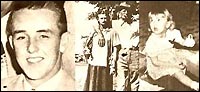
victims
Dragging the bodies outside, he hid them in unused outbuildings. Caril Ann had either witnessed all of this or was told about it when she came home. In either case, rather than react to the slaughter and turn him in, or at least run away, she stayed with him. She had opportunities to escape, but she failed to do so. The couple stayed in the house for the next six days, hanging a sign on the door to ward off police and family: “Stay a Way Every Body is Sick With the Flue.” Whenever Caril Ann did venture out to speak with someone who knocked, she claimed that her mother’s life would be in danger if she let them in. Oddly, no one took action on these strange communications.
The bodies were discovered on the morning of January 28, but the two lovers were already on their way to Bennett, 16 miles south, to hide out on the farm of a family friend, 70-year-old August Meyer. Starkweather’s car got bogged down on the property and Meyer and Starkweather got into a fight that climaxed with Starkweather shooting Meyer and his dog “in self-defense.” Leaving their car stuck in the mud, Starkweather and Fugate walked to the highway and got a ride from high school sweethearts, Robert Jensen, 17, and Carol King, 16.
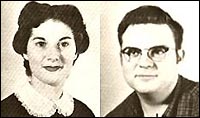
At gunpoint, Starkweather robbed Jensen of $4. Caril Ann took the bills from the boy’s wallet. He then made Jensen drive to an abandoned schoolyard, ordering him onto the steps of the storm cellar, where he shot the boy six times in the head. He fell to the foot of the stairs and was left there. King was also shot to death, and her genitals viciously slashed with a knife, but Starkweather blamed Caril Ann for the crime, citing jealousy as the motive. She said that he had done it. The truth was never clear, although there was reason to believe that he had tried to rape King, but had been unable to perform and, enraged, had slashed her. He dumped King’s half-nude body on top of Jensen’s in the cellar and stole Jensen’s car. He later claimed that he had killed Jensen in self-defense, but since he shot Jensen from behind, it seems unlikely.
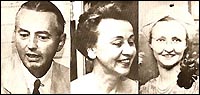
Returning to Lincoln on January 30 to acquire a less conspicuous car, the couple invaded the home of a banker, C. Lauer Ward. Ward wasn’t home, so they tied up his wife Clara and a deaf maid, 51-year-old Lillian Fencl and viciously stabbed both women to death in a bedroom. Starkweather also broke the neck of the family dog and then waited for Ward to return. They struggled with the gun and Starkweather pushed Ward down the cellar steps before blasting him several times. Then Starkweather and Fugate stole clothing and money, and fled in Ward’s Packard, intent on escaping to Washington state.
On February 1, they reached Douglas, Wyoming, after slipping through a dragnet that included 200 members of the Nebraska National Guard. Starkweather felt they needed to switch cars. He spotted a Buick parked beside the road and inside, asleep, was shoe salesman Merle Collison. Starkweather pumped nine bullets into the helpless victim, into his face, neck, hand and legagain, “in self defense.” As Starkweather struggled to remove the body, another motorist happened by. They grappled over Starkweather’s gun and were spotted by a patrol officer. The deputy sheriff stopped and Caril Ann jumped from the car and ran toward him, pointing at Charles as she cried, “He killed a man!”
Startled and outnumbered, Starkweather fled in the Ward car, topping speeds of 120 mph, as his pursuers radioed ahead for a roadblock. Concentrated gunfire drove him off the road, and Starkweather surrendered. He made a full confession of his crimes, sometimes taking the blame and other times sharing equal responsibility with Fugate.
How do these couples get to the point of such wanton massacre, especially when the violence seems to be spurred on by just one of them?
Let’s look at the typical dynamic.
While there are a few notable exceptions to this general portrait, many couples (no matter what gender) tend to follow a similar pattern. Two people meet and feel a strong attraction, or they are related and have established an intimate familiarity with each other that allows them to share fantasieseven violent ones. Typically one is dominant, and that one seduces the other into sharing his or her fantasy, and then into acting it out. If they succeed, they get bolder, with the dominant one feeling arrogant and alive, and the submissive one often experiencing some guilt, but reluctant to withdraw. However, he or she is often afraid of the dominant one, so will continue to go along.
The urge to commit another crime becomes compulsive for the dominant partner. In the case of two equally dominant partnersmore rare but it happensthey egg each other on. If either feels unsatisfied, that one may go off and commit other crimes on his or her own. With a dominant/submissive couple, the dominant one determines what they will do next. As they escalate, the submissive one (who also may be passive-aggressive) will either get out of the situation, undermine the plan or talk to the authorities (or tell someone else that will go report it). In any event, this person will attempt to end the crimes. He or she has had enough, either because of safety fears or because the guilt has become a burden.
If both are arrested, the submissive usually will attempt to save himself by turning on the dominant partner and blaming him for the most serious crimes. At first the dominant one may protect the weaker one, but generally he turns on the other one and implicates him or her.
Inevitably, they end up estranged, with the dominant using whatever leverage he can get from his association with the submissive partner.
Pandy (AP/Wide World)
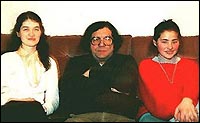
A typical case was a father-daughter team in Brussels, Belgium, who were convicted of multiple counts of murder in 2002. The father, Andras Pandy, brutalized the daughter, Agnes, including raping her since she was 13. Out of fear, she was his accomplice for three years, helping him to kill and get rid of five of the six victims that she knew about until she finally confessed to the police.
Andras Pandy was a Hungarian-born priest, but he had raped his daughter and two stepdaughters. Agnes told authorities about six relatives who were killedPandy’s first two wives and four of his children and step-childrenbut the body parts and sets of teeth pulled from the basement and refrigerators on one of his properties were tested for DNA and proved to belong to other people. In the end, authorities suspected Pandy in the deaths of 13 people, some of them children. According to Agnes some had been shot and others bludgeoned to death with a sledgehammer. She and Pandy hacked the corpses into pieces and wrapped them in plastic. Some were dumped outside the home, while others were immersed in an acidic drain cleaner called Cleanest, which could dissolve meat from bones and then dissolve the bones themselves.
Although Pandy denounced the investigation as a witch-hunt without physical evidence, the prosecutor described him as a man who wanted to be in control of those who knew about his incestuous activities. Mostly that meant killing them. He claimed that the missing relatives were still alive. He was in touch with them “through angels.”

of Andras Pandy (AP)
At the conclusion of his trial in 2002, Andras Pandy was convicted on six counts of first-degree murder and three counts of rape, getting life in prison, while Agnes, 44, got 21 years on five counts for her participation.
Agnes claimed that she was equally a victim. “I had no way out,” she said. “I was completely in his grip.” She was unsparing in her details of Pandy’s brutalization.
Agnes was a submissive person who accommodated a killer for three years and who finally turned on him. While she may not have initiated the crimes, she certainly participated and did nothing on five separate occasions to report her father. She went along.
In fact, numerous teams are formed among those who are related by blood or marriage, cementing an intimacy that fully exploits the relationship.
(AP/Wide World)
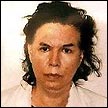
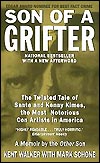
Sante Kimes was a born con artist. She had no sense of boundaries, and even got her children involved in her schemes. She did not hesitate to do whatever it took to get what she wanted for herself. Kent Walker, her oldest son, remembers life with his mother in his book, Son of a Grifter, in which he attempts to make sense of why he rejected her life of crime while his younger half-brother Kenny did not. Sante was simply a charmer; she worked people with skill.
“I’ve met a lot of good liars in my day,” Walker says. “None of them are as good as my mom.”
Grifter
This team of grifters, Sante and Kenny, came to national attention with the 1998 disappearance of a wealthy philanthropist, Irene Silverman, from her Upper East Side mansion in Manhattan. Her husband had died 15 years earlier, and since that time she had taken wealthy tenants into her apartment suites for company. Among them were the Kimeses.
Kenny was 24 at the time, and he presented himself as a polished young man fresh out of college, and quickly ingratiated himself with the elderly widow. He and his mother, 64, then finagled a real estate document with Silverman’s signature on it, but the notary public refused to sign it without Irene present. The Kimses could not produce her and her friends began to wonder where she was.
On July 5, 1998, Silverman, 82, was last seen in her nightgown on the sidewalk of East 65th Street. After that, her whereabouts became a mystery.

(AP/Wide World)
On that same night, Sante and Kenny were arrested for auto theft in Las Vegas. A search of their Lincoln Town Car turned up Silverman’s passport, a pair of handcuffs, several syringes, a Glock 9-mm handgun, stun guns, wigs and papers that indicated that the two had planned a con on the elderly lady so they could take over her $7.7 million dollar townhouse.
In fact, these two had a lengthy rap sheet for numerous crimes, from theft and forgery to insurance fraud. Sante even served prison time for enslaving domestic help, and she was suspected in an arson and the disappearances of two men.
Apparently as Sante and Kenny traveled around, as Sarah van Boven reported in Newsweek, people began to disappear. One man, David Kazdin, in whose name they had taken out a title on a home that they subsequently burned for insurance money, was found dead and stuffed into a dumpster.
In May 2002, even without a body, the jury found that there was nevertheless sufficient evidence to convict this team of first-degree murder. The jury found Sante guilty of 58 different crimes and Kenny of 60. They were given multiple life sentences, with Sante getting 120 years and Kenny 125. The judge called Sante a “sociopath of unremitting malevolence.”
Kent Walker, Sante’s first son and an accomplice in some of her earlier crimes, says that there was no one easier to love and no one easier to hate. She had once used him to escape arrest by punching him hard in the mouth and directing the police against a store clerk who was accusing her of theft. They arrested the clerk, while Sante took Kent to the doctor. When he was arrested at age 12 for theft, he decided to turn his life around. He would not become his mother’s partner, so she eventually turned to his half-brother. “He bought into Mom’s delusions,” Walker said. “She broke his spirit.”

Maria Zone (CTV)
After their New York trial, the Kimses were scheduled to be extradited to California to face charges in another murder, but in the summer of 2001 Kenny took a hostage in the prisonCourt TV correspondent Maria Zoneand held her for four hours to try to force a deal. It didn’t work, and he got eight years in disciplinary confinement. As a way to reduce that time, Kenny admitted that Irene Silverman was indeed dead and that he had wrapped her body in garbage bags and dumped it in a hole at a construction site in New Jersey. He did not know where the site was. The only thing he could say to help was that the building was close to water.
He and his mother were then taken to Los Angeles and indicted by a grand jury for the murder of David Kazdin. A witness came forward to say that he saw Kenny standing by the victim with a gun in his hand. As of this writing, that capital trial is pending, and Sante is expected to act as her own lawyer. Since Kenny is alleged to be the triggerman and since Sante has shown extreme disregard for her children’s welfare in the past, there’s little doubt that she will likely do what she can to save her own skin.
* * * * *
Crime writer Michael Newton estimates that 13% of serial murders involve multiple killers, and more than half of such teams involve only two. In his Enclyclopedia of Serial Killers, he includes many pages in the appendices that list team killers. Male couples are the most common, with male/female couples accounting for about 25%.
Ray and Faye Copeland, 75 and 69 respectively, were married and living together on a farm in rural Chillicothe, Missouri. They often hired drifters looking for work, or took them out of homeless shelters. Ray would involve them in schemes to cheat neighbors out of cattle, and one man who was working with him noticed something odd in October, 1989. In the ground, he discovered an assortment of bones, along with a human skull. Fearing for his life, he left and called in a tip to a television program called “Crimestoppers” that operated out of Nebraska. Since local law enforcement already suspected Ray of cattle fraud, they decided to investigate. They found that the tipster had been Ray’s partner in crime, so when they tracked him down, he admitted to the lesser crime but insisted that something larger was amiss on that property.
The sheriff brought the Copeland couple in for interrogation, and while they were off their property, another type of investigation got underway. On farms that Copeland had leased, the remains of five men were dug upmen that no one had missed so their disappearances had gone unreported. All were shot in the back of the head with a .22 Marlin rifle. That gun was found at the Copeland’s primary farm. In addition, a ledger was discovered that listed the names of transients employed by them, and some of those were ominously marked with a “X.” The prosecutor speculated that these men knew about Ray’s double-dealing and had been eliminated as witnesses against him.
Initially it was thought the murders were solely the work of Ray Copeland. Then Faye wrote a note to her husband, who was being assessed for the possibility of insanity, to “remain cool.” That handwriting matched the handwriting in the ledgers. In addition, Faye had stitched together a patchwork quilt from strips made from the clothing of the men who had been killed. Prosecutors saw this as damning evidence.
Faye was prosecuted for five counts of first-degree murder, found guilty, and sentenced to die. Then Ray was tried, found guilty and also sentenced to die. Before they could execute him, Ray died in prison. Many people fought for Faye’s release, claiming there was no evidence that she was part of any of the murders and plenty that Ray had dominated and battered her, so her sentence was commuted to life without parole.
They were the oldest couple ever condemned to death in the United States.
Other such couples have taken even bolder steps, and contrary to what the media asserted following a sniper spree, these teams are not as “unheard of” as one might think. Let’s look at four all-male couples who operated in similar ways.
Malvo (AP)
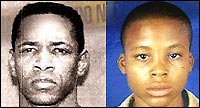
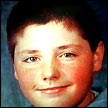
While John Muhammad, 41, and John Lee Malvo, 17, have stirred up much discussion with their multiple-state spree picking off strangers with a high-powered gun, it’s not true, as some crime professionals said, that the like has never been seen before. We have certainly had snipers, we’ve seen black snipers, and even pairs who worked together to terrorize peopleeven another pair of black males. We’ve also seen children team up to become murdering snipers.
(AP/Wide World)
In his book Killer Kids, crime writer Michael Newton describes Jonesboro, Arkansas, boys Andrew Golden, 11, and Mitchell Johnson, 13, as “gun buddies.” On March 24, 1998, in the middle of the day, they dressed in camouflage fatigues, set off a fire alarm in Westside Middle School and as teachers and children streamed out of the building, they lay on the ground with their rifles and took aim. They pumped out 23 shots, wounding 15 people and killing five. All but one was female. One of the surviving wounded was a girl who had rejected Andrew’s advances.
The boys then ran to a van that they had stocked with more guns and ammunition, but the police apprehended them before they could do any more harm. It turned out that they had stolen three rifles and 10 pistols from relatives, and had stacked up quite a large quantity of ammunition. They also stole the van (neither had a driver’s license). The whole thing was carefully planned and one of the boys had even waited in the woods all morning while the other bided his time until just after noon before pulling the alarm.
Earlier, Johnson had telegraphed his intent by telling classmates that he “had a lot of killing to do.” Yet neither boy could give a reason why he had fired on these innocent people. They had been given guns at an early age and taught how to use them properly, and both boys liked violent videogames and paramilitary fantasies. Together, they proved to be a deadly combination.
* * * * *
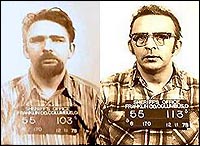
In February 1978, three people were shot in their home in Columbus, Ohio, with a .22 rifle. The victims were shot multiple times. The same gun was implicated through ballistics tests in four more shootings (including victims’ pets), and then the police matched it to a bullet found in two female murder victims in Newark, Ohio, the year before. They were shot while leaving work and were left to freeze in a snow bank. One more man was shot before Gary Lewingdon was arrested for credit card fraud. He had items that belonged to the last victim. Under interrogation, he admitted his part in the killings, but claimed that his brother Thaddeus was in on them, too, and was the one who led the duo.
Thaddeus was arrested and he made a full confession, although he indicated that it was Gary who wanted to continue. Both were convicted of multiple counts of first-degree murder and given multiple life sentences, and Gary eventually became psychotic. While Thaddeus died in prison from cancer, Gary attempted to escape from the forensic hospital where he was held, but he was recaptured. Denied parole in 1998, he remains incarcerated.
* * * * *
In the early 1970s, two black men, Erskine Burrows and Larry Tacklyn, used a .22 revolver to kill several high-ranking officials On September 9, 1972, they shot police commissioner George Duckett after luring him to the back door of his own home. They also wounded his daughter, who ran to help him.
Scotland Yard came in to investigate but was unable to identify the killer.
The next incident was a double murder of even greater proportions. On March 10, 1973, the island’s governor, Sir Richard Sharples, and his captain, Hugh Sayers, were shot while they were on the terrace of Government House. Sir Richard’s dog was also shot and killed. Two black men were seen running from the area.
Again, Scotland Yard’s investigator got nowhere.
Another double murder occurred on April 6, but this time the victims were shopkeepers. Mark Doe and Victor Rego were bound in their supermarket and shot with a .32 revolver, although some .22 bullets found at the scene linked them with the previous shootings. Two black men were seen leaving this scene, and a witness knew one of them: Larry Tacklyn.
Police arrested him but failed to apprehend his partner, who went on to rob the Bank of Bermuda of $28,000. Shortly thereafter, Erskine Burrows, identified as the bank robber, was arrested, and now officials had this killing team in custody. It was thought that Burrows had acted alone in the first killing, but that Tacklyn had been part of the other four. At trial, Burrows was found guilty on all charges, but Tacklyn was only convicted of the shopkeeper murders. Both received the death sentence and both were hanged.
* * * * *
As for Muhammad and Malvo, the extent of their crimes is still being determined. Their spree came to national attention on October 2, 2002, around Rockville, Maryland, and from there it spread to Washington, DC, Fredericksburg, VA, and other places in the general tri-state area. Thirteen people were shot at random with a Bushmaster .223 caliber semi-automatic rifle, and 10 of them died. One was a boy critically wounded in a school yard, another an analyst for the FBI, who died.
The twosome terrorized the area for three weeks and demanded $10 million before being found sleeping in their car along I-95 on the night of October 24. They had left notes and made phone calls that eventually were traced to them via associations in Washington state. Ballistics linked them to all 13 shootings, but it didn’t stop there. The men were also tied to six other shootings, three of them fatal, in other states, and two more shootings are still under investigation at this writing.
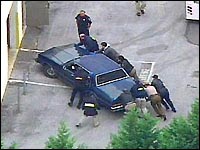
After a seven-hour interrogation, Malvo admitted to being the triggerman in some of the shootings, making him eligible to be tried as an adult on capital murder charges. He said the shootings were organized and planned, with one of them serving as a lookout and the other the shooter. They used two-way radios to communicate, making sure that conditions were acceptable before moving forward with the plan. They watched news coverage carefully and moved around to create fear and confusion. Their 1990 Chevy Caprice was also rigged to be able to shoot from inside.
The case has already stretched out farther than investigators originally imagined, so many leads are still being followed up. To this date, Muhammad has offered no information as to his motives, but his stint in the military, along with the behavior reported by his acquaintances, indicates that he is an angry man with plenty of issues, not the least of which is an affinity with terrorist groups who hate the U.S.
While serial killers are found more often in America than elsewhere, other countries do spawn them, so let’s look at a couple of European team killers who appeared to act out of displaced hatred.
As 2002 opened, a couple who met through a heavy metal rock magazine ad were tried in Bochum, Germany for killing a friend in what appeared to be a Satanic ritual. Manuela Ruda, 23, and her husband Daniel, 26, stabbed Frank Haagen 66 times, beat him with hammers, drank his blood, and left his decomposing body next to the coffin in which Manuela liked to sleep. A scalpel protruded from his stomach and a pentagram was carved onto his chest. They then prepared to continue to act out in this manner against others, because they knew it was what Satan would require of them.

Haagen
They drove around town, awaiting Satan’s next order and armed themselves with a chainsaw, just to be “prepared.” They were arrested at a gas station.
In court, Manuela claimed that she’d gotten a taste for vampirism when she encountered vampire cults in Britain and drank blood at “bite parties.” She delivered her soul to Satan, who had ordered the “sacrifice” in what she described as an aura of light and energy. She and her husband did commit the crime, they both admitted, but they were not responsible. They were merely Satan’s instruments and had to “make sure the victim suffered well.”
Forensic psychiatrist Norbert Leygraf assessed them and said they were severely disturbed and could kill again. He recommended that they be kept in a secure institution.
* * * * *
Verona, Italy is the fictional setting for Shakespeare’s romantic tragedy, Romeo and Juliet. It also hosted a team of killers who played out what America’s Leopold and Loeb might have done had they not been caught after their first murder.

pedia of Serial Killers
Brian Lane and Wilfred Gregg’s The Encyclopedia of Serial Killers, describes Wolfgang Abel and Mario Furlan as school chums, a year apart in age. Both came from privileged backgrounds and both were highly intelligent. They appear to have begun their criminal career in 1977 by burning a man to death in his car. Then they went to Padua, where they knifed a casino employee and a waiter to death. They escalated their brutality by using an axe on a prostitute and a hammer on two priests (one suffered 26 blows) before they returned to their initial MO by burning alive a hitchhiker who was sleeping in Verona’s city center.
But these were all rather traditional compared to what they did next. A homosexual priest became a victim when they hammered a nail into his forehead. Then they attached a wooden cross to a chisel and pushed this into the man’s skull as well.
At almost every scene, starting in 1980, they left notes that explained the reason for the murders. Laura Coricelli, who covered the case for an Italian newspaper, wrote that they sent these pamphlets to newspapers as well, claiming they had murdered three store clerks. Apparently these two viewed themselves as the last surviving Nazis, and their victims were among those who had “betrayed the true God”mostly homosexuals and prostitutes, society’s “inferior people.” The notes were all attributed to “Ludwig.”
Killing individuals apparently failed to satisfy their appetites, so “the Ludwig band” burned down a building in Milan that housed a cinema that showed pornographic films, and six people died inside. Next they set a fire in a discotheque, killing a woman and injuring forty more people. When they tried to commit arson at a more crowded dance hall, the discotheque Melamara di Castiglione of the Stivere, they were caught. Had they not been discovered, they might have killed as many as 400 revelers.
Arrested in March, 1984, they went to trial at the end of 1986. Abel was 27 and Furlan was 26. Furlan’s handwriting was matched to one of the Ludwig notes, although he and Abel both denied having anything to do with the “Ludwig” killings or the hate pamphlets. In Abel’s apartment, they found a book with the name “Ludwig Friar” highlighted in the text. Witnesses had also placed them at the cinema fire and near one of the murdered victims. Twenty-seven charges of murder were leveled against them, but they were found guilty of only 10. Because they were deemed partially insane, primarily because of suicide attempts in prison, both got a sentence of 30 years. However, after serving only three, they were allowed to live in “open custody,” which meant they were moved into a village and required only to report to the police on a regular basis. Essentially they’re free to do mostly what they please and they continue to maintain their innocence.
Sometimes the formation of a team is based in sexual attraction or family ties, but the most dangerous teams are composed of two or more psychopaths who chance to meet and who realize they now have a partner as depraved as they are. With no moral boundaries, they work together to expand their range of criminal creativity and affirm each other in their brutality.
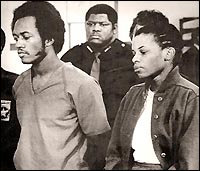
Alton Coleman, 28, and his girlfriend Debra Brown, 21, are a case in point.
After Coleman got out on bail for a charge of raping a 14-year-old girl, he went on the run in 1984 from Waukegan, Illinois, with Brown at his side. This ninth-grade dropout was also suspected in the kidnapping of a missing 9-year-old girl, and a warrant was out for his arrest. Once he was gone, her body was found, raped and strangled.

my of Motive
“Seldom in my career,” wrote former FBI profiler John Douglas in Anatomy of Motive, “have I come across a more depraved individual than Alan Coleman, willing to rape or kill practically anyone or anything that moved and totally unconcerned with the consequences.”
Being on the run did not stop this rapist/killer, however, and he got Brown fully involved. Just over two weeks after they left, a seven-year-old girl was raped and stabbed while her cousin, two years older, was raped and beaten. This girl survived to explain how they had been lured toward a car by a black couple asking for directions.
The next crime occurred in Ohio, when a woman took in a couple who claimed they had no money. That night she and her 10-year-old daughter were strangled. Shortly afterward, a woman kidnapped from Gary, Indiana was found strangled near Detroit. (This sequence of events is a bit different in John Douglas’s book, but the victims are the same.)
Coleman and Brown moved quickly, returning to Ohio, where in Cincinnati, they attacked a couple and stole their car. On the way, they raped and strangled another young girl and shot an elderly man to death, leaving him in a ditch.
Throughout this spree, these two assaulted and stole from people who survived and were able to describe their attackers. They were soon on the FBI’s Ten Most Wanted list. Douglas did a fugitive profile and suspected that Coleman was indulging in a fantasy of sexual domination. “This is what made him feel good and gave him most satisfaction in life,” Douglas declared. He predicted that Coleman would eventually return to the Chicago area, because that was the place with which he was most familiar.
An acquaintance brought this couple’s run to an end by alerting the police in Evanston, Illinois. They had kidnapped, raped, and killed across six states, so they ended up being tried in several places. Coleman even subpoenaed Brown to appear at one of his trials and say that she had killed the victim. She agreed to say what he asked, and Douglas interviewed her in prison and found her to have a slave-like personality, passive and compliant. She appeared not to care what she had done.
They were convicted on many counts and sentenced to death in Ohio. Coleman received four death sentences and Brown two. However, Brown’ sentence in Ohio, where she was detained, was commuted to life.
* * * *
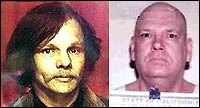
son ID photo
Roy Norris and Lawrence Bittaker met in prison and discovered a common taste for sadistic sexual torture. Once released, they bought a van in Los Angeles, which they dubbed “Murder Mac,” and used it to troll for young female victims. They grabbed Cindy Schaeffer, 16, on June 24, 1979 and repeatedly raped her before strangling her with a coat hanger. The next one got an ice pick through the brain, and following that attack, the men tortured and killed two teenage girls together before dumping their bodies over a cliff. They killed another girl on Halloween and left her on someone’s front lawn.
But one pick-up whom they raped but released turned them in. In custody, Norris confessed and implicated Bittaker as the ringleader. He showed the police where the bodies had been left.
Both men were charged with five counts of murder, along with an assortment of other crimes from rape to conspiracy. Norris got immunity from the death sentence for his testimony against Bittaker. Instead, he was sentenced to 45 years, while Bittaker went on California’s death row to await execution.
* * * * *

David Alan Gore and Fred Waterfield, criminal cousins in Florida, took to hunting down women during the early 1980s for their violent sexual pleasure. Gore served as an auxiliary sheriff’s deputy, which made their “hobby” much easier to pull off. Waterfield offered Gore $1,000 for each pretty girl he could bring back. He used his badge to get girls into his car, taking his first victim off a school bus and driving her home to get her mother, so he would have two. He raped them both, and when Waterfield arrived, he tied up the mother so tight that she choked to death. He then raped the teenager and murdered her, leaving Gore to get rid of the bodies.
Waterfield demanded a blonde and Gore complied by disabling Judith Daley’s car and offering her a ride to a phone. They raped her, killed her, and then dumped her in a swamp for the alligators to feed on.
Their next victims were a pair of female hitchhikers, who were raped and then shot. The spree ended when someone phoned in a report that a naked man was chasing a naked woman, firing a gun. The police arrived at the suspect’s house to find the body of a 17-year-old girl in the trunk of Gore’s car. Gore surrendered and showed the officers to the attic. There they found a 14-year-old girl, still alive, bound to the rafters. She was a friend of the dead girl, and they had been hitchhiking together.
Gore quickly turned on his cousin, describing their criminal history in detail. Waterfield was caught, both of them were convicted of rape and murder, and Gore received a death sentence while Waterfield got two life sentences.
* * * * *
(AP/Wide World)
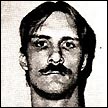
Another team who chanced to meet while drifting aimlessly around the country were Doug Gretzler and William Luther Steelman. Willie was 28 and Doug 22 when they met. Steelman had once been committed to a mental institution, and when he met Gretzler, the stage was set for a spree unlike the Southwest had ever seen before.
It started on October 28, 1973, when the two men entered a house trailer in Mesa, Arizona and shot to death the adolescent couple who lived there. Then they traveled to Tucson and killed a young man, leaving his body in the desert before returning to the city to murder another couple in their apartment. As they left and drove into the desert, they found a man in a sleeping bag and killed him as well. In Phoenix, they grabbed two more young men, stripped and killed them, leaving their bodies in California.
Arizona authorities knew who they were looking for and quickly issued warrants.
On November 6, this spree-killing team hit again, but this time with nine victims all at once. They went to a house where an 18-year-old girl was baby-sitting Walter and Joanne Parkin’s two children. The sitter’s parents had dropped by, along with her brother and fiancé, and then the Parkins came home. The killers shot them all, leaving the Parkin couple in their bed and stuffing the rest of the bodies into a closet. Collectively, these nine people were shot 25 times.
Two days later, the killers were apprehended at a motel. Gretzler cracked, describing the other crimes and where all the bodies were. Convicted in trials in two states, they were sentenced to die in Arizona. Steelman died in prison. Gretzler was executed in 1998.
* * * * *
In Paris, between 1984 and 1987, two men preyed on elderly women. They were known as “the Monster of Monmartre.” Their victims, ranging from 60 to 95 years of age, were often bound and beaten before they were murdered. One was forced to drink bleach. Another woman was stabbed 60 times.
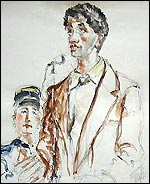
court
The “monster” turned out to be a 21-year-old, bleached-blond, black transvestite, Thierry Paulin, who often invited his 19-year-old lover, Jean-Thierry Mathurin, on his criminal escapades. They would follow elderly women home from the grocery and then jump them as they opened their doors. On his 24th birthday, now separated from Mathurin, Paulin attacked three older women. Two died but one survived to finger him. Upon his arrest, he confessed to 21 murders, naming Mathurin as a frequent accomplice. Mathurin was arrested and charged with nine counts of murder. He refused to even say Paulin’s name, and both went to prison, where Paulin died of complications from AIDS in 1989.
As we’ve seen, teams can fall apart, and not all attempts to solicit team members for a criminal venture turn out well, either.
(Gilmore)
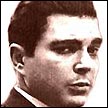
When Charles Schmid, 23, started killing high school girls in Tucson, Arizona, in 1964, he got two people to go along with him. Self-conscious about his short stature, he strutted around in boots stuffed with newspapers and tin cans. He also wore make-up and tried to look like Elvis Presley. People viewed him as an eccentric character, but girls were easily enamored of him.
On the night of May 15, he persuaded John Saunders and Mary Rae French to go with him while he raped and killed Alleen Rowe in the desert. He buried her there in the sand and even bragged about it afterward, but no one reported it.
The following summer, Schmid strangled two girls and buried them out in the desert as well. Having gotten away with it once, he figured he was immune, so he took his buddy Richard Bruns out to see what he had done. This was Schmid’s way of getting compliance while bragging about what he’d done. If someone saw the body and did nothing about it, he was part of the team.
But Richard was distressed by what he had seen and finally went to the police and took them to where the girls’ skeletal remains still lay buried in the sand. A shoe-clad foot sticking out of the sand marking the spot.
Schmid was arrested that November, shortly after his marriage to a 15-year-old girl. Then Saunders and French were arrested, but they turned state’s evidence against Schmid, sealing his fate. He was sentenced to die, but he died instead in prison. For their part in the first murder, Saunders got life and French four to five years.
This is a good case of a psychopath believing too well in his own powers of persuasion, to the point where his discernment fails him. Many a killer has been undermined by someone he or she viewed as an accomplice, who in the end had other plans. Those teams that appear to succeed best are often glued together by common sexual appetites, clandestine activities or fetishes. We’ve seen some examples among male/male and male/female teams. Now let’s look at a few exclusively female team killers.
It was in Walker, Michigan in 1987 where a pair of lesbians made murder into a sexual game. Gwedolyn Gail Graham, 23, and Catherine May Wood, 24, worked together at the Alpine Manor Nursing Home. Graham was a nurse’s aid and Wood was her immediate superior. Wood had divorced her husband and gained an enormous amount of weight, so she was in need of a friend. When she met Graham, they immediately hit it off and it wasn’t long before they became lovers.
It was Graham who first broached the subject of murder. They practiced sexual asphyxia to achieve greater orgasms, so Wood later claimed she thought Graham was kidding. Yet the linked pain and pleasure of their sexual games became threaded with the idea of cruelty. Just talking about murder got them both sexually excited.
They started killing patients in January and continued for three months, picking victims whose initials, taken all together, would spell out the word, “murder.” Graham dubbed this “the Murder Game.” Posting Wood as sentry, she started with several elderly women, but they struggled so hard she had to back off. Oddly enough, none of them registered a complaint, and in fact, most of the patients liked these two women. In many respects, they appeared to be good at their jobs.
Then Graham went into the room of a woman suffering from Alzheimer’s disease whom she knew would be unable to fight her off. Using a washcloth over the woman’s face, she smothered her to death. In the weeks that followed, Graham moved on to another, and then another. There were times when the act of killing so excited her that when she was done, she and Wood went to an unoccupied room for a quick sexual encounter. Graham even took items off the victimsjewelry or denturesto help her to relive what she had just done, and she found enormous emotional release in killing.
In a morbid postscript, these women washed the bodies down as part of the postmortem routine, and handling the people they had just killed excited them even further. They simply could not stop.
Then they got bolder. They told colleagues what they were doing, because even the confessions added to their heightened sexual drive, but their accounts were dismissed as sick jokes. Graham showed three aides her shelf of souvenirs, and still, astonishingly, no one stopped them.
Then Graham pressured Wood to take a more active role. To prove her love, she would have to kill one of the patients herself. Wood wasn’t ready for this, so she worked behind the scenes to get herself transferred to another shift.
This angered Graham, who then took up with another woman and eventually left Michigan to go work at a hospital in Texas taking care of infants. A terrified Wood confessed everything to her former husband, who called the police.
Of the 40 patients who had died in that three-month period, eight seemed suspicious enough for further investigation. Then investigators settled on five, and arrested both women. Wood turned state’s witness against her former lover for a sentence of 20 to 40 years. She told them she’d come forward because of Graham’s admission to her that she wanted to “take one of the babies and smash it up against a window.”
Graham was convicted on five counts of first-degree murder and one count of conspiracy to commit murder (although Wood had claimed that she’d tried to smother five more patients.) She got six life sentences, with no possibility of parole.
* * * * *
Another team of female killers in a medical context were a pair of midwives who stimulated the imaginations of a village full of women, many of whom then acted out against husbands and children. The so-called “angel-makers of Nagyrev,” which is a farming village in Hungary are believed responsible for the deaths of an estimated 300 people over a span of 15 years.
It all started during World War I, when midwife Julius Fazekas took care of people’s medical needs. Her cohort in crime, reputed to be a witch, was Susanna Olah, a.k.a., “Auntie Susi.”
Most of the village’s men had gone to war in 1914, but the women had access to the Allied prisoners of war in camps outside town. When spouses returned, many of the wives were unhappy. They’d gotten used to their sexual freedom. Rumors of their unrest got back to the midwives, so they began to show the women a way to be rid of their unwanted burdens. They boiled arsenic off strips of flypaper, dispensing poison to whomever wanted it. By some estimates, around 50 poisoners went into action and because of the high death rate, the area eventually became known as “The Murder District.”
Eventually they were stopped and the midwives arrested, along with 36 other women, with more to follow, and 26 actually went to trial. Eight received the death sentence, seven got life, and the others spent some time in jail. Among those who died was “Auntie Susi,” because it was she who had distributed the poison. One account says that Fazekas was one of those hanged, but another describes her suicide by poison in her own home, surrounded by pots of boiled flypaper. At any rate, the woman who’d come in to offer her “medical” services had inspired a shocking murder spree, and the final tally will never be known.
The same may be said of the next couple, who persuaded people to die as sacrifices to their religion.

Villareal
Adolfo de Jesus Constanzo was the High Priest and Sara Maria Aldrete his High Priestess. What they were doing was uncovered after a 21-year-old college student, Mark Kilroy, turned up missing. A student at the University of Texas, he went with three classmates to Matamoros, Mexico, just over the border. It was March 1987, and they went from bar to bar, as students on spring break will do. But Mark disappeared.
His family instigated a search, which failed to turn up anything until they got a tip about a drug raid on a remote homestead called Rancho Santa Elena. Apparently a blond man from the states was seen bound and gagged in a van at the ranch. A search turned up an altar of some kind in a shed, along with bloodstains, human hair and something else organic that was later identified as part of a human brain. A severed goat’s head indicated that the people who lived here were involved in a religious cult, which turned out to be a Satanic form of Santeria. In this religion, human sacrifice was performed to protect them from police attacks, and Mark Kilroy had been among them. His headless torso was discovered in a mass grave containing the decapitated and mutilated bodies of 14 other men and boys.
All of these people had been killed on the orders of the cult leaders, Constanzo and Aldrete, who had fled before the raid. They had insisted that prior to any major drug deal, they needed the heart and brain of a human victim to boil and consume. Many hapless victims had served that purpose.
The two elders were traced to Mexico City in 1989, but police were too late to grab Constanzo. He had ordered his cult members to shoot him while he was locked in an embrace with his homosexual lover, and they had obeyed. Aldrete fled the apartment but was caught. She denied having any part in the human sacrifices, but she was indicted, along with other surviving members of the cult.
In the end, she got six years for her association in the crimes, and in another trial was convicted of multiple murders. For that, she got a sentence of 62 years. Her four accomplices from the ranch got 67 years a piece.
It was believed that Constanzo had long practiced his black magic openly, taking two dozen sacrifices around Mexico City during one year. When he demanded full partnership in a powerful drug family and was rejected, all seven high-ranking members turned up dead, with evidence of pre-mortem torture. He was not one to be trifled with, believing he had supernatural powers, but in the end, his mistakes ended his long string of murders.
* * * * *
It’s likely that killers will continue to team up, using a partner to affirm a plan or to assist with some devious activity that requires more than one person to accomplish. Criminologists would do well to study this dynamic in more depth than has yet been done, so as to try to understand how such teams develop and operate. The “compliant accomplice” theory goes only so far. Much more needs to be done in this area.
Alvarez, Alex & Ronet Bachman, Murder American Style. Belmont, CA: Wadsworth, 2003.
Boven, Sarah van. “A Mystery in Manhattan,” Newsweek, July 20, 1998.
Casert, Ralph. “Jurors Decide on Serial Killers Fate,” Associated Press, March 6, 2002.
Coricelli, Laura. “Fire Walk with Me,” Grandinotizie, March 2001 (translated from Italian.)
Davis, Carol Anne. Women Who Kill: Profiles of Female Serial Killers. London: Allison and Busby, 2001.
Douglas, John. Anatomy of Motive. New York: Scribner, 1999.
Hickey, Eric. Serial Murderers and Their Victims. 3rd Ed. Belmont, CA: Wadsworth, 2001.
Jones, Ann. Women Who Kill. Boston, MA: Beacon Press, 1996.
Jones, Richard Glyn, ed. The Mammoth Book of Women Who Kill. New York: Carroll & Graf, 2002.
Kelleher, Michael D. and C. L. Kelleher. Murder Most Rare. New York: Dell, 1998.
Lane, Brian and Wilfred Gregg. The Encyclopedia of Serial Killers. New York: Berkley, 1995.
Lester, D. Serial killers: The Insatiable Passion. Philadelphia, PA: Charles Press, 1995.
Manners, Terry. Deadlier Than the Male: Stories of Female Serial Killers. London: Pan Books, 1995.
Newton, Michael. The Encyclopedia of Serial Killers. New York: Checkmark Books, 2002.
Newton, Michael. Killer Kids. Port Townsend, WA: Loompanics, 2000.
Newton, Michael. Wasteland: The Savage Odyssey of Charles Starkweather and Caril Ann Fugate. New York: Pocket, 1998.
Reinhardt, J. M. The Murderous Trail of Charles Starkweather. Springfield, ILL: Charles C. Thomas. Police Science Series.
Sargeant, J. Born Bad: The Story of Charles Starkweather and Caril Ann Fugate. London, England: Creation Books. 1996.
Schecter, Harold. The A to Z Guide to Serial Killers. New York: Pocket, 1996.
Scott, Gini Graham. Homicide: One Hundred Years of Murder in America. Los Angeles, CA: Lowell House, 1998.
“Spree Killer,” American Justice, A&E Network, April 14, 1999.
Walker, Kent, with Mark Schone. Son of a Grifter. NY: Avon, 2001.