
Women Who Kill: Part One — Bad Girls — Crime Library
Most data about violent crime and criminal types has centered on males, and that’s attributed to the idea that males are more aggressive, violent, and criminally versatile than females. However, it may also have something to do with the fact that most of the researchers and criminologists have been male. Traditionally, it’s been more difficult for men to admit to violence in women than to dissect the methods and motives of their own gender. As British philanthropist Lord Astor put it, “Everyone starts out totally dependent on a woman. The idea that she could turn out to be your enemy is terribly frightening.”

Bathory (Dennis
Bathory-Kitsz)
Yet fear and bias should have no place in research. From a review of the literature, it’s clear that we have a long way to go to understand violence in females. “Violence is still universally considered to be the province of the male,” says crime researcher Patricia Pearson. “Violence is masculine. Men are the cause of it, and women and children the ones who suffer. The sole explanation offered up by criminologists for violence committed by women is that it is involuntary.”
Women are often viewed as “soft” and vulnerable: They’re not really equipped for violence and usually end up being accomplices. One male writer even thought it was too cruel to allow a (beautiful) woman who’d killed 20 people in agonizing ways to choke to death on a hangman’s noose. Would he have said the same for a male? That’s doubtful. While it’s true that male murderers far outnumber women, it’s also true that all of our conclusions about violence are based on those who have been caught. Who’s to say how many female killers and violent offenders there really are?
While researchers repeat one another in pointing out how even in violence, women are still the gentler sex, there are times when a female shows more spunk. Instead of poison, she may grab an ax, even a gun. Instead of killing a customer who failed to pay for drugs, she might bear and kill children one at a time. (In fact, women outnumber men in the deaths of children and come equal to them in killing siblings and parents.)
Some females are just as cold-blooded as males, but female psychopathy is an understudied subject. The feeble attempts to assess a female psychopath — psychopaths being the most criminally versatile and most likely to repeat an offense among all violent offenders base conclusions on samples far too small to make any assertions. It’s clear that many interpretations about female violence are framed by social projections about what women are supposed to be like, rather than on what they really are like, and there’s little acknowledgment of how changing social conditions affect personality. During the 1970s, however, after women were “liberated,” there was a surge in violent crime by women. They may not go on a rampage killing, but the lower visibility of their crimes does not discount the lethality of their motives or their viciousness.
Even so, it’s clear that the motives for women show a range as diverse as that of males:
- monetary gain
- ridding themselves of a burden
- revenge
- dislike
- pressure from a gang
- seeking power
- following orders
- delusions
- pleasure
- self-defense
- acting out from a history of abuse
- sexual compulsion
- team chemistry
- psychopathy
- misplaced mercy
- depravity
- rivalry
Murderers and Their
Victims
Of the 62 female serial killers in Eric Hickey’s study for Serial Murderers and Their Victims, they accounted for between 400 and 600 victims. Some were nurses, some black widows, others were part of a team, and a few were predators. Three-fourths of them began their careers since the 1950s. The average age in the group was 30, and the longest period of killing without apprehension was 34 years. Some were grandmothers. In more recent years, females have turned increasingly toward strangers as victims, but they generally choose easy targets among vulnerable populations. They don’t mutilate corpses, which is common to a certain type of male serial killer.
While people are appalled by women who kill their own children, it’s more common than we think. Maternal instinct is sometimes no match for deadened emotions or personal ambition. Similarly, people are shocked when a woman who has professed love for her husband poisons his food or hires someone to kill him, but a woman is just as capable as a man of these crimes. Perhaps we don’t recognize them as quickly, allowing women to get away with serial crimes for longer periods, because we don’t want to. Yet Hickey’s analysis showed that women were involved in serial crimes in some way 38 percent of the time.
In this first part of a series on women and crime, we focus on a few of the more notorious murderers, both historical and contemporary. While there are many more violent women than we can cover, these women represent a range of killers, from greedy to delusional to outright psychopathic. They didn’t kill as part of a team but on their own and for their own reasons — not something a man thought up. Let’s look first at one of the most prolific murderers — including both male and female populations — in the history of our culture.
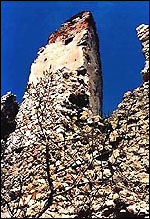
Hungarian Countess Erzebet Bathory is credited as the first person on record to be murderously motivated by blood — and certainly the first woman.
Bathory-Kitsz)
Legend has it, according to historian Raymond T. McNally in Dracula was a Woman, that she slapped a servant girl, got blood on her hand, and believed that it made her skin look younger. To restore her beauty, she then made a practice of bathing in the blood of virgins and having girls lick her dry. By some accounts, she drank the blood herself. Whether or not this part is true, she certainly used her status to bring about murder and mayhem to untold numbers.
Born in 1560, Erzebet grew up experiencing uncontrollable seizures and rages. She might have been epileptic or suffered some other disorder, but whatever the problem was, it appeared to contribute to her aggression. When she was 15, she married a sadistic man, Count Nadasdy, who shared her interest in sorcery and who became known as the “black Hero.” He taught her how to discipline the servants, such as spreading honey over a naked girl and leaving her for the bugs. He also showed Erzebet how to beat them to the edge of their lives, although some accounts describe her lesbian affairs with them as well. She also used them in her diabolical experiments and had a habit of biting them, sometimes to death. It was clear that she favored the dark side and developed a lust for cruelty, mentored by her own childhood nurse, a practitioner of witchcraft.
After Nadasdy died in 1604, Erzebet moved to Vienna. She also stepped up her cruel and arbitrary beatings and was soon torturing and butchering the girls. She sent her maids to lure children and young women to her quarters, so she could satisfy her lust. She might stick pins into sensitive body parts, cut off someone’s fingers, slit her skin with knives, or break her face. In the winter, women were dragged outside, doused with water, and left to freeze to death. In a dungeon, girls were chained to the walls, fattened up, and “milked” for their blood. Sometimes they were set on fire. Even when Erzebet was ill, she didn’t stop. Instead she’d have girls brought to her bed so she could bite them. The villagers could do nothing to stop her, because she had too much power.
When she turned her bloodthirst to young noblewomen, she got caught. After a murder in 1609 that Erzebet tried to stage as a suicide, the authorities decided to investigate. After finding some dead girls in her castle and another nearly drained of blood, they arrested Erzebet. A search of the castle, according to The Mammoth Book of Women Who Kill, produced eight corpses.
Erzebet went through two separate trials, and during the second one, a register was discovered in her home that included in her own handwriting the names of over 650 victims. Accounts of her tortures by witnesses made even the judges blanch, and they could not imagine how a single person had devised so many different types of tortures. Her accomplices were sentenced to torture and death, and Erzebet was imprisoned for life in a small room in her own castle, where she died in 1614. It was afterward that rumors spread about how she’d bathed in the blood of her young victims.
From one predator to another, let’s return to the twentieth century.
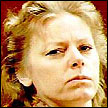
Aileen Wuornos has been called America’s first female serial killer, but that’s not exactly accurate. She wasn’t the first. However, she’s among the few murderous females who seemed to act like a true predator, targeting strangers rather than someone closer to home, and using a gun to murder them.
Wuornos has been the subject of countless books, articles, and movies — even an opera — and while awaiting her execution on death row, she claimed in August 2001 that she wanted it to be done and over with. She had killed people and deserved to die, she stated. “I have hate crawling through my system.” She said that were she released, she would kill again, and that she had robbed and killed her victims in the first degree. However, that hasn’t always been her story.
On a documentary made for A&E’s American Justice, footage of her indicates that her mood changes from one moment to the next, and while she might admit to killing her seven male victims, she claimed during her confession and trial that it was in self-defense. Yet the pattern and the background of some of the victims indicates otherwise.
It started in December 1989 when an abandoned car was found not far from Daytona Beach, Florida, with bloody seats. Papers indicated the car belonged to one Richard Mallory, known to pick up prostitutes, and there was every indication that he’d had a few drinks with a companion. Police speculated that something had gone wrong, and within two weeks, Mallory’s corpse was found in the woods. He’d been shot four times in the chest with a .22 caliber gun and was covered under a rubber-backed rug.
Apparently Wuornos admitted this murder to her female lover, Tyria Moore, because according to Moore, she returned to their cheap motel room that day and said, “I’ve just killed a man.”
While it was her first, it was not necessarily the first one she wanted to kill. According to the story she told to psychologists later, her mother had abandoned her as an infant and her schizophrenic father had been imprisoned for the rape of a seven-year-old. With a murder investigation on, he had hung himself in his cell. Aileen and her brother had been forced to live with her maternal grandparents, and her grandfather was an abusive alcoholic. When a friend of his (she said) impregnated her in Troy, Michigan, when she was only 14, she was forced to have the baby boy and give it up for adoption. Her grandfather then kicked her out of the house, so she turned tricks to survive. Apparently she’d been having sex with boys for several years.
At the age of 17, she hitched out to Denver, and then Florida. Along the way, as she plied her trade, she was beaten and raped several times. Her fear and paranoia about men developed into what might have amounted to oversensitivity to a male approach for sex.
She met Tyria Moore in Florida and acquired a gun. After killing Mallory, who had actually served 10 years in a psychiatric institute for sexual offenses, she waited five months before her next victim. Her defense psychologist believes that Mallory did something to her that triggered the spree.
In May 1991, a truck was found along a Florida highway, registered to David Spears. His naked corpse was discovered about 60 miles away, north of Tampa. He, too, was shot in the chest with a .22. While no fingerprints were found in the car, there was a single strand of blond hair.
Five days later, another male corpse was found, also shot with a .22, whose car was abandoned about sixty miles away.
While police did not realize at this point that they had a serial killer, a strange incident gave them an important break. Two women were seen pulling over in a silver Sunbird and removing the plates. Then they ran into the woods, and those who witnessed this provided details about what they looked like. The car belonged to a missing missionary. Composite sketches were drawn but weren’t distributed until after three more male corpses were found, all shot with a .22.
Since the murders had occurred in five different counties, no links were established until a year into the killing spree, at which point a task force was formed. The composite pictures were publicized and leads came in. Several people identified the pictures as a pair of lesbians, Tyria Moore and “Lee.”
Lee was Aileen Wuornos, who was quickly spotted in a biker bar, The Last Resort. Since she was guilty of a parole violation, police brought her in and then pressured Moore to tell what she knew. They also used a key found in Wuornos’ possession to enter a storage space, where they found items belonging to some of the victims.
Moore admitted that Aileen was a murderer and agreed to get her to talk on tape. It took a while, but finally on January 16, 1991, Aileen went to the police and offered her confession. She had killed seven men. She described how she and Mallory had wrestled before she shot him, and then said, “I just kept shooting him.” After describing what she had done with the men, she said that she had confessed because, “I want to get right with God.”
She also told them where they could find the murder weapon, which she had dumped. On the American Justice documentary, she learned that one of her victims was a missionary, and she professed remorse, but she still insisted that all of her murders had been in self-defense. She’d been hitch-hiking and they’d picked her up and propositioned her. When they got violent, she shot them.

2001 (AP)
The defense psychologist, Elizabeth McMahon, backed her up, explaining that her background had made her paranoid about men. Wuornos claimed that her first victim had tied her to the steering wheel, tortured her, and sodomized her. After she shot him, she covered him with a carpet to protect him from birds.
The prosecutor did not believe her. He thought that she simply went out like a predator, lured men with the possibility of sex, and then killed them for their money and possessions. His star witness was Tyria Moore, who’d known about the murders but had said nothing about rape or self-defense. He hammered Wuornos about her motives.
“I’m the victim as far as I’m concerned!” Wuornos shot back at him. To her mind, everyone was to blame for this situation but her.
The jury members, who weren’t too impressed with this “exit-to-exit” hooker who cleared $200 a day, felt that Wuornos had offered them little reason to feel sorry for her, although in Deadlier Than the Male, Terry Manners claims that she wept into a tissue after admitting to her deeds. Her attorneys embraced and comforted her.
On January 28, 1992, the jury recommended the death penalty. Wuornos pleaded no contest to five other counts of murder, but called the jury members “scumbags of America.” She received the death penalty six times, and when she went to court in 2001 to dismiss her lawyers, the judge told her she was now on the “fast track” to the electric chair. At that time she indicated that the prosecutor had been right all along: she was a cold-blooded killer.
And speaking of cold-blooded, the next serial killer got away with murder for two decades before she was finally stopped, and her targets were those closest to her.
Seven year-old Charlie Cotton had died after a troublesome gastrointestinal illness. As the autopsy progressed, the doctor noticed signs of malnutrition. Yet they were looking for symptoms of poisoning and within the designated inquest time frame, they could offer no definite opinion.
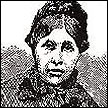
It was 1872, after all, in a poor area of West Auckland, Britain, where children often died from poor health. Even so, Charlie’s stepmother, who’d given birth to many children in four marriages, had lost most of them to the very same thing. In fact, she’d lost her husbands that way, too.
young woman
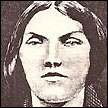
According to Terry Manners in Deadlier Than the Male, even if the surgeons found no proof, the people in the village had their own ideas. Mary Ann Cotton was a killer, a poisoner. She’d once poisoned her neighbor’s pigs. Yet without a verdict of suspicious death, no one could stop her from collecting insurance money on the boy. Being rid of him, and with his own father dead, left her free to marry her village lover. Fortunately for him, she didn’t get that far.
The village surgeon still had his doubts, so he retested the contents of Charlie’s stomach. Evidence of arsenic was clear and he went straight to the police. Mary Ann Cotton was arrested before she made it to the altar a fifth time.
She’d grown up a miner’s daughter, says Bernard O’Donnell in The Mammoth Book of Women Who Kill, and her father died before she was 15. She’d devoted herself to the church and had started a school, but by age 19, she was married to William Mowbray and pregnant. They had five children, one daughter and four sons. The boys all died of “gastric fever.” Then she had two more daughters, but both soon died. Another daughter and a son came along, and the son was dead before he reached his first birthday. Then Mary Ann’s first husband died of a violent bout of gastric fever, and Manners says that she was seen dancing before her mirror in a new dress.
Soon another child died and she had only one left out of eight born to her. Mary Ann became a nurse and married one of the patients, George Ward. However, he failed to regain his strength and proved to be a disappointing husband, so he was dispatched like her first mate. Mary Ann was 33 and had already killed 10 people.
Then she took a position as a housekeeper for a widower named James Robinson, who had five children. He’d just lost his wife and soon his children were dying, starting with his infant son. She comforted him in his loss and became pregnant. This looked like a way to start a better life until her mother fell ill and needed her to return and look after her one remaining daughter. Instead of helping, Mary Ann bought arsenic and killed her mother. She took her nine-year-old daughter with her, but the child was now doomed as well. She died, along with two more of Robinson’s children. They all appeared to have contracted the same painful, writhing condition. Once again, the diagnosis was gastric fever.
Mary Ann had a baby with Robinson, and inside of two weeks, the infant was dead. When Mary Ann nagged her husband to get himself insured, he started to have some suspicions about this woman. Then he found out that she had attempted to insure his life on her own. When he realized she’d bled his accounts and left him in debt, he kicked her out, and inexplicably, she took his youngest daughter with her. She later abandoned the child.
From there Mary Ann led a life of prostitution until she met Frederick Cotton, whose wife had recently died, as had two children, and he was left to care for two young boys. Mary Ann seduced and then got rid of his sister, who had introduced them and who lived in Frederick’s house. Then she got pregnant, but rather than marry Frederick, she went to work for Dr. Heffernan. After he caught her trying to poison him, she left, taking some valuables with her.
Returning to Cotton, and quite pregnant with his child, she married him, although she had never divorced Robinson. In short order, she insured the lives of Cotton’s children, and when another man caught her eye, her husband mysteriously diedcause: gastric fever.
Over the course of 20 years, Mary Ann had managed to kill without accountability and despite the suspicions of her fellow villagers. Doctors didn’t pay much attention to the poor, so it was an easy matter to dispense with those who were in one’s way. Her lover moved in and took over as head of the family, but then Mary Ann spotted another man with greater social standing. Excise officer John Quick-Manning became her lover, which meant her current “burdens” had to go. Cotton’s oldest son and her own baby with Cotton died within a few weeks, as did her live-in loverall of them from terrible convulsions. Now she only had little Charlie leftand an unborn child sired by Quick-Manning.
Because Mary had a special sexual allure, the men who were attracted to her never suspected what she was doing. All they could think about was taking her to bed and claiming her as their own. That was her greatest advantagethat, and her inability to care about anyone but herself. Her last murder was little Charlie, and finally a doctor became sufficiently suspicious to perform a test for the presence of arsenic, and found it.
Orders were drawn up for exhuming the bodies of her three previous victims, and arsenic was found in all of them. Then a background check linked her to the other deaths, all attributed to the same cause.
While people searched for motives, there was nothing common to all the victims, except that they had become obstacles in her way. In those days, not much was known about psychopaths, particularly female ones. No one understood how psychopaths get bored and tend to move on, regardless of the cost to others. What mattered was their own pleasure and stimulation.
Cotton
While under arrest, Mary Ann gave birth to a girl. Then she went to court, where she refused to answer questions. Although she was only tried on the death of Charlie, the other arsenic poisonings were introduced as evidence and there appeared to be no defense. The twelve men of the jury found her guilty of murder. She proclaimed her innocence and then collapsed.
It’s a common saying that hanging is too good for someone who had murdered others in a torturous manner, but in this case, Mary Ann got as good as she gave. The executioner was a careless man, and sometimes had to add some extra attention to finish a job he’d bungled. Terry Manners points out that he might even have had to grab the legs of hanging victim to add extra weight.
On March 24, 1873, it was Mary Ann Cotton’s turn to face him. He placed a hood over her head, added the noose, and then opened the trap door. But her neck did not snap and she struggled and choked for over three full minutes before she finally went still. When her corpse was cut down, her hair was shorn so phrenologists could take a cast of her skull for further study. Her killing career, spanning 20 years, had finally come to an end.
In The Encyclopedia of Serial Killers, Brian Lane and Wilfred Gregg provide a rhyme that immortalized her:
Mary Ann Cotton
She’s dead and she’s rotten
She lies in her bed
With her eyes wide open
Sing, sing, oh what can I sing?
Mary Ann Cotton is tied up with string
Where, where? Up in the air
Sellin’ black puddens a penny a pair.
Spawn
In Savage Spawn, Jonathan Kellerman states that male psychopaths outnumber females eight to one. Yet the voluminous literature on psychopathy focuses primarily on males, so little can really be said on the subject until assessment levels are more comparable. Childhood psychopaths (males) get far more attention than female psychopaths.
Basically, psychopaths exhibit callousness, impulsivity, shallow emotions, superficial charm, and no remorse for what they do. They’re narcissistic and manipulative, and tend to seek stimulating activities like crime. They fail to learn from punishment, so they’re well-represented among repeat offenders. When intelligent, they’re generally persuasive and charismatic, and they can get people do to almost anything. They have no regard for truth, although they can evince complete sincerity, and they’re looking out only for themselves. They generally form no long-range plans and fail to take responsibility for their deeds. Robert D. Hare’s Without Conscience offers a comprehensive description of his work among male psychopaths in prisons.
Conscience
In a study by Nesca, Dalby, and Baskerville, published in 1999, they attempted to profile a female psychopath, and their conclusions about female psychopaths in general are based on this one case. “Ms. X” had murdered her cellmate while serving a four-year sentence for armed robbery, and they felt that she showed many of the classic symptoms of psychopathy.
The authors claim that recent estimates indicate that “severe” psychopathy among women is rare, about one-third of the estimated prevalence for men. Relying on the social history and personality profile of 30-year-old “Ms. X,” the authors found among her symptoms an early onset of antisocial behavior, evidence of sexual aggression, multiple substance abuse, and sexual perversion. She also showed fluctuating levels of reality testing when emotional, but no problem with impulsivityconsidered a central trait of psychopathy.
She had suffered sexual abuse in her family home, was removed at the age of six, and put into foster homes over the next three years. At age nine, she joined a street gang. She had numerous short-term relationships, showed sadomasochistic tendencies, and only completed school through the ninth grade. She acknowledged a history of mutilating animals. Half of her life has been spent in prison, and all of her immediate family members have been incarcerated at some point.
Since she showed more theatrical acting out than narcissism, the authors decided that female psychopaths are more inclined to be paranoid and hysterical than arrogant and egotistical.

Predator: Women
Who Kill
Deborah Schurman-Kaufman undertook a lengthy analysis of what little material there is on female offenders, and found that male and female offenders share a common background of neglect and abuse. In The New Predator: Women Who Kill, she finds only seven women guilty of multiple murder to interviewa sample far too small to draw any conclusions. At best, she can say they shared an introverted family life and sense of isolation. She also indicates that, as with men, killing for females is largely about control and power. Yet much of what she has to say about psychopathy, sadism, murder, and violent aggression is based on studies done with males.
No wonder people assume that what drives women to kill is a mysteryin particular, those women who assume the role of caretakers of the most vulnerable among us. It’s striking that among nurses and midwives, there have been so many killers, but even more striking are those who have motives other than mercy for their deeds.
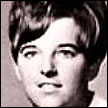
In 1982, Dr. Kathleen Holland opened a pediatrics clinic in Kerville, Texas. She hired a licensed vocational nurse named Genene Ann Jones, who had recently resigned from the Bexar County Medical Center Hospital. Then over the next two months, seven children had seizures. The staff at the hospital where she transported them was suspicious. Holland had no idea what to say, and then one of the children died.
of Genene Jones
However, a bottle of succinylcholine, a powerful muscle relaxant, had turned up missing, and then suddenly Genene Jones located it. Holland dismissed Jones, and was later to learn that the bottle had been filled with saline. In other words, someone had been using this dangerous drug.
It wasn’t the first time Jones had been in trouble.
In February 1983, a grand jury was convened to look into 47 suspicious deaths of children at Bexar County Medical Center Hospital that had occurred over a period of four yearsthe time when she had been a nurse there. A second grand jury organized hearings on the children from Holland’s clinic. The body of Chelsea McClellan was exhumed and her tissues tested; her death appeared to have been caused by an injection of the muscle relaxant.
The grand jury indicted Jones on two counts of murder, and several charges of injury to six other children. Anyone who knew Jones was not altogether surprised. She could be inordinately aggressive, had betrayed friends, and often resorted to lies to manipulate othersa classic psychopath. While she’d wanted children all her life, the two she had she’d left in the care of her adoptive mother.
The first child she picked up in her job at Bexar County Medical had a fatal intestinal condition, and when he died shortly thereafter, she went berserk. She brought a stool into the cubicle where the body lay and sat staring at it.
By 1981, Jones demanded to be put in charge of the sickest patients. That placed her close to those that died most often. She loved the excitement of an emergency, and even seemed to enjoy the grief she experienced when a child didn’t make it. She always wanted to take the corpse to the morgue.
It became clear to everyone that children were dying in this unit from problems that shouldn’t have been fatal. The need for resuscitation suddenly seemed constantbut only when Jones was around. Those in the most critical condition were all under her care. One child had a seizure three days in a row, but only on her shift. “They’re going to start thinking I’m the Death Nurse,” Jones quipped one day.
Then a baby named Jose Antonio Flores, six months old, went into cardiac arrest while in Jones’s care. He was revived, but went into arrest again the next day during her shift and died from bleeding. Tests on the corpse indicated an overdose of a drug called Heparin, an anticoagulant. No one had ordered it.
Then Rolando Santos, being treated for pneumonia, was having seizures, cardiac arrest, and extensive unexplained bleeding. All of his troubles developed or intensified on Jones’s shift. Finally one doctor stepped forward and told the hospital staff that she was killing children. They needed an investigation. Yet the nurses protected her. Since the hospital did not want bad publicity, they accepted whatever the head nurse said.
Another child was sent to the pediatrics unit to recover from open-heart surgery. At first, he progressed well, but on Jones’s shift, he became lethargic. Then his condition deteriorated and he soon died. Jones grabbed a syringe and squirted fluid over the child in the sign of a cross, then repeated it on herself.
Finally, a committee was formed to look into the problem. They decided to replace the LVNs with RNs on the unit, and Jones promptly resigned. To their mind, that took care of the problem.
All it did was let her know she could get away with medical abuse, and she moved on to the Kerrville clinic. Despite the risk of exposure in such a small place to inject children to the point of seizure, she didn’t stop.
Although Dr. Holland was warned in veiled tones not to hire Genene Jones, she viewed Jones as a victim of the male-dominated patriarchy. She had no idea that by teaming up with this woman, she was about to kill her own career, her marriage, and one of her young charges.
At trial, prosecutors presented Jones as having a hero complex: She needed to take the children to the edge of death and then bring them back so that she could be acclaimed their savior. One of her former colleagues reported that she wanted to get more sick children into the intensive care unit. “They’re out there,” she supposedly said. “All you have to do is find them.”
Yet her actions may actually have been inspired by a more mundane motive: She liked the excitement and the attention it brought her. The children couldn’t tell on her; they were at her mercy. So she was free to recreate emergencies over and over.
In a statistical report presented at the second trial, an investigator stated that children were 25% more likely to have a cardiac arrest when Jones was in charge, and 10% more likely to die.
On February 15, 1982, Jones was convicted of murder. Later that year, she was found guilty of injuring another child by injection. The two sentences totaled 159 years, but she’s eligible for parole after 20.
Clearly, Jones made the deliberate effort to kill, but not all female killers are as aggressive. Yet denial can still play a part in the tragedies they cause, as was the case with the next woman, who became quite famous for her unintentional crimes.
Mary: Captive to the
Public Health
Mary Mallon didn’t want to kill anyone, but she couldn’t help herself. Even when she knew what she was doing, she didn’t want to stop. She arrived in America from Ireland in 1883 with the hope of making her life better. She acquired a position as a cook with a wealthy banker, and that family rented a house on Long Island for the summer.
Mary went there to cook, and six people who stayed there came down with a case of typhoid fever, which can be spread through water or food. It can also be fatal.
Investigators on Long Island were unable to find any contaminated source, so a sanitary engineer, George Soper, went in to evaluate the house. He thought the source might be soft clams, but eventually changed his mind and focused on the cook, Mary Mallon. She appeared to be healthy, but that did not eliminate her as a carrier. According to Judith Walzer Leavitt in Typhoid Mary: Captive to the Public Health, Mary became the center of a badly handled investigation.
She had already taken another position, but Soper found her and told her that she was spreading this potentially deadly disease. He demanded urine and blood samples. She refused.
Soper then took an indirect route by researching her employment history, which went through eight separate families. Seven of them had experienced outbreaks of typhoid fever and one person had died. That meant that Mary was a public health hazard and Soper could turn her in, which he did.
New York City’s health inspector was informed about the situation in 1907, so he grabbed Mary and forced her to be tested. It turned out that she did have the typhoid baccilli in her system. She was sent to live in a cottage on North Brother Island in the East River, where she stayed in isolation for three years and gained the moniker, “Typhoid Mary.” The whole time she protested that she was perfectly healthy and ought not to be treated so badly.
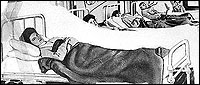
Eventually she was released on the proviso that she refrain from working with food. She agreed to that condition for a while, but then changed her name and returned to cooking, since she could earn better money. However, she chose to work at a hospital, and she soon spread typhoid to more than 20 doctors, nurses, and staff members. Two people died. Mary was officially a serial killer, though she’d never lifted a hand against anyone.
The health department grabbed her again and this time they isolated her for the rest of her life — 23 more years. Yet even from there, she continued in the food industry, as she baked and sold cakes.
What Mary did was more from ignorance than viciousness, though three people died as a result. Still, it’s a far cry from the woman whose aggressive drive ended up in a double murder that got her the electric chair.

It was Karla Fay Tucker’s idea to go out that night. She was a tomboy type, 23 years old, getting high and always trying to prove herself there in the suburbs of Houston, Texas. She liked to fight and she hung out with bikers or Vietnam vets. In 1983, her latest boyfriend, Daniel Garrett, was teaching her combat maneuvers when she got high on speed and urged him to go with her for a ride.
There was this guy, she said, that she disliked. His name was Jerry Lynn Dean, and she wanted to break into his house and take something, like his Harley motorcycle or maybe some parts.
When they entered in the dark, Karla heard Jerry waking up on his futon. She jumped him, scaring him, and that gave her an enormous rush. He started to struggle as she straddled him, so she grabbed a pickax to hold him down, and the more he struggled, the more she was determined to keep him down. She used the ax to put eleven deep stab wounds into his throat and chest, and as he died, she experienced a sexual climax. Then she went after Dean’s girlfriend, Deborah Thornton, but as Gini Graham Scott put it in Homicide, her arms got tired, so her boyfriend had to finish the job.
Later she bragged about this violence to her sister, who was so disgusted she turned Karla and Daniel in to the police.
At the trial, Karla Fay was a puzzle to everyone. She was small and pretty. She’d never been abused, never raped, never been exposed to violent modeling, although she’d been on drugs since she was ten and supposedly had become a prostitute. No one knew where this aggression came from.
In 1984, she was sentenced to death. While in prison, she found God, and even as her death date approached and she asked for clemency, she claimed that she’d accepted what she’d done and she would now accept her fate. Amid nationwide appeals for clemency on her behalf, she was executed in 1998the first woman to be killed by the state of Texas since 1863.
Another axe murder also featured a female as the central suspect, although this woman managed to get off, despite the significant amount of evidence that went against her.
Women Who Kill: Part One
Did She or Didn’t She?
The following story is taken from a dozen books, a documentary, court records from Fall River, MA, newspaper accounts, the Fall River museum, and certain recorded witness statements. All are listed in the bibliography.
photo
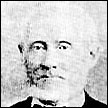
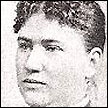
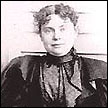
Andrew Borden, 70, was one of the richest men in Fall River, with a net worth estimated at $300,000 to $500,000. He was a white-haired, dour man, known for his thrift. His second wife, Abby, was a stout, goodhearted woman, although she did not get along well with Andrew’s grown daughters, Emma and Lizzie, who lived with them in their small house in Fall River, Massachusetts.
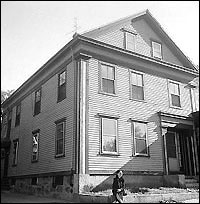
On August 4, 1892, the bodies of Andrew and Abby Borden were found in their home. Abby’s body was on the floor of the upstairs guest bedroom, while Andrew’s corpse lay, half sitting, on the living room couch, his feet still resting in his congress boots. There were blood spots on the floor, on the wall over the sofa, and on the picture hanging over the sofa, but there was no injury other than to his face, which was cut by eleven blows. It appeared that he had been attacked from above as he took a nap.
(CORBIS)
Abbey was hit by a sharp instrument, inflicting upon the back of her head eighteen to twenty blows. She was killed around ninety minutes before Andrew.
Police investigators pieced together the following initial scenario:
It was the family practice to keep all doors on the first floor locked. On that day, Lizzie, the younger daughter who was then in her thirties, came down for breakfast around 8:40-8:45 and sat around reading. She spoke to Bridget about Abby receiving a note from a sick friend, upon whom she had gone out to call. No one knew where Lizzie was between 8:50 and 9:30, when she came to the side door to see what Bridget was doing. Bridget was cleaning windows when she heard Andrew at the front door at around 10:30, so she let him in. She heard someone upstairs laugh in a muffled way.
Lizzie says she went upstairs for five minutes to her room to sew a loop on a dress. She then went down to the kitchen, where she greeted her father. (First she admitted she was on the steps, then changed her story.)
Lizzie told Andrew about the note to Abby. Andrew went up the backstairs to his room and then came back down to the sitting room. Lizzie helped him to get comfortable. He was preparing to take a nap, as he was feeling ill.
Lizzie then claimed to have gone out to the barn at 10:45 to look for some lead, leaving the screen door unlocked in back. She was there for 20 minutes to half an hour.
At about 11:10, Bridget heard Lizzie cry out, “Maggie, come down!”
She asked what the matter was and Lizzie said, “Come down quick! Father’s dead! Somebody has come in and killed him!”
When Bridget came down, she saw Lizzie standing at the back door. Lizzie instead instructed her to fetch the doctor. Bridget ran across the street to their neighbor and family physician, Dr. Seabury Bowen.
In the meantime, a neighbor, Mrs. Adelaide Churchill, called to Lizzie and asked if anything was wrong. Lizzie made some offhanded comments about the heat and then urged her to come over and help, saying that her father had been murdered. Mrs. Churchill inquired after her mother and Lizzie said that Abby Borden, her stepmother, had received a note asking her to respond to someone who was sick. “I don’t know but they’ve killed her, too.”
After the doctor came and covered Andrew, Lizzie then said she had heard her stepmother come in and told Bridget to go upstairs to look for her. Bridget refused, so Mrs. Churchill went up. Before she reached the landing she could see that Abbey was lying in the guestroom.
However, no one made a move to leave the premises, although the murderer must have been on the second floor if Lizzie had indeed heard her mother come in since her father had been killed. No one had passed by them.
In fact, it was odd that Lizzie had remained in the house when she first found her father, since the murder had obviously just been done and the “maniac” could still be there.
In the meantime, Lizzie’s friend, Alice Russell, had arrived. Dr. Bowen had gone to telegraph Lizzie’s older sister Emma, who was visiting friends in Fairhaven.
Alice went with Lizzie to her room. She asked Lizzie why she had been in the barn and Lizzie said she was looking for lead to fix a screen. (This was the only time she gave this purpose.) Then someone else asked her and she said she was looking for fishing sinkers. Lizzie asked for an undertaker, so Alice went down to talk to Dr. Bowen. When she came back up, she saw Lizzie coming out of Emma’s room, wearing a pink and white wrapper, whereas she had been wearing a light blue dress with dark sprigs. Later she saw a bundle in Emma’s closet. A police officer searching there pressed it but did not open it.
Inspector Medley went to the barn and determined that the thick dust in the loft had not been disturbed. It was impossible to breathe in the heat. He placed his hand on the floor and formed an impression, but the coating on the loft floor was free of any other marks or footprints. Officer Harrington went up shortly afterward and made the same observation.
Police searched the premises and found two axes and two hatchets, and a hatchet head with part of a freshly broken handle still in the eye. The hatchet head was dusted with ashes on both sides and lay in a box a few feet from a pile of ashes.
It was also determined that the evening before, members of the family had been ill, with Abby complaining to Dr. Bowen of being poisoned.
No footprints were found around the house on the grass, and the cellar door was locked, as was the front door.
As investigators searched, Lizzie went to her room and would not let anyone in, and did so only under orders. Officer Harrington later remarked on the fact that Lizzie seemed calm, with no stated interest in catching the killer. He had the impression she knew more than she was saying. She showed no sorrow or grief.
Harrington then went down to the kitchen where he saw Dr. Bowen with some scraps of paper in his hand, on which there was some writing. Bowen said, “It’s nothing. It is something about my daughter, I think, going through somewhere.” Harrington recalled that it was addressed to “Emma.” Bowen then took the lid off the kitchen stove and tossed the scraps inside. Harrington noticed a cylindrical object in the ashes, about a foot long and two inches in diameter. He thought it might have been paper scrolled up.
Dr. Albert Dedrick spotted a basin in the wash stand that had water stained in blood. He was told that perhaps some of the doctors had washed their hands there.
Officer Medley noticed a pail of water in the wash cellar that had small towels that seemed to have been covered in blood. He asked Lizzie and she said she had explained it all to Dr. Bowen, who assured Medley it was all right (indicating these were menstrual rags, but no one checked for sure. Men were squeamish in those days about female privacy.) Lizzie said the pail had been there three or four days, although Bridget claimed she had not seen it before that day. It could not have been there two days before or she would have seen it when she did the washing.
Nothing was found in the yard to indicate that a killer had passed through. When questioned, neighbors who were out at the time saw no one suspicious.
On the night of the murders, police officer Joseph Hyde was guarding the door and saw Lizzie and Alice Russell go down to the cellar with a slop pail. Alice carried a lamp. Alice stopped short of entering the washroom, where the clothing of the murder victims was stored. Lizzie went in and rinsed out the pail. Then Lizzie came down alone a second time, about 15 minutes later. The officer saw her put something into the cupboard under the sink, but he could not see clearly what she was doing.
There were numerous suspects, ranging from Emma to an illegitimate son of Andrew Borden’s to a disgruntled customer to a maniac off the streets. Yet Lizzie was arrested and imprisoned until her trial. Alice made things more difficult for her by admitting that she’d seen Lizzie burn a dress right after the murders.
Nevertheless, Lizzie was acquitted, and many believe it was because 1) she was wealthy and it was a political hot potato to send a well-bred woman to the gallows, and 2) much of the important evidence was not admitted into the trial.
Evidence that indicates that Lizzie was implicated includes:
- There was blood on the sole of one of Lizzie’s shoes.
- There was a small spot of blood on one of her underskirts, one-sixteenth of an inch in diameter and more extensive on the outside than in. It was consistent with human blood, which Lizzie explained as being due to a flea bite.
- The dress received into evidence on August 6th as the one Lizzie wore on the morning of the murder was not positively identified by those who saw her, and several even claimed it was not the dress.
- A few days before the incident, Lizzie accompanied Emma to New Bedford, apparently leaving home after a family disagreement over a suspected property transfer to Abby. Then Lizzie turned back, but instead of going home, she spent four nights at a rooming house, returning home on August 2nd. Andrew and Abby were then complaining of stomach disorders. Abby had confided to Dr. Bowen that she thought they were being poisoned, with the implication that it was by Lizzie.
- On August 3, Lizzie went to a drug store and asked to purchase prussic acid to rid a sealskin cape of bugs. The druggist refused to sell it without a prescription.
- That night, she visited Alice Russell and remarked on a strong sense of foreboding that someone was trying to harm her father, and she mentioned a man who had argued with her father recently about property.
- She lied to police about the bucketful of bloody rags in the basement.
- On Sunday morning after the murders, Alice observed Lizzie burning a dress in the kitchen stove.
- Alice apparently told a neighbor that there were places the police should have searched, but did not. There were things they might have found.
- Hannah Reagan, a policewoman, overheard an argument between Emma and Lizzie in which Lizzie accused Emma of giving her away.
- When Andrew came in that morning, Bridget heard a muted laugh from the landing. She assumed it was Lizzie, and if so, Lizzie must have seen Abby’s body.
- There was no blood found in closets where the intruder must have hidden, or on stairs or any room through which he needed to pass.
- She said she’d been in the barn, but there was no dust on her dress or hands
- The note to Abby was never found and no one came forward to say they had sent it
One significant mystery that stumps many scholars is the lack of blood on Lizzie’s person or clothing. While she may have cleaned up after Abby, she did not have sufficient time after Andrew before she called Bridget. However, the fact that Andrew’s coat was found rolled under his head was suspicious, since he’d never have treated it that way. It’s speculated that Lizzie pulled it on over her dress, killed him, and then wrapped the coat and placed it under his head. Already blood-soaked, it would have appeared the blood was from his wounds. Blood on her face might have been wiped with rags and tossed into a bucket of “menstrual rags.”
Oddly, the prosecutor received a package from Lizzie after the trial containing the official photographsincluding the crime scenewith a note to the effect that she thought he might like them “as souvenirs of an interesting occasion.”
Appleton, Arthur. Mary Ann Cotton: Her Story and Trial. London: Michael Joseph, LTD, 1973.
Alt, Betty and Sandra Wells. Wicked Women. Boulder, CO: Paladin Press, 2000.
Brown, Arnold R. Lizzie Borden: The Legend, The Truth, The Final Chapter. NY: Dell, 1992.
Davis, Carol Anne. Women Who Kill: Profiles of Female Serial Killers. London: Allison and Busby, 2001.
“Death Row Prostitute,” American Justice, A&E. 1999.
Elkind, Peter. The Death Shift: The True Story of Nurse Genene Jones and the Texas Baby Murders. New York: Viking, 1983.
Geary, Rick. The Borden Tragedy, NY: Nantier, Beall, Minoustchine, 1997.
Hare, Robert L. Without Conscience}. New York: Pocket, 1993.
Hickey, Eric. Serial Murderers and Their Victims. 2nd Ed. Belmont, CA: Wadsworth, 1997.
Jones, Ann. Women Who Kill. Boston, MA: Beacon Press, 1996.
Jones, Richard Glyn, ed. The Mammoth Book of Women Who Kill. New York: Carroll & Graf, 2002.
Kelleher, Michael D. and C. L. Kelleher. Murder Most Rare. New York: Dell, 1998.
Kellerman, Jonathan. Savage Spawn. New York: Random House, 1999.
Kent, David. Forty Whacks. Dublin, NH: Yankee Books, 1992.
Kent, David, editor. The Lizzie Borden Sourcebook. Boston: Branden Publishing Co., 1992.
Lane, Brian and Wilfred Gregg. The Encyclopedia of Serial Killers. New York: Berkley, 1995.
Lizzie Borden, “Real Life,” NBC, Aug. 23, 1996, American Justice.
Manners, Terry. Deadlier Than the Male: Stories of Female Serial Killers. London: Pan Books, 1995.
Martins, Michael & Dennis A. Binette, eds. The Commonwealth of Massachusetts vs. Lizzie A. Borden: The Knowlton Papers, 1892-1893. Fall River, MA: Fall River Historical Society, 1994.
Nesca, M., Dalby, J. T., & Baskerville, S. “Psychosocial profile of a female psychopath.” American Journal of Forensic Psychology, 17, 63-77, 1999.
Ochs, Ridgely. “Dinner with Typhoid Mary,” lihistory.com.
Porter, Edwin H. 1893. The Fall River Tragedy. J.D. Munroe, Fall River. Reprinted by Robert Flynn, King Philip Publications, Portland, Me., 1985.
Pearson, Edmund. The Trial Book of Lizzie Borden. Doubleday, 1937
Pearson, Patricia. When She was Bad. New York: Penguin, 1997.
Rebello, Leonard. Lizzie Borden, Past and Present, self-published, 1999.
Ryckebusch, Jules R., ed. Proceedings, Lizzie Borden Conference. Fall River, MA: Bristol Community College. Portland, ME: King Philip Publishing Co., 1993.
Schneider, Mike, “Female Serial Killer Seeks Execution,” The Associated Press, August 20, 2001.
Schurman-Kaufman, Deborah. The New Predator: Women Who Kill. New York: Algora, 2000.
Scott, Gini Graham. Homicide: One Hundred Years of Murder in America. Los Angeles, CA: Lowell House, 1998.
Spiering, Frank. 1984. Lizzie. New York: Random House. Paperback reprint, 1985. Pinnacle Books.
Witness Statements, published by the Lizzie Borden B&B Museum, Fall River, MA.