
David Koresh and the Waco Incident — Both Sides Prepare — Crime Library
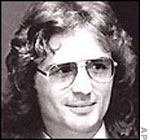
A number of people, both witnesses and historians, have tried to accurately document the facts of what happened on February 28th, 1993 in Waco, Texas in the clash between law enforcement and a religious group known as the Branch Davidians. No one seems able to write about those events in an unbiased manner, since it seems that the whole thing was preventable. fEven the academics appear to have a cause, so it’s difficult at times to piece together what actually happened and who was to blame. Was Koresh a manipulative psychopath who exploited an opportunity, as many FBI agents claim, or was he just a deluded religious leader whose private play was suddenly exposed on the world’s stage? Perhaps we’ll never know.
Hostage negotiator Christopher Whitcomb, writing in Cold Zero, and true crime writer Clifford Linedecker in Massacre at Waco, Texas both present a chronology of the facts on that momentous Sunday morning.
Somewhere between 70 and 76 armed agents from the Bureau of Alcohol, Tobacco, and Firearms (ATF) prepared to move on a group of wooden buildings outside the central Texas town of Waco. Known as the Mount Carmel Center, the place was occupied by members of an apocalyptic religious group that was led by a man named David Koresh. Rumored to be stockpiled inside was an arsenal of explosives and weapons, some of which reportedly had been illegally converted to rapid-fire automatic.
That put them under the ATF’s jurisdiction. A UPS driver had tipped off the government when a package bound for Mount Carmel had broken open to reveal casings for hand grenades. While the group did earn money from gun sales and were legally allowed to trade in arms, it appeared that they weren’t following protocol. Some neighbors also reported a lot of target practice.
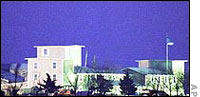
before the fire
But there was more, too, which came out in the days ahead. Linedecker claims that the local newspaper was running a series of articles about Koresh’s dubious activities, entitled “The Sinful Messiah,” based on accounts by defectors like Marc Breault, who later authored Inside the Cult. Breault had hired detectives to snoop around and when contacted by the ATF, he supplied a number of detailed descriptions of his former associates. He denounced Koresh, speaking of child abuse and polygamy.
Thanks to some of these leads, the ATF set up several agents to act as college students interested in Koresh’s teachings. They moved into a house nearby and came over to visit. Catherine Wessinger, a religious scholar at Loyola University who penned How the Millennium Comes Violently, claims that they never fooled the Davidians.
Then that February 28th morning, a reporter asked for directions from a person who was connected to the Davidians, and that person alerted Koresh. At the time, one of the ATF agents was at Mount Carmel, and he left in a hurry. That behavior alerted Koresh, who was already aware that people had been asking questions about him. The agent who left called the ATF commander to let him know that the Davidians were aware of their approach. There was no more secrecy.
In fact, there never really had been. Since reporters either accompanied the agents or arrived before them at the target area, clearly they’d been alerted. Linedecker, writing from the ATF’s point of view, said that it seemed early enough in the day to the commanders that surprise was still on their side. Besides, it was Sunday and the guns were supposedly locked up for the day of prayer. So the agents got into a convoy and drove out to the barren grounds to serve their warrants and seize any illegal items. A Blackhawk helicopter from the Texas National Guard accompanied them, along with two others belonging to the ATF.
Everyone was aware of the potential risk. Koresh’s paranoia about the government as the agent of Satan didn’t help matters, because the ATF’s advance only proved the truth of his prophecies: they would be attacked by the Babylonians. Even so, no one anticipated what actually happened.
The agents hoped that this incident could be settled quickly. At nearly 10 o’clock, as three teams formed to enter the building, an agent went to the compound’s front door and knocked. “The first entry team was to be inside the front door within seven seconds after the convoy pulled up to the compound,” says Linedecker. “All the assault teams would be deployed within thirteen seconds.” They’d been preparing for this for eight months, and each team had an assignment—protect the children, neutralize the military force, and seize the arms.
Koresh looked out from behind a steel door and learned that the agents had a search warrant. Instead of letting them in, he slammed the door and then someone started shooting. It’s not clear from which side the first bullets came, but both sides commenced a fierce gun battle. Wessinger says that survivors of the skirmish and the subsequent standoff claimed that bullets came in through the ceiling, which meant that agents in the helicopters were firing into the compound. The ATF, in several hearings afterward, say no one in the choppers fired a single shot. By some reports, agents were shooting the dogs to get them out of the way and that’s what started the deadly crossfire between the two groups. Women from inside who survived claimed they’d placed their bodies over the children to protect them from the rain of bullets.
Several agents were hit right away, and multiple shots came at the hovering choppers. One member of a team that penetrated the building was shot in the head and killed. Several who had climbed to the roof rolled off when hit. From noises inside, said agents in later hearings, it was clear that the cult had some heavy artillery. Bullets even pierced the reporters’ cars and then concussion grenades, known as “flash-bangs” exploded among the agents. Koresh and his crew appeared to have superior weapons. They also had the advantage of cover, while the agents were out in the open.
Nevertheless, women were screaming inside and men were yelling. ATF bullets pierced the front door, behind which Koresh had been standing. Several people had been hit, including cultists firing from the tower, and four were wounded while five were dead. Whoever had started it, both sides knew they would have to fight hard for survival.
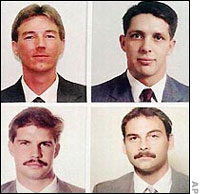
The intense skirmish continued for around two hours before a truce was called, allowing the ATF to remove their dead and wounded. It turned out that 20 agents had been hit, but emergency facilities were 20 minutes away. The wounded were transported, but too late for four men, who’d sustained mortal wounds. (Wessinger claims the count was 20 wounded and four dead, but FBI records indicate that 16 were wounded and four were dead.)
While the ATF waited through a tense afternoon, they arranged to make some statements over a local radio station, in the hope Koresh was listening, to let him know there would be no new attacks. Yet around 5:00 when three cultists walking outside the compound to return there from work encountered ATF agents, the shooting resumed. Agents killed one and captured one of the trio, while one got away, and officials then broadcast a request to Koresh to give up without a fight. His response was a scripture reading.
Wessinger interprets his behavior within her analysis of end-times religious groups by pointing out that his “ultimate concern” was to “obey God’s will, as revealed in the Bible, in order to be included in the millennial kingdom.” They had believed that day to be imminent and had armed themselves for its eventuality. Inside the buildings were over 100 people who believed in Koresh’s divine gifts and his ability to dictate to them what God wished for them. Several apostates who were advising the ATF indicated that a siege could very well trigger a mass suicide like Jonestown. Nevertheless, ATF director Steven Higgens, as reported by Wessinger, had insisted two days before that a show of force against this group was necessary.
Koresh quickly contacted the media and participated in several live interviews with CNN about how the ATF had endangered his flock. He emphasized the number of children who lived in the compound and said that he’d been shot and was bleeding badly. He expected to die. (In fact, as Wessinger indicates, he probably interpreted this as another fulfillment of the prophecy of the lamb being mortally wounded.)
By that time, the ATF was reinforced, along with local police officers, Texas Rangers, members of the FBI’s Hostage Rescue Team (HRT), the FBI’s Special Agent in Charge (SAC) from the San Antonio office, a bomb squad, and several U.S. Marshals. The media, too, began to pour in. Koresh released four children ranging in age from three to six, and everyone settled in for a long night.
Former Davidian Marc Breault provides a long history of the development of the Branch Davidians as an offshoot from the Seventh Day Adventist Church. He also details how Koresh rose to power and eventually took over. In the beginning, his name was Vernon J. Howell and he was a high school dropout with the gift of the gab.
The Seventh Day Adventists advocated purity of the body as the temple in which the Holy Spirit resides, so their habits of eating and drinking were strict. They believed the final battle between good and evil could happen at any time, and when it did, and only a select number would witness the return of Jesus Christ and be saved. Yet some members wanted regulations to be even stricter, and from the original church several sects formed.
Within this congregation during the early 1930s, Victor T. Houteff preached about the approaching Apocalypse. He was chosen by God to cleanse the church, and when his defiant dogmatism forced him out, he took several followers with him. In 1935, they purchased land outside Waco, calling it the Mount Carmel Center. Then Houteff renamed his sect the Davidian Seventh Day Adventists, and when he died in 1955, his wife Florence succeeded him as leader. She gave a confident prediction for the exact date of the world’s end in 1959, and many frightened converts flocked to Waco.
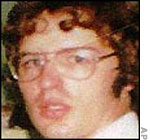
When her prediction proved false, Benjamin Boden then attracted a disillusioned group to himself. He called this group the Branch, which then became the Branch Davidians. When he died, his wife, Lois, became the new prophet, and among the more ambitious members of her group was Vernon J. Howell, who had joined in 1983.
He was easy-going, handsome, and aggressive, with the flamboyance of a rock star. He could take any Bible verse and discuss it endlessly, which made him seem highly intelligent, even gifted—possibly inspired. Lois Boden’s son and heir, George, hated Howell. He intended to be the group’s next leader, no matter how charming Howell might seem. There could only be one Messiah.
As these two faced off, Howell charmed the elderly Lois into taking him as a lover. He claimed it was God’s divine command that they produce a child together, although they failed in this. Eventually the two men gathered their respective supporters, each claiming exclusive access to Biblical revelation. Howell insisted that as God’s “seventh messenger,” it was he who would set off the chain of events that would bring on the Apocalypse. In some ways, he was right, at least for his own flock.
When Lois died in 1986, Boden forced Howell out. Howell left for a while, but then returned for a face off. Boden had dug up the corpse of an elderly woman to challenge Howell to raise her from the dead, so Howell tried to use this incident to get Boden arrested. The sheriff needed proof, so Howell armed himself and took some men to enter Mount Carmel to get photographs. Boden came at them with an Uzi and they shot back. Surprisingly, no one was killed, but Boden quickly went to prison on an unrelated charge and that opened the door for Howell to take over. In a court trial, Boden appeared to be more dangerous—especially when he had the corpse brought into the courtroom to prove his powers. Howell was acquitted of all charges, and he saw this as a sign of God’s protection. Boden left town and was later committed to a mental hospital.
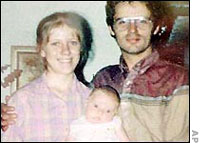
son Cyrus
Now Howell was free to affirm himself as a harbinger out of the Book of Revelations who could interpret the prophecies of the Seven Seals. When inspired one day by the “New Light,” he divided husbands from wives and claimed all the women as his own. He gave each girl a Star of David, which Breault says was a symbol indicative of ownership. “That cheap piece of jewelry signified that a female belonged to the exalted House of David and was destined to become a Handmaiden to the Lord”—the “lord” in this case being Howell.
It was important, Howell said, that as God he had to spread his seed and create a divine army. Then he dubbed his male followers Mighty Men—the guards of King Solomon’s bed—and they were to be his primary soldiers. It was estimated that he’d claimed at least 15 girls and women for his harem, some as young as 12.
In 1990, Howell changed his name to David Koresh to bring together the concept that he was an heir to King David and that his name meant death. He dictated strict rules about how his flock should spend their days, apparently changing those rules at whim, and he preached at his flock day and night. Yet he himself was above the rules. He could eat food forbidden to them, sleep till noon, and drink alcohol.
By 1992, Koresh was teaching his followers about martyrdom for the cause. At the same time, he was stockpiling food and collecting arms to defend himself against any attacks, whether from defectors or government agents—the “Babylonians.” While Wessinger claims that there’s no evidence that the Branch Davidians were actually using the guns they were selling, they clearly had a siege mentality. The cult managed to acquire sufficient supplies—especially in terms of instant storable meals–to last a year, if the need arose.
According to defectors, Koresh demanded to know from members of his group how far they were willing to go in defense of the true faith. The only way to serve God was to be willing to die. He even taught the children that suicide might one day be required and showed them how to do it with cyanide or a gun. Eventually he changed the name of Mount Carmel to Ranch Apocalypse.
The first few days following the failed ATF raid, the government assembled a crisis management team to talk with the cornered Branch Davidians. In their “Report to the Deputy Attorney General on the Events at Waco, Texas,” compiled in October that year, the FBI described their crisis management program for handling situations like this. Acting quickly, they determined what resources would be needed and selected people for a team. That meant negotiators, tactical personnel, support people, local law enforcement, consultants, and liaisons with the media. Special Agent-in-Charge Jeffrey Jamar took over, raising the hackles of the ATF, who later said they had never asked for help. By 5 o’clock p.m. on the second day, the FBI had a full command center operating, which they had set up in a hangar at a former air force base about a mile from the Branch Davidian compound. From the first day to the last, the place was abuzz with activity.
The Critical Incident Negotiation Team supervised the negotiations, using a team leader, an agent on the phone talking with someone inside the compound, secondary negotiators who handled that person’s suggestions, and people to prepare the reports for the end of each day. These were kept in envelopes for anyone to read who might need information quickly.
The initial communications had occurred between ATF Special Agent James Cavanaugh and David Koresh, but then Lt. Larry Lynch of the Waco Police Department took over, speaking mostly with Steve Schneider and Wayne Martin, Koresh’s trusted lieutenants. Schneider was a disaffected Seventh Day Adventist evangelist and Martin was an attorney. After the cult’s messages to the media, the phone lines were rerouted from the compound so that anyone inside who dialed out would only get an FBI negotiator on the other end. During the second day, three negotiators kept up unceasing contact with 15 different members of Koresh’s group, but that soon changed to contact with mostly Schneider or Koresh.
Outside, the job of the Hostage Rescue Team was to control the perimeter around the compound, for which they used different types of intimidating tanks. Christopher Whitcomb describes what it was like to be there, and he makes it clear that while the negotiators were trying to settle things peacefully, the HRT were ready for action. It was clear that the FBI’s own people were working at odds with each other, and many of them knew it throughout the siege. Yet each side believed it was right: Negotiators insisted that tactical behavior only fulfilled Koresh’s prophecy and strengthened his resolve, while the HRT people, with their pro-military mindset, believed that encroaching on his territory intimidated him and weakened him in the eyes of his flock.
Koresh informed the FBI that he’d been hit by two bullets, one through the hip and the other through his left wrist. He refused medical assistance. However, he did release ten more children that day, including a baby. The FBI believed there was hope that he might eventually give up, although a psychological consultant was convinced that Koresh himself would never surrender. God was not going to prison.
Then things got ugly. When Koresh realized he couldn’t dial out to anyone except the FBI, he threatened more violence and hung out banners for requests for the media. Even so, he repeatedly assured anyone who asked that he had no plans for suicide. He promised to let everyone out if his message was played for the whole nation. As a show of good faith, he sent out a few more children.
Also as a show of good faith, the FBI made arrangements for the broadcast on March 2, while U. S. Marshals prepared to take people into custody. Then they awaited the hour-long tape that Koresh was making. It arrived at 8:00 a.m., along with the release of two more children and two adults.
As several Christian radio stations broadcast Koresh’s speech, negotiators worked out the surrender logistics. Koresh was to come out first, carried on the stretcher. Then Schneider was to send someone out every two minutes. Vehicles were put in place to pick them up.
That afternoon, Koresh assured negotiators that the plan was proceeding. He just wanted to lead his people in prayer.
Then at 6:00, he said that God had instructed him to wait. There would be no surrender that day. Thereafter, all he offered were Bible readings and statements of resistance.
According to the FBI report, they learned that things were not as they had seemed. Even as Koresh had denied ideas about suicide, he had actually formed a rather insidious plan. According to one of his own followers, Koresh believed he was about to die so he’d instructed his group in what they were to do once he expired. They were to carry him outside on a stretcher and then fire on the agents so they would kill and then be killed. Some of them were given hand grenades, and allegedly Koresh had instructed them to stand together in small groups and pull the pins. That way they could take as many of “the Beast” with them as possible. Everyone was to die.
But then Koresh had a change of heart—perhaps because he was not dying, after all. After talking about meeting in the next world, the Davidians gathered to pray and to wait for further instructions. Koresh then advised them that they should not emerge at that time, because he had sinned by indulging in whiskey and prohibited food. That would effectively eliminate their salvation.
The standoff continued.
The next day, Koresh reiterated that his commands came from God and he sent out one child with nine puppies. Then he offered more scripture interpretations. He told the FBI that if his “boss” took it into his mind to punish them for what they had done, it would be the start of World War III.
While the negotiators quickly grew bored with his endless hours of rambling speeches, they wanted to get as many children out as possible, so they listened patiently. Yet then Koresh indicated that his own children would not be coming out.
The FBI began to realize that this man was unpredictable. The negotiators consulted with several mental health experts and religious scholars, and there appeared to be little consensus, except that Koresh was likely to be dangerous if pushed too far. Since 1993, many scholars have tried to interpret the situation in retrospect, condemning the FBI for their lack of understanding. If only they’d been educated in Biblical passages, Wessinger says, they would have known what Koresh was communicating.
Jayne Docherty, a professor of conflict resolution, writes that a study of these religious groups indicates that “a propensity toward millennial beliefs appears to be imprinted on the human psyche.” The roots of a violent encounter, such as that between the ATF and Branch Davidians, are inherently interactive. The group itself would probably not become violent without the catalyst of aggression or persecution. Such groups are easy targets for “normal” people to demonize, and as such, the set-up tends to invite a clash.
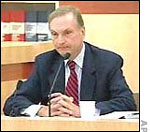
One psychiatrist, Park Dietz, who came to the command center early, read through all the reports and said that Koresh appeared to have antisocial and narcissistic traits, as well as paranoid and grandiose delusions. While some appeal to the rational side of his personality might work short-term, in the long run, his psychopathology would erupt. He could become dangerous. The best approach was to validate his ideas and get him to believe that his mission has not yet been accomplished.
While he warned the FBI to be consistent, it became clear to negotiators that much of the ground they gained in discussions with Koresh was lost through bad judgment.
Pete Smerick, a criminal investigative analyst, wrote a report to headquarters back in Virginia that the on-site commanders were moving too rapidly toward tactical deployment. He advised backing off with the tanks. The HRT was just making the situation more volatile.
“For years, Koresh has been brainwashing his followers in this battle between the church and the enemy,” one memo read, “On February 28, his prophecy came true. Koresh is still able to convince his followers that the end is near, as he predicted. Their enemies will surround them and kill them.”
It wouldn’t be effective to use traditional hostage strategy in this situation. They weren’t dealing with criminals but with a religious fanatic whose followers would do whatever he said. Even worse than the show of force was the way the FBI seemed to be punishing every good act that Koresh did. When he sent people out, Jamar did things like turn off the electricity or broadcast raucous music. Koresh was clearly annoyed by all of this and it was no wonder that he believed that God instructed him to resist rather than surrender. They were playing against his divinity, trying to weaken him, so he was reaching for all the symbols of his power. It was a no-win situation.
Even so, over the 51 days that the siege endured, the revolving teams of negotiators kept trying to resolve things peacefully and save the largest number of people possible. The behavioral science people were well aware that the HRT and other military-minded personnel viewed them as “soft,” but they knew their job.
Hundreds of suggestions were faxed and mailed to them every day from people all over the country, and some “experts” even showed up.
One man from a nearby university wrote a letter to Koresh that he expected the FBI to deliver. In it, he said that Koresh was misreading the scriptures, and he pointed out several divine directives that would indicate what God was really saying.
Other people wanted to be allowed into the compound to argue the Bible with Koresh. They were well meaning, but they failed to understand the kind of person Koresh was. They believed he could simply be reasoned into a different position and then give up. A few more aggressive people even threatened to force their way in to either help Koresh or show him the error of his ways. In fact, on separate occasions, two men managed to accomplish this. They were welcomed inside to be proselytized, and they both left before the final days.
A man claiming to be Jesus’s brother arrived from Florida to talk with Koresh, and another claiming to be Jesus himself said that he had to go in and set Koresh straight on who Christ really was. One well-known minister claimed that Koresh was possessed by a demon and needed an exorcism, which he offered to perform.
Many of these “interventions” amused the negotiators, but at the same time, they were well aware that fewer people were coming out and that Koresh could remain inside with his band for quite a long time—perhaps as long as a year. He had supplies stashed away, and water. The worst thing for his people was the cold nights without electricity, but so far, they were enduring that. They asked for milk for the children, which the FBI could hardly refuse.
Trying to resolve things quickly, the negotiators tried to put together a strategy that relied on those things that Koresh most wanted. They knew he had won in court against Boden, and that he appeared to be enjoying all the sudden fame, so they worked on that angle: The ATF had attacked, they could prove it from the crime scene, and Koresh could take them to court and win. He would then draw even more followers and the Branch Davidians would be known all over the world. They were already on the cover of the major news magazines and the world was watching. Koresh could parlay this into something beneficial for himself and his followers.
Yet even as they said these things to him, they were aware that he knew he had some other concerns: dead ATF agents, charges of polygamy and child abuse. He was likely aware that things would not go as easily as promised.
Trying to get around Koresh, the FBI made tapes of the children who had come out, showing they were cared for and urging them to appeal to their parents to join them. They sent these tapes into the compound, and each time they called the press together for a television broadcast, they turned the electricity back on so the Davidians could see what they were saying. The agents expressed concern for their safety and clarified inaccurate speculations.
One other ploy was to record Koresh on the phone, and when his words seemed to undermine his preaching, they would broadcast that over a loudspeaker for the rest of the cult to hear. It was hoped that at least some of them—in particular the key lieutenants—would see the inconsistency and question their leader.
Yet on March 9, just over a week since the siege had begun, Koresh sent out a videotape on which he and Schneider had recorded interviews with people inside the compound. Each one expressed a firm desire to remain there. They were not coming out unless God ordered them to.
Ultimately, Koresh was in control. He would decide when he’d negotiate and when he wouldn’t. The FBI would have to sit there and wait.
On March 12, Davidian Kathy Schroeder came out. When questioned, she denied any plans for suicide, yet when she tried calling back into the compound, she received no answer. She did admit that some people inside wanted to come out but were afraid of Koresh. They wouldn’t leave until he told them to. That message was alarming. That meant that Koresh might well have a plan that exploited his group members’ inability to act for themselves.
At that point Special Agent in Charge Jamar decided to shut off the electricity for good. Up until then, he’d allowed it to come on for short periods of time, but he was tired of all the dilly-dallying. This tactic angered everyone inside the compound and further annoyed the negotiators. Koresh rightly called it an act of bad faith, and Schneider said that the three people who’d been about to come out were now going to remain. A couple of days later, the tactical people placed bright lights outside the compound at night to make it difficult for those inside to sleep and stepped up the loud music as an annoyance. Wessinger lists the kind of music used as Tibetan Buddhist chants, bagpipes, seagulls crying, helicopters, dentist drills, sirens, dying rabbits, a train, and songs by Alice Cooper and Nancy Sinatra. (A rock group actually offered to come in and play music that they knew would be psychologically demoralizing, but their offer was rejected.)
Then the HRT drained the compound’s diesel storage tanks.
More adults came out, and Koresh said he would send out no one else. Then the loudspeaker system failed, much to Jamar’s frustration and to the negotiators’ relief, although they later got it working again.
The crisis management team advised Jamar that since Koresh offered no specific time frame for surrender, the wait could be indefinite. At that point, the introduction of teargas was mentioned.
To avoid this, the negotiators made Koresh an offer: In prison he could communicate with his followers and make a worldwide broadcast on CNN. In order to have these privileges, Koresh and his people had to leave by 10:00 the next day, March 23.
Koresh rejected the deal and tore up the letter, and one more man emerged at this point. Schneider became more belligerent in his phone conversations and many at the command center felt that something negative was building.
On March 25, the FBI sent in an ultimatum: send a minimum of 20 people out by the end of the afternoon or they would begin to prepare for action. When no one emerged, the FBI removed motorcycles and other vehicles from in front of the compound.
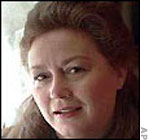
David Koresh
Two days later, according to FBI documents, Schneider denied Koresh’s self-professed divinity and hinted that the FBI might burn the building to get them out. That seemed like a rather enigmatic comment, perhaps even a hint of what was being discussed inside. Then several days were taken up with meetings between Koresh, Schneider, and two lawyers, one of whom had been hired by Koresh’s mother. Once that was settled, Koresh decided that he wanted to spend Passover in the compound. Since he was the leader of a religious group, there was no real point in arguing. The FBI gave in and waited through the Passover period.
As it neared an end, Koresh announced that he would observe it for seven more days. Passover was officially at an end, but who could argue? Once again, it was clear that he was in charge.
By this time, it was clear to everyone that it was going to be one thing after another with him. He wrote and sent out several letters over the next few days that indicated he would never surrender or leave voluntarily.
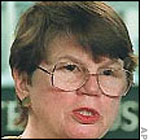
General
By April 10, it appeared to be time to resume discussions about tear gas, and this time, the argument was presented to the newly-sworn Attorney General Janet Reno. Having only recently taken up the reigns, this was a difficult situation to be in. She asked for information about the gas, in particular whether it was harmful to children. She was assured that it was not.
The FBI wanted to use a substance called chlorobenzylidene malononitrile, or CS gas. They claimed that it was not flammable, but others sources insist that it is highly flammable. Since the FBI did not expect flames to be present, they might have believed there was little real danger. However, inside the compound, to warm things up at night and to read, the group was using kerosene lamps. It seemed reasonable to expect that someone might have thought of that, yet clearly no one did.
Even as these discussions were underway, there were a few intermittent conversations with Koresh, who offered more of what they called “Bible babble,” and negotiations appeared to be stalled. Koresh was now saying that he needed time to write a manuscript on the meaning of the Seven Seals, and he was at work on that now. He asked for supplies to accomplish this, and the FBI sent those in.
He completed it on April 16. Yet still he did not come out. Some of his followers who managed to get out said that he had only completed work on the first seal, while the FBI believed he’d finished the entire manuscript and still resisted them. By that time, they’d had it. They no longer believed any of Koresh’s promises.
On April 17, Reno approved the use of CS gas to end the six-week standoff. Apparently she felt that the negotiators had come to an impasse and that the sanitary conditions in the compound were deteriorating. She was thinking of the 23 children still inside. In addition to that, the operation was getting expensive, with no foreseeable end. Tear gas was uncomfortable, but it would not harm anyone. The HRT was instructed to insert it gradually over a period of 48 hours and then be ready to capture people as they emerged. Arrest warrants were obtained for every person known to be inside, and search warrants for the compound were in hand. Teams prepared to wash gas off the children as they emerged and to get them to safety.
On April 18, tanks continued to remove vehicles from the front of the compound. Tension was high, and it was clear that Koresh was upset, especially when they moved his black Camaro. He called the command center and said, “If you don’t stop what you’re doing, this could be the worst day in law enforcement history.”
A sniper with a good view of the compound reported that someone from inside had hung a sign on a window that read, “Flames await.” It was an ominous message. The negotiators weren’t sure what it meant but they suspected that Koresh had a plan. They were soon to find out.
Just after dawn on Monday morning, April 19, the FBI phoned the compound to warn those inside about what was to occur. Linedecker provides a full description of what was said. It was not an assault, the FBI insisted, but a means for getting the Davidians to come out. This was the most uncomfortable tactic they’d used thus far, and if it didn’t work, they could only resort to real aggression. Yet they believed that no one would long endure the harsh fumes of the gas. It burned the mouth, eyes, skin, and lungs to the point that any reasonable person would accept a way to escape it.
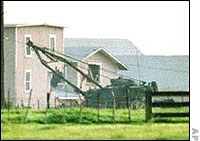
Three minutes after the initial call, two Combat Engineering Vehicles approached the buildings, punched holes into the fragile walls, and began to spray teargas through nozzles into the compound, propelled by noncombustible carbon dioxide. Nearby were an Abrams tank and nine Bradley vehicles, while choppers flew overhead, taking aerial photos. Everyone was under orders that if children were in any way endangered, the mission was to be aborted.
Abruptly, the Davidians opened fire at the tanks. Yet the teargas injection continued and CS grenades were thrown in through the windows. The walls of the buildings were no match for the tanks, and large holes appeared wherever the tanks were used. Then the vehicles pulled back for an hour to reload and went at it again. The Davidians responded with more gunfire. They also tossed the telephone out the front door, a sign that all negotiations had ceased—although survivors claim that the tanks had broken the phone lines. (At this point, if those who said they were using kerosene lamps were correct, and if the tanks had indeed knocked them over, the fires would already have started and spread. However, it would be several hours before that occurred, putting the claim into some doubt.)
The Texas wind was fierce that morning, which was not good for the tactical teams. The FBI continued to broadcast pleas for the Davidians to come out, hoping that at least the women with children would do so. They assured those inside that no one would be harmed, but the Davidians had already seen some of their fellow members led away in the days before in handcuffs and orange prison suits. That was yet another tactical error meant to display force.
Then just a few minutes after noon, the buildings quickly went up in flames and the fire spread fast. Agents close to the buildings heard gunfire, and they assumed that the people inside had decided to end it with a mass suicide. An HRT agent later claimed that he’d seen someone light a fire in front of the building, and several loud explosions inside erupted into a giant plume of black smoke that filled the sky. Helicopters flew back and forth, recording what they could, but no one knew how dangerous it might be to get close.
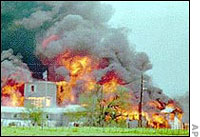
Again a message was broadcast over the loudspeaker that Koresh should send his people out. Only nine emerged. One woman who came out, her clothing in flames, tried to go back in, but was caught by an ATF agent and brought to safety.
Firefighters arrived but the FBI made them keep their distance due to gunfire and the possibility of more explosions. Around 12:45, they entered the building and found numerous incinerated bodies. Most were well beyond immediate identification.
The negotiators, who had worked long hours to ensure a peaceful resolution, were stunned. They had predicted something along these lines if aggression of any kind were used. Even so, they had not imagined the magnitude of what did happen.
And now it was time to investigate the crime scene. For that, another team was called into action, and those agents whose work was done went home. They were aware there would be endless inquiries about how such an event could have occurred.
By the end of that shocking day, 80 people were found dead, 23 of them children under 17. Koresh had fathered 14 of them. While rumors spread that Koresh himself had escaped through underground tunnels, his body was later identified by dental records. He’d been shot in the head.
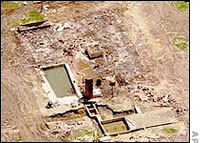
Many of the victims had died from gunshot wounds and one child had been stabbed to death. Over 100 firearms were eventually recovered from the scene, and 400,000 rounds of ammunition. Wessinger states that many of them were still in their plastic wrappers, apparently scheduled for shipment rather than for use, but that’s an interpretation without evidence.
It wasn’t long before accusations were flung from both sides that the other side had started the fire, and the FBI brought to court what they felt was clear evidence that the Davidians had done it. They produced surveillance audiotapes of people inside the compound joking the day before about “catching on fire.” On the actual day, there were recorded commands to “spread the fuel” and “light the torch,” yet survivors who had escaped the compound claimed there had never been a suicide plan. Still, they could not explain why Koresh refused to come out for six hours after the introduction of tear gas.
The subsequent investigation showed that the fire had three points of origin, which would not have happened accidentally. One canister that had incendiary potential and that matched what the FBI was using was actually found in water, so it could not have started a fire. Yet if it was true that CS gas was flammable, then the amount pumped into the compound could easily have caught fire. The question was what was the true source of the fire? Had the tanks knocked over oil lamps? If so, why hadn’t the fire begun earlier? No one seemed to have satisfactory answers, but everyone pointed the finger, including people who were not even there.
Nevertheless, there was no doubt that the initiating ATF raid was ill planned and completely unnecessary. Koresh could have been arrested peacefully away from the compound while a search was activated. Even if the ATF firmly believed that only an element of surprise would have allowed the plan to succeed, once that surprise was lost, they should have stopped and prepared for something else. There was little evidence of awareness of what the Davidians were all about, and it was clear that a paramilitary maneuver simply to inspect some guns was overkill. In a videotape for the History Channel, entitled “Cults,” journalist Mike Wallace sternly points out that there were many people to blame for what happened to the Branch Davidians inside the compound, not just them, and there might never be complete clarity on the issue.
The ATF made another suspicious decision as well. On May 12, less then a month after the incident, they bulldozed the site. In other words, if there were any clues remaining after the fire that might have provided information as to what took place, they were now beyond use.
Most Americans afterward blamed the Branch Davidians for what had taken place, but in later years, the sentiment shifted somewhat, and some homegrown radicals decided there should be some payback. Only two years later, on the anniversary of the fire, Timothy McVeigh left a truck full of explosives outside the Alfred P. Murrah Federal Building in Oklahoma City, killing or injuring hundreds of workers and their children. Those who view the government the way Koresh did are unlikely to accept any explanation but one: unwarranted government persecution.
David Koresh had decided that the Fifth Seal of Chapter 6 in the Book of Revelation predicted that Armageddon would occur there at Mount Carmel. It describes those who were slain for the Word of the Lord and mentions a waiting period, after which the entire community would be killed. According to Koresh’s understanding, through this violence, he and his people were to achieve salvation.
While there were predictions from religious and political scholars that another Waco was in the making among other secretive groups, the FBI did learn from this incident. The next time they were faced with a similar standoff the Freeman in Garfield County, Montana in 1996, they approached it much differently.
From March 25 to June 13, the FBI confronted a small group of Christian Patriots who called themselves the Freemen. Their aim was to overthrow the government, which they viewed as satanic. As part of a protest, some of them stopped paying taxes and government loans, which resulted in the foreclosure of their property. Instead of leaving, they tried setting up their own local government and threatened to arrest even to hang local government officials.
This brought in the FBI, but with restrictions from Attorney General Reno that there would be no armed confrontation. The Freemen that gathered on a foreclosed wheat farm were armed, but the federal agents relied on more than 40 negotiators, including family members of the protesters, to try to bring about a peaceful resolution. No one wanted another Waco. Those on the farm were offered conditions that allowed them to remain loyal to their concerns and to run their own defense even as 14 of them were taken into custody. In other words, contrary to Waco, the FBI avoided acting in a way that confirmed the group’s persecutory belief system, and the matter ended in the courtroom for issues of tax evasion rather than on an impromptu battlefield.
Breault, Marc, with Martin King. Inside the Cult. New York: Signet. 1993.
FBI, “Report to the Deputy Attorney General on the Events at Waco, Texas,” www.usdojgov.com
Linedecker, Clifford. Massacre at Waco, Texas. New York: St. Martin’s Press, 1993.
Moran, Sarah. The Secret World of Cults. Surrey, England: CLB International, 1999.
Twentieth Century with Mike Wallace: Cults, The History Channel, 1996.
Wessinger, Catherine. How the Millennium Comes Violently. New York: Seven Bridges Press, 2000.
Whitcomb, Christopher. Cold Zero: Inside the FBI Hostage Rescue Team. New York: Little, brown, & Co., 2001.