
The Disappearance of Jimmy Hoffa — Prologue — Crime Library
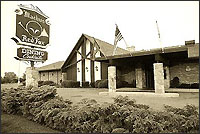
Bloomfield Township, Michigan
(CORBIS)
On July 30, 1975, former Teamsters President Jimmy Hoffa stood outside the Machus Red Fox Restaurant in Bloomfield Township, Michigan, impatiently scanning the parking lot. The man who had made the Teamsters the most formidable labor union in the country was already angry. It was quarter after two in the afternoon, and the men he was supposed to be meeting for lunch hadn’t arrived yet. Hoffa was a stickler for punctuality, and it was his understanding that they were to meet at 2:00.
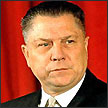
James R. Hoffa (AP)
Wearing a dark blue short-sleeve shirt, blue pants, white socks, and black Gucci loafers, Hoffa walked to a nearby pay phone outside a hardware store and called his wife to tell her that he’d apparently been stood up. Josephine Hoffa had felt that her husband seemed uncharacteristically nervous when he had left the house an hour earlier. Before going to the restaurant, Hoffa had stopped at the offices of a limousine service in Pontiac that was owned by a good friend. An employee there also noticed that Hoffa seemed nervous.
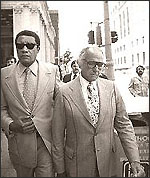
Giacalone (CORBIS)
Jimmy Hoffa was supposed to be meeting Detroit mobster Anthony “Tony Jack” Giacalone and New Jersey labor leader Anthony “Tony Pro” Provenzano, who also happened to be a made member of the Genovese crime family. The reason for this meeting, Hoffa believed, was to discuss his intention to run for the presidency of the International Brotherhood of Teamsters and regain the powerful position he had lost after his 1964 convictions for jury tampering, conspiracy, and mail and wire fraud. But the Mafia, who had worked hand in hand with Hoffa in the past, wasn’t so sure they wanted him back in power. President Richard Nixon had granted Hoffa clemency in 1971, just before Christmas, but things had changed significantly in the nearly five years Hoffa had spent behind bars. The mob found Hoffa’s handpicked successor, Frank Fitzsimmons, more pliable than Hoffa, and Fitzsimmons was well liked by President Nixon. The gangsters liked things the way they were. They wanted Hoffa to stay retired.
Not long after Hoffa had called home on the pay phone outside the hardware store, a maroon 1975 Mercury Marquis Brougham pulled out of the restaurant parking lot and nearly hit a truck. The truck driver, who was making deliveries in the area, pulled up next to the car and immediately recognized Jimmy Hoffa sitting in the backseat behind the car’s driver. The truck driver also noticed a long object covered with a gray blanket on the seat between Hoffa and another passenger. The truck driver thought it was a shotgun or a rifle. He didn’t get a good look at anyone else in the car.
The next day Hoffa’s green 1974 Pontiac Grand Ville was found unlocked in the restaurant parking lot. Police opened the trunk but found nothing unusual. Using the truck driver’s description of the car Hoffa was last seen in, investigators were able to trace the maroon Mercury to its owner, Joe Giacalone, the son of mobster Anthony Giacalone. Joe Giacalone claimed that he had lent the car to a friend that day, a teamster named Charles “Chuckie” O’Brien, who was very close to the Hoffa family and had actually lived with the Hoffas at one time. The car was located, and O’Brien’s fingerprints were found on a 7UP bottle and a piece of paper recovered from the car. Investigators felt that Jimmy Hoffa would have felt comfortable enough with O’Brien, whom he considered a foster son, to get into the Mercury.
FBI agents checked on the whereabouts of the two men Hoffa was supposed to be meeting that day. “Tony Jack” Giacalone swore he was at the gym where he worked out every day, and witnesses placed him at the Southfield Athletic Club at the time of Hoffa’s disappearance. “Tony Pro” Provenzano was in New Jersey playing cards with friends. Both Tonys said they knew nothing about a scheduled meeting with Hoffa.
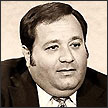
O’Brien
Chuckie O’Brien claimed that he hadn’t seen Hoffa on July 30 and gave a detailed account of his whereabouts. He told investigators that he had delivered a 40-pound frozen salmon to the home of a Teamster International vice president and helped the man’s wife cut the fish into steaks. During the time that Jimmy Hoffa had been waiting at the restaurant, O’Brien said he was at the Southfield Athletic Club with Anthony Giacalone. O’Brien claimed he then took the Mercury to a car wash because fish blood had leaked onto the backseat. No one at the athletic club or the car wash could corroborate his story.
Specially trained German shepherds were flown in from Philadelphia eight days after Hoffa’s disappearance. The dogs were given a pair of the labor leader’s Bermuda shorts and a pair of his moccasins. They picked up Hoffa’s scent in the backseat and trunk of Joe Giacalone’s maroon Mercury. Twenty-six years later in March of 2001, a DNA match was made between a hair found in the back of the car and a hair taken from Hoffa’s hairbrush.
Over a quarter of a century has passed since the mysterious disappearance of James Riddle Hoffa, and the case remains unsolved. But this mystery is not a who-done-it. The likely suspects are all known, and their motives are well documented. The question is: Where? What exactly did they do to Jimmy Hoffa, and where did they dispose of his body?
(Library of Congress)
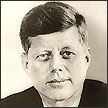
In 1959 Robert F. Kennedy, the brother of John F. Kennedy who would soon be elected president of the United States, appeared on The Jack Paar Show, America’s first late-night television talk show. At the time Bobby Kennedy was chief counsel of the Senate Labor Rackets Committee, better known as the McClellan Committee. Speaking to a national television audience, Kennedy had plenty to say about Jimmy Hoffa and the Teamsters union, and the crusading young attorney was not afraid to name names.
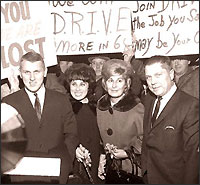
Teamster rally (CORBIS)
Sitting across from an attentive Jack Paar, their images broadcast across America in grainy black and white, Kennedy said, “All of our lives are too intricately interwoven with this union to sit passively by and allow the Teamsters under Mr. Hoffa’s leadership to create such a superpower in this country—a power greater than the people and greater than the Government… Unless something is done, this country is not going to be controlled by the people but is going to be controlled by Johnny Dio and Jimmy Hoffa and Tony ‘Ducks’ Corallo.”
Except for Hoffa’s, those names were probably unfamiliar to most Americans, but the directness of Kennedy’s accusation was courageous and remarkable. What public official today would go on The Tonight Show with Jay Leno or The Late Show with David Letterman and point the finger at gangsters, using their real names?
In the late 1950s, the McClellan Committee—named after its chairman, Senator John L. McClellan—was set up to investigate the influence of organized crime in labor unions . Though Robert Kennedy knew relatively little about organized labor when the committee began its work, the young attorney from Massachusetts was a quick study and a tenacious public servant. He made no bones about his desire to “get Hoffa.” Kennedy could not abide corruption on any level, and by all indications the leadership of the Teamsters union was rotten to the core.
Hoffa had always been a brawler and a bully who would use any means necessary to achieve his goals for the Teamsters. When he and Kennedy locked horns in the public arena, Hoffa, as was his way, insisted on making it personal, ridiculing Kennedy and calling him a “boy.” When the two men first met at a Washington dinner party, Hoffa had actually challenged Kennedy to an arm- wrestling contest and the next day publicly proclaimed victory. On another occasion at a restaurant, Hoffa initiated a shoving match with Kennedy because he felt that the young attorney had snubbed him. Kennedy was everything Hoffa loathed—born into money, Ivy League-educated, refined and good-looking—but in Hoffa’s estimation Kennedy fell short because he didn’t live up to Hoffa’s standards for manhood.
Hoffa believed that a real man should be able to handle himself with his fists, intimidating his adversaries physically when words weren’t enough. He also believed in any means to an end. According to Hoffa, the only thing that mattered was success, no matter how it was achieved, and to Hoffa’s way of thinking, dealing with gangsters was necessary for the success of the Teamsters. But in fact dealing with Hoffa was more necessary for the success of the mob. While the mob provided Hoffa with the kind of muscle he valued, Hoffa provided the mob with money, lots of it.
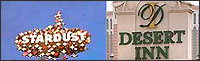
Vegas
The jackpot in question was the Central States Pension Fund. The hardworking rank and file of the Teamsters entrusted the union with their retirement savings with the promise that it would be invested soundly and yield the highest dividends possible. But under Hoffa, loans were made to such dubious individuals as Jewish gangster Morris “Moe” Dalitz, one of the underworld’s architects of Las Vegas. Dalitz, who started as a member of the notorious Purple Gang in Detroit before moving his base of operations to Cleveland, used money loaned from the Teamsters’ pension fund to build the grand Desert Inn and the Stardust Hotel in Vegas.
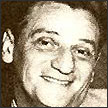
According to Ralph and Estelle James in their book, Hoffa and the Teamsters, Dalitz was a member of Hoffa’s inner circle. In 1949 when the Teamsters threatened to strike against the Detroit Laundry Institute, Dalitz, who was a part owner in a laundry, got Hoffa to intervene behind the scenes and managed to avert the strike. The McClellan Committee uncovered evidence that the grateful laundry owners of Detroit kicked back a substantial sum of money to Hoffa disguised as a loan.
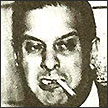
Johnny Dio
Mobster Johnny Dio, who was cited by Robert Kennedy on television, was considered the master of labor racketeering. Born John Dioguardi, he wrote the book on how to profit from labor unions and was welcomed by mob families across the country eager to learn from him. Dio, who belonged to New York’s Lucchese family, would open garment factories, then negotiate “sweetheart deals” with the unions that granted him waivers from every major contractual obligation contained in their labor agreements. In this way Dio was able to use underpaid, nonunion immigrant labor in his factories, allowing him to undercut his competitors. In exchange for their cooperation, union officials were given generous kickbacks. “It cannot be said,” the McClellan Committee concluded, “using the widest possible latitude, that John Dioguardi was ever interested in the lot of the working man.”
One of Johnny Dio’s partners in labor crime was Anthony “Tony Ducks” Corallo, who earned his nickname not because he loved water fowl but because he had an uncanny ability to duck convictions in court. Dio and Corallo, who would one day become boss of the Lucchese family, set up six “paper locals” in New York with Jimmy Hoffa’s blessing. These locals had no members, only officials who were either made-members or associates of the Mafia, and eventually these men were able to take control of all airport trucking in New York City. According to the McClellan Committee, these mobsters used “their positions for purposes of extortion, bribery, and shakedowns.” In exchange for this extraordinary license to steal, Hoffa expected the paper locals to support him when it came time to vote in Teamster elections.

According to Stephen Fox in Blood and Power, the McClellan Committee uncovered “a pattern of squandered and stolen union funds, sweetheart contracts, conflicts of interest among employers and labor leaders, phony ‘paper locals’ and denial of democratic process to members, collusions and coercions and violence always about to break out” in cities across the country, including New York, Chicago, Detroit, Cleveland, St. Louis, Pittsburgh, and Minneapolis. Hoffa’s associates in organized crime included “Angelo Meli, William Bufalino, and Pete Licavoli of Detroit; Babe Triscaro of Cleveland; Paul Ricca and Joey Glimco of Chicago; and Johnny Dio, Tony Ducks Corallo, and Vincent Squillante of New York. ” But as Fox points out, “Hoffa took cues—not orders—from gangsters.” And that’s where his troubles began.
On Valentine’s Day 1970, a small airplane towing a long banner flew low over Lewisburg Federal Prison in central Pennsylvania. The banner proclaimed, “Happy Birthday, Jimmy!” It was Jimmy Hoffa’s fifty-seventh birthday. He had been incarcerated almost five years.
(Library of Congress)
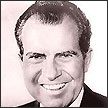
Hoffa received lots of birthday cards from loyal rank and file members and Teamster officials in addition to the usual stream of encouraging letters. But the support that Hoffa was getting through the mail was deceptive. Though he was still a hero to the workers he had represented, the corrupt Teamster leadership was just as happy to have him on ice. Hoffa’s handpicked successor for the presidency of the union, Frank Fitzsimmons, was much more to their liking. Fitzsimmons didn’t merely take cues from the gangsters; he practically gave them carte blanche to do whatever they wanted with their union positions. The even-tempered Fitzsimmons was also much easier to get along with than the pugnacious Hoffa. In addition he was a friend of President Nixon and a frequent guest at the White House. Fitzsimmons’s air of respectability was the perfect cover for the corruption lurking beneath the Teamsters. Hoffa, on the other hand, was now a con, not the most desirable image for a front man.
But Hoffa was undaunted. He was determined to regain his seat of power even though the Landrum-Griffin Act stipulated that a convicted felon could not hold office in a union until five years after his release. Hoffa knew he would have to bide his time. His plan was to finish his sentence and wait out the mandatory exclusionary period, then mount his campaign against the lackluster Fitzsimmons who consistently disregarded Hoffa’s suggestions for the Teamsters in favor of the mob’s wishes.
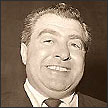
Hoffa was confident that he had the support of the rank and file, and he believed they would sweep him back into office, but while in prison he also tried to shore up his mob alliances. A high-ranking mobster with close ties to the Teamsters happened to be serving time at Lewisburg on an extortion conviction, Hoffa’s old friend Anthony “Tony Pro” Provenzano.
Provenzano was a capo in the Genovese crime family as well as an International Brotherhood of Teamsters vice president, controlling the most corrupt local in the country, Local 560 in Union City, New Jersey. Provenzano’s position with the union was a longstanding quid pro quo devised by Hoffa himself who had been seeking to solidify his mob support. Local 560 eventually became Tony Pro’s personal piggy bank, allowing him easy access to union funds for his own illegitimate purposes.
In prison Hoffa and Provenzano were initially close allies. Provenzano was a de facto power within Lewisburg, carrying his mob rank with him, and he provided Hoffa with protection. At one point, Provenzano was paralyzed with a painful stomach ailment, and it was Hoffa who raised hell on his behalf, convincing prison officials to get Provenzano the medical attention he required. But over time their relationship deteriorated. Provenzano wanted Hoffa’s help in securing a loan from the Teamsters for a restaurant he wanted to open, but Hoffa couldn’t deliver for him. Provenzano was upset over this, and later Hoffa was overheard telling Provenzano, “It’s because of people like you that I got into trouble in the first place.”
(After they were both released from Lewisburg, a federal informant claimed to have witnessed a violent confrontation between Provenzano and Hoffa at a chance meeting at an airport. According to Lester Velie in Desperate Bargain: Why Jimmy Hoffa Had to Die, “Hoffa and Provenzano went at it with their fists, and Hoffa broke a bottle over Provenzano’s head.” Provenzano angrily threatened Hoffa’s grandchildren, swearing “I’ll tear your heart out!”)
Hoffa opposed Provenzano’s intention to return to his old position with Local 560 after his five-year exclusionary period, and likewise Provenzano opposed Hoffa’s desire to recapture the presidency of the Teamsters. They became each other’s problem, but Provenzano had a reputation for making his problems disappear.
(courtesy of The Detroit News)
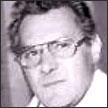
In 1963 a prosecution witness in Provenzano’s extortion trial was gunned down shortly before he was scheduled to give testimony. In 1972 a man involved in a counterfeiting operation with Provenzano simply disappeared. In a case uncannily similar to the Hoffa disappearance, Anthony Castellito, the secretary-treasurer of Provenzano’s Local 560, was lured to a location in upstate New York where he was met by a short, slight, and bespectacled loanshark named Salvatore “Sally Bugs” Briguglio who allegedly murdered Castellito and transported the body back to New Jersey. Castellito’s remains were never found. Conveniently Provenzano was in Florida at the time of Castellito’s disappearance. The setup was nearly identical to Hoffa’s disappearance. When Provenzano returned to the Garden State, he appointed Briguglio, who previously had no official connection to the Teamsters, to the victim’s former position as secretary-treasurer of Local 560.
In 1985 the FBI released a memo summarizing the Hoffa case and cited Salvatore Briguglio as a prime suspect along with Briguglio’s brother Gabriel, the brothers Stephen and Thomas Andretta, Chuckie O’Brien, “Tony Pro” Provenzano, “Tony Jack” Giacalone, and the mob boss of western Pennsylvania, Russell Bufalino.
In January 1976 and February 1977 the government issued internal reports based on interviews with an informer who claimed to know the whole story of what happened to Jimmy Hoffa. The informer, Ralph Picardo, was serving a murder sentence at the time in Trenton State Prison in New Jersey’s capital. Picardo had been a business agent for Local 84 in New Jersey and a driver for “Tony Pro” Provenzano. As reported in The Hoffa Wars by Dan E. Moldea, Picardo claimed that Hoffa had been invited to the Machus Red Fox restaurant by Detroit mobster Anthony Giacalone for a “sit-down” with Provenzano, so that the two men could iron out their differences. Chuckie O’Brien, whose alibi included spending time carving a large fish that day, picked up Hoffa at the restaurant and took him to a nearby house where O’Brien had been staying with friends. Teamster business agent Thomas Andretta, Salvatore Briguglio and his brother Gabriel were in the house, waiting to ambush Hoffa. A man named Frank Sheeran, who had been president of Local 326 in Delaware, was also in the house. Sheeran was a close associate of Pennsylvania mob boss Russell Bufalino and had driven Bufalino to Detroit that day. According to Picardo, the hit on Hoffa was ordered by Bufalino who gave the contract to Provenzano. Bufalino’s cousin William, president of the Teamsters’ jukebox local in Detroit, had had a serious falling out with Hoffa in 1967.
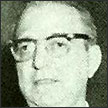
Picardo did not say whether Russell Bufalino was actually present for Hoffa’s execution, but it is curious that on a day when others involved in the conspiracy made sure that they were nowhere in the vicinity, Bufalino traveled from his base in Pittston, Pennsylvania, to be in the same city. Perhaps Bufalino wanted to make sure that the pesky Hoffa was taken care of once and for all. Or perhaps it was personal, and he wanted to witness the event himself. Bufalino’s exact whereabouts on July 30, 1975, are unknown, but there is little doubt that Hoffa was murdered that day in that house.
*****
Without a body or circumstantial evidence that will hold up in court, there will probably never be a conviction in the slaying of Jimmy Hoffa. But the conspirators did not get off scot-free. Over the years the government made sure these men were prosecuted to the full extent of the law on other charges.
Anthony “Tony Pro” Provenzano’s pocket local, Local 560, eventually came under government oversight, putting a major crimp in Provenzano’s illegal operations. In 1978 he was prosecuted and found guilty of the 1961 murder of Anthony Castellito. Seventeen years after Castellito’s body was allegedly put through a tree shredder, Tony Pro was sent to prison where he died 10 years later at the age of 81.
Anthony “Tony Jack” Giacalone, who allegedly set up Hoffa, was tried and convicted on tax evasion charges and spent 10 years in prison. He was charged with racketeering violations in 1996, but died before the case could be tried.
Despite numerous holes in Chuckie O’Brien’s alibi, the man who allegedly drove Hoffa to his execution was never charged with anything relating to Hoffa’s disappearance. He moved to Florida where he was given a job by Teamster president Frank Fitzsimmons, but in 1990 O’Brien was banished from the union for his mob connections. He served a short time in prison in the late ’70s for accepting a free car from an auto dealership and for lying on a loan application. Plagued with ill-health, O’Brien has survived cancer and four heart bypass operations and now lives in Boca Raton, Florida, where he maintains that the government, not the mob, killed Jimmy Hoffa.
Tony Pro associate Salvatore Briguglio was murdered gangland-style on Mulberry Street in New York’s Little Italy. Two gunman pumped several shots into his chest and head. At the time he had been talking with prosecutors and was about to make a deal in exchange for his testimony against Provenzano in the Castellito murder case.
Authorities know who killed Jimmy Hoffa and they know why, but the question that remains is where? What did Hoffa’s killers do with his body? Theories—both credible and ridiculous—abound, and some incarcerated felons seem to amuse themselves by cooking up scenarios for eager journalists salivating for the scoop of the century. Tons of earth have been moved in the search for Jimmy Hoffa’s remains. The following are just a few of the leads that didn’t pan out:
-
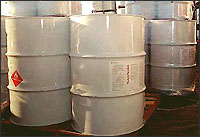
According to Ralph Picardo, the convict who fingered the conspirators, Hoffa’s body was put in a 55-gallon steel drum and carted away in a Gateway Transportation truck. Picardo said he didn’t know where it was taken.
-
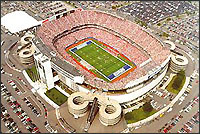
According to another jail bird, Hoffa’s body was taken to New Jersey where it was mixed into the concrete that was used to construct the New York Giant’s football stadium in East Rutherford, New Jersey.
-
Hoffa was said to have been buried in a 100-acre gravel pit in Highland, Michigan, which was owned by his brother William.
-
Hoffa’s body was encased in the foundation of a public works garage in Cadillac, Michigan.
-
His remains were buried at the bottom of a swimming pool behind a mansion in Bloomfield Hills, Michigan.
-
The corpse was ground up and dumped in a Florida swamp.
-
Hoffa was crushed in an automobile compactor at Central Sanitation Services in Hamtramck, Michigan.
-
His body was buried in a field in Waterford Township, Michigan.
-
It was weighted down and dumped in Michigan’s Au Sable River.
-
Hoffa’s remains were disintegrated at a fat-rendering plant.
-
He was buried under the helipad at the Sheraton Savannah Resort Hotel, which at the time of his disappearance was owned by the Teamsters.
-
His body was put in a steel drum and buried on the grounds of Brother Moscato’s garbage dump, a toxic waste site in Jersey City, New Jersey.
Jimmy Hoffa was declared legally dead in 1982, but his case remains open. Like a perpetual flame, a special agent at the FBI’s Detroit field office is constantly assigned to it. The investigation has generated over 16,000 pages of documents gathered from interviews, wiretaps, and surveillance, but despite the government’s best efforts to get to the bottom of Jimmy Hoffa’s disappearance, what the mob did with the body remains a question mark.
Fox, Stephen. Blood and Power: Organized Crime in Twentieth-Century America. New York: Penguin, 1989.
Franco, Joseph with Richard Hammer. Hoffa’s Man: The Rise and Fall of Jimmy Hoffa as Witnessed by His Strongest Arm. New York: Prentice Hall, 1987.
James, Michael. “Gone Without a Trace.” ABCnews.com, July 30, 2000
James, Ralph and Estelle. Hoffa and the Teamsters: A Study of Union Power. Princeton, NJ: Van Nostrand, 1965.
“The Jimmy Hoffa Investigation: Hoffa Case Chronology.” Detnews.com, 2001
“The Jimmy Hoffa Investigation: Key Figures in Hoffa Saga.” Detnews.com, 2001
Jones, Thomas L. “Missing Person #75-3425: What Became of Jimmy Hoffa?” BostonMafia.com, 2002 http.bostonmafia.com/ThomHoffa.html
Kresnak, Jack and Joe Swickard. “The Hoffa Files 3: Another Lead to Nowhere.” Detroit Free Press, Dec. 21, 1992
Moldea, Dan E. The Hoffa Wars: Teamsters, Rebels, Politicians, and the Mob. New York: Paddington Press, 1978.
Russell, Thaddeus. Out of the Jungle: Jimmy Hoffa and the Remaking of the American Working Class. New York: Knopf, 2001.
Shepardson, David. “The Jimmy Hoffa Investigation: Thousands of Tips Failed to Solve Disappearance.” Detnews.com, 2001
Sheridan, Walter. The Fall and Rise of Jimmy Hoffa. New York: Saturday Review Press, 1972.
Sifakis, Carl. The Mafia Encyclopedia. New York: Facts on File, 1987.
Sinclair, Norman and David Shepardson. “The Jimmy Hoffa Investigation: New Clue Might Mean Charges in Hoffa Death.” Detnews.com, 2001
Velie, Lester. Desperate Bargain: Why Jimmy Hoffa Had to Die. New York: Reader’s Digest Press, 1977.
Zacharias, Pat. “The Day Jimmy Hoffa Didn’t Come Home.” Detnews.com