
Point of No Return: The Case of Peter Bergna — One More Night — Crime Library
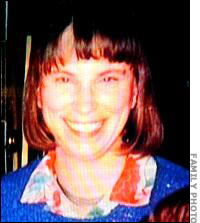
Rinette Rielle-Bergna was belted into the passenger side of the nearly-new 1997 blue Ford F-150 truck as her husband, Peter, maneuvered the roads near the east Bowl of Slide Mountain at the Mount Rose Ski Resort outside Tahoe, Nevada. She might have worried that it was midnight on that first day of June in 1998. She certainly was exhausted and perhaps wondering why Peter insisted on bringing her here rather than taking her right home to Incline Village. She had been in Italy over the past six weeks on a work-related project and Peter had just picked her up at the Reno-Tahoe International Airport. At age 49, she was more inclined to get some rest than look for a romantic view, and she had been traveling for many hours.

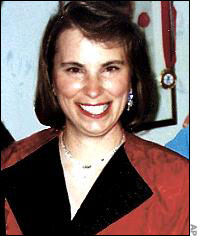
But Peter had suggested they go to one of their favorite overlooks, off State Road 878, which took them toward the resort. He apparently wanted to discuss the fact that her new career took her away too much and he wasn’t happy. He really disliked being alone. In fact, one of the contentions in their eleven-year-marriage was that they had not had children. He had wanted them and Rinette had not. As the adopted son of a powerful California DA, Peter had developed a strong need for attention, so Rinette had made a list recently of the things she could do to improve things between them. But she had also recently taken this job and she loved the travel. She even considered buying a condo in Italy.
Rinette might have wondered why Peter was so overdressed that evening. He wore jeans, a jacket over his shirt, a baseball cap, and he even had on a pair of gloves. He mentioned that it was a cool night, although she was comfortable in very light attire and he never reached for the knob to turn on the truck’s heater. In fact, he rode with the driver-side window rolled all the way down.
As Peter pulled up to a place to get out and smoke one of his beloved cigars, they were in the midst of a heated conversation, which included exploring the possibility of divorce. Rinette supposedly capitulated, saying she would reduce her time on the road so she could be home more with him, although she was apparently not happy about it. Still, marriage was compromise and she had already done several things that had upset Peter. For one, she had kept her last name when they married, hyphenating it to his and subtly signaling her independence. He wanted to know she was totally committed.
What she did not know was the Peter seemed to have a plan. He wanted to drive to a spot that overlooked the city lights, where he had been just the day before. He didn’t tell Rinette that part, however. He also did not reveal that he had two five-gallon plastic containers of gas in the back of the truck, unsealed, with parts of their caps missing. Should they tip over, they would leak their contents.
Rinette went along for the ride, happy to be back in the pretty Tahoe area, despite the unpleasant conversation they’d just had. But she was never going home again.
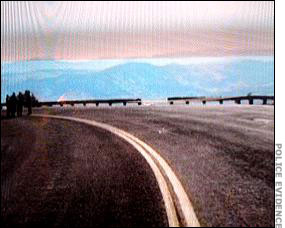
The spot where Peter was going had a wide gentle curve, a pull-off area, and a guardrail that allowed people to park for a brief time and look at the lights in the Washoe Valley 3,000 feet below. Suddenly, as they drove down toward the spot, Peter claimed that the brakes were not working. The car picked up speed, going straight toward the guardrail. “We’re not stopping!” Peter yelled. At least, that’s the story that he gave afterward.
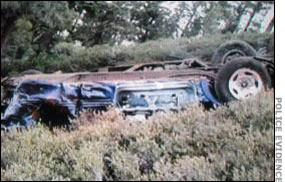
We’ll never know what went through Rinette’s mind as the truck struck the guardrail and crashed through. It kept going, plunging down the steep incline to land nose down 100 feet below. It then tumbled over and over another 700 feet before coming to a rest upside down, shattered and damaged beyond repair. Inside, Rinette, so full of optimism about her future just moments before, had been battered and crushed to death. Her lifeless body hung from the seat belt. But Peter was not with her. He had not been strapped in and he’d even dismantled the passenger-side airbag because Rinette was so short and he thought it might harm her if deployed. Thus, she had been without any buffer or cushion. And he had supposedly been thrown free as the truck jolted down the mountain.
Overhead, he called 911 on the cell phone he had in his jacket pocket to alert authorities, crying and screaming that he was on the side of the mountain and his wife was in the car below. He was sliding down, he said, and was clinging to a branch. The emergency dispatcher had a difficult time getting him to calm down, according to Michael Fleeman in Over the Edge, and that delayed getting someone there to assist him. In addition, there was some confusion as to just where he was, but finally emergency personnel were sent to the scene. Peter lay on his side, saying he could not move his legs.
While he waited, Peter looked down from his vantage point to try to see where the truck had gone. His foot and back hurt, he would later claim, and he was scanning the darkness for a fire. Apparently he’d expected that the vehicle had hit and exploded, but he saw nothing. The camper shell had broken free and gone flying, but the valley was silent. Over and over, he called for Rinette.

The first patrol officers on the scene found a gaping hole in the guardrail and saw Peter about eighty feet below. They went to assist him and were surprised that he appeared only slightly hurt and not very dirty, especially when he said he had been ejected from the truck before it went down the precipice. In fact, the only real dirt was on the seat of his pants. The officers noted that the temperature was about 60 degrees, without a chill, yet Peter was dressed for a much cooler climate. He said he was okay and urged them to find his wife.
It was too dark below to see anything, so the trooper called for a Care Flight helicopter. With the helicopter’s powerful light, they were able to see the crushed vehicle below. They knew it was unlikely that anyone could have survived, but they had to check, so down they went. As they had feared, Rinette had been badly battered and was not breathing. They cut her out of the seatbelt and placed her into a body bag.
As Peter was being treated by a paramedic and a nurse who had arrived on the helicopter, he kept shouting for his wife, and said at one point, “I think she’s dead.” The nurse wondered why he did not seem upset. In fact, while he appeared to be sobbing, she saw no tears.
On the road, the troopers found a baseball cap with the word, “Incline” written on the front. It would later turn out to belong to Peter, adding yet another angle on this mystery. For those who arrived at the scene, it just didn’t add up. Not all accidents turned out to be genuine accidents, and the observant officer can often provide the small clues that reveal the truth.
The Reno Gazette-Journal would carry this story, which would be picked up by Las Vegas papers, the Associated Press, and even some television magazine shows, but most of their coverage would view the story in retrospect. Initially, despite suspicions raised at the scene, there was no reason not to just record Peter Bergna’s version of events and then let him go.
As night passed into the first light of day, officers were checking the crash site. They found no leaked fluid that might signal defective brakes, but more important, they saw no skid marks or even an attempt to steer away from the guardrail. Tires under duress would have left some impression, but there was none. It appeared that the truck had moved right into the impediment. Later they would perform more thorough tests, but at this time they wondered why Bergna had been unable to steer the truck into the curve, even with failing brakes. It was sufficiently wide and graded in such a way as to bank toward the mountain.
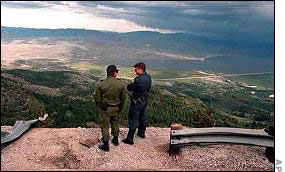
Unfortunately, rescue vehicles had driven over the area and rescue personnel had taken the same path the truck had taken, so the scene had not been preserved. Yet certain evidence such as the two full gas cans found in the truck, demanded some answers. Why would someone be carrying them around with him? When Detective James Beltron arrived from the Washoe County Sheriff’s Department, he also noticed the lack of tire marks.
As he was looking around, a car drove up and to everyone’s surprise, Bergna got out on the passenger’s side. Just when he should have at least been extremely sore from being ejected, here he was back at the scene, with only a slight limp. And he wasn’t there asking about his wife, who had been brought up the mountain and placed on the road a few yards away, but about his missing fanny pack. He did have a broken foot, as it turned out, but no cuts or scratches from the jagged edges over the side of the cliff. Without even noticing his wife, he got back into the car and left.
Beltron smelled a rat. He decided to bring Bergna in for questioning. Bergna was agreeable, although on pain medication, and during the interrogation he told Beltron that he had been thrown free on impact when the brakes failed, going out the open driver-side window and tumbling down through the sand. He’d had his window open because he had just smoked a cigar. He later said that perhaps he had opened the door and jumped; he wasn’t sure because he could not remember. He seemed to have no clear memory for events after he realized he wasn’t stopping the car. He also wondered whether he might have accidentally stepped on the accelerator instead. He had simply panicked.
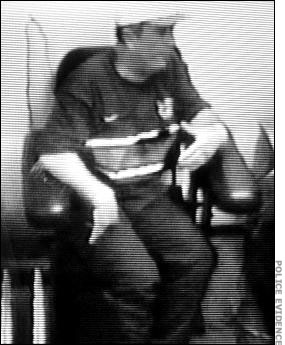
When questioned about the gas cans, Bergna said that he’d filled them for a trip to Las Vegas, because he did not want to have to fill up at more expensive stations, but he also said that he had needed the gas for his snow blower and other machines.
When pressed, Bergna admitted that he and his wife had been having difficulties over her work and his desire to have children, and, yes, after he’d picked her up, divorce had been mentioned. He did not go into details about that. He also indicated that the place where the crash occurred was one of their favorite romantic spots, but they had only been up there five or six times. Yet he also stated that Rinette had never been there.
Beltron expected some amount of confusion, and he kept trying to catch Bergna in some obvious slip, but Bergna managed to leave the session without giving up anything Beltron could use. All he had gained were some inconsistencies. He had no proof that anything sinister had occurred. He asked Bergna to come back again to take a polygraph, and Bergna agreed, but he neither passed nor failed. Instead, he breathed so heavily during significant questions that the examiner was unable to get reliable results. He believed that Bergna had done this intentionally. The question was, why? The police decided to learn more about this “lonely” man.
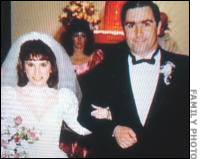
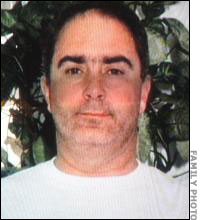
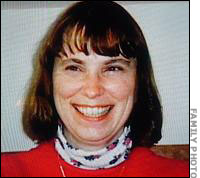
Peter and Rinette had been married eleven years. At the time of the accident, he was 45 and she had been 49. She had just switched careers from being a successful pharmacist and president of the Nevada Pharmacy Association to exploring the world of an international tour guide. Peter was a respected antiques appraiser for the San Francisco-based auction firm, Butterfield & Butterfield, making a six-figure income. He also volunteered to coach the school athletic teams and was reportedly quite generous. Those who knew this couple well believed they had an enviable relationship. Both were successful at what they did and they had made a home in the beautiful, upscale Incline Village, with its exclusive golf courses and private beaches. The accident seemed deeply tragic to everyone acquainted with them. Poor Rinette, they learned, had been so mangled that the medical examiner could not even determine a cause of death.
He did note, according to Fleeman, that she had thirteen broken ribs, a broken kneecap and wrist, and blood filling her chest cavity. She also had bleeding to the brain and a broken neck. She had sustained a great deal of multiple force blunt trauma and one could only hope that she had lost consciousness quickly. Due to the severity and number of her injuries, there was no way to tell if she had been killed prior to the crash and then sent over the edge.
The other part of the initial investigation was to learn more about Peter and to examine the truck. Peter, it turned out, had lied about the fact that he did not see other women. In fact, while his wife was gone, he had asked a colleague to set him up with a mutual acquaintance who attracted him. He had also asked another woman on a date. Neither had responded to him, but not for his lack of trying. Was he just looking for someone to take the chill off his loneliness or was he seeking his next potential wife? Clearly, the initial impression of the Bergnas as the ideal couple was a superficial assessment. In fact, Bergna tried these women again within a month after his wife’s death, and there were also reports that he had been getting rid of his wife’s personal effects. That struck some as a man who was not in true mourning.
Then there was the truck. A helicopter picked up the crumpled heap to take to a mechanic for analysis. Dewey Willie gave it a thorough going-over, but he found nothing mechanically wrong with it. With less than 24,000 miles on it, the Ford was — or had been – in pristine condition. Whatever had happened to send it over the edge had not been due to faulty brakes or steering. In fact, there was no significant history of brake problems for this model from the Ford Motor Company. For him, the cause of the accident remained a mystery.
Many police officers are quite sophisticated in methods of accident reconstruction. From road skids, the car’s condition, weather conditions, and other factors, says Donald van Kirk in Vehicular Accident Investigation and Reconstruction, they can accurately determine just what happened. To come up with accurate calculation of what happened between two vehicles or a vehicle and an object, the first group will note several key items, such as pre- and post-impact skid marks, lighting and conditions, the final positions of the vehicle or vehicles, the type of damage to the vehicle, and the tire condition. They’ll take verbal reports from the drivers, if possible, but will rely on the more objective interpretation of engineering to get a final result. Key elements to be determined are speed, distance traveled (pre and post-impact), and lapsed time, using simple momentum and energy calculations.
To determine responsibility, investigators will also learn what they can about the mechanical condition of the vehicle, and will note any contact mark between one vehicle and another or an object (in this case, a guardrail). They will also collect eyewitness accounts (only Peter’s was available), figure out what to expect in terms of performance from the vehicle models, and note the date and weather conditions of the accident. Another factor will be the driver’s history. These all go together into a file in the event that litigation will follow. The best information is the vehicle itself and where it came to rest. Thus, investigators often work backwards to establish the incident chronology, including all other known facts. Then an engineering analysis is done to derive the speed at which the vehicle was traveling. This can be compared against available eyewitness reports.
Some reconstructionists say that unless a computer simulation is used, the calculations will not be scientific. Controlled crash tests are not accurate renditions, and hypothetical models that are untested fail to meet scientific criteria. The computer will duplicate the physical laws of motion and apply them with precision to the facts about the vehicle and the incident. A 3-D animation is the best tool available for seeing and working with the totality of the circumstances. But such tools are devised only when there’s reason to believe a case is going to court. No one yet knew if that would be the case in the Bergna incident.
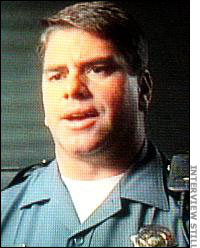
Over a year after the crash, Officer John Schilling, who had been on the scene that night and was an accident reconstructionist, acquired a Ford truck similar to Bergna’s to try a partial re-enactment. He and other officers drove it down the road and around the curve at varying speeds, finding that even at a fairly quick clip, there was no reason why Peter Bergna could not have maneuvered his car safely away from the guardrail and the precipice beyond. In fact, Bergna’s account of what happened made little sense, unless he made a sharp right turn into the guardrail. They videotaped their efforts, just in case.
Schilling reported that in his opinion, according to Mike Henderson in the Las Vegas Review-Journal, the truck brakes had not failed and Bergna had gotten out of the car before impact with the guardrail. He found no skids on the road to indicate someone hitting the brakes or even swerving to try to avoid hitting the rail. It appeared to be a staged accident, and therefore a homicide. Still, it would be another year before any action was taken.
In the fall of 2000, Chief Deputy District Attorney Dave Clifton listened to the evidence gathered thus far and decided to take the case to a grand jury. The members convened on November 15.
By this time, investigators had discovered that Bergna’s shoes appeared to have asphalt on them, an indication he might have jumped from the truck before it hit the guardrail. They also knew that the tops of the gas cans had been unsealed, and that Bergna stood to receive $450,000 from a life insurance police on his wife, as well as several hundred thousand dollars from a property inheritance. In fact, he had already collected all of it and had even demanded more from Rinette’s family. They had responded with a civil suit, now believing that Rinette’s death had been no accident.
Among the items that made this case stand out as a potential murder were:
- Peter’s cap in the road and asphalt marks on his shoes
- Peter’s lack of injury from “ejection”
- His inability to say how he could have been ejected from the car
- The gas cans and his remark that he’d been looking for a fire
- His ability to use a cell phone while he was “sliding” down the mountain
- His attention to other women and the problems in his marriage
- The fact that his truck showed no sign of brake problems
- The inconsistencies in his stories to police
- His manner that night and afterward
- His lack of tears when he cried
- The fact that he could have steered the truck away from danger if he’d tried
- The physics calculations that precluded him from being in the position in which he was found if ejected from a moving truck
- His fight with Rinette’s family to get money to which he felt entitled
In December 2000, after listening to more than a dozen witnesses, the grand jury took very little time to indict Bergna on murder charges. He was arrested in Seattle, the city to where he had moved to be with his new fiancée. Rather than fight extradition, he returned to Reno to face the charges. His attorney assured him that in their favor was the fact that it had taken so long to investigate and bring charges. They probably didn’t have much of a case. Once the criminal case was in motion, Rinette’s family ended the civil proceedings and the prosecutor announced they would not seek the death penalty.
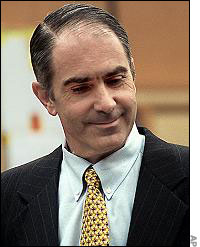
Prior to the trial, lab work was completed on the unknown smudges on Bergna’s tennis shoes, to ensure that the substance was from the asphalt at the scene. A solution that dissolved asphalt was applied and it successfully dissolved the smudge material. Infrared spectroscopy found elements that were consistent with asphalt, and some of same material was found on other areas of Bergna’s clothing. But there was no evidence of the expected plant matter with which he had allegedly made violent contact on the side of the hill. Thus, the crime lab results did not support his story. Yet the defense would have its own expert opinions on this matter, not the least of which was to comment that Bergna’s clothing had not been confiscated in a timely manner.
Bergna’s attorney, Michael Schwartz from Seattle, said he would not accept a plea. It was time to go to trial.
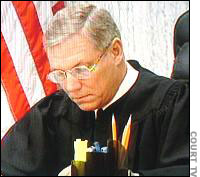
Washoe County District Judge Brent Adams presided over the trial, which began on October 4, 2001. Clifton’s belief, from calculations, was that the truck had been traveling at 22 mph, and had gone through the guardrail at a right angle, 60 to 90 degrees. The curve around the mountain wound to the left and the truck would have been going that way as it proceeded down the mountain, but to hit the guardrail, the driver had to have turned right. Clifton said that Bergna had jumped from the truck before it hit, rolling his foot in a way that sprained it and left a mark from the road on the tennis shoe he wore. He did not have a seatbelt on, as if ready to jump.
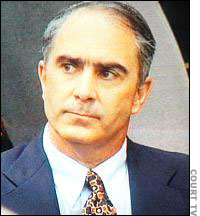
In an aggressive and confident move, Schwartz dismissed most of this theory and stated that cornstarch found on Bergna’s clothing was consistent with the airbag deploying, which proved he was in the truck when it contacted the guardrail. As for his attention to women, that was part of his business, and in any event it was hardly an indication that he was a murderer. Schwartz also questioned Schilling’s credentials, saying that he had only attended a few brief training sessions, and hence, was no expert. In addition, their expert calculations indicated that the truck had not struck the guardrail at right angles but had instead slid along the edge and hit the post, which projected the truck into the air with a twisting motion that would have allowed Bergna to be ejected out the open window in the manner he described.
Clifton played the 911 call to open things up, and the police and emergency team witnesses came on the stand to discuss their encounters with Bergna on the night of May 31/June 1, 1998. Then the case went into the technicalities of accident reconstruction, with Schilling showing how the defense theory had to be wrong. Schwartz worked hard to undermine Schilling’s credibility, so it was clearly a matter for the jury to decide — if they even followed the mathematical details.
On October 11, Judge Adams nearly had to call a mistrial. Detective Belton was answering questions about his interrogation of Bergna the day after Rinette Bergna’s death and he mentioned that he’d asked Bergna to come in the following day to take “a test.” While he did not specify polygraph, which would be inadmissible and could unfairly prejudice the jury, it was clear what he meant and he had been instructed not to refer to it. In fact, all police officers knew that they should not do this in court; it was, in fact, unlawful to do so. The jury was asked to leave as Schwartz instantly demanded a mistrial. He debated with the Clifton, getting hot under the collar and, in one reporter’s words, they “nearly came to blows.”
Judge Adams told them to stop and said he’d had enough of their antics. He threatened fines all around, followed by contempt citations, and then denied the request for a mistrial. Nevertheless, he told Beltron he could have cost tax payers a considerable amount of money to reseat a jury. He then invited the jury to return.
Beltron played a tape of his interview, supplying the jury with transcripts so they could see for themselves Bergna’s odd statements and inconsistencies. These included his statement about the romantic place he shared with his wife along with the statement that she’d never been on Slide Mountain in that spot. The jury was also left with the impression of how Bergna had disliked his wife’s new job. To conclude, Beltron stated that he had overheard the defendant tell his father, “I did it,” but he did not know to what Bergna had referred, and this odd remark was never quite clarified.
On cross examination, Schwartz showed how poorly the case had been documented and investigated, accusing the entire team of acting under the influence of tunnel vision — forming a theory and supporting it rather than collecting facts and then coming up with a viable explanation for them once they were properly gathered. Tunnel vision is the bane of inexperienced officers, encouraging them to overlook evidence for other possible explanations. That, said Schwartz, appeared to be the case here.
It was a crucial point, as the trial centered on technical details about accident reconstruction that depended on getting the facts right — and getting them all. Schwartz could only hope the jury members would keep this in mind.
They were shown the mangled guardrail and scale models of the side of the mountain where the incident had occurred, so they could understand how it was reconstructed. A lab tech testified that while cornstarch had been identified on Bergna’s clothing, it was in the amount consistent with what was in the air at any given time and did not necessarily indicate the airbag as its source. Asphalt marks on his tennis shoes and on his cap lying in the road indicate he could have been out of the truck before it hit the guardrail.
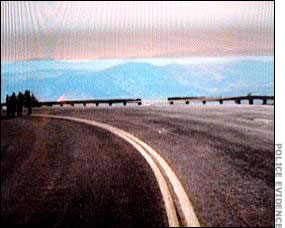
On October 20, during the trial’s third week, the jury went to the accident scene to see it for themselves. Clifton wanted to give them a better idea of what Rinette had endured as she crashed down the side of Slide Mountain, as well as provide a three-dimensional view. “There’s really nothing that allows them to truly live the experience other than seeing it in person,” he was quoted in the AP as saying. “It really hits home.”
The jury members were instructed to say nothing as they looked over the precipice and saw a yellow flag 700 feet blow. They also saw the spot eighty feet down where Bergna claimed to have come to a rest. Bergna was there as well, conferring a short distance away with his attorneys. Fleeman says he then walked over and looked down himself.
Back in the courtroom, a final and dramatic witness for the prosecution was a prison inmate who claimed that Bergna had admitted to killing his wife because she did not want children and did not want to pay out in the event of a divorce. He allegedly said that he had a good attorney who could get him off. This man claimed he was coming forward because it was the right thing to do. But Schwartz presented the man’s lengthy criminal history and continuous deception, effectively destroying him as a credible witness. Now it was Schwartz’s turn to lay out an alternate scenario.
Kay Sweeney, an investigator from King County, Washington, testified for the defense on October 30 that the evidence had not been properly protected. The truck had stood outside in the weather, which exposed scratch marks on it to fading, as well as making it difficult to analyze trace evidence inside. Nevertheless, he showed how the truck had sideswiped the guardrail and bounced over the top of a wooden post, ejecting Bergna. Particles on Bergna’s clothing from the airbag were consistent with the possibility that he had been in the truck when the bag inflated, so he was still inside when it made impact. In addition, the marks on his shoes were not necessarily from asphalt from that roadway.
Two other investigators agreed that the lack of evidence preservation made the evidence difficult to accurately interpret. Dean Jackson, a retired professor of material science from Arizona State University, used several items to support the possibility that Bergna had been ejected from the truck in the manner he had described: marks on his shoes and clothing, and a bent area of molding on the driver-side window. He claimed that the bottom of the shoes had not come into contact with something hard, as they would have had he jumped out while the truck accelerated. The smear on his shoe matched items such as motor oil, which could have come from the truck — or an unrelated source.
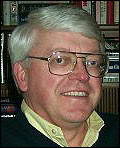
On October 24, Robert D. Keppel, with a lot of experience with staged accidents, insisted that this one did not have the markers typical of staging, and Bergna’s behavior was not what was expected from men planning to kill their wives. There had been no recent insurance policy to enrich himself and no mistress on the side. Indeed, a plan to jump from a moving vehicle before it went through a guardrail — if it even would — seemed risky and preposterous. On top of that, the investigation itself was full of holes.
One expert offered testimony with a simulated rendering of how the accident had occurred, indicating exactly how the truck had caught on the guardrail post and twisted around at a 50 degree angle. To make this simulation, he had used the width of the truck’s wheelbase and looked at marks on the guardrail posts from the truck’s tow hooks.
For several days, character witnesses took the stand to discuss Bergna’s demeanor after Rinette’s death. Then an insurance broker stated that Peter had not wanted to take out such a large life insurance policy; it had been Rinette’s idea, and it was she who added extra coverage for accidental deaths.
By the time Schwartz was finished, Peter Bergna did indeed appear to be the victim of an accident, having little to gain and a lot to risk by staging an accident in this particular manner. But it was time for the rebuttal.
The prosecution’s first rebuttal witness was Robert H. Turner, a retired professor from the University of Nevada who specialized in mechanical engineering. He was critical of one defense expert’s calculation, calling it junk science. He stated that it was so flawed, any student handing it in would have received a D; it was “shot through with mistakes.” The truck could not have changed direction so dramatically just from hitting the post. His own calculations affirmed those that Schilling had made.
Michael Schwartz asked him how he could form such an opinion without having examined all the evidence. Turner responded that the mechanics indicated that the truck could not have changed direction as much as the animation indicated. “It’s not physically possible,” he said, and there were discrepancies in some of the measurements.
During breaks in the trial, state reporters from the AP, the experts “performed additional calculations” to accommodate small discrepancies and came back to report that they would have made no difference to the ultimate interpretation.
But a problem arose among the defense experts. Jon Jacobson had testified that Bergna’s truck had not hit the ground first with its right front corner, but a second expert, Lindley Manning, indicated that in discussions, Jacobson had made the opposite claim. Manning, a retired University of Nevada engineering professor, stated that Jacobson’s account of the crash was in error. But he also pointed out that the Nevada Highway Patrol had devised a mistaken theory as well. In his opinion, the lead investigator, John Schilling, was “uneducated.”
Whether the jury members followed any of this is anyone’s guess. It’s likely they tried, but it’s just as likely they decided that there were too many disagreements among supposed experts to take any of them seriously. How were they to decide who was right?
At any rate, the cases had been made on both sides. In summing it up, Clifton said that Bergna had plotted the killing because he had disliked the fact that Rinette had taken a job that paid half of what she’d been making and took her away for long periods of time. Just prior to her return, Bergna had tried dating other women, as if he knew he’d soon be free. He had also checked out the area where the crash would happen and he had placed two unsealed five-gallon cans of gasoline into the truck before picking up his wife, to ensure the vehicle’s destruction when he sent it over the edge. In addition, he had suffered few injuries from being ejected from a truck, which had surprised everyone with accident experience, and his version of how the truck went through the guardrail had been contradicted by even his own experts. The jurors needed only use common sense to understand the scenario — intentional murder.
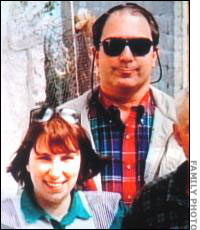
Schwartz took the path of asking the jury not to add insult to injury: a man has an accident and he must pay for that by going to prison? The jurors might not like the way Bergna processed his grief, but that did not imply he was a killer. There was no solid motive and the facts of the crash were obviously interpretable in more than one way. Clearly, there was reasonable doubt.
After seven days of deliberation, the jury deadlocked, with nine voting for conviction and three against. (Apparently, the jury sent a note to the judge indicating that one hold-out believed that if Bergna really had killed his wife, God would punish him and the juror could not live with making that decision himself.) The judge was forced to declare a mistrial, and Peter was released from jail on bail to await another trial. Part of the $750,000 bond included the deed to his home, worth $500,000. Bergna’s wealthy mother took responsibility for the rest.
Michael Sion, writing for the Reno News and Review, sat through a day of the trial and came out thinking that despite a gut impression that Bergna was guilty of killing his wife and staging an accident, one could not be certain beyond a reasonable doubt. Indeed, he points out, it had taken detectives three years to arrest the guy. While Sion comes to no conclusion, he raises an issue at the heart of the case: how can we know for sure?
Let’s look at the use of accident reconstruction experts. Those on the prosecution insisted that calculations support the incident as a staged accident, while the defense experts said it was not possible to prove that. Indeed, one could as easily interpret the evidence in the opposite manner and accept that the incident was, as the defendant said, an accident.
Donald J. van Kirk, a forensic engineering consultant for fifteen years, and a former senior engineer for Ford Motor Company, states that a reconstruction is not a re-creation, because it is impossible to actually recreate a specific accident. No two vehicles of the same make and model are identical; even from the same assembly line, they might differ by a few hundred pounds. The reconstructionist can only interpret the facts to devise a scenario that makes sense (fits the damaged vehicle, witness statements, and data from the scene).
Van Kirk admits that reconstruction is more an art than a science, despite all the mathematical calculations. This means that a solid interpretation will come from an experienced neutral expert with nothing at stake except his or her own reputation for telling the truth. Even at that, whenever a fact is interpretable, especially at crime scenes that have not been properly preserved, more than one scenario might be possible. As such, it would be difficult to base the outcome of a case such as Bergna’s on the reconstruction alone. In fact, it was likely a case more about his character than technology.
Clifton was so certain of Bergna’s guilt that he decided to try again.
In June 2002, the second trial began, and it was equally technical, but this time both sides promised in the media to bring more to the table. The prosecutor hoped to delve more deeply into Bergna as a person, while the defense attorneys (three of them) claimed to have information about the braking system of the truck. Schwartz tried to get a change of venue, due to media coverage, but Judge Adams said he would do that only if he could not seat an impartial jury in Reno. He apparently succeeded.
On May 13, 2002, the emergency workers who had arrived at the scene recounted their surprise that Bergna had sustained so few injuries. Ejection, they stated, often produced more serious injuries, even life-threatening ones. Nevertheless, they were forced to admit that some people do manage to escape an ejection incident without injury.
Schwartz claimed that a test done of the truck since the first trial showed that there had indeed been a failure, as Bergna had claimed. In fact, he had hoped to prove that the Ford Motor Company had a history of cover-up involving the brake systems on this specific truck model and make, and thousands of such trucks had come in for repair of the brakes. He offered several thick binders full of evidence to support his claim, containing documents from another attorney who was involved in a lawsuit against the automaker in North Carolina. He said he had evidence that would show that these trucks could easily fail in such a way that the person did not have enough effective breaking distance to stop before hitting something.
However, the official position of the Ford Motor Company was that there was no such wide-scale brake problem, and Judge Adams determined by looking at the materials that the many reports were irrelevant, since they were not specifically about the Ford truck at the heart of the case. Schwartz was posturing, he said, and these items would not be admitted.
Clifton indicated that even if Bergna could not stop, he could have at least tried to avoid hitting the guardrail. There was no evidence of that. He told his wife that he was having trouble, so he clearly had time to do something of that nature. When asked why had had not tried steering away, he had offered no explanation. In addition, Clifton said once again, if he had indeed been thrown from the vehicle as he claimed, he would have kept going down the hill, not stopped where he was found.
Friends of Bergna’s once again testified that he had deeply loved his wife and had been terribly distraught after her death. His coworkers affirmed that the marriage had been stable and supportive. At first after the incident, one man said, Bergna had been numb and without energy, unable to work effectively.
Following that testimony, however, was Bergna’s first wife, a rebuttal witness who said she had been frightened of him. “I was very, very fearful of my physical wellbeing,” she said. Rebecca Tillery had been married to Bergna for three years and she recounted how Bergna was able to show a façade to others of an affable guy, but “once the door was closed, I found there was a totally different person.”
In closing, Deputy DA Kelli Anne Viloria, working with Clifton, depicted Bergna as a calculating killer who was hoping to commit the perfect crime. She said he viewed both his wife and the truck as easily replaceable. He was unhappy over Rinette’s new career and the loss of income, and had been looking at other women during the weeks prior to the murder. She repeated all the known facts that supported their case and reiterated how terrible it must have been for Rinette to go over the cliff’s edge. “She threatened his self-worth,” Viloria contended, “and the cost was Rinette’s life.”
Schwartz insisted again that the case was all supposition and interpretation, not fact. The evidence pointed to a different scenario, he stated, and the story about an accident was entirely credible. In addition, Bergna’s complete assistance with the investigation undermined the notion that he was a calculating killer. “Let’s have some evidence before we start making these claims, shall we?” he pleaded.
Yet it was Clifton who had the last word, and a rather convincing one at that.
In a dramatic flourish to finish the case, DDA Clifton asked the jury to consider this question: if the truck had such problems with braking, why had the defendant replaced his damaged vehicle with another Ford truck? Not once, but twice. That was something to think about.
The trial had lasted six weeks and this time, after three days, the jury members agreed: they found Bergna guilty. As they were polled, he sat at the defense table shaking his head in disbelief. Then he was handcuffed and taken away. Schwartz refused to comment for reporters, but Clifton said he was ecstatic.
The next day, the jury recommended that Bergna receive life in prison, with eligibility for parole after twenty years. Bergna began to sob, burying his head in his attorneys’ shoulder for comfort. He would be an old man before he got out and he would surely lose his fiancée.
Although he had not testified, Bergna now rose to read a statement: “Please believe me that I felt and still feel great sadness following the death of my friend and my wife. Not one day will ever go by or has gone by that I will not think about Rinette and what she meant to me and my family.”
Schwartz put an arm around him and later told the press he was convinced this was an erroneous verdict. He vowed to prove his client was innocent.
Some jurors commented to the Reno Gazette-Journal about what had assisted them in their decision. The fact that Bergna had been wearing gloves and heavy clothing in June had seemed suspicious, as if he knew he’d need protection, as had his tale that he’d been ejected feet first from the truck. And how had he been smoking a cigar as he’d stated, they wondered, while wearing gloves? In addition, they weren’t convinced that he could have been talking to the 911 dispatcher, telling her he was sliding. Instead, on a precipice that steep, they believed he’d be using his hands to stop himself. In their minds, he had not been down the slope when he made the call.
By September, Judge Adams had to consider whether Bergna would get yet a third trial. Schwartz had already claimed that the conviction had been based more on a vindictive ex-wife than on the facts. In addition, he had found a way to show that the trial had not been fair: the area’s publicity had been prejudicial, especially since newspapers had published that the mistrial results had inclined toward conviction. Before the trial had even begun, three jurors had stated that they believed Bergna was guilty. Hence, their expectations could have affected the way they heard and interpreted the evidence. He supplied the names.
Judge Adams listened to Schwartz for two days as he claimed that a juror, Nicole Abbott, had smoked marijuana, talked about the case outside court, and taken jury notes home with her. She allegedly had discussed the case with a man, Christopher Wood, who had then briefly shared a cell with Bergna at the Washoe County jail. This amounted to jury misconduct, they claimed, which affected the verdict.
The prosecutor countered that the allegations had been refuted and that, at worst, Abbott had merely made a few misstatements, claiming she had not discussed the case or heard newspaper reports when she actually had, none of which had affected the jury’s ultimate findings. (Then a cellmate of Wood’s claimed that Wood had said that Bergna offered him $50,000 to spill the goods on Abbott, although this claim, too, was not substantiated.)
Schwartz responded that the system should not tolerate such lies, because they were on “substantive, important issues.” Clifton called them “momentary lapses.”
On September 25, after due consideration, Judge Adams upheld the conviction and denied Bergna’s bid for a third trial. He believed the verdict had been fair and impartial. “The court…” he stated, “does not believe that the totality of evidence fails to prove the defendant guilty beyond a reasonable doubt.”
Bergna appealed this decision to the Nevada Supreme Court, asking to be released on bail until his case could be heard. He offered to put up his mother’s house in Saratoga, California as assurance he would not flee. Clifton objected, stating that the risk of flight was significant. He also said that Nevada courts do not have jurisdiction to grant bail when there is proof and a presumption that the defendant has committed murder. Judge Adams scheduled the hearing for October 21 and at that time denied Bergna’s request, stating that he had not met the burden of proof that he was not a flight risk.
On October 28, after Bergna declined to make a statement, he was formally sentence to life in prison, with eligibility of parole in twenty years. He was also required to repay the family of his deceased wife the $282,000 they had given him as her inheritance.
In December 2004, the Nevada Supreme Court published its opinion on Bergna’s appeal of the denial for a third trial. The court upheld the jury’s decision and found Bergna’s claim that the trial was unfair to be without merit. He was denied a retrial. Bergna was disappointed with this outcome, but Clifton viewed the decision as closure and justice finally done.
Bergna v. State, 120 Nev. Adv. Rep. 92 (December 20, 2004).
“Bergna’s First Wife Says She feared Him,” AP, June 12, 2002.
“Bergna Seeks Release Pending Murder Conviction Appeal,” AP,
Chereb, Sandra. “Bergna Mountainside Murder case in hands of Jury — Again.” AP, June 14, 2002.
“Defense Expert says Bergna Thrown from Truck,” AP, November 2, 2001.
Fleeman, Michael. Over the Edge. New York: St. Martin’s Press, 2004.
“Friends tell Reno Jury Bergna Loves His Wife,” AP, June 4, 2002.
Gardner, Tom. “Decision on Murder Retrial Back in Reno Judge’s Hands,” AP, Sept. 20, 2002.
Henderson, Mike. “Wife’s Death Accident or Murder?” Las Vegas Review-Journal, January 1, 2001.
“Jurors Deadlocked in Reno Murder Case,” Associated Press, November 20, 2001.
“Jurors Speak about Bergna Trial in Reno,” AP July 1, 2002.
“Jury Begins Deliberations in Murder Trial,” Las Vegas Review-Journal, November 14, 2001.
“Mystery on Slide Mountain,” CBS News, August 13, 2002.
“Professor Disputes Bergna Story in Wife’s Fatal Tahoe Crash,” Associated Press, Nov. 8, 2001.
“Prosecutors, Experts Clash over Crash Evidence,” AP, November 7, 2001.
Sion, Michael. “On Bergna and Guilt,” Reno News and Review, November 1, 2001.
Sonner, Scott. “Emergency Workers Testify in Cliffside Murder Trial in Reno,” Associated Press, May 13, 2001.
Thomas, Merry. “Bergna Denied Retrial by High Court,” North Lake Tahoe Bonanza. December 24, 2004.
Van Kirk, Donald. Vehicular Accident Investigation and Reconstruction. Boca Raton, FL: CRC Press, 20001.