All about the murder of William Desmond Taylor by Denise Noe
All about the murder of William Desmond Taylor by Denise Noe
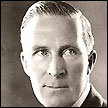 |
| William Desmond Taylor (CORBIS) |
On February 1, 1922, William Desmond Taylor was enjoying a rich,
full life. In that silent film era, he was one of Hollywoods most
successful and respected directors. He had directed such
acting greats as Mary Pickford, Dustin Farnum, Wallace Reid and Mary
Miles Minter. His notable films included Davy Crockett,
Tom Sawyer and Huckleberry Finn. He
had recently directed The Green Temptation starring Bett
Compson and Anne of the Green Gables. Both motion
pictures had been well received (perhaps green was a lucky color for
him) so he could look forward to directing many more movies.
|
|
The director resided in a California neighborhood called West
Lake Park, at the time a fashionable area. His home was in Alvarado
Court, a collection of bungalows grouped in a U-shape around an
elaborately landscaped garden. Each house was built in a
Spanish style with white stucco and red tiled roofs. The
occupants of Alvarado Court tended to be people in the movie
business. Another director, Charles Maigne, lived next
door to Taylor. Acclaimed screen actors Agnes Ayres, Douglas
MacLean and Edna Purviance also lived in Alvarado Court.
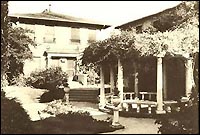 |
Taylors bungalow in
Alvarado Court
(Bison Archives)
|
|
|
Taylors life was not entirely charmed. Earlier that year, his
valet had defrauded and stole from him. Taylor had been in
England when plump Edward Sands, the directors cook, valet and
secretary, wrecked Taylors car, forged checks for over $5,000,
and stole jewels and clothes from his employer. Sands was not
caught. He appeared to have simply vanished before the
director returned to America.
Taylors replacement valet and cook, Henry Peavey, had gotten
into some trouble unconnected with his job. Peavey had been
arrested for vagrancy and indecent exposure, charges often made
against homosexuals cruising for partners in those days.
Taylor had put up bail for his beleaguered servant. The
director had also promised the court that he would appear on
Peaveys behalf on February 2.
Taylor was close to the actress Mabel Normand and, for good
reason, deeply concerned about her. In some accounts of the case,
Taylor and Normand were in love. In others, they were close
friends who shared books and laughs. In either case, Normand,
like so many people in Hollywood in the post-World War I era, had
experimented with mood altering drugs. She became addicted,
and Taylor wanted to help her kick the habit.
Normand visited Taylor that day, February 1, to pick up a book on
German philosophy. She left Taylors home at about 7:45 p.m.
The director walked her to her car where he teased her about having
a copy of the Police Gazette in the vehicle, a lowbrow
magazine considered racy in its day. The philosophy book and
the cheap, raunchy magazine certainly made for eclectic reading.
Normand blew kisses at Taylor as he waved goodbye.
Shortly after, at about 8 p.m., Taylor was shot in the back
inside his home. A single bullet killed him. Many
people believe his killer slipped through the door that he had left
open while he saw Normand off. The assassin likely waited for
the director to return to the house, then ended his life with a
single shot.
In the bungalow directly to the east of Taylors, Faith
MacLean, wife of actor Douglas MacLean who had appeared in films
directed by Taylor, was seated at her table and enjoying the last
course of her evening meal. Her husband had finished his
dinner and was upstairs playing cribbage. Suddenly she was startled
by a sudden, explosive noise.
Faith looked outside in the direction of the sound. A
stranger, who appeared to be a man in his late 20s, came onto the
lighted doorway and their eyes met in the early evenings
darkness.
The man calmly turned around and went back into Taylors house.
A few minutes later he emerged and strolled out of the courtyard
through the area between the MacLean and Taylor homes.
Reassured by the strangers unhurried manner, MacLean assumed she
had heard a car backfire and thought no more of it until the
next morning.
At about 7:30 a.m. on February 2, Henry Peavey arrived at
Taylors home to fix the directors breakfast. He was
carrying a bottle of milk of magnesia that his employer had
requested. The valet bent down to pick up the morning
newspaper from the doorstep. He had a key, and when he opened the
door, let loose a blood-curdling scream.
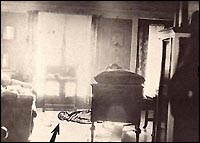 |
Crime scene, arrow points
to body
(Bison Archives) |
|
|
The fully clothed body of William Desmond Taylor lay on his
living room floor. A chair was astride one of his legs.
It was later discovered that his pockets held a wallet with $78 in
it, a silver cigarette case, an ivory toothpick, and a Waltham
pocket watch. A two-carat diamond ring was on his finger.
Above his hand he wore an item that had just come into vogue: a
wristwatch.
A crowd gathered, and someone phoned the police. But
some people got there before the police did.
|
|
