
Ginny Foat: Feminism on Trial — The Crime Library — Introduction — Crime Library
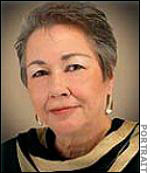
When Ginny Foat walked out of the Jefferson Parish Courthouse in Gretna, Louisiana a free woman on November 16, 1983, she and others who sided with her during her high-profile trial on murder charges were quick to proclaim it a victory for the feminist cause. Within hours of her acquittal for a murder that occurred eighteen years earlier, she broke her silence on the case, telling reporters that her “not guilty” verdict was “a victory for all women whose plight in life is to have to stay in a position because of social mores.”
But was it a victory for a noble cause or was it merely a personal triumph for an abused, formerly battered woman who found herself on the dark end of a bad situation? Was Ginny Foat truly “innocent” in the 1965 bludgeoning death of an Argentine businessman visiting New Orleans or was she found “not guilty” simply because there was too much reasonable doubt in the minds of a sympathetic jury? Because her sole accuser was a disreputable, unsympathetic character and no corroborative evidence could be introduced by the prosecution? Doubts persist to this day. A number of right wing, anti-feminist, anti-abortion Web sites still refuse to acknowledge the jury’s verdict. The truth, if it is not known already, may never be known.
What is known is that a man died a brutal death in a darkened, isolated section of a New Orleans suburb and no one has ever been convicted of his murder. The case is considered solved, but key questions remain unanswered. It is generally understood that Jack Sidote, Foat’s second of four husbands, had at least some role in the crime, if not the only role. However, owing to the deal he cut with the Jefferson Parish District Attorney’s Office, he would never have to stand trial for the murder if he fingered his ex-wife as the perpetrator. After the verdict, Ginny Foat would go home to California and pick up and reassemble the pieces of a shattered life and career, Jack Sidote would return to a Nevada jail cell, and a family in Argentina would continue mourning the loss of a loved one, wondering whether or not justice was served.
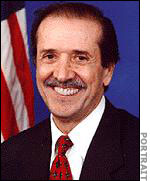
Today Ginny Foat sits on the City Council in Palm Springs, California. She is one of three openly gay/lesbian elected city officials, including the mayor a seat once occupied by the late Sonny Bono. In this mid-sized resort community on the fringes of the Mohave Desert, made famous by its hotels, golf courses, and former resident Frank Sinatra, Ginny Foat goes about the routine business of attending ribbon-cuttings and voting on ordinances aimed at ensuring orderly growth in her adopted hometown. Her trial, which caused a national media feeding frenzy, is more than two decades behind her. She has moved on in the direction she was headed before the flow was interrupted by a highly publicized arrest in Burbank on a January day in 1983.
Who was Ginny Foat and why did her trial and acquittal cause such a stir in the media and within feminist and anti-feminist circles? Did she deserve to be the cause cèlébre some made her out to be or was she the femme fatale as others portrayed her? The story began long before her election as President of the California Chapter of the National Organization for Women (NOW) in 1981 and her emergence as one of the nation’s leading spokespersons against domestic violence. It began, humbly enough, in the teeming New York City borough of Brooklyn more than sixty years ago.
Although she couldn’t have known it at the time, a number of developments in Ginny Foat’s early childhood may well have prepped her for the life that was to come. During her growing up process she developed an early affinity for the opposite sex and she suffered a number of beatings from a loving but stern father that may have conditioned her to initially accept domestic violence as the norm.
Ginny Foat entered the world as Virginia Galluzzo on June 2, 1941, the oldest of two daughters of August (“Gus”) and Virginia Galluzzo, for whom she was named. Gus Galluzzo, a hardworking, first generation Italian-American, was the manager for one of the Gristede Brothers’ chain of food stores, toiling fourteen hours a day and half a day on Saturday to support his family.
When Ginny was six her father had saved up enough to move the family now consisting of a second daughter from Brooklyn into what was then considered the “suburbs.” They bought a house in Queens Village in the neighboring borough of Queens that was “exactly like every other house on the block,” according to Foat’s 1985 autobiography Never Guilty, Never Free. It was a working class, strongly ethnic neighborhood consisting largely of Italians and Jews. “We lived there for six years or so, and all I recall as extraordinary about that part of my childhood was how perfectly ordinary it was,” she wrote.
But, though Ginny’s childhood appeared to be nothing out of the ordinary for a young girl growing up in the postwar era, there was one thing that didn’t mesh with the stereotype: she was a tomboy. Despite being told by her mother, “Girls play with girls and boys play with boys,” Ginny preferred the boys. They appeared to have more freedom and more fun. They did mischievous things like writing their names in the wet cement of newly poured sidewalks and experimented with smoking cigarettes. On one occasion a carelessly discarded match or still-lit butt set a nearby field on fire.
Like most of the other Italian-American fathers of the time, Gus was a stern patriarch and disciplinarian. Even though he loved Ginny and she loved him, when her punishment was deserved, he administered it. “Wait ’til your father gets home” was not an idle threat under the roof of the Galluzzo home. On at least a handful of occasions she could recall, Ginny was led to the basement and whipped with a leather strap her father had hanging there.
Though acknowledging in her book that she probably deserved the painful punishment, these whippings may have had unintended consequences. Ginny, who in later years would suffer physical abuse at the hands of a sadistic spouse and would become a spokesperson for the rights of abused women, asked herself some serious related questions in her book. “I’ve wondered whether it might have been there, in that basement, that I first began to believe in the rightness, the acceptability, of being beaten by a man I loved,” she wrote in her book.
When Ginny was twelve and just entering junior high school her family moved to New Paltz, New York, eighty miles northwest of the city near the Catskill Mountains. In the beginning she “felt like a Martian.” She was a Catholic in a predominantly Protestant town. A second generation Italian-American in a three-centuries-old village populated by descendents of the original Dutch, German, English, and French settlers. A daughter of a blue collar worker in a society dominated by the offspring of college professors and administrators. A “city kid” surrounded by others her age who had grown up in the country.
To make matters worse, Ginny was an early bloomer. She reached puberty at nine and was developing breasts by the time of her relocation. Most of the other girls around her hadn’t progressed to that point and she stood out prominently among her peers. Boys her age would laugh and make jokes behind her back and even grown men began staring at her. Embarrassed, she would wear baggy blouses to hide her “hated curves” but she couldn’t do that any longer after her mother insisted that she wear a bra.
But Ginny, who longed for acceptance among those her age, soon realized that she could turn her liabilities into assets. “I began to realize that . . . my looks could be a tool. I was getting attention because of the way I looked, and attention might lead to acceptance.” Boys had been telling her she was pretty and she began taking pains to enhance her natural beauty. She brushed and styled her long black hair the way the other girls did and applied makeup and mascara to highlight her large, dark eyes. Thus armed with the requisite eye-catching physical appearance, she set out on her quest for peer approval.
She started by flirting with a handsome, popular young man whose father was a dean at the university, then called the New Paltz State Teachers’ College. They began dating and going to dances and, before long, “some of his popularity spilled my way. Even the girls began to thaw.” Ginny got invitations to pajama parties, Saturday afternoon movie outings, and other feminine social events. She developed a strong network of friends among the other girls.
Within a year, having ascended the first rungs of the social ladder, Ginny ditched her first boyfriend and sought greener pastures. In so doing, she embarked on what would become a long pattern of preference for older, more savvy men. Fred Schindler fit the bill. She was fourteen and he was two years ahead of her in high school when they started dating.
Over the next few years, Ginny and Fred became so inseparable that marriage was assumed to be a foregone conclusion after she graduated. In fact, just before her graduation, they became engaged. Having a steady boyfriend of Fred’s caliber cemented Ginny’s acceptability among her peers. She was elevated to the upper echelons of her social circle. She took part in school sports, sang in the chorus, worked on the yearbook staff, and helped organize dances and proms. These were happy, fulfilling years for her. She graduated with honors and began contemplating her future.
For a time, Ginny worked as a waitress for a drive-in restaurant and that was considered okay for a young, single woman. But, when marriage came, it was expected she would quit working, have babies, and dutifully spend her days in a housecoat and slippers, following the dictates of a straight-ahead, “till death do we part” domestic lifestyle. Ginny, however, had other ideas, even though she couldn’t exactly pinpoint them. A restless, adventurous stirring within her she was at a loss to explain.
A hint at what might lie in store occurred when she attended a Career Day while still in junior high. She went home to announce to her mother that she wanted to become a lawyer. The response was predictable for the time. Her mother laughed and questioned where the money for “all that school” was going to come from, while speculating, “You’re just going to get married anyway. It would just be a waste.” Had she been a boy, she wrote, it would have been different. Parents in that era saved their money for weddings if they had daughters and for college if they had sons.
By contemporary standards, it is difficult to imagine that such double standards once existed so recently in our history but they did, nonetheless. Women didn’t routinely become doctors and lawyers in the ’50s. Or pursue business careers or other careers traditionally considered a male bailiwick. Those women who pursued secular careers usually exploited the limited options open to them nursing, teaching elementary school, or becoming librarians or secretaries. Jobs the men didn’t want. In many cases these were women to whom men were not attracted and they were simply thought of as “just making the best of their situation.” Condescending terms now branded as sexist such as “old maid,” “spinster” and others of a more vulgar connotation were routinely applied to these unmarried career women. These stereotypes were reinforced by the movies, TV, and other media during that era. “Gal Friday” was an acceptable metaphor for women in clerical positions as recently as the 1970s.
These were the “choices” most young women of the ’50s faced: get married and become a housewife or follow a traditional female vocation as a lonely single. By the time she finished high school, Ginny Galluzzo knew she wasn’t cut out for either one of them.
Soon after graduating high school, Ginny began to get jittery about her impending marriage and the prospects of a staid, uneventful life ahead. She “picked silly fights and trivialities to argue over” with Fred, and refused to set a wedding date. Finally she gave him back his ring and, even though she continued to see him, the relationship had definitely cooled. Finally it ended altogether.
Ginny watched apprehensively as her high school friends went away to college or settled down with spouses of their own to have families. The fun life she enjoyed during her high school years was over and she felt like she was “being left behind.”
The prospect of getting out of her small town and finally out on her own appealed to Ginny’s adventurous spirit. She enrolled in Grace Downs Academy, a school in New York City for flight attendants, then called stewardesses or, more condescendingly, “stews.” This, too, was one of the few careers open to women at the time, but they had to be young (under 35), single, attractive, cheerful, and poised. The minute they got married their wings would be clipped. This was standard policy for all the airlines at that time. Company officials rationalized that the demands of the job, constantly being on the go, would cause strains on their female employees’ marital relationships. However, there was a deeper, more underlying and publicly unspoken motivation on their part. They wanted pretty faces to attract the well-to-do business travelers.
At the time of her enrollment at Grace Downs, Ginny Galluzzo perfectly fit the mold. Pretty, voluptuous, cheerful, she was easily accepted for admission. She lived in a dorm and attended classes that taught about airplanes and airports “but most of the program had a finishing-school flavor” about it, she later recalled. The trainees were taught to walk like fashion models, with books balanced on their heads. They took classes in how to apply makeup and groom their hair, and to properly greet passengers, serve their trays, and be attentive to their other reasonable needs. At the time this was standard procedure.
Living in the big city as a young, attractive single woman, Ginny had an active social life. No longer involved with Fred, she dated other men and, for a time, she was free for the first time since junior high. But one of those she dated was Danny Angelillo who, for some unexplained reason, she called “Tony” in her book. Danny had been a star football player at a rival high school and was attending college on a football scholarship until an injury put an end to that. They continued to date while Ginny finished up at Grace Downs. She finally graduated and got her “wings” pinned on in the summer of 1960.

Her first assignment was hardly what one would call glamorous. She worked the Cleveland to Newark commuter run for Allegheny Airlines. But, to Ginny who had never traveled farther than to Rhode Island to visit cousins, it was an opportunity to get away from the boredom of her previous existence. She liked the feeling of independence it gave her. She hoped to eventually go on to bigger and better things, traveling to more exotic places, but marriage a year later put an end to her flights of fancy.
Ginny and Danny were married on August 20, 1961. She had just turned 20 two months earlier. However, marriage wasn’t right for either of them at the time, as Ginny later acknowledged. It wasn’t the “rose-covered cottage” she had once envisioned. Danny went back to school at New Paltz State, immersing himself with a circle of friends Ginny felt out-of-place with, and she went to work at a school for emotionally troubled inner city boys just outside of New Paltz. Ginny was troubled by the fact that she had to be the one working while he went to school and hung out with his friends. Her Italian-Catholic upbringing had conditioned her to expect that the husband would be the provider.
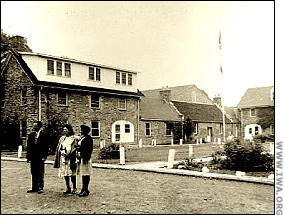
The experience of working at Wiltwyck School for Boys was an eye-opener for Ginny. For the first time in her life she was forced to confront the realities of racism. Most of the boys at the school were black. Some had been physically and/or sexually abused by parents, some had already been on drugs, others had been abandoned to the streets. “It was impossible not to be outraged by a system that caused such misery or allowed it to exist,” she wrote.
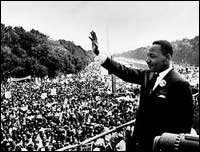
This experience stirred her to a level of activism that would characterize her later life. She got involved in the Civil Rights Movement and helped organize a contingent from upstate New York to participate in the 1963 March on Washington and she helped charter buses that would convey them to the demonstration. On August 28, 1963, twenty-two year old Ginny Galluzzo Angelillo was one of the 200,000 people gathered in the Nation’s Capital to hear and cheer Dr. Martin Luther King Jr.’s “I Have a Dream” speech.
The experience convinced Ginny that she had a future as an activist but her dream, like that of Dr. King, was cut short at least for the present. Determined to try and make her marriage work, despite the differences between her and Danny, she was crushed by the news that he was having an affair with another student at the college. Attempts at reconciliation failed and the couple agreed to an annulment. Ginny blamed herself for the breakup and her guilt was not made easier by the knowledge that this would be the first failed marriage in her family’s history. She felt like a failure, herself; then came an even more shocking revelation. She was pregnant. Worse yet, the baby wasn’t Danny’s.
The child Ginny was carrying was conceived during a casual affair she had during her separation from Danny. This was the early 1960s and the sexual revolution of that decade was still a few years off. For Ginny, or any other young unmarried woman of that time, to have a baby out of wedlock would have been a major scandal. Especially to her parents. Abortion was ten years away from being legalized by the Supreme Court’s Roe vs. Wade decision; a ruling that would later become a major linchpin for the feminist movement. Ginny was left with no choice but to have the baby and then give it up for adoption.
After much agonizing and an intensive search, Ginny located a home for unwed mothers in an unnamed Midwestern city run by a religious organization. To pay the expenses for her trip she sold her MG convertible and bought a cheaper used car, pocketing the difference. She told her parents she was going on a long trip to take her mind off the situation with Danny and her other troubles. For the next few months she would have no contact with them.
Checking into the home and being apprised of the rules and regulations was a demeaning experience for Ginny. “Every moment I spent in that place was an exercise in guilt. We were constantly told in subtle, tacit ways that we were worthless, and we were also told it outright.” The pregnant young women of the home were reviled as sinful sluts and expected to follow a strict daily regimen that included lowly cleaning chores as part of their penance. Once, after Ginny had finished polishing a wooden railing in the chapel, her supervisor ran her finger along it, looked at it, and told Ginny, “It’s as dirty as you are.”
When Ginny finally did give birth, the only information she was given was that it was a boy and he was healthy. In accordance with the home’s policy, she was not allowed to see or hold the baby. As soon as she recovered from her delivery, she was asked to sign the adoption authorization papers and that was the end of it. When she was strong enough to leave the home she paid the nominal fee and headed back to New Paltz, feeling sad and empty after giving up what would be her only child. To this day she has no idea whatever became of him.
For months after returning to New Paltz, Ginny dwelled in a deep depression. Her parents attributed her mood to the breakup of the marriage, not knowing at the time their daughter had recently given up what would have been their first grandchild. Her father, in fact, would never know. Her mother only found out twenty years later when the story came out on the witness stand at Ginny’s murder trial.
While experiencing this lowly state of affairs, she fell into the arms of John “Jack” Sidote. It was the spring of 1965, about a year after having her baby. Ginny accepted an invitation from a girlfriend to have a few drinks at Villa Lipani, a nearby resort that catered primarily to an Italian-American clientele. Behind the bar, mixing drinks and charming the women customers was Jack.
Ginny described him as “an aggressively good-looking man who appeared to be in his middle to late twenties (he was 26). He wasn’t very tall, but he had a lean, broad-shouldered, compact strength. His hair and eyes were black, and his face seemed very dark above his ruffled bartender’s shirt. … There was a compelling vitality about him, a sort of magnetism that I could feel even at a distance.” He also sported a deep scar that ran the width of his forehead. “But, instead of detracting from his looks, it added somehow to the impression he gave of total, overpowering masculinity.”
Ginny was taken in by him immediately. “I couldn’t take my eyes off him,” she confessed in her book, despite being warned by her friend that he was “bad news.” She went on to write, “I’d never in my life felt so drawn to a man or so excited by one. I loved the way he looked and the way he moved, and I loved what I saw as his confidence, his aura of strength and power. That, I thought, was exactly what I needed in a man.”
But, if that was what she saw in Jack, she wasn’t the first or only one to see it. His reputation as a Don Juan was no secret. The resort had cottages on the premises, one of which the owner, John Lipani a father-figure to Jack graciously let him stay in while Jack was separated from his wife. At least that’s what he later told Ginny. Prior to their meeting, he reportedly had many overnight trysts with women patrons and resort employees there. He had a wife and young daughter living in Wappingers Falls, a small village south of Poughkeepsie on the eastern bank of the Hudson River, and the marriage may, indeed, have been on the rocks at the time, but he was still legally married.
When Ginny returned the bar the following night, Jack explained his marital situation to her. He had been married to his wife, Elaine, since 1959 and they had a daughter but things weren’t going well for them. He wanted a divorce but his wife was a devout Catholic and wouldn’t grant him one. He loved his daughter and went to see her as often as he could but, as far as he was concerned, the marriage was over. Whether or not he was just feeding Ginny a line to ease her apprehensions was something she couldn’t tell at the time. It didn’t seem to matter to her, though. Ginny saw him as a great catch and she was willing to do what it took to reel him in. All the while, he was reeling her in, too.
The next night she went back again and Jack talked her into staying until he closed at 4 a.m. They later went to his room. Ginny, who to that point in her life, had used her looks and later her body as a tool to get the attention she craved from men, admitted in her book that she “never especially liked the act itself.” With Jack it was different. “Mutual passion was a strong bond between us, at least at first.”
Soon after that first night together, Ginny and Jack became virtually inseparable. She would come to the bar and hang out until closing time or wait at home for him to call her at the end of his shift. On his days off they would go horseback riding, play bocce, or go to fancy restaurants in New York City. On other occasions they would go to the racetrack at Yonkers, where Jack seemed to know everyone, including track officials, thoroughbred owners, and important guests. They frequented the clubhouse, eating dinner while the races were underway and hobnobbing with other VIPs. For Ginny, who was attempting to recover from a long bout with the blues, this was just the therapy she needed. She felt needed, attractive, and important again.
In later years, long after their breakup and a contentious murder trial in which each would accuse the other of the terrible act, Ginny would reflect on how she could ever have gotten involved with him, knowing what she knew twenty years later. She would answer people’s questions along these lines by putting her situation in the context of her time. Women growing up in the ’50s were conditioned to measure their own worth by that of the men they were with. But her best explanation for her involvement with him was a very simple one: she loved him.
As the relationship between Ginny and Jack grew closer, the rift between her and her parents grew wider. She described it as being “under siege at home.” Her drinking and carousing till all hours of the night on those nights when she actually came home plus the fact that she was carrying on with a married man who had a child, was more than her parents with their Old World values could tolerate. They disliked Jack and were so cold to him that he stopped coming to the door when he came to pick up Ginny. He would sit in the driveway and honk the horn, an act that drove Gus ballistic.
Rumors had been circulating that Jack had “been rough” with a girl he dated who was the daughter of a friend of hers. Ginny was cautioned by her mother to be careful but she vehemently defended Jack, trying to reassure Virginia that he was always gentle with her.
It did no good for Ginny to remind her parents that Jack Sidote had come from the same hardworking Italian stock as themselves. The fact that he had graduated high school, served in the Marines, been honorably discharged, and worked a steady job all fell on deaf ears.
In marked contrast to Ginny’s free-spirited, largely nocturnal lifestyle, her younger sister Emilia married a nice Italian Catholic man and settled comfortably into a diurnal routine that had Gus and Virginia’s wholehearted approval. Ginny remained confident that a similar situation might be possible for her and Jack and that, once achieved, her parents would finally come to accept him.
But, when the real tip-off came that something wasn’t right about Jack, Ginny failed to read the handwriting on the wall. After being stood up by him for a date and not seeing him for two days, he explained that he had been arrested for possession of a gun. He was released after convincing the police he needed it for protection while driving through rough neighborhoods in New York City. After telling Ginny the story, he retrieved the gun from a drawer and began waving it around, saying “I’ve killed a lot of people with this gun.” When she tried to laugh it off as a joke, he grabbed her violently by the shoulders and began shaking her hard, shouting, “You don’t believe I could do it?” several times.
For Ginny, the experience was physically painful; the first of what would become many painful beatings at his hands. As he was shaking her, she described being frightened by “the look in his eyes. It was a maniacal look, a scary, crazed look” that she had never seen on him before. “You better believe I could do it,” he also repeated several times, breaking out into a sinister cackle that scared Ginny even more.
Whether it was just bravado on his part or if he was serious, Ginny had no way of knowing. Her failure to correctly interpret the warning signs that were becoming all the more apparent would lead to much worse problems later on.
As the summer of 1965 wore on, Jack began tightening his Svengali-like grip on Ginny, demanding an accounting of everything she did when he was not around, as well as who she was spending her time with. To him, most women were “bitches” and “whores,” including Ginny’s friends. To please him she had to distance herself from them, just as she had been doing with her parents. Her universe centered around him and no one else.
When the summer ended Jack announced that he had an offer from a man in Florida to go partners in a bar and restaurant and, with or without Ginny, he was going. Ginny knew she couldn’t live without him and, if he was going, so was she.
Waiting until the very last minute to tell her parents, knowing what their reaction would be, she discreetly packed her bags and sprang it on them just as Jack was pulling into the driveway. “You whore!” was Gus’s reaction and he slapped her. Then he began crying the bitter tears of a father who knew he’d lost control over a daughter he loved. Ginny’s only reply was to pick up her bags and walk out the door.
Failure in Florida
Ginny’s first surprise of many that were to come on what turned out to be a vicious and deadly odyssey was that she and Jack would not be alone. Arriving at Jack’s new Pontiac Bonneville she was stunned to see another person sitting in the passenger seat. It was Wasyl Bozydaj, a young man in his late teens who had been Jack’s bar back at Villa Lipani.
As the trio left New Paltz and headed south, Ginny felt strangely alone in the back seat. She had envisioned this as being a romantic trip for just the two of them, yet here was this third person she hadn’t been told about. Jack and Wasyl had been chatting amiably and trading off on the driving, virtually ignoring Ginny for the first few hundred miles. Finally Ginny decided to join in the conversation, asking Jack for some particulars about the deal he had supposedly worked out for the restaurant. They were a few miles outside Washington, D.C. and Wasyl was driving.
“Stop the car,” Jack ordered.
Wasyl pulled over onto a shoulder. Jack grabbed the keys, hustled out and yanked open the back door next to where Ginny was sitting. Savagely grabbing her by the arm and jerking her out the car, he dragged her around toward the trunk. Shocked and fearful, Ginny pleaded with him to tell her what she did. He seized her by the shoulders and slammed her backward against the trunk, causing a sharp pain in her back.
“What do you mean, asking me about my business?” he shouted. “Who do you think you are? You’re not my mother. You’re not my wife. You’re just some whore I brought along for the ride. Anytime you don’t like the way I’m handling things you can leave.”
Slapping the car keys into her hand, he told her, “You want to leave now? Open the trunk and get your stuff out. We’ll leave you right here.”
Having burned all of her bridges behind her, including the option of returning to her parents, Ginny knew she had no choice but to continue the journey with Jack. She handed him the keys and they were off once again.
On their arrival in Florida, at a town whose name Ginny couldn’t recall, more disappointments awaited. For two days, while Ginny waited anxiously by herself in the motel room the three of them shared, Jack and Wasyl were out all day. On the third day, Jack came back drunk and upset. He paced the floor, cursing and yelling. Ignoring Ginny, he told Wasyl that the “deal” had fallen through. No partnership, no money, no jobs for any of them.
When Ginny suggested the possibility of going back to New York he beat her viciously all over her body and threatened to cut off her breasts, all the while warning her about nagging him or asking him questions about his business. The sex act that followed was equally vicious and brutal. While making love to Ginny, Jack continued to hit her.
Then, when it was over, a bizarre transformation came over him. He started crying, apologizing, and stroking Ginny’s hair, telling her how much he loved her. He was just upset over the way his business deal had fallen through. Ever the forgiving one, Ginny forgave him and, in typical fashion, blamed herself.
A long, nightmarish journey was just beginning in more ways than one.
Murder in New Orleans
After the horrific beating she took in Florida, Ginny bore her suffering in silence. For the next few days after it Jack was sweet and attentive to her but Ginny knew she wasn’t out of the woods yet. Jack was drinking more than ever now and, when he was down, the alcohol made him mean.
A week after their arrival in Florida, Jack announced it was time to move on. He claimed to have some old Marine buddies in Baton Rouge, Louisiana who could possibly offer them work, so off they went.
On their arrival in Baton Rouge, Jack ordered Ginny to go to work. Their money was running low. After trying a succession of restaurants, they found one that hired her as a waitress. During the two weeks she worked there Ginny turned all of her nightly tips over to Jack, along with her Friday paychecks. After the second Friday, though, he again announced it was time to hit the road: this time to New Orleans.
Checking into a cheap two-room suite at the John Mitchell Hotel a few blocks from Canal Street, Wasyl got a job as a soda jerk in a drive-in restaurant. Ginny and Jack found work at the Ponderosa Bar, her as a bartender and him as a bouncer. The two of them each received about ten dollars a night for their work, much of which went to booze to support Jack’s growing alcohol addiction.
And the beatings continued, as well, often preceding and during sex. Afterward, as in Florida, he would turn sweet and apologetic and Ginny, as always, would forgive him and blame herself. She kept telling herself that their situation would get better and she even made a list of things that bothered Jack so that she could know what to avoid. She even tried to make their room look a little more homey in her off-hours during the day.
One night Jack came home late and, as he stood over Ginny, shaking her awake, she feared for the worst. “Oh, God, I thought. He’s going to hit me again,” was how she described it. Instead, “He looked scared. He looked like a little boy who had done something wrong and had been caught and was about to be punished.” Then he explained that he had been in a card game and cheated one of the players who “was connected,” a shorthand term for someone who is in the Mafia. He expected trouble and they needed to leave town immediately.
Obediently, Ginny hastily dressed and packed and, after only three weeks in New Orleans, they were on the road again, only this time it was not by choice. They were on the lam. The truth that later came out was that a man had been murdered. Whether by Jack or Ginny or both, the gory details would emerge in a courtroom eighteen years later and laid out for a jury to decide. And the story that emerged was radically different from the one Ginny told in court and in her book.
In November 1965 Moises Chayo was in New Orleans overseeing the treatment of his 23-year-old son, Raymond, for phlebitis at the world-renowned Ochsner Clinic. The story of his life, as told in later newspaper accounts, was the Horatio Alger story of a self-made man, with a foreign twist. The youngest child born into a large, poor Jewish family in Aleppo, Syria in 1903, he moved to New York City after getting married. There he opened an import-export business. In 1950, after his son and two daughters were born, he moved the family to Buenos Aires, Argentina.
In Buenos Aires, Chayo started a successful vacuum cleaner factory. He and his family prospered, hiring servants and chauffeurs, and they hobnobbed among the wealthy elite of the Argentine capital’s society. Photographs of him that accompanied the articles showed a heavy-set man, almost completely bald with just a fringe of gray hair circling his head from one ear to the other. He had a bulbous nose, dark eyes, and a winning smile. At the time of his death he was 62.
Raymond was in the hospital for a month and a half, and his father came to visit him regularly while staying at a nearby motel. On the day of Raymond’s discharge, his father was scheduled to pick him up and pay the bill. The plan was for the two of them to fly to Panama where Raymond had a business and his father was going to help him with it. However, when the day arrived, on November 21, Moises Chayo wasn’t there. By the next day a search was on.
Two weeks after Moises Chayo’s disappearance, Raymond was notified that the body of a man believed to be his father was found in a remote canal (drainage ditch) in the New Orleans suburb of Metairie. He returned to New Orleans but, by that time, the body had been so badly decomposed that it was not possible for Raymond to identify it. Reportedly he never saw the body but he identified items found on the body as belonging to his father. Raymond accompanied the casket bearing his father’s remains back to Argentina for burial.
The Jefferson Parish Coroner’s Office officially classified Chayo’s death as a homicide. The autopsy revealed the cause of death to be trauma resulting from one or more blows to the head with a blunt weapon. His body had been discarded in the canal where he hemorrhaged to death. Although a burgeoning suburb today, Metairie in 1965 was largely unsettled. The canal was in one of those unsettled areas and two weeks would pass before Chayo’s body was found.
For the next eleven-plus years, Chayo’s murder would go unsolved. A confession by Jack Sidote on March 16, 1977, in which he implicated Ginny, reopened the case. By then estranged from Ginny, who had risen to prominence in the nationwide feminist movement, Jack was living back in upstate New York, claiming to be a recovering alcoholic. His purpose for spilling his guts about the murder and a later one for which he was convicted was allegedly to purge a guilty conscience, although many people speculated it was to get back at Ginny for dumping him.
According to Jack’s confession, recorded by the New York State Police in Highland, NY, he and Ginny and Wasyl weren’t making enough money to survive in New Orleans. They were planning to leave after only a few weeks there. However, they were short of money on which to travel. Jack said he and Ginny concocted a scheme to “roll” someone. The plan, he told police, was for Ginny to dress up in a seductive outfit, pick someone up in a Bourbon Street bar, lure him into their car, and drive to a deserted area where the two of them would rob the victim and leave him stranded. Jack said he was hiding in the trunk of the car with a dustcloth wedged into the locking mechanism so he wouldn’t get locked in.
He went on to say they parked the vehicle in a small lot and later, from his hiding place in the trunk he could hear Ginny’s voice as she returned. He also said he heard a man’s voice but he couldn’t understand what they were saying. He said the car began moving and they drove “for quite awhile,” during which time the car hit a pothole and the trunk locked shut. When the car finally stopped, Jack’s confession went on, Ginny and the man she was with came around to the rear of the vehicle. Claiming that she was “ill or nauseous,” he said she told the man she had to get some medicine out of the trunk. When she unlocked it, Jack said, he jumped out and “grabbed this guy.” It was the first time he had ever seen him, he claimed.
Jack’s confession went on to say that a struggle ensued in which Chayo, being much heavier, appeared to have the advantage. He said he had a tire iron in his hand but did not have enough leverage to use it. During the struggle, he said, Ginny was shouting, “He saw my driver’s license. He knows my name. We got to kill him.” Jack, who implied that he was getting the worst of the struggle, called out to Ginny to help him. Then, his confession went on, “. . . she grabbed a lug wrench and struck him on the side of the temple. He let go of me and he fell and then she struck him again, and at this time the guy was like passed out.” He went on to tell the police that she grabbed his wallet, jumped in the car and the two of them fled the scene.
On their return to the city, Jack said, he changed clothes and discarded the ones he was wearing that had gotten torn during the struggle with Chayo. Ginny, he said, had the wallet. On rifling through its contents they found about $1,400 and some Argentine currency which they later redeemed for dollars when the got to California. Discarding the potentially incriminating lug wrench and wallet, they went back to the hotel, and later that night Ginny flew to Dallas, Jack said. He flew to Dallas the next day, he added.
Here the story gets a bit hazy. Wasyl Bozydaj would later testify that Jack gave him a hundred dollars and told him to drive the car to Houston (not Dallas), and that he and Ginny would meet up with him there. In the car with Wasyl was an unidentified passenger who was either a friend of his or a friend of Jack’s. In trying to recall the night eighteen years later, Wasyl told the court at Ginny’s murder trial he couldn’t remember who the passenger was. They met up with Ginny and Jack at a motel near the airport in Houston and the four of them continued driving westward.
Ginny, however, “had no recollection of any flight to Houston. Try as I might, I could not remember how we all left New Orleans,” she wrote in her book. However, insofar as having any part in the murder of Moises Chayo, she stuck by the story she gave on the witness stand and later reported in her book. All she could recall about that night was “that Jack had come home one night looking scared and talking about crooked card games and saying we had to go.” She claimed that she knew nothing about Chayo’s murder until the time she was informed of Jack’s confession.
Murder in Nevada
Jack, Ginny, and Wasyl, now joined by a fourth unidentified passenger left Houston, heading westward across the vastness of Texas. Ginny wrote that “there was nothing especially memorable” about the unidentified passenger “except that he had a gun.” With Wasyl driving and the other passenger sitting in the front seat next to him, the passenger and Jack, who was sitting in the rear next to Ginny, took turns shooting from the car windows at road signs they passed.
Their next stop was Carson City, the state capital of Nevada. Apparently still flush with cash taken from Chayo’s wallet, Jack paid a month’s rent and he, Ginny, and Wasyl moved in. The fourth passenger had left them there. For that entire month, none of them worked, but Ginny knew that if they didn’t get some income soon their funds would run out.
However, though both of them were trying, neither of them were able to find work. Jack would get depressed, then drunk, then violent, beating Ginny unmercifully.
By this time, she wrote, he was hitting her in the face as well as the body. She was “too bruised to make a good impression on a prospective employer.”
Other than that, Ginny maintained that she didn’t remember much else about the time they spent in Carson City. But there was more to the story that she claimed not to know about until much later: another murder.
More than a month prior to his 1977 confession to the New York State Police about the Chayo murder, Jack had also fessed up to a second murder in which he implicated Ginny. This one occurred near Zephyr Cove, Nevada, south of Carson City along the south shore of Lake Tahoe, a month after Chayo’s slaying. Again, as in New Orleans, according to Jack’s confession, the motive was robbery and the method was “rolling” an unsuspecting lone male, using Ginny as bait. This time, however, the murder weapon was a gun.
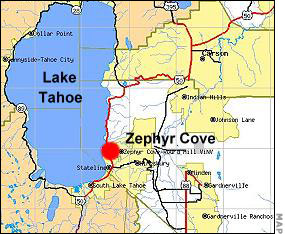
The victim, Donald Fitting, was a hotel worker from San Francisco. According to Jack’s story as told to NYSP, he and Ginny were again low on funds and they discussed going to one of the South Shore casinos to select their prospective victim. He said they sat down at a casino bar next to a man drinking by himself and Ginny introduced herself and Jack as her brother. In his confession, Jack said he was drunk and didn’t or couldn’t hear much of their conversation. He claimed to have passed out in a drunken stupor in the car’s back seat, only to be awakened by the sound of “loud noises,” possibly from a gun being fired, in the front seat.
His confession went on to say that Ginny was telling him to help her get Fitting’s body out of the car. When Jack got out and opened the front passenger door, he said the body fell against him and, with the car’s dome light on, he noticed blood on the back of the passenger seat. Ginny, he claimed, helped him get the body out of the car and lay it alongside the road, and he said she also told him to get the ring off Fitting’s finger, which Jack said he did. Jack also told NYSP that he saw a gun on the front seat of the car when he first opened the door.
Following the incident, according to Jack’s statement, the two of them drove back to Carson City as dawn was breaking. When he asked Ginny what happened, she reportedly told him, “I don’t want to talk about it.” Ginny, he said, cleaned up the car so that, by the next day when they set out for California, it was “as though nothing had happened.” When they got to California, Jack said, Ginny sold Fitting’s ring to a jewelry store for about $200. He claimed not to know where the gun had come from or what happened to it afterward.
The details of Jack’s statement regarding the Fitting murder, when checked out for their veracity, actually matched an unsolved murder in the files of the Douglas County (Nevada) Sheriff’s Office. A body was found alongside U.S. Highway 50, the main thoroughfare connecting Carson City and Zephyr Cove, on the afternoon of December 20, 1965. Jack had stated that the incident took place on the night of December 19 and the pre-dawn hours of the 20th. The police report also said “the victim had been shot three times with a small caliber weapon.” On the night of the murder, Jack said he had been awakened from his drunken stupor by “loud noises,” at least two of them. Could they have been gunshots? At his later trial for the murder, this was what was established.
Although claiming to not know where the gun came from, the weapon that killed Fitting was described as being of a “small caliber.” A month earlier, as Jack, Ginny, and Wasyl were driving across Texas, their fourth, unidentified, passenger was packing a small caliber pistol, believed to be a .22, with which they were shooting at road signs. When Ginny expressed her fears to Jack, he had laughed and reportedly told her, “It was only a little gun.” It appears possible that the fourth passenger, for whatever reason, may have left the gun behind when he parted company with them.
Two months after his confession, Jack was booked and charged with murder in the death of Donald Fitting. Although he accused Ginny of the crime, she was questioned but never charged. But, long before that took place, much more would transpire in the years between the murder and Jack’s confession, including the split between him and Ginny in 1970. The bloody and violent saga was far from over.
The odyssey of Ginny Galluzzo and Jack Sidote that began in New Paltz, New York in September 1965 ended in early 1966 on the Pacific Coast. After leaving Nevada they headed west, then south toward the Los Angeles area. They settled into a small furnished apartment on the beach in Hermosa Beach. Still naively envisioning the day the two of them would get married and settle down to a normal life minus the beatings, Ginny’s disillusionment would, unfortunately, continue. Instead of getting better, the beatings got worse, as did Jack’s drinking problem.
Jack found sporadic work at one of the small dives that catered to “local beach drunks” on the pier at Hermosa Beach. Ginny began working in a beer bar in Torrance. Later the two of them worked together for a telephone solicitation company. Ginny managed the office and Jack delivered prizes people had won.
This arrangement, Ginny recalled, worked out fine in the beginning. Jack seemed to enjoy being his own boss and, as he drank less, the beatings stopped. To Ginny, it appeared that they might finally be able to settle down to a normal life. She was even more buoyed by the news that Jack’s divorce had finally gone through. But, as always, the good times never seemed to last too long. Jack became bored, especially when deliveries were slow, and he began drinking heavily again.
Then one day she came home and found him in bed with another woman. He was apologetic and defensive, calling the other woman his favorite insult, a “whore,” and saying she meant nothing to him. In typical fashion, he managed to put Ginny on the defensive, implying that she was to blame.
Not long after that they opened a bar in Carson with the help of some backers. It was called “No Regrets.” As they applied for the liquor license, Jack offered Ginny a strangely worded proposal. “Since we’ve got to get that beer license, I guess we ought to get married.”
It was far from the romantic, wine and candlelight, ring-presenting proposal she had been hoping for but she knew it was probably the best he could do. And she accepted it in that context. On New Year’s Day, 1967, Jack and Ginny tied the knot in Winterhaven, Arizona.
Having met in a bar slightly less than two years earlier, it was ironic and perhaps appropriate that Ginny and Jack should begin their married life as proprietors of a bar. But, like the bar Jack had worked for on the Hermosa Beach wharf, No Regrets was no classy Villa Lipani either. Ginny described it as “nothing fancy just a little neighborhood bar with stools, a few tables, and a pool table. It was the kind of place where working men felt comfortable stopping for a few beers with their buddies after a long day, or bringing their wives for a night out.”
The name, too, had more than a touch of irony to it. In later years Jack would say that there were times he felt like crossing out the word “No.”
But, despite its lack of class and affluent ambience, No Regrets was Jack’s dream come true. He had always wanted to open his own bar and here was his chance. He relished it, at first, hobnobbing with the customers, drinking and shooting pool with them, and just “being one of the boys,” as Ginny put it. He even sang occasionally, something he hadn’t done since his glory days at Villa Lipani.
The newly-hitched couple moved into a nice apartment in Torrance, close to the bar, and Ginny, for the first time, began to enjoy the life of being just an ordinary housewife. Jack tended the bar some of the time and hired bartenders to help out the rest of the time. After a long, turbulent year and a half on the road, Ginny settled into a comfortable domestic routine and was confident enough at this point to invite her parents out for a visit. Her father, who hated to fly, begged off but her mother came out, along with Jack’s parents. Although the situation seemed, to Ginny, to be a bit uneasy, their parents who at first opposed the union appeared to be finally accepting it. After all, they shared a common religion, nationality, and working class ethic.
However, this blissful state of affairs didn’t last long. The neighborhood was changing and, for No Regrets, not for the better. Dark-skinned ethnic Samoans began moving in as the more affluent whites moved out. Jack welcomed their patronage at the bar but most of his less racially enlightened regulars did not. They became no-shows, and the Samoan customers, apparently, were not spending as much money as the regulars had done. Business was slipping and there was nothing they could do to stop the downslide. In desperation, Ginny offered to tend bar so that they could lay off the other bartenders and cut down their overhead. Jack agreed and she gave up her domestic lifestyle to work the day shift. Jack worked the night shift.
Watching his dream of prosperity slipping away, Jack reverted to his old familiar pattern of drinking heavily and beating up on Ginny. But, according to her autobiography, there was something different about this time. She was no longer just passively accepting his violence. Though not openly challenging him or physically attempting to fight back, she resisted in other ways. Sometimes she would barricade the door to their bedroom. On other occasions she would flee the apartment, sometimes taking refuge in the apartment of a sympathetic male neighbor she anonymously called “Sam Allen.”
In later years, as an outspoken feminist and advocate for the rights of battered women, as well as in her autobiography, Ginny would explain why she stayed with Jack through such a long, agonizing period of abuse. In her mind, which was firmly rooted in the reality of the times, there was almost no choice.
The term “battered wife syndrome” did not exist in the late ’60s when Ginny was going through it. There were no shelters in which battered women could seek refuge and counseling. When the abuse occurred women were expected to stoically and silently endure it and remain with their partners in spite of it. Naively, many of them believed their husbands would “change” one day, and stop using them for punching bags. But burying one’s head in the sand does not make a problem go away. When the issue came out of the closet in the 1970s and afterward, it was too late to help Ginny cope with her situation with Jack but it wasn’t too late for it to enable her to reach out and help others who were suffering like she had.
As had been the case on other occasions during their relationship, Ginny ended up doing a disproportionate share of the work. Jack started showing up later and later for his night shift, forcing Ginny to work longer hours. He was often drunk when he finally did come in. Sometimes he would get so drunk he wouldn’t show up at all and Ginny ended up working a double shift, which meant 11:00 in the morning till 2:00 the following morning. Fifteen hours, most of which was spent on her feet.
One hot night in August 1967, Ginny was sacked out on their couch, fully clothed and exhausted from working another of her extended shifts while ill with the flu. Jack had showed up late for his shift again, and when he finally did come in he was ornery, resentful, and drunk. Returning home in the wee hours of the morning, he shook Ginny awake. Expecting a beating, instead she heard him announce, “I killed somebody.”
That “somebody” turned out to be an eighteen year old Samoan named Okeni Moe. The story that came out was that Jack had an altercation with a group of unruly Samoans at the bar. As they fled the scene in their car with Moe behind the wheel, Jack grabbed a gun from a friend’s car and fired what was intended to be “a warning shot” at the fleeing vehicle. But the “warning shot” proved fatal. The bullet crashed through the rear window and lodged in Moe’s head. He was rushed to the hospital in critical condition and died in the emergency room a few hours later. Jack was arrested and charged with murder later reduced to involuntary manslaughter.
Although Jack was freed on bail pending trial, he and Ginny never reopened No Regrets. To have done so might have invited reprisals from an angry Samoan community. Besides, the bar was “mortgaged to the hilt” and the couple could no longer afford to make payments. Soon after the foreclosure on the bar their car was repossessed and they were even more deeply in debt. Ginny’s emotions went into a downward spiral and a deep depression set in. Her plight wasn’t made easier by Jack’s conviction in May 1968. After pleading self-defense, the judge didn’t quite see it that way. Jack was sentenced to six months to fifteen years at the state prison in Chino.
Ginny moved into a small apartment in San Pedro and soon afterward she landed an opportunity that set her along the path of a promising career. She took a job at the Princess Louise, a one-time luxury cruise ship that was now dry-docked in San Pedro Harbor and converted into an upscale dining and entertainment complex. Starting at the bottom as a cocktail waitress making good tips, she moved up the ladder as her skill levels expanded. She began working then managing banquets, learning the catering business from the bottom up. This was an exciting new world for her that put her in touch with a sophisticated circle of friends. But it also, apparently, put her in touch with some shady characters, as well, one of whom was Richard Busconi.
Busconi, whose nickname was “Blackie,” was a small-time hood who Ginny never mentioned in her book. According to an account in Ellen Hawkes’s book, Feminism on Trial, Jack was questioned in his Chino cell by two L.A. detectives in connection with a murder that took place on May 15, 1969. Busconi had been gunned down in a seedy waterfront bar in San Pedro and the detectives apparently knew that Ginny had been seeing the victim and possibly living with him prior to his death. The detectives suspected Jack may have hired a hit man to kill Busconi, but Jack claimed it was the first he’d ever heard of Ginny seeing this other man. When asked about the murder by the same detectives, Ginny admitted to casually dating Busconi but denied living with him.
Ginny denied being physically involved with Busconi when Jack grilled her about it and, according to Hawkes’s account, she accused the police of making the whole thing up. Jack later said that Busconi had beaten Ginny black and blue in the face, though Ginny claimed the bruises stemmed from an accident in which she had been involved.
Fortunately for Ginny at this time, her job at the Princess Louise made it possible for her to meet respectable people in the upper echelons of society. One of them was the restaurant manager, Raymond Foat.
Everything Jack Sidote symbolized to Ginny, Ray Foat was the polar opposite. Suave, sophisticated, unpretentious, well-bred, urbane, classy, and well-liked, Ray, to her, represented a kinder, gentler side of life. Jack’s stretch in prison, the longer it went on, was making him worse than he was before. He even beat her during her visits to the prison, once while her parents were there with her. To Ginny, Ray appeared to offer a pleasant alternative to the years of humiliation and abuse she had long endured.
Ray Foat was about six feet tall with wavy brown hair and a slim moustache. He was from England and spoke with a cultured British accent. Ginny described him as having an air of “elegance” about him. But strangely enough, in the beginning, she didn’t like him. He wasn’t the “macho” type she was used to. Not a “real man” who was “hard, tough, and commanding. . . . Real men weren’t gentle, polite, and considerate. . . . Real men didn’t charm women, they ruled them,” she wrote.
However, she soon realized that her lifelong frame of reference regarding “real men” had been skewed and she was only just now beginning to see life in a different light. In that context, she began to appreciate and admire the assets Ray brought to the table. His courtly mannerisms contrasted sharply with the Neanderthal behavior patterns of Jack. Most of all she appreciated the fact that Ray respected women. No matter who they were or what they looked like, he made them feel important and good about themselves. In a sense, he was in tune with the changing times, although his respect for women obviously predated the women’s movement.
Ray was, at the time, in the process of getting a divorce, and he began pursuing Ginny. He found all kinds of excuses to be with her, whether work-related or socially. She tried to keep him at an arms-length at first but he was persistent. Finally her resistance broke down and they became friends. Having both been through marital difficulties, they could cry on each other’s shoulders. Within a short time they became neighbors. Ginny and a friend named Clara Sparks took an apartment together on the same block on which Ray lived.
One night when Ginny and Clara were working late on a banquet, Ray called and asked them to come over to his apartment as soon as they got off. When they did, he showed them the damage a vandal had done to his clothing. Nearly every piece was slashed with a razor blade and drenched with chlorine. Ginny and Clara had just moved into their apartment and Ray agreed to let Ginny stash some of her boxes at his place until she could get her apartment better organized. It didn’t take a genius to figure out who caused the damage to Ray’s clothing but why would his wife take some of Ginny’s letters to and from Jack from her boxes? Ginny didn’t have to wait long to find out.
On her next visit to Jack at Chino, she found out that Ray’s wife had written to him saying Ginny and Ray were having an affair and that Jack had to put a stop to it. Naturally he was in a rage and he refused to believe her, despite her innocence. However, by this time, Ginny was beyond caring what he thought. She knew then and there she didn’t love him anymore and that she was in love with Ray. And though Ray’s wife was wrong in her accusations at the time, it wasn’t by much. Within a month Ginny and Ray were indeed having an affair.
By 1970 Jack had been in prison for two years, just long enough for Ginny to begin putting her situation into the proper perspective. The late ’60s/early ’70s were a time of intense consciousness-raising on all levels, and like many women of that time, Ginny began asserting a newfound sense of liberation. Women no longer had to be held hostage to old standards that relegated them to second-class status. They were standing up for their rights for the first time since the suffragette movement resulted in the right to vote in the 1920s.
Ray Foat seemed to understand this more than most men and Ginny appreciated that. He treated her with respect and dignity. Like a “lady” and not a “whore.” He helped give her the confidence she needed to move ahead with her life and realize she could now make it without Jack holding her back. Even though she dutifully went to visit him in Chino every weekend for those two years, she knew it was no longer a question of whether or not to leave him but rather when and how she would do it.
Ginny and Ray had been going out for only a few months when he got word he had to move. A Princess Louise II was being opened in Vancouver, Canada and he was chosen to manage it. Though sad to see him go, Ginny knew it wasn’t going to be permanent. They would be together again at some point, whether he returned to California or she went to Vancouver. The separation, she felt, was probably necessary. Ray’s divorce was about to become finalized. It was now up to Ginny to resolve her situation and it was better for all concerned that Ray not be anywhere nearby when she broke the news to Jack. A confrontation with unpleasant results might have occurred.
Toward the end of his sentence, Jack began getting weekend work-release passes. He worked part time in an auto body shop and stayed with Ginny at night. The beatings and the sadistic sex continued and she was thoroughly disgusted with both by then. She would tell him, “I’m leaving, Jack,” and the beatings got worse. At first he didn’t believe her and she couldn’t convince him otherwise. When she finally did it nearly cost her her life.
It was at her apartment and, after realizing she was serious about her intent to leave him, he began hitting her worse than he ever had in the five years they’d been together. He punched her in the face and everywhere else on her body, then kicked her when she was down on the floor. He dragged her onto the bed, whipped her with his belt, then climbed over her and began choking her. She blacked out.
Clara came running into the room and Jack hastily departed, calling Ginny a whore and threatening to come back the next day and kill her. Clara tried to get Ginny to a doctor but all Ginny wanted to do was get out of town, as physically painful as it might have been. Clara helped her clean up, called Ginny’s parents, and got her boyfriend to drive Ginny to the airport where she caught a plane back to New York.
Gus met her at the airport and, on seeing the condition she was in, he burst into tears. But he hugged his daughter and gave her reassurances that she would be safe. Three thousand miles from Jack Sidote, Ginny slept in her old bed for the first time in five years that night. Though battered, scarred, and in pain, there was a sense of relief evident in her description of her arrival back in New Paltz. “The ugliest part of my life was finally over,” she wrote. No man would ever lay a hand on her again.
Ginny stayed in New Paltz for about six weeks, giving her most visible bruises time to heal before going out to face the world again. She described this period as one of “recuperation and renewal … and of soul-searching and some long-overdue self-assessment.”
In the meantime Ginny continued to correspond with Ray in Vancouver. It was agreed she would go to Vancouver, spend some time there with him, then decide if she liked it well enough to stay. The Princess Louise II had an opening for a catering manager. Ray would hold the position open for Ginny if she wanted it. After flying out there in mid-September 1970 for the new ship’s grand opening, she liked it and announced her decision to stay. The job was hers.
As the months went on, Ginny became more and more a part of Ray’s social circle. However, there was a certain amount of discomfort in it, initially. They were not married and it was turning out to be a clumsy sort of arrangement, especially when Ginny had to be introduced as someone other than Ray’s wife.
Their situation was made easier, though, when Ginny received word of her divorce. Jack had filed for it on his release from prison and he transferred his parole to New York where he found Ginny had gone on his return. In later years Ginny found out how furious Jack was when he found out she was no longer in New York. He wrote a letter to her parents threatening to kill her and promising to “get even if it was the last thing he ever did.” Her parents didn’t tell Jack of Ginny’s whereabouts and they destroyed the letter.
In May 1971 Ginny and Ray were married aboard a yacht owned by one of the owners of the Princess Louise II off the British Columbia coast. Ginny described the wedding as “spectacular.”
The Foats returned to California in June 1972 and took jobs at the same restaurant in Anaheim. Ray was the manager and Ginny was the catering manager. At this point, with Ginny becoming more and more of an independent woman, Ray seemed to chafe at the loss of the “Professor Higgins” role he had played to her “Eliza Doolittle” character. They began arguing and the marriage started unraveling, though it would hold together for another few years.
Soon afterward, on the invitation of a member of the Soroptimists, Ginny joined the professional women’s organization. Though not a feminist organization, the Soroptimists helped professional businesswomen feel good and positive about themselves. Through them, for the first time in her life, Ginny found role models who were not men. She met “strong women who were successful as something other than wives and mothers.”
Ginny went on to form a catering partnership with a young man named Danny Marcheano, with whom she had worked at a previous restaurant. The business started taking off and Ginny felt good about herself and her prospects for success. Things were looking up and she and Danny decided to apply for a bank loan so they could buy a building from which they could operate their business. Then came an incident which turned out to be a significant turning point in Ginny’s life. In order to get the loan approved, Ray had to co-sign for Ginny.
Furious, Ginny raised her objections with the bank. No one had to co-sign for Danny but, because she was a woman in business despite being a success at it her husband had to co-sign in order for her to get the loan. Danny and Ray simply laughed it off and told Ginny not to worry about it but she did. It bothered her. So much so that, later the same day, she decided to go to a seminar that was being advertised in the local newspaper. It was sponsored by the National Organization for Women.
Ginny attended the all-day event sponsored by NOW. The sessions she attended opened her eyes to things she had been experiencing all of her life that she now realized weren’t “normal.” Men beating up their women was not acceptable behavior, despite the fact that it had always gone unreported and unpunished. Shelters now existed for victims of domestic violence. The women’s rights movement was starting to take off and Ginny now knew she wanted to be a part of it.
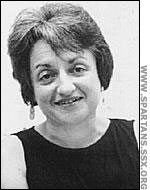
She started out by reading feminist books like Betty Friedan’s The Feminine Mystique and others and read them in just a few days. “Every page seemed to bring a new revelation,” she wrote. Soon after that first meeting, in December 1974, she joined the Anaheim Chapter of NOW.
When Ginny Foat joined NOW the organization was less than a decade old. Founded in 1966, it was still fluid, still evolving, still a work in progress. The “politics” that were later to cause deep divisions within the organization and between its leaders had not yet risen to the surface. Opportunities for advancement within the organization existed for those who were willing to work hard at spreading the word and furthering the cause. And, since there wasn’t much of a budget with which to work, most of the positions within NOW and its local chapters were voluntary. Ginny threw herself into the work, volunteering for whatever needed to be done. And, most of all, she learned by listening; not yet leading.
However, within a year after Ginny’s decision to join NOW, divisions between the organization’s philosophical underpinnings began to surface. The founding mothers of the feminist movement were, by and large, well-to-do matriarchs who toed the line in many ways, despite their outspoken views on the rights of women. On the other extreme were those who made up a sizable lesbian contingent within the movement. The two sides were at loggerheads over how the movement should treat the issue of lesbianism. The older generation of leaders was wary of alienating those in the political power establishment of the nation over issues of sexual preferences, especially with the fate of the Equal Rights Amendment to the Federal Constitution hanging in the balance. They sought changes in the laws regarding women from a place that was safely within the American mainstream.
The younger generation within the movement was not so concerned with niceties. They wanted NOW to take stronger stands, not just on lesbianism, but also on issues regarding racism, abortion, and violence against women. A contingent known as the Majority Caucus rose to the forefront on these issues and, at the 1975 national NOW convention, this group, led by Eleanor “Ellie” Smeal, took control of the organization. Their slogan was, “Out of the mainstream, into the revolution.”

Ginny found her voice and her place with this latter group. She moved comfortably within the more revolutionary and activist circles of the movement. She and other like-minded women demonstrated outside of churches that opposed abortion. She helped raise funds for various related causes. She took part in consciousness-raising sessions to elevate awareness of domestic violence and other abuses traditionally aimed at women. She counseled women who were going through divorces or having difficulties finding jobs in the workforce. Wherever she felt she could perform a valuable service to the movement, there she was.
But, Ginny’s liberation was coming with a price attached. It was causing a serious strain on her relationship with Ray and with her business partner. Trying to keep her feet planted in these diverse worlds was becoming more and more problematic. She didn’t want to lose Ray so, despite her “meteoric rise” within the feminist movement, she dropped out of it for the time being. She sold her half of the business to Danny, then settled down as a homemaker at her and Ray’s new home in Canoga Park complete with backyard patio, swimming pool, and Jacuzzi.
Domesticity, though, didn’t agree with Ginny’s restless, activist spirit. After a few months out of circulation, she was right back in the thick of things again. This time the normally tolerant Ray decided he’d had enough. Especially after Ginny cut her hair short, in a style that was in vogue among other feminists in the movement. Although Ray had always been respectful of women, his attitude was more of a patronizing, chivalrous nature, not necessarily one of equality. He and Ginny separated in early 1977. It wasn’t a good start to a new year and it was to get even worse. Several months later, her past would come back to haunt her.
On the morning of May 25, 1977 Ginny opened the door to her home and saw four men in business suits standing there, one of whom asked her if she was Virginia Galluzzo. Lying about her identity at first, thinking Ray was trying to serve her with divorce papers, she owned up to her real name when informed that the men were detectives. When asked, “Is John Sidote your ex-husband?” Ginny knew there was going to be trouble.
“I want you to come downtown with us,” one of the men said. “We need to talk to you about John Sidote saying that you murdered some people.”
Ginny went with them to a police substation in Van Nuys. It turned out that two of them were from Los Angeles and the other two were from Douglas County, Nevada. Ginny was read her rights and agreed to talk freely with a tape recorder rolling, despite not having an attorney present to advise her. Jack, she soon found out, had implicated her in the murder of Donald Fitting that had taken place nearly twelve years earlier. He was making good on the threats he had made to “get even with her” at the time of their final breakup seven years earlier.
One of the detectives told Ginny that he had run her maiden name through the National Crime Information Center and she was in it. There was, he said, a warrant outstanding for her in Louisiana and she could be extradited. When she asked what the warrant was for, she was told it was for murder. This, she would later testify and write in her book, was the first time she had heard about either the Nevada or Louisiana murders.
Operating with the information they had from Jack’s confession of several months earlier to the New York State Police, the main investigator bored in on Ginny, trying to make her confess. Finally, after about an hour of grilling and protesting her innocence in vain, Ginny demanded to speak to her lawyer. She was booked and taken to a jail cell.
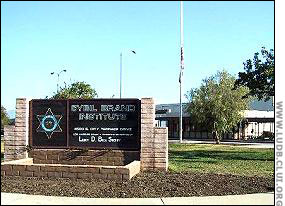
Her lawyer, Bob Tuller, arrived a few hours later and tried to reassure her that it was a mistake that would be straightened out in the morning. But that wasn’t to be the case. Ginny was taken to Sybil Brand, the Los Angeles County Women’s Prison, where she was denied bail and told she was being held there pending extradition. While incarcerated, she endured the humiliation of being strip searched, sprayed for lice, being issued prison clothing, and being issued a prisoner number. Assigned to a cell with two other inmates and only two beds, Ginny was forced to sleep on a mattress in the middle of the floor. She was put on a strong tranquilizer Thorazine and given frequent dosages of it. All of this for a suburban, middle-class woman who, only hours earlier, had been relaxing in the comfort of her own home.
While she was imprisoned, Ray proved to be very supportive, even offering to sell their house to pay for her mounting legal expenses. Despite their separation and previous bitterness, their problems were shelved for the moment while they tried to straighten out Ginny’s plight. Some of her friends from NOW also came to visit her, and though the organization refused to take a firm stand in her behalf, they did manage to collect about a thousand dollars toward her defense expenses.
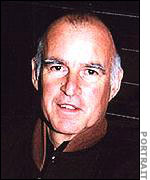
In California, if a prisoner awaiting extradition isn’t extradited within ninety days, they are automatically freed. As the ninetieth day approached Ginny was hopeful but her hopes were dashed when she entered the courtroom and saw deputies from the Douglas County Sheriff’s Office waiting there. Governor Jerry Brown had signed the extradition order and Ginny was to be transferred to Nevada.
Soon after her arrival at the Douglas County jail in Minden, Nevada, Ginny learned to her horror that the prisoner being placed in a nearby cell was none other than Jack Sidote. All through the night she screamed and cried and begged for help, fearing that he would kill or harm her, even though he was helpless to do anything. To calm her down she was transferred the next day to a cell in Carson City.
While awaiting trial in Nevada, Ginny was denied bail because the State of Louisiana held “detainers” against her and Jack, pending the outcome of their trial. Three weeks later Louisiana dropped its detainer against Ginny but left the arrest warrant for murder outstanding. Ginny was then freed on $75,000 bond and she stayed with a friend near Lake Tahoe, awaiting trial.
On September 22, 1977, Ginny faced Jack Sidote for the first time in seven years. Earlier she had learned that he entered into a plea bargain deal with Nevada authorities that would involve implicating her. He would be charged with voluntary manslaughter not murder and robbery in exchange for testifying against Ginny. However, because of complications in the law, he failed to understand the consequences of the deal he struck. He could be sentenced to ten years in prison for manslaughter and fifteen years for robbery and that is exactly what he got. Sobered by the reality of facing 25 years in prison, he made a statement on the witness stand that shocked Ginny and everyone else present. He chose to remain silent, claiming that “justice in this matter has been duly served” because of the severity of his sentence. He refused to implicate her.
Technically, Ginny should have been freed then and there but, because Louisiana was waiting to see what Nevada would do, the case took another labyrinthine turn. As she was leaving the courtroom a Nevada deputy arrested her on behalf of the Louisiana authorities who had issued a new detainer against her. She was led back to the Carson City jail.
While Ginny was being held there, authorities in Louisiana couldn’t seem to decide what to do. Tuller and the other attorneys representing Ginny tried repeatedly to get answers from the district attorney’s office in Jefferson Parish but no commitment was being made one way or another. Tuller even traveled to the parish seat at Gretna but to no avail. Apparently Louisiana was waiting to see what Nevada was doing; however, when nothing was done to Ginny there, they would neither pursue nor drop the case.
Finally, a telephone call to the Jefferson Parish D.A.’s office got some sort of a definitive answer. An assistant D.A. named Shirley Wimberly gave assurances to Tuller that there were no plans to prosecute Ginny. As far as Mr. Wimberly was concerned the case was closed. But Ginny’s attorneys never received confirmation in writing from Wimberly. The failure to do so would come back to haunt them six years later.
Back in California, after being freed from her Nevada jail cell, Ginny and Ray agreed to give their marriage another try. Ginny was spent and drained from her ordeal and she welcomed the support Ray offered her during and after this trying time. However, she soon realized that she could not go back to being the helpless, dependent woman she had been when they first met. Too much water had gone under the bridge, especially since her involvement in the feminist movement. Nor could she go back to her catering business. Despite not being convicted, in the minds of prospective clients she would be considered damaged goods, having been arrested. Financially depleted and worn out, Ginny and Ray split up for the last time in the spring of 1978.
But the one thing that gave Ginny solace during this trying time was that the feminist movement was still open to her. She appeared to lose none of her standing with them and, in fact, may have even gained some, being seen as the victim of a male plot against her. She now plunged fulltime into the women’s movement, moving quickly into circles that included the movers and shakers of the California NOW Chapter, the nation’s largest. “Almost from my earliest involvement with NOW I was a member of the cadre, the favored inner circle, and as such I was marked for leadership,” she wrote.
Having firsthand experience with prison life, Ginny lent that experience toward bettering the situation of women who were incarcerated. She was named co-chair of NOW’s statewide Women in Prison Task Force. She also plunged headfirst into the fight for passage of the Equal Rights Amendment. She traveled to states whose legislatures were considering passing the amendment, passing out leaflets, organizing caravans to key cities in those states, holding town meetings on the issue, and actively working on the campaigns of pro-ERA legislators or legislative candidates.
With ERA still short of the required vote of three-quarters of the states’ legislatures and due to expire in 1979, Ginny and others labored intensively for the proposed amendment’s extension. On July 9, 1978 she was among a group of more than 100,000 activist women marching on Washington for the extension. Dressed as a nineteenth century suffragette, Ginny proudly held one end of a banner that contained the full text of the ERA as they marched down Constitution Avenue.
That same year she was elected vice president of the California NOW chapter. The following year the national NOW convention was held in Los Angeles and Ginny was front and center in helping to organize it. During the presidential campaign of 1980 Ginny and others in NOW leadership positions supported the candidacy of Massachusetts Senator Edward “Teddy” Kennedy over the incumbent President Jimmy Carter.

Elected as a delegate to the Democratic Convention in New York, Ginny was on the floor as the whip for one of the best-organized and most powerful contingents at the convention. She was hobnobbing in the company of such renowned feminist leaders as Bella Abzug, Gloria Steinem, Shirley Chisholm, Ellie Smeal, and others. The NOW faction succeeded in getting their two major planks into the party platform: support for ERA and condemnation of government interference with a woman’s right to an abortion.
Despite Kennedy’s loss to Carter and Carter’s loss in the fall to Ronald Reagan, Ginny came out of the experience more savvy in the ways of politics. It was to serve as a learning experience that would benefit her later on when she chose the path of seeking elective office.
While much of this whirlwind of activity was going on in Ginny’s life, she got involved in a relationship with a wealthy Jewish TV producer named Jack Meyer. He was a supporter of the women’s movement and seemed to be proud of Ginny’s involvement in it; however, he also seemed to resent the demands the movement placed on her time. He complained about not seeing enough of her. They split up for a year, then reunited and married in a lavish wedding, followed by a European honeymoon. But it didn’t last and, after only two months, the newlywed couple was living apart. The marriage was annulled within a year. It was her fourth and final marriage.
By the early 1980s Ginny had become an effective lobbyist and labor organizer, helping to defeat anti-abortion bills in the California Legislature. Also at this time, as vice president of the California NOW chapter, Ginny had been virtually running the state organization due to the illness of its president. She was encouraged to run for the state presidency in 1981 and, after receiving assurances that the voluntary position would become a salaried one, she ran and won a two-year term.
During this time, NOW’s California membership doubled from around 20,000 to 40,000, keeping its standing as the largest chapter in the nation. Ginny traveled around the huge state constantly, visiting local chapters and taking up the cudgel on nearly every issue deemed to be important to the movement reproductive rights, gay and lesbian issues, reapportionment, equal pay for women, and many others. She was a frequent guest on interview shows and she was a member of influential political organizations under the Democratic Party auspices. She supported the gubernatorial campaign of Los Angeles Mayor Tom Bradley, the senatorial campaign of Governor Jerry Brown (despite his earlier signing of the extradition order that transferred her to jail in Nevada), and the campaign of Leo McCarthy for Lieutenant Governor.
The constant whirlwind of activity suited Ginny’s need to be involved in what she felt to be worthwhile causes. She was beginning to see the fruits of her idealism ripening.
However, as is the case in almost any national revolution or powerful social movement, the women’s movement began to cannibalize itself as its power grew. Jealousies, differences of opinion, and personality clashes led to dissention, factionalism, and internecine warfare. By the early 1980s NOW was experiencing these growing pains. Ginny, as president of the nation’s largest NOW chapter, was caught up in this maelstrom in the most destructive way.
One of the key issues at state in this dispute revolved around the actual leadership itself. Ginny’s “inner circle” initially included a group made up of powerful feminists like Shelly Mandell, Elaine Lafferty, Jan Holden, editor Toni Carabillo of the NOW national newsletter, and Jean Conger who had been NOW’s national secretary and an executive assistant to Ellie Smeal. This group, however, would soon begin bickering and breaking off into factions. Smeal’s second term as NOW president would be ending in 1982 and, according to NOW’s bylaws at that time, she couldn’t succeed herself.
Ginny was getting letters and phone calls from all over the country encouraging her to run for the national NOW presidency and Mandell and Lafferty were hoping to manage her campaign. However, fearing that the unresolved indictment in Louisiana might come back to haunt her if she attained the high-visibility position of NOW President, Ginny decided instead to run for one of the organization’s lower-profile three vice presidencies. But, when she told Mandell and Lafferty about her decision, they were upset because the decision was made without consulting them. This was the beginning of a rift that would once again land Ginny in hot water.
At the 1982 NOW convention in Indianapolis, rumors of the Louisiana indictment against Ginny began circulating on the floor and in the back rooms where deals were being concocted. Ginny immediately suspected Mandell and Lafferty of circulating the rumors, since they were now backing a candidate running against Ginny. They denied it, of course, but the damage was done. Ginny lost her bid for the vice presidency.
Several months later, while attending a national NOW board meeting in Washington in December 1982, Ginny received a phone call from a California politician. He asked her to intervene in a dispute over the election of a slate of delegates to the 1983 California Democratic Convention. The phone call resulted in a bitter confrontation between Ginny and Mandell. Mandell, who had herself once been considered a possible candidate for the national NOW presidency, began to resent Ginny’s growing power within the organization. This time she decided to do something malicious to put a stop to her rival’s ascent. She made a phone call to Jefferson Parish.
On the morning of January 11, 1983, Ginny was racing to the airport in Burbank, California, trying to get her lawyer friend Kay Tsenin to her San Francisco-bound flight on time. As she approached the terminal, however, she was greeted by a heavily armed contingent of police dressed in riot gear. Flashing lights came on behind her and she was pulled over and ordered out of the car. Then TV news crews emerged and began taking Ginny’s picture. As Ginny was handcuffed and taken away, she told Kay to notify Bob Tuller immediately.
On being taken into custody and read her rights, this time Ginny had nothing to say without her lawyer being present. Her interrogators attempted to bluff her into making a confession, saying that Jack Sidote had agreed to testify against her. They said the car they were driving in at the time of the Chayo murder had been found and Chayo’s blood was all over it, as were Ginny’s fingerprints. Though maintaining her right to remain silent, Ginny wondered how the inside of a car could have blood on it from a murder that supposedly took place outside the vehicle. As for her fingerprints, of course they would be there. She had ridden in the car hundreds of times over the course of a 3,000-mile cross-country trek.
Following her arrest, Ginny was once again remanded to Sybil Brand Prison and again subjected to many of the routines she had endured during her previous stay. But this time it was a bit different. She was being confined in a cellblock reserved for high-publicity cases like hers was.
While in Sybil Brand Ginny began to learn the truth about Mandell’s involvement in her arrest. Stories that came out in the newspapers painted a picture of a vendetta that occurred in the feminist circle in which the two of them associated. Mandell had made a phone call to the sheriff’s office in Jefferson Parish, then followed it up with a letter, requesting information on any charges that had been made against Virginia Galluzzo, now known as Ginny Foat. Her inquiry triggered an investigation that reopened the Louisiana case against Ginny.
Mandell alibied in one newspaper account that she was merely trying to ensure that Ginny had a clean record before a Los Angeles City Councilman could recommend her to the city’s Human Relations Commission. However, Ginny didn’t live in that particular councilman’s district so Mandell’s story didn’t hold any credibility. Later Mandell was apologetic about what resulted from her inquiry, even to the extent of calling herself “dumb,” but the damage was already done. The feminist movement was traumatized and polarization between factions debating Ginny’s guilt or innocence resulted.
On the one extreme were those who believed Ginny was an innocent victim of a conniving, scheming male who had been knocked down and was trying to drag her down with him. On the other extreme were those who may have had their private doubts about her guilt but nonetheless felt that just being accused of such a heinous crime was a stigma that could hurt the organization and the movement. Those in the latter group advocated distancing themselves and the organization from Ginny as much as possible while her status remained unresolved. There were fears that her feminist views would work against her in a conservative Southern state like Louisiana.
One of those who supported Ginny included Gloria Steinem, who called on the national organization to stand behind a sister in trouble. Another was Midge Costanza, a former White House aide to President Carter. However, the decision as to whether or not to back Ginny was left up to individuals’ discretions and judgments. With the feminist movement in turmoil over Ginny’s plight, the new national NOW president, Judy Goldsmith, came to visit Ginny in jail. She tried to get Ginny to sign a prepared statement disassociating herself from the organization but Ginny refused. Finally a compromise was reached in which the organization expressed sympathy for Ginny but not outright support, and Ginny was granted a paid leave of absence from her post as president of the California NOW chapter.
At a press conference the next day, Goldsmith expressed the organization’s official position of having “great compassion” for Ginny’s situation but she went on to say, “We won’t waste any more precious feminist energies on internal fights.” Immediately this statement was misinterpreted by some in the media. The New York Daily News headline the next day read “NOW: Won’t vow aid in official’s slay case.”
However, despite the national NOW board’s refusal to take a stand in Ginny’s favor, many local chapters did. Money came pouring into a Ginny Foat Defense Fund started by her friends, much of it from chapters all around the country. Ginny received hundreds of letters from women who never met her, saying they had been in similar situations with abusive husbands and boyfriends. Women with disabilities living on meager Social Security checks were sending in what little they could, along with notes and letters of support. Ads that had been placed in newspapers and magazines were reaping results.
While all of this was going on and Ginny’s lawyers were fighting extradition to Louisiana, Jack Sidote was giving testimony to a grand jury in Jefferson Parish. The D.A.’s office there had granted him immunity in exchange for his testimony implicating Ginny in the Chayo murder. No matter what he told the grand jury or testified to in court later on, he would not be charged with the crime. He was essentially telling them the same story he had told to the New York State Police and authorities in Nevada.
During the extradition wrangling, Ginny’s California attorneys bought time to seek out appropriate counsel for her: lawyers who could practice under Louisiana’s unique Napoleonic Code and had a solid track record for getting their clients off the hook. They ended up choosing John Reed and Robert Glass, two Ivy League grads with backgrounds in poverty law and civil rights cases. Once retained, Reed and Glass began the difficult task of finding potential witnesses who could testify in Ginny’s behalf on a case that stretched back eighteen years. So much had changed in that time that even the bar in which Ginny and Jack worked was no longer standing. Potential witnesses had either died or disappeared. Ginny, however, was anxious to get to Louisiana and get the issue resolved. It had been hanging overhead for too long and she wanted to clear her name once and for all.
On the advice of her attorneys, Ginny hadn’t been saying much to the media. She granted a few limited interviews but, for the most part, she kept quiet, not wanting to risk saying anything that could create doubt in people’s minds and be used against her. But, unlike Ginny, Jack Sidote was relishing his fifteen minutes of fame. He granted interviews to so-called “men’s magazines” and national network TV stations, including one that aired on CBS in which he called Ginny a “no-good bitch” and a “whore.” It was even reported that he was trying to sell his story rights to a book. The result was that his side was the one most often heard and read and Ginny was made to look like evil incarnate; a scheming, seductive siren who led him astray from the respectable life he’d led prior to meeting her.
Journalists who went after Ginny’s story, Ellen Hawkes wrote in Feminism on Trial, discovered biographical facts that “indicated less a passive woman than someone who, for whatever reasons or goals, had changed herself dramatically several times in her life. Her metamorphoses seemed to occur at turning points that didn’t just happen, but that Foat herself chose, often coinciding with the choice of a mate. In that sense, even her feminist conversion had the look of a love affair, her life suddenly given over with the same passionate intensity to the romance of sisterhood, her identity totally redefined with her new commitment. These involvements in her life had roused her to new roles . . .”
In the meantime, the feeding frenzy of the media circus was in full swing. As Ginny’s plane approached New Orleans International Airport, radio reports of her imminent arrival were being broadcast. On landing, the reporters and cameramen were all over her, pressing her for comments. One reporter, with more temerity than the others actually asked her if she was guilty and, when she refused to answer, he shouted into his microphone, “She’s not answering!” as if that was an admission of her guilt.
Driven from the airport to Gretna, just across the Greater New Orleans Bridge from New Orleans, Ginny was remanded to the Jefferson Parish Jail. The media circus continued there until she was taken to her cell beyond the reach of reporters. Two hours after being incarcerated, she had her first meeting with Reed and Glass. The next day she was brought before Judge Robert Burns of the 24th Judicial District Court. He set bail at $125,000, which was put up by a prominent woman physician from New Orleans. Ginny was free, pending her trial.
Out on bail, Ginny had to return to California and straighten out some personal matters. She was also talking to a number of individuals about a book and movie deal related to her story. Her legal expenses were threatening to climb into the six-figure range and receiving payment for telling her story, she hoped, might help defray some of those expenses. According to one report, she later received a $150,000 advance against royalties for a book about her life.
Ginny also had to get to New York to see her father who had suffered a heart attack. By the time Ginny arrived Gus had sunk into a coma and was on life support devices in a hospital in Poughkeepsie. Faced with the decision of whether or not to “pull the plug,” the family decided to let him go. He died in May 1983.
Ginny remained in New Paltz to help her mother with the estate, then returned to California to finish business there before returning to Louisiana that summer. Her attorneys, Reed and Glass, were pushing to get her a speedy trial or have the charges against her dropped. District Attorney John Mamoulides of Jefferson Parish had assigned two of his assistants, Tom Porteous and Gordon Konrad, to the prosecution team.
Ginny’s lawyers attempted to convince them to honor the promise made six years earlier by Shirley Wimberly that their office had no case and there would be no prosecution. However, since the agreement was not in writing, the D.A.’s office would deny its validity. They did, however, offer Ginny a plea-bargain deal in which the murder charge would be dropped in exchange for a plea of guilty to being an accessory. Ginny and her lawyers laughed off the deal, confident their case was strong enough to beat the murder rap.
Prior to Ginny’s arrest, Porteous, Konrad, and even Mamoulides himself, had made several trips to Nevada to persuade Jack to testify against Ginny. Four years into his 25-year sentence, Jack had been released but a drunken driving arrest shortly after his release landed him back in jail for a parole violation. Jack was once again offered immunity from prosecution in the Chayo murder but he was initially hesitant to testify against Ginny. A codicil was added to the immunity agreement stating that Louisiana would put in a good word with the Nevada Parole Board in exchange for his testimony, and that seemed to do the trick. He would implicate his former wife.
The months leading up the trial were spent, by both sides, gathering whatever evidence they could and interviewing potential witnesses. Wasyl Bozydaj was located and he agreed to testify for the prosecution, despite his denials of any knowledge of the killings in Louisiana and Nevada. Ginny was put through a form of therapy in an effort to jar her memory of long-ago events she had deliberately suppressed over the years. Her case was also assigned by her team to the National Jury Project in an effort to help shape an effective defense strategy.
Both the therapy and the NJP efforts focused heavily on trying to elicit emotion in Ginny; trying to get her to morph into a character that a jury could sympathize with. The decision had already been made to put her on the witness stand in her own defense. She now had to become more convincing in her retelling of a long, ongoing pattern of abuse at the hands of the man who was the state’s chief and only witness who could conceivably put her at the scene of the Chayo murder. She had to become the vulnerable, impressionable Virginia Galluzzo again; not the confident, self-assured Ginny Foat.
Eventually these strategies worked. By the fall, Ginny was ready to face a jury.
Jury selection in Ginny’s trial began on November 7, 1983 and continued for the next three days. The final group impaneled included six women and six men. On November 10 the trial began with opening arguments, the first of which was delivered by Konrad. He basically summarized Jack’s story and tried to paint Ginny as the femme fatale who lured a man from a Bourbon Street bar, rolled and killed him. At the same time he tried to paint Jack as “deeply contrite” and “seeking only to atone for his sins.” Ginny wrote. Konrad said Jack bore no malice against Ginny and wasn’t trying to get back at her for leaving him.
John Reed’s opening statement for the defense portrayed Ginny as the innocent victim of Jack’s violence and later of a vendetta he was pursuing against her. He related the story of Ginny’s life and upbringing and, for the first time publicly, it was revealed that she had given up her baby. Konrad raised objections to this approach but Judge Burns ruled that it was germane and allowed Reed to continue. Ginny was relieved, knowing that if a jury could hear her tale of suffering its members would be more sympathetic toward her.
Following Reed’s opening, the prosecution called its first witnesses. They included the Jefferson Parish Sheriff’s Office watch commander who was in charge of investigating Chayo’s murder and the pathologist who performed the autopsy on Chayo. For the prosecution they simply stated what their investigations revealed but, on cross examination, inconsistencies were brought out between what they said and what Jack had said in his confession.
The next witness was Raymond Chayo who identified items found in his father’s possession as having belonged to his father. In his cross examination, Glass proceeded gingerly, not wishing to give the appearance of grilling a witness who had lost a loved one to a violent crime. Glass knew that the jury was sympathetic to Raymond Chayo’s plight and he didn’t want to risk antagonizing them, but he had a job to do and certain facts had to be established. The main one revolved around Moises Chayo’s love of card games. On the night of the murder, Jack had told Ginny that an argument ensued over a card game. The defense had to establish that the elder Chayo could, indeed, have been in card game with Jack that night and this would help corroborate Ginny’s version of what she learned that evening.
Raymond Chayo admitted that his father was a good bridge player but he couldn’t say for certain whether he knew how to play poker or blackjack games in which bets were normally placed. He also admitted that his father had told him he was going to look for bridge games while he was in town and he conceded that his father could have known how to play card games on which the players gambled. (Later in the trial, the defense would field a witness who acknowledged playing gin rummy with Moises Chayo for money at the New Orleans Athletic Club. The club was only a block away from the bar in which Ginny and Jack had worked during their brief stay in New Orleans.)
At the start of the trial’s second day, Wasyl was brought to the stand by the D.A.’s office. He described his friendship with Jack and told the court he had never seen Jack beat Ginny up, although under cross examination, he admitted to seeing her eyes puffed up from crying. He conceded that Jack was volatile and could have assaulted her. Wasyl also said Ginny and Jack had gone out together all dressed up, in contradiction to Ginny’s story that Jack had gone out alone on the night they ended up leaving New Orleans. He told the court that Jack had given him a hundred dollar bill and told him to drive to Houston while he and Ginny would arrive there on separate flights. Wasyl was unable to identify the hitchhiker who rode with him from New Orleans to Houston.
The most potentially damaging portion of Wasyl’s testimony was when, under prompting from Porteous, he said during the trip from Houston to Carson City, Jack had been drunk and shouted out, “You shouldn’t have hit him so hard.” Under cross examination, Wasyl conceded that Jack could have been babbling to himself rather than addressing Ginny. However, the story that came out in the Times-Picayune left the impression that he was accusing Ginny. The paper later printed a correction, saying that they “regretted the error.” Fortunately for Ginny and her defense team the jury was sequestered and probably never saw the article.
The success or failure of the state’s case against Ginny hinged on the testimony of a single witness John “Jack” Sidote. What he would have to say would make or break the state’s case and the D.A.’s office, with whom Jack had cut his immunity deal, were out to make him look as credible as possible before a jury. Even to the extent of dressing him conservatively and trying to give him an air of respectability as he took his place on the witness stand.
Konrad began the questioning by asking Jack questions about how he met Ginny and how the relationship between them evolved. Soon he was describing the circumstances under which, he claimed, Chayo was lured from a Bourbon Street bar by Ginny, then driven to the remote area in Metairie where the murder took place. He described the struggle that ensued and told the court that Chayo was hit a number of times with tire tools by both him and Ginny. After the victim had been knocked to the ground, Jack said he and Ginny dragged his body over to a nearby canal and left it there after taking his wallet. However, there were inconsistencies between his testimony and what he had said in his 1977 confession. In his confession he said that Ginny was the lone assailant and that Chayo’s body had been left where it fell. There was no mention of dragging it to a canal.
After the incident, Jack testified, he and Ginny drove back to their hotel where she brought him a change of clothes and they drove around the corner where he changed. Then, he said, they returned to the hotel where he gave Wasyl some money and told him to drive the car to Texas. After that, he went on, he and Ginny went up to their room where they emptied the wallet of $1,400 and some foreign currency, and tore the wallet up before flushing it down the toilet. Where he had gotten the money to give Wasyl before going through Chayo’s wallet wasn’t explained. After that, arrangements were made for he and Ginny to fly separately to Houston (or Dallas, he wasn’t sure which), where they would all rendezvous and continue their westward journey. There were other inconsistencies in his testimony, as well.
Following a brief recess, Glass began his cross examination. During his grilling of Jack, many inconsistencies were brought out between what Jack said in his confession and other previous statements and what he said on the witness stand. There were inconsistencies of times, locations, and descriptions of the murder site. There were also discrepancies between Jack’s physical description of Chayo and the facts that were already known about the victim’s physique and facial characteristics.
The issue of Jack’s alcohol addiction also came to the fore, as Glass hammered away at his earlier testimony under Konrad. Jack conceded that he might have, at times, talked to himself during a drunken stupor. With this admission, Glass tried to establish that Jack might have been talking to himself when he said, “You shouldn’t have hit him so hard,” as Wasyl had said during his testimony. Glass also grilled Jack on his immunity agreement, establishing for the jury that, in exchange for his testimony, the Jefferson D.A.’s office would attempt to intercede on his behalf with authorities in Nevada.
Cross examination continued the following day. Glass grilled Jack on a number of issues related to his violent, volatile character, trying to paint an unsympathetic picture of him for the jurors. Several years earlier, in a drunken, desperate robbery attempt of his former employer John Lipani’s home, he assaulted Lipani’s wife Marie. This was brought out during cross examination, despite prosecution objections. Pictures were shown to the jury of what Marie’s face looked like after Jack beat her before the judge could sustain Konrad’s objections.
Just prior to that, when asked about his beatings of Ginny, Jack denied most of them. Under pressure, however, he said, “I struck her but I never beat her,” as if to imply there was a distinction between the two. Jack also admitted to the time he nearly choked Ginny to death but he denied saying he was going to come back and kill her.
Jack also denied writing a letter to Ginny’s parents in which he threatened to kill her. He denied being motivated by a desire for vengeance against Ginny when he made his confession to the New York State Police. Finally, at the end of cross examination, Glass asked Jack to look directly at Ginny and repeat his accusations against her. Jack refused.
The prosecution had the option of putting Jack back on the stand for further testimony but, during the following session, Konrad declined to do so. Instead, to the surprise of nearly everyone in the courtroom, he announced that the state was going to rest its case.
Technically, at that point, Ginny and her lawyers didn’t have to mount a defense at all. It was strongly felt that the prosecution had failed to make a convincing case and that, as a credible witness, Jack Sidote was damaged goods. It was also felt that there was already enough “reasonable doubt” in the jury’s mind for them to vote for acquittal. Ginny hoped that that would be the course they pursued and that she wouldn’t have to testify after all. However, her attorneys felt otherwise. Even though absolved of murder, Ginny could still be tried on manslaughter charges. They had to go on with it.
The defense witnesses included a psychiatrist who specialized in drug- and alcohol-related cases and who told the court that alcoholics have a tendency to blame other people for their problems and this may have been the case with Jack. Also called to the stand was a retired physician who testified that he had played cards with Chayo for money shortly before the murder took place.
Ginny’s former roommate, Clara Sparks, described for the court in detail the beating Jack had given to Ginny shortly before their breakup. She acknowledged seeing him choking her and threatening to kill her as he stormed out. Clara’s boyfriend at the time, a former Air Force medic, also testified on the extent of Ginny’s bruises and he said that he drove her to the airport for her flight back to New York. Ginny’s sister Emilia and her mother also took the stand and vouched for the injuries they saw on Ginny when she returned.
Then it was Ginny’s turn. The moment she had been dreading had arrived but she knew it would be her best opportunity to clear herself. Her testimony was punctuated by emotion and crying spells but she was determined to go through with it.
As Ginny began her testimony, with Reed gently prodding her, she went back in time to her meeting with Jack and the trip she took with him to Florida, Louisiana, Nevada, and finally California. It was a struggle to get her words out, as bad memories floated back to her. She described the beatings Jack gave her in such vivid detail that she often had to stop and cry. At least once the judge had to call a recess so she could recover and compose herself. For more than two hours that day and on into the next day, she recounted her experiences with Jack between 1965 and 1970. Reed did no more than gently probe and get Ginny to spill her guts. He asked her no tough questions and basically she didn’t even have to refute Jack’s testimony. Glass had already damaged Jack’s credibility in the eyes of the jury.
Under cross-examination from Konrad, Ginny was repeatedly asked how she and Jack left New Orleans; did they drive or fly? She admitted she couldn’t recall. How much money did Jack have? Ginny didn’t know because he was the one who always handled the money. Konrad asked her questions about her love life; how many times was she married? How long did they last? Didn’t she realize she was breaking up Jack’s marriage? Didn’t she sleep with Ray Foat while still married to Jack and while Ray was still married? She answered each question truthfully, even though they had no direct bearing on the murder she was being accused of. Never once did he ask whether or not she killed Moises Chayo.
Reed asked Ginny a few more questions on redirect, then rested the defense’s case. Despite some speculation that the state would recall Jack to the stand, they rested also. The stage was set for closing arguments.
Mamoulides, taking a personal interest in the case, interjected himself into it for the first time when he addressed the jury. He tried to focus their attention on the charges against Ginny, not on supposedly peripheral issues like the participants’ lifestyles, marital histories, and whether or not Ginny had been physically abused. Porteous followed up by trying lend credence to Jack’s motives for testifying and denying that Jack was acting out of a desire for revenge. He also tried to portray Ginny as a liar who couldn’t remember such an important detail as the manner in which they left New Orleans eighteen years earlier.
In his closing statement, Reed answered that question by saying Ginny didn’t remember simply because it wasn’t important to her. Jack could remember because it was important to him, Reed maintained. Jack was fleeing town as a murderer and consequently it was easier for him to remember how he fled. Reed also poked holes in Jack’s motivations for confessing and cautioned the jury not to give credibility to someone who was an alcoholic, “a crazy person and a liar.” His final words to the jury were, “I ask you as a jury to look at her and to tell Ginny that she need not be ashamed anymore; that she need not fear Jack Sidote anymore.”
Konrad had the last word and he desperately tried to cast doubt on Ginny’s testimony and her version of the events of 1965. He tried to portray her as the cause of the breakup between Jack and his wife and the reason he became an alcoholic. She was the one who led Jack to commit murder and she participated in the killing. He even made an issue over the fact that she had given up a baby only an hour after delivering it, not mentioning the truth that Ginny had no choice but to do so.
With the final closing argument delivered and the jury set to begin deliberations, court was recessed for lunch.
During recess, Ginny and her entourage went to a nearby diner to have lunch, anticipating a long jury deliberation. Instead, less than two hours after the jury retired to deliberate, a reporter rushed over to them and announced that the jury was coming back into the courtroom. They had a verdict.
Ginny and her group hustled back to the courthouse and she and her lawyers sat at the defense table. When everyone was seated, Judge Burns asked the foreman of the jury if they had a verdict and the answer was affirmative. “Will you hand it to the clerk, please?” the judge requested. The clerk took a slip of paper from the foreman and delivered it to Burns. He looked at the piece of paper, then looked at Ginny as he read the verdict.
“We the jury find the defendant, Virginia Foat, not guilty.”
Ginny slumped into her chair, relieved. Bedlam broke out in the courtroom and she was hugged by everyone from her attorneys to her family members to her friends. Jurors came up to her with their lunch napkins and asked for her autograph. Outside in the hallway cameras flashed and there were more congratulations and cheers. Ginny was free.
She ended her book with the verdict, saying, “The jury had made its judgment in one hour and fifty minutes, and I, after an agony of years, had made mine: Ginny Foat is not guilty.”
Within hours of the verdict, Ginny was addressing members of the media in a press conference at the law offices of Reed and Glass. Freed from the constraints of not being able to comment on an ongoing legal matter, she was now at liberty to speak her piece, and she did.
The prosecutors, she implied, were guilty of sexism in taking the word of an alcoholic schizophrenic who assaulted women. She told reporters that her case was a symbolic one, and proclaimed the verdict as “a victory for all women whose plight in life is to have to stay in a position because of social mores. When they choose to move on they run the risk of being prosecuted.” She went on to reassert her feminist leanings and her determination to move on with her life and career within the movement. The proceeds from her book, as well as from a movie being made on her life, she said, were going toward a defense fund for battered women.
But the verdict, though a clear personal victory for Ginny, was by no means a conclusive vote on her innocence. Many of Ginny’s comments at the press conference made the evening news and, on hearing them, some of the jurors in her case began to express their own opinions now that they were no longer sequestered and under a gag order. Some were astonished by her statement that the verdict was a victory for the feminist cause. That cause, they maintained, was not what was on trial. This was not a “political trial,” as Ginny called it soon after it was over.
The jurors who spoke for the record were quick to remind their interviewers that their vote was based largely on “reasonable doubt”; on their utter disdain for Jack Sidote and his disreputable character. The jury foreman commented that, “After we saw Sidote, Ginny Foat could have taken the Fifth on everything and it wouldn’t have mattered.” The foreman also told a reporter, “She was acting like she’d become a martyr for the cause, and for that reason, I don’t trust her. Seeing her on television, I wanted to tell people, ‘Hey, we found Ginny Foat not guilty, we didn’t find her innocent.”
Ginny returned to California after the trial and attempted to pick up the pieces of her shattered life and career. Her case had left the women’s movement sharply divided and factionalized. To some she had become a cause cèlébre for the women’s movement and her victory was, indeed, as Ginny put it, “a victory for all women.” The verdict was lauded by many of the nation’s top feminist leaders, including Smeal who prior to the verdict, hadn’t taken a public stand on the case. But, in the eyes of many, Ginny could not be accepted back into the fold. Justifiably, she was angry over this, especially with the national organization and with Judy Goldsmith.
Ginny was critical of the national NOW leadership for not giving their full support to her during her legal ordeal. She accused the organization of forgetting its grass-roots membership, focusing too much on mainstream politics. Goldsmith had said she was “extremely pleased” with the acquittal and she hoped Ginny could “now pursue her feminist activities free from the glare of publicity.” But Ginny was bitter that neither Goldsmith nor her successor at the California NOW chapter, Sandra Farha, had sent her a personal letter of congratulations.
While Ginny’s ordeal was going on, time ran out on the Equal Rights Amendment. Thanks largely to a growing anti-feminist sentiment, led by Phyllis Schlafly of Illinois, the ERA had failed to achieve passage in the 38 state legislatures needed for ratification. When the national election year of 1984 arrived, the women’s movement focused on reviving ERA, as well as defeating President Reagan’s bid for reelection. Ginny wanted to be a part of that effort but whether or not she could do it within NOW was doubtful.
During the years following her release, Ginny traveled widely giving interviews, lecturing on the plight of battered women, and putting the finishing touches on her book with Laura Foreman. A made-for-TV movie was made on her life entitled The Death of a Passive Woman.
Democratic presidential candidate Walter Mondale’s decision to select Geraldine Ferraro as his vice presidential running mate was seen as a great victory for the women’s movement. Never before in the nation’s history had a woman been nominated for national office. NOW, which had never before officially endorsed a presidential candidate, went on to endorse Mondale, a move opposed by Ginny who felt the organization was becoming an arm of the Democratic Party. Once again, her thinking was out of the organizational mainstream. Nonetheless, Ginny attended the 1984 NOW convention, not speaking to Goldsmith or vice versa.
Reagan’s landslide victory that year further fragmented the women’s movement, creating a contingent that was conscious of the growing national trend toward conservatism. Conservative columnists like Patrick Buchanan were saying that feminism was “passé” and that its time had passed. Even the grand matriarch of the women’s movement, Betty Friedan, was critical of the national organization for allowing “radicals” to run the show. Open displays of lesbianism at the 1985 NOW convention in New Orleans further alienated those in the mainstream faction.
Ginny wasn’t there, however. Perhaps it would have brought back bitter memories of the city or, more likely, it would have put her in the same company of those she accused of betraying her. In attendance at the convention and working for the candidacy of Smeal were Shelly Mandell, Elaine Lafferty, and Toni Carabillo. At the time Ginny had a $5 million lawsuit against Mandell and two dozen other unnamed people for “invasion of privacy and emotional distress.” Nonetheless, despite her absence, her name was on a lot of tongues. The case was still fresh in delegates’ minds. When the vote was taken for national NOW president, Ginny received two write-in votes.
Most of the two decades of Ginny’s life following her “not guilty” verdict were spent in relative anonymity, compared to what it had been before and during her ordeal. She kept a high profile for awhile, touring, lecturing, appearing on talk shows, and promoting her book, but by the late 1980s she had receded into the shadows. She was never again high in the hierarchy of NOW which, by this time, had been going off in a different, more mainstream direction.
According to her current online resume, Ginny was Founder/Executive Director for Legal Advocates for Women in San Francisco from 1984 to 1987, and co-owner of a West Hollywood restaurant/cabaret for two years after that. For the next nine years she served as Executive Director of Caring for Babies with AIDS in Los Angeles, and briefly as National Director of Regional Field Services, YWCA of the USA. Presently she is the owner and corporate officer of a property management company in Palm Springs, head of her own nonprofit consulting agency, and Vice President of Operations for O’Leary & Associates, Inc., a political phone management company. The latter company was founded by noted, recently deceased lesbian activist Jean O’Leary who co-founded the first “National Coming-Out Day” in 1988.
Over the years Ginny was also involved in numerous civic and charitable causes and won numerous awards. She also stayed active politically, being elected to fill an unexpired term on the Palm Springs City Council in 2003 and then was elected to a full four-year term the following year.
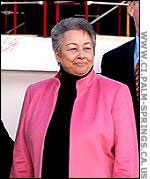
At what point Ginny Foat came out and openly declared her proclivity toward lesbianism cannot be ascertained from information available in the public record. When she was elected to the Palm Springs City Council it was already a matter of record. She had been advocating for the rights of gays and lesbians for many years prior to that.
During her most recent election, Ginny’s past was dredged up by the local newspaper, the Palm Springs Sun, and she was once again forced to deal with it, which she did in a formal letter to her constituency and on her campaign website. In her letter she said “I have never tried to hide my past” and she accused the Sun of “slanted journalism.” Emphasizing her long history of civic and charitable involvement, Ginny implored voters to focus on the future and not the past. She was elected with about 15% of the vote citywide in a city of about 40,000 people, with an estimated gay population of 35-40%
However, though her past is largely behind her, Ginny Foat will probably never be entirely free of it, as stated in the title of her book, Never Guilty, Never Free. Despite receiving a “not-guilty” verdict, a number of right-wing, Pro-Life, Anti-Feminist organizations, continue to consider her guilty. Their websites perpetuate lies and serious factual inaccuracies, regardless of what the record shows. Several of these sites, apparently copying from each other with identical information, call her a “double murderer,” completely ignoring the fact that she was acquitted, and they actually come out and say she murdered both Moises Chayo and Donald Fitting. They also erroneously say she spent four years in prison.
Although it would be easy to blow these inaccurate accusations off to the work of crackpots, at least one of these organizations has a measure of credibility within conservative circles. The American Life League, headquartered in Stafford, Virginia, claims to be the largest pro-life educational organization in the U.S., boasting a membership of 375,000.
So, at age 64, with a life filled with tragedies and triumphs behind her, Ginny Foat attempts to forge ahead on a life that still shows great promise. Whether or not she is eyeing higher political office or other lofty ambitions can only be speculated, but for a brief period of time, she was in the national spotlight with the fate of a powerful movement hanging in the balance.