
Fatty Arbuckle and the Death of Virginia Rappe — A Gift for Comedy — Crime Library
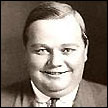
The gifted comedian Roscoe Conkling “Fatty” Arbuckle didn’t use the weight that inspired his nickname to get a cheap, easy laugh. He would never be seen stuck in a doorway or chair, for example.
While his weight inevitably added to his humor his comic gifts elevated him beyond fat jokes. In the silent film era, he was considered second only to Charlie Chaplin in his talent. The big, agile man whose talent for pratfalls, somersaults, and extraordinary pie throwing brought joy to audiences of all ages.
But one fateful night, at a Labor Day party in San Francisco, the laughter stopped. Arbuckle was accused of a horrific crime, the tale of which would haunt him until his dying day
Arbuckle was born on March 24, 1887, in Smith Center, Kansas. He would later joke, “Two big things blew Smith Center, Kansas right off the map — my birth and a cyclone. No one has heard of the place since.” His weight at birth has been reported as either 14 or 16 pounds. His family, nine children in all, moved to California when he was an infant.
Young Roscoe’s family life was not happy. His father, the hard-drinking William Goodrich Arbuckle, named his son after a Republican politician, Roscoe Conkling. Curiously William Goodrich Arbuckle was not a member of the GOP but a Democrat. Dad blamed the boy’s birth for his mother’s health problems and was also nagged by a sneaking suspicion that this son was not biologically his. He often punished the boy unreasonably. One of the reasons the elder Arbuckle suspected he had not sired the boy was that Roscoe was so heavy while both his parents were slender. Since Roscoe’s mother was a devout, pious Christian, the suspicion was probably unfounded but it did not change the fact that Arbuckle grew up in an environment of mistrust.
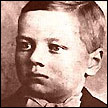
Other children often made fun of little Roscoe’s weight, taunting him as “fatty.” As a result of being bullied, Roscoe became a shy, tongue-tied child. He was self-conscious about his size but he had a strong appetite and used food to cope with emotional trauma. As happens so frequently, this became a vicious circle in which he was emotionally wounded by people jeering about his size, comforted himself by overeating, which increased both his weight and painful ostracism from others.
But the boy soon found that his shyness and self-consciousness seemed to magically melt away when he was performing in front of an audience. Roscoe could sing beautifully and was remarkably limber and agile despite his size.
Arbuckle made his stage debut at the age of 8. From then on, the blue-eyed, exuberant youngster saw a lot of the theater. Multitalented, he worked as a clown, a singer, and in acrobatic acts.
His mother died in 1899, when he was only 12. Shortly after that, he was abandoned by the father who had both emotionally rejected him and physically abused him. The teenager supported himself by doing odd jobs in a San Jose, California hotel. He sang while he worked. One day a professional singer overheard him and suggested he accompany her to an amateur night at a neighborhood theater. This theater was of the type where a long hook would come out to draw a performer who was not doing well off the stage. The humiliation of such a dramatic rejection terrified young Arbuckle but he made up his mind that he was going to perform and do well. He sang a couple of songs and then started entertaining the audience with a variety of jigs, somersaults and pratfalls. The hook came out from the wing and a panicked Arbuckle jumped and somersaulted out of its way until he finally dived into the orchestra pit.
The audience was delighted and he easily won the contest — and the attention of some important people in show business.
In 1904, the young Arbuckle sang for Sid Grauman at the Unique Theater in San Jose. He was what was called an “illustrated singer.” As described in David Yallop’s The Day the Laughter Stopped, an illustrated singer was one who sang “while gorgeously-colored slides with the lyrics were projected on a screen . . . thereby ‘illustrating’ the song.”
During 1905, Arbuckle began a tour of the West Coast with the Pantages Theatre circuit. In 1906, the performer was in Portland, Oregon when he was hired by a man named Leon Errol to work in the Orpheum Theater. Then Arbuckle began another tour with Errol’s company.
Arbuckle performed at the Last Chance Saloon, a watering hole for miners in Butte, Montana. Their resident singer was a popular, buxom blonde named Lilly who liked to drink She usually opened the show but one day she did not appear, probably because she was on a bender. The miners became raucous when Arbuckle went onstage in her stead. They gave him the finger and loudly threatened to tear the place apart.
The comedian had a brainstorm. He dashed to Lilly’s dressing room. The audience was still restive but soon calmed down considerably when Lilly’s unexpected replacement strolled onto the stage. She was a very large, well-dressed woman. As she sang, the miners were entranced by her lovely, soprano voice. The new singer became an instant hit. The next night and the next the Last Chance Saloon was more packed than ever. But on that night, a semi-sober Lilly walked in and saw the woman onstage who had taken her place. She was outraged. She ran onto the stage and tore her wig off of Roscoe Arbuckle’s head. The comedian pretended to be scared and ran into the chairs and tables as she followed. As Yallop wrote, “The miners, convinced that the whole things was a superbly-rehearsed piece of comedy, howled with laughter as Roscoe, with Lilly in hot pursuit, jumped over tables, swung on lamps, did cartwheels and pratfalls, and finally vanished into the street.”
However, the next day Errol’s company left Butte. Lilly had too much clout to allow the cross-dresser usurper to rival her.
Arbuckle was back in California in 1909 when he got a part in a movie called Ben’s Kid. But these were the days when stage actors were looked on as less than respectable and those in the young film industry were even more suspect. (Boardinghouses often had signs warning no dogs or actors allowed). Arbuckle was positively embarrassed about it and did not tell anyone he knew about his role.
Arbuckle matured into a strikingly fastidious man. He always kept himself clean and neat. Perhaps this was partly a reaction to his poverty-stricken and sometimes squalid childhood or to the prejudicial “fat slob” stereotype. He also disliked swearing. Although he would be known as Fatty to audiences, he never allowed his friends to call him that. If they slipped, he would remind them, “My name is Roscoe.”
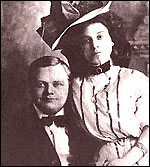
1909 was an important year for Roscoe Arbuckle. He married singer Minta Durfee, whom he affectionately called “Minty.” At their wedding reception, guests teased the couple about the wedding night and how Roscoe’s fat body would do against Minta’s petite one.
That night he was unable to consummate their marriage. “Minty,” he said, “I can’t.” He was not a virgin but had only had a single sexual encounter — with a showgirl. However, the jeering of his friends left him feeling awkward and embarrassed. The couple slept in the same bed without having sex but hugging each other tightly to express their love. About a week passed before he felt comfortable enough to engage in sexual relations.
Soon Arbuckle joined up with the Morosco Burbank stock company. He traveled through China and Japan with Ferris Hartman. Minta accompanied him on his travels. Sometimes she saw a side of him she did not like. He took to drinking with the other guys and, like his father before him, booze caused a negative change in his personality. When drunk he was sullen, nasty, and argumentative, although never physically violent. In 1913, he made his last appearance on the stage in Yokahama, Japan.
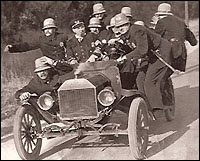
Upon returning to the states late that year he went to work at Mack Sennett’s studio, Keystone. There he appeared in hundreds of one-reel comedies. Usually he was a policeman with the famous Keystone Cops. Henry “Pathé” Lehrman directed most of the pictures in which Arbuckle appeared. Arbuckle became the very first actor in films to take a pie in the face when he made A Noise from the Deep. The agile actor threw pies as well and was able to accomplish the remarkable feat of tossing two pies in opposite directions at the same time. Actors Arbuckle worked with included such greats as Chaplin, Mabel Normand, and Fred Sterling.
In 1914, Arbuckle began directing some of the films in which he acted. The next year, he moved from one-reelers to two-reelers and proved that he could sustain his comedy.
Mabel Normand was called “The Queen of Comedy” and “The Female Chaplin.” She and Roscoe paired up regularly in such movies as Mabel, Fatty and the Law, Mabel and Fatty’s Wash Day, and Mable and Fatty Viewing the World’s Fair at San Francisco. For the last motion picture, the actors and crew traveled to the actual World’s Fair that was going on in San Francisco in 1915.
The next year saw the comedian face a health crisis. He had a carbuncle — a bacterial infection — on his leg. It was so bad that the doctors thought for a while that they might have to amputate.. Luckily, he did not lose a limb but the sickness made the heavy man lose 80 pounds and he briefly became addicted to morphine.
In 1917 Arbuckle partnered up with Joseph Schenck, Norma Talmadge’s husband, to form a film company called Comique. Arbuckle wanted more creative control over his work and this gave it to him.
He soon hired a young performer named Buster Keaton who would become a leading light in the world of comedy. Roscoe and Keaton would star in 1917 in The Butcher Boy.
However, professional glory was marred by personal trauma. He and Minta were having trouble in their marriage. Arbuckle would not give up his booze. They separated in 1917. Interestingly, and ironically in view of later events, most familiar with Arbuckle’s life believe he was never unfaithful to Minty, even after they separated. Yallop wrote that, “Arbuckle may have been the most chaste man in Hollywood.”
Continuing to make Comique films, Arbuckle turned out some of the greatest classics of the silent era. They include movies like Coney Island, Goodnight Nurse,and The Garage. As far as his films went, it seemed like Roscoe “Fatty” Arbuckle could only get better. Eventually, Arbuckle relinquished control of Comique to Keaton and signed with Paramount after being offered a cool $1 million per year.
In 1919, Paramount asked him to move from two-reel films to feature movies. That studio also wanted him to make films at a much faster clip than he was used to and his work suffered as a result. However, movies like Brewster’s Millions in 1920 and Gasoline Gus in 1921 are very worthwhile comedies. Arbuckle was making about six motion pictures per year and at one point working on three different films at once. He was understandably exhausted and decided to take a three-day vacation in San Francisco with his friend, director Fred Fischbach.
Before they left, Arbuckle suffered a burn to his buttocks. There are two different accounts of how he was burned. According to Andy Edmonds in Frame-Up! Arbuckle asked a mechanic to take a look at his luxurious Pierce-Arrow. While his car was getting a check-up, Arbuckle sat down on an old crate. “Owwwwww!” he shrieked, jumping up instantly. He had sat down on an acid-soaked rag. In that brief moment, the acid had burned through his pants and caused him second-degree burns.
Yallop’s account in The Day the Laughter Stopped was that Arbuckle had backed into a hot stove.”
In any case, he was injured and Arbuckle called up Fischbach to tell him that they couldn’t take their little vacation as planned because he was in too much pain. Fischbach exploded. He was looking forward to this trip. Arbuckle had to make it.
publicity photo
“I can’t sit very long because of the burns,” the comedian told him.
But the director insisted that he could stand it if he really wanted to.
Arbuckle eventually caved in. “I’ll put some cases of booze from my cellar in the trunk,” he told Fischbach.
“Don’t do that,” his friend urged. “You don’t want to travel with bootleg booze in your car. In case we get stopped, we’ll be clean. Let me take care of everything when we get to ‘Frisco. I’ve got connections.”
So Arbuckle, Fischbach, and actor Lowell Sherman got in the entertainer’s Pierce-Arrow for the ride to San Francisco. Arbuckle was at the wheel. After driving for several hours, Arbuckle complained about the pain he was in. The group stopped at a store and bought a rubber ring for him to sit on that gave him some relief.
The group rented three adjoining rooms, numbers 1219, 1220, and 1221, at the St. Francis hotel. 1219 was Fischbach and Arbuckle’s room; 1220 was the party room; and 1221 was Sherman’s room.
It was supposed to be a relaxing Labor Day weekend.
In some accounts, Arbuckle was the host of the party in 1220 of the St. Francis hotel. In others, his roommate, the director Fred Fischbach, was.
One of those present was a young actress named Virginia Rappe. Born Virginia Rapp, she had added the “e” to her last name to Rappe because she thought it sounded “more elegant.” The name, of course, has an unfortunate and ironic resemblance to the word “rape.”
Rappe’s background was sad. She had been born out of wedlock at a time when “illegitimate” was a dirty word. Her mother Mabel Rapp, lived in Chicago but moved to New York when pregnant to hide her “shame” from those closest to her. Mabel died when Virginia was only 11, when she went to Chicago to be raised by her grandmother.
She grew into a strikingly lovely young woman with thick dark hair. She also grew up much too fast. The yellow journalism accounts that dogged Arbuckle for the rest of his life tended to depict Virginia Rappe as a kind of latter-day Snow White so some modern authors, in their defenses of the comedian, have made her out to be a kind of Venus Flytrap. The truth is probably that her childhood was unstable and lonely and the lack of a father figure in her early years caused her to pursue numerous sexual relationships with men.. In those days when contraception was anything but reliable, she suffered the consequences.
It is believed that she had had five abortions by the age of 16. She had also suffered bouts of venereal disease. At the age of 17, she gave birth to an out-of-wedlock child. Wisely reasoning that she was not equipped to raise the child herself, she put it into foster care.
Rappe’s good looks led to a modeling career in her teens. She soon became well known for her excellent fashion sense. She moved to San Francisco where she worked as an artist’s model. There are reports that the slender, shapely young woman sometimes modeled in the nude. She met a dress designer named Robert Moscovitz. The couple began dating, got serious, and became engaged but Moscovitz was killed in a trolley-car accident before they could wed.
Crushed psychologically and financially, Rappe moved to Los Angeles where she moved in with her aunt, Leora Deltag.
In 1917, Virginian met and began dating director Henry “Pathé” Lehrman. She also started getting work in motion pictures. Her parts were small and sometimes uncredited. Perhaps her greatest triumph was being awarded the title “Best Dressed Girl in Pictures” in 1918 and having her photo appear on the cover of several sheet-music scores. The best known of these would be Let Me Call You Sweetheart.
But her career never really took off. There were rumors that, like many aspiring actresses, she dabbled in prostitution in order to pay her bills.
She was doing well enough, however, that newspapers and movie magazines interviewed her. In one of these interviews she discussed a meeting with Roscoe Arbuckle. She called him “disgusting and crude… vulgar and disrespectful of women.” However, author Andy Edmonds believes that the young actress said this because her boyfriend Lehrman had a long-running feud with Arbuckle. Her negative comments do not accord with those of other women who knew the comedian as a dapper and polite gentleman.
Alcohol seemed to bring out a bizarre side of Virginia Rappe. Journalist Adela Rogers St. Johns said, “The day after Fatty had been indicted… the man who did my cleaning came to me and told me: ‘I did Virginia Rappe’s cleaning. I see where one side says she was a sweet young girl and Mr. Arbuckle dragged her into the bedroom. Well, once I went in her house to hang up some cleaning and the first thing I knew she’d torn off her dress and was running outdoors yelling, ‘Save me, a man attacked me.’ The neighbors told me whenever she got a few drinks she did that.”
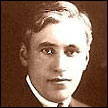
portrait (CORBIS)
Lehrman and Rappe apparently had a troubled relationship. They would break up, reconcile and then break up again. The two were also suspected of having venereal disease by studio executive Mack Sennett and ordered to leave a Keystone lot because of it. Of course, venereal diseases are not spread through casual contact but apparently Sennett was ignorant of this because he had the lot fumigated. Then again, some have said the couple had lice, which are far more easily spread and can be transmitted through shared towels and sheets.
At any rate, Rappe starred in Lehrman’s 1920 film A Twilight Baby. Shortly after production wrapped, the couple broke up. Some people close to Rappe believe she was pregnant by Lehrman and seeking an abortion when she headed up to San Francisco on the fateful Labor Day weekend of 1921.
Sources differ on whether or not Virginia was invited to the party on September 5, 1921 or crashed it along with her manager, Al Semnacher, and a woman accompanying them named Bambina Maude Delmont. Delmont had had many run-ins with the police. She had been charged with extortion, bigamy, fraud, and racketeering. In Frame-Up, Edmonds writes that Delmont was “a professional correspondent: a woman hired to provide compromising pictures to use in divorce cases or for more unscrupulous purposes such as blackmail.”
Seeing Rappe and Delmont, Arbuckle is said to have voiced concern. Their bad reputations, he feared, might cause police to raid the party.
Several other people attended the party at one point or another. One was a nightgown salesman named Ira Fortlois who was friends with Fischbach. Actresses Zey Prevon and Alice Blake also showed up.
The party had a lot of catered food and snacks, bootleg booze, and dancing to the music playing on the Victrola. As is usual at such gatherings, there was joking and laughter, flirting and storytelling. At one point, Delmont put on Lowell Sherman’s pajamas; at another the two of them went into his room.
Arbuckle decided to leave the party at about 3 p.m. to drive a friend of his, Mae Taub, into town. Ironically, Taub was the daughter-in-law of Billy Sunday, a fiery evangelist who strongly supported Prohibition, but she did not seem to mind being in a place where illegal liquor was flowing freely.
The comedian went to his adjoining bedroom to change clothes. Exactly what happened after that would become a matter of fierce dispute.
According to the story Arbuckle gave and to which he stuck, he entered the bathroom to find poor Rappe lying in a dead faint on the floor. He picked her up and placed her on a bed.
“Water,” the sick woman requested in a weak voice.
Arbuckle brought a glass of cold water to her. Thinking she was probably just suffering the ill effects of too much drinking, the comedian left the room to dress himself for his ride.
When he went back to the bedroom, he saw that Virginia had rolled off the bed. She was lying on the floor, moaning and writhing. He helped her back onto the bed, then left for a bucket of ice. The ice would serve a dual purpose, Arbuckle believed: it would calm the woman down if she was really hysterical but it would also show whether or not she was faking. Buster Keaton had told his friend that one can discern a faked fainting or hysterical fit by holding ice against the suspected person’s thigh. According to Edmonds’ book, Arbuckle placed the ice on Virginia’s thigh. Yallop’s volume has him putting it directly on her vulva. In either case, it did no good.
Delmont came into the room. She saw Arbuckle placing an ice cube on the sick woman’s thigh. The two discussed Virginia’s distress. Both thought she was merely drunk.
Then Virginia began tearing at her clothes and screaming. The sounds caused other partygoers, Zey Prevon and Alice Blake, to rush in. Still believing that Virginia was just soused or deliberately making a scene, an aggravated Arbuckle told them, “Shut her up! Get her out of here. She makes too much noise.”
Fischbach went into the room, and seeing Arbuckle putting ice on the semiconscious woman, teased him that he was still able to do something raunchy despite the burn on his backside and leg. “Having fun with her?” he asked.
The comedian was in no mood for jokes and snapped at Fischbach.
Suddenly Virginia began screaming. “Stay away from me! I don’t want you near me!” she shouted at Arbuckle. Then she turned to Delmont and said words that would damn the entertainer, “What did he do to me, Maudie? Roscoe did this to me.”
The bathtub had been filled with cold water and Virginia was placed in the tub. Time in the water seemed to have a calming effect on the distressed woman. Fischbach and Arbuckle helped her out of it and escorted her to room 1227. Delmont went into the room with them. Arbuckle phoned the hotel manager and hotel doctor. The latter was not available but another physician, Dr. Olav Kaarboe, came to the room and took a look at Virginia. His diagnosis was that she was simply drunk.
With Virginia lying in bed, the party continued. There was more drinking and dancing and the sort of flirting and acting silly that usually characterizes where alcohol is served.
Later, Arbuckle took off for the delayed trip with Mae Taub. He dropped Taub off at her requested destination. After he returned, the hotel physician, Dr. Arthur Beardslee, arrived to take a look at poor Virginia. He gave her a shot of morphine and Virginia drifted off to sleep for the night.
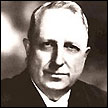
Hearst (AP)
The next day, Dr. Beardslee again treated Virginia with morphine. He also catheterized her because Delmont told him the sick woman had not urinated in many hours.
Later, Delmont called Dr. Melville Rumwell, a man she knew well enough to call “Rummy.” When the doctor arrived, Delmont told him, as she had previously told Beardslee, that Virginia took sick after a drunken Roscoe Arbuckle dragged her into a room and raped her or at least tried to. Rumwell found no evidence of rape but treated the girl for pain and trouble urinating.
Tuesday afternoon, Arbuckle checked out of the hotel.
A couple days later, a feverish Virginia Rappe was finally taken to a hospital. She died there on Friday, September 9, of peritonitis, an acute infection that was, in her case, caused by a ruptured bladder. Why that bladder ruptured would become a matter of great dispute and the most serious importance.
Authorities would allege that Rappe’s bladder tore because the overweight comedian sexually assaulted her. Rumors swirled around that he had also raped her with an instrument like a Coca-Cola bottle or a champagne bottle. However, these rumors were undoubtedly false. No such attack was even alleged in court.
The newspapers were filled with headlines about the sexual horror Roscoe supposedly perpetrated against young Rappe. It was Hollywood’s first major scandal although it would, of course, by no means be its last.
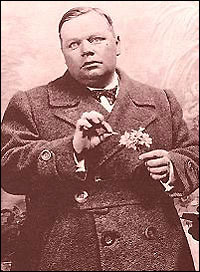
Newspapers, led by William Randolph Hearst’s San Francisco Examiner, had a field day. Yellow journalism was at its peak and readers were regaled with stories about Arbuckle’s supposedly debauched private life and his alleged cruelty to the deceased Virginia Rappe. Hearst once bragged, to Arbuckle’s good friend Buster Keaton, that the Examiner had sold more newspapers because of the Arbuckle case than the sinking of the Lusitania.
The comedian was bewildered by his dizzying fall from public grace. “I don’t understand it,” he complained. “One minute I’m the guy everybody loved, the next I’m the guy everybody loves to hate.”
In the meantime, San Francisco District Attorney Mathew Brady was conducting repeated interviews with Maude Delmont, his prospective star witness. Every time she talked about the events of that terrible night, her story changed.
When Brady brought the Arbuckle case before a grand jury, he threatened Zey Prevon with prosecution for perjury unless she agreed with a police statement alleging that a dying Virginia Rappe had said, “Roscoe hurt me.”
Arbuckle was originally arrested for first-degree murder, a crime punishable by the death penalty. Later, the charge was reduced to manslaughter that carried a possible ten-year prison sentence.
Earl Rogers, father of Adela Rogers St. John, predicted that the entertainer would face prejudice because of his size. “Arbuckle’s weight will damn him,” Rogers prophesied. “He will no longer be the roly-poly, good-natured, funny 350-pound fat man everybody loves. He will become a monster. If he were an ordinary man, his own spotless reputation, his clean pictures would save him. They’ll never convict him, but this will ruin him and maybe motion pictures for some time.”
The comedian’s sexual attack on Virginia Rappe, the prosecution argued, had ruptured the victim’s bladder, causing her death. The first trial began on November 14, 1921. The prosecutor was San Francisco District Attorney Mathew Brady, an ambitious, hot-tempered man with a dramatic manner that often came in handy in the courtroom.
Gavin McNab was the lawyer defending Roscoe Arbuckle. Like Brady, he was a native of San Francisco. He was a respected attorney who was often hired by people associated with the motion picture industry.
Presiding over the case was Judge Sylvain Lazarus.
Despite their marital difficulties, Minta Durfee believed her husband innocent of the felonies of which he stood accused.
She had visited him in jail before he was bailed out. “Roscoe,” she began, embarrassed but needing his reassurance, “I have only one question to ask you. Please don’t get angry but I must know. Were you in any way responsible for Virginia Rappe’s death?”
“Minty, I swear to God I never touched that girl like they say I did,” he told her.
That was good enough for Minta. She appeared regularly in the courtroom to show her support for him.
The prosecution’s first witness was a nurse named Grace Halston. She glared at the defendant, obviously convinced of his guilt. She testified that the late Rappe had several bruises on her body and that her organs were torn in a way that suggested force.
McNab got Halston to admit that the ruptured bladder could have been caused by cancer and that the bruises might have been caused by Rappe’s heavy jewelry.
Dr. Arthur Beardslee testified that the bladder seemed to be injured from force inflicted from outside of her body. On cross-examination, he admitted that Rappe had said nothing to him indicating she had been assaulted by the accused. Beardslee also said that the sick woman would have benefited from surgery.
The defense attorney zeroed in on this admission. “Then, Dr. Beardslee, let me ask you this,” he began. “If you saw evidence that Miss Rappe would benefit from surgery, why was no surgery ordered at that time?”
“I have no answer for that,” he said.
“You have no answer,” McNab observed. “I wonder if Miss Rappe might be alive today if you had.”
Brady called Betty Campbell to the stand. She was a model who had been at the party. She testified that, about an hour after the alleged rape, she had seen Arbuckle relaxed and enjoying himself. Edmonds wrote that, “Brady tried to use this in an attempt to show Arbuckle had neither remorse nor concern for the condition of Virginia Rappe.” Under cross-examination, Campbell said the comedian seemed not the least bit intoxicated. Then McNab dropped a bombshell. Campbell testified that the prosecutor had threatened to get her imprisoned if she didn’t testify against Arbuckle.
This understandably sent Brady into a frenzy of objections.
The defense attorney presented the judge with affidavits from Alice Blake and Zey Prevon backing up the claim of intimidation by the prosecution. Prevon was called to the stand and testified that she had signed the statement saying Rappe had claimed, “He killed me,” under duress. Alice Blake made similar assertions from the witness stand.
The prosecution struck a hard blow with the testimony of a security guard who had worked at Lehrman’s Culver City studio. The former security guard, Jesse Norgard, testified that Arbuckle had once shown up at the studio and offered him cash in exchange for the key to Rappe’s dressing room. The comedian supposedly said he wanted it to play a joke on the actress. Norgard said he refused to give out that key.
Oddly, the woman who had originally made the accusation against Arbuckle, the shady Maude Delmont, never appeared in court, something the defense would gleefully point out.
Dr. Edward Heinrich, a criminologist who was especially expert in fingerprints, testified that partial prints of Rappe were found on the inside of the door to 1219 with Arbuckle’s superimposed over them. This seemed to indicate that the two had struggled over the door and implied that the actress tried to open it while the comedian slammed it shut.
To rebut this testimony, McNab would put Ignatius McCarthy on the stand. McCarthy had been a federal investigator. He said he could prove the fingerprints were faked. McNab also called to the stand a hotel maid who claimed she had dusted the door several times before it was sealed and examined by the District Attorney.
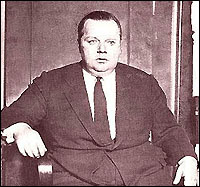
On Monday, November 28, the defense called Roscoe Arbuckle to the witness stand. He was eager to testify. He had heard himself accused of one of the most terrible crimes imaginable and was relieved to able to publicly and emphatically deny it. He walked to the stand looking tired and drawn, with dark circles obvious under his eyes. He was neatly attired in a dark suit and white shirt and his expression appropriately somber. He would be on the stand for a little over four hours.
“Mr. Arbuckle,” Gavin McNab began, “where were you on September 5, 1921?”
“At the St. Francis Hotel occupying rooms 1219, 1220, and 1221,” the entertainer answered.
“Did you see Miss Virginia Rappe on that day?”
“Yes, sir.”
“At what time and where did you see her?”
“She came into room 1220 at about 12:00 noon,” was Arbuckle’s calm reply.
Under the lawyer’s questioning, Arbuckle gave names of others at the party. He told how he had planned to take Mae Taub into town and was going into the bathroom to get dressed when he discovered Virginia in pain.
“When I walked into 1219,” the witness recalled, “I closed and locked the door, and I went straight to the bathroom and found Miss Rappe on the floor in front of the toilet. She’d been vomiting.”
“What did you do?”
“When I opened the door, the door struck her, and I had to slide in this way to get in, to get by her and get hold of her. Then I closed the door and picked her up. When I picked her up . . . she vomited again. I held her under the waist . . . and the forehead, to keep her hair back off her face so she could vomit. When she finished, I put the seat down, then I sat her down on it.
“‘Can I do anything for you?’ I asked her. She said she wanted to lie down. I carried her into 1219 and put her on the bed. I lifted her feet off the floor. I went to the bathroom again and came back in two or three minutes. I found her rolling on the floor between two beds holding her stomach. I tried to pick her up but I couldn’t. I immediately went out of 1219 to 1220 and asked Mrs. Delmont and Miss Prevon to come in. I told them Miss Rappe was sick.”
He vehemently denied having ever put his hand over Rappe’s on the door. He also told how a frantic Virginia had torn at her clothes and Arbuckle had helped her off with a dress and Fischbach came into the room. Then he said that Fischbach had taken the sick woman to the bathroom and put her in a tub of cold water. This was done, Arbuckle claimed, in hopes of calming down her apparent hysteria. When Virginia was carried back to the bed, Maude Delmont rubbed her with ice. Arbuckle said he tried to cover Virginia with the bedspread and an infuriated Delmont spoke rudely to him and he in turn barked, “If you don’t shut up, I’ll throw you out the window.”
The witness remained unshaken under an intense cross-examination by Assistant District Attorney Leo Friedman.
“What time did you say Miss Rappe entered your rooms?”
“Around 12:00,” Arbuckle said.
“You had known her before?” Friedman asked.
“Uh-huh. About five or six years.”
Arbuckle admitted to drinking some liquor but indicated that he was not drunk. The judge called a recess.
Court resumed with a startling exhibit by the prosecution. Virginia Rappe’s bladder was brought into the courtroom!
Friedman tried to get Arbuckle to admit he had deliberately followed Virginia. The defendant stuck to his story. The DA tried to wring at least an admission of callousness from the witness.
“Did you tell the hotel manager what had caused Miss Rappe’s sickness?”
“No,” Arbuckle replied. “How should I know what caused her sickness?”
“You didn’t tell anybody you found her in the bathroom?” the prosecutor asked incredulously.
“Nobody asked me.”
“You didn’t tell anyone you found her between the beds?”
“Nobody asked me,” Arbuckle repeated. “I’m telling you?”
“You never said anything to anybody except that Miss Rappe was sick?”
“Nope.”
“Not even the doctor?” Friedman pressed.
“Nope.”
When Arbuckle stepped down, most observers thought his testimony had scored strongly for his defense.
Both the prosecutor and the defense put on expert witnesses to discuss the state of Virginia Rappe’s bladder. Dr. William Ophuls was called by the prosecution and Dr. G. Rusk by the defense. According to Andy Edmonds, “The experts agreed on four points: that the bladder was ruptured, that there was evidence of chronic inflammation, that there were signs of acute peritonitis, and that the examination failed to reveal any pathological change in the vicinity of the tear preceding the rupture. In short — the rupture was not caused by external force.”
The defense was jubilant. They believed it would be an easy victory.
However, prosecutor Friedman still thought the evidence pointed straight at Arbuckle. His summation painted a portrait of the actor as a cold-hearted sort. “This big, kindhearted comedian,” he said sarcastically. “Did he say ‘Get a doctor for this suffering girl?’ No. He said, ‘Shut up or I’ll throw you out the window.’
“He was not content to stop at throwing her out the window. He attempted to make a sport with her by placing ice on her body. This man then and there proved himself guilty of this offense. This act shows you the mental makeup of Roscoe Arbuckle.”
In his summation, McNab dramatically charged that his client was the victim of a vicious persecution. “It was a deliberate conspiracy against Arbuckle!” the indignant McNab thundered. “It was the shame of San Francisco. Perjured wretches tried, from the stand, to deprive this defendant, this stranger within our gates, of his liberty.”
The first trial ended on December 4, 1921 when, after 43 hours of deliberation and 22 ballots, the jury was unable to reach a verdict. They were deadlocked, 10 to 2, in favor of acquittal.
One of the holdouts, Helen Hubbard, supposedly told the others that she would never change her mind because she had decided Arbuckle was guilty when she heard that he had been arrested.
The prosecution pressed the case a second time. The defense this time around went after the dead woman in a rather distasteful way, playing on popular prejudice against women who drank and enjoyed a variety of sexual partners.
Two major prosecution witnesses reversed their previous testimony. Zey Prevon testified that she had not heard Rappe accuse Arbuckle of hurting her. Of equal significance was the testimony of prosecution witness Dr. Heinrich who said he believed the overlapping fingerprints on the bedroom door may well have been faked.
The defense decided that the district attorney’s case was so weak that they would not dignify it by seeming to take it seriously. They not only did not put their client on the witness stand but also did not make a closing summation! This backfired. Most of the jurors assumed that the failure to put on a strong defense was an implicit admission of guilt. This time the jury deadlocked again, but voted 10-2 for conviction, precisely the opposite of the first jury.
So the case went to trial a third and final time. This time the defense went all out. Arbuckle again took the stand. He appeared forthright in his denials. The district attorney operated under something of a handicap because one of its major witnesses, Zey Prevon, had left the country.
The jury not only came back with a quick acquittal but, on their own initiative, issued an apology to the accused saying he had been wronged. “Acquittal is not enough for Roscoe Arbuckle,” the jury’s statement began. “We feel that a great injustice has been done him. We feel also that it was only our plain duty to give him this exoneration, under the evidence, for there was not the slightest proof adduced to connect him in any way with the commission of a crime.
“He was manly throughout the case, and told a straightforward story on the witness stand, which we all believed.
“The happening at the hotel was an unfortunate affair for which Arbuckle, so the evidence shows, was in no way responsible.
“We wish him success, and hope that the American people will take the judgment of fourteen men and woman who have sat listening for thirty-one days to evidence, that Roscoe Arbuckle is entirely innocent and free from all blame.”
What exactly did happen to Virginia Rappe? There is no doubt that the immediate cause of death was peritonitis caused by a ruptured bladder. Why did the bladder rupture?
One common theory is that Rappe had just undergone an illegal and botched abortion. She is said to have told others at the party, “I need money for an abortion.” There are two ways this statement can be interpreted. The first, and most obvious, is that she was pregnant at the time she said it. The second is that she had just had a pregnancy terminated and needed to pay the person who had performed the operation.
Was Rappe pregnant at the time she died? The surprising answer is that we do not know. Several of her organs, including her uterus, were removed after the autopsy and secretly destroyed. The physician believed to be behind the destruction of these parts was Dr. Rumwell, a man reputed to perform abortions. Perhaps he wanted to hide evidence that he had recently performed an illegal procedure.
An anonymous writer called “Shush” speculates in Web-based analysis “What Really Happened to Virginia Rappe?” about the cause of her peritonitis. “Shush” notes that there are three major reasons for peritonitis. One of them, due to dialysis treatments, doesn’t apply in this case. Another, related to cirrhosis of the liver, could be a factor since there are some who believe the actress was an alcoholic. However, “Shush” observes that “this leaves out the whole issue of the ruptured bladder” and “it’s hard to believe that Virginia’s ruptured bladder played no part in her death.”
The third type of peritonitis, secondary peritonitis, “caused by bacteria entering the peritoneum through a hole somewhere in the gastrointestinal tract” fits the case best in the opinion of “Shush.” While dying, Rappe had told a nurse that she had been having an abnormal vaginal discharge for about six weeks. This may or may not have been related to a venereal disease. This infection may have traveled upward into her intestines. The vomiting may have ruptured her already distressed bladder.
Edmonds gives an account in which Arbuckle did contribute to her ruptured bladder but in an innocent manner. At the party, the guests started doing “high kicks” in an effort to see who could kick the highest. Arbuckle re-injured the burn he had recently gotten so he sat down.
According to Edmonds, it was well known among Arbuckle’s acquaintances that he was ticklish and they would often tickle his ribs, causing him to double over and jerk his knee up. At the party, Rappe (who may or may not have known this about the comedian) got Arbuckle up off the sofa then impulsively tickled him. His knee automatically shot up and jabbed the actress’ stomach. She shrieked in sudden pain and fled to the bathroom.
The author notes that, if this story is true, it explains Rappe’s alleged remarks, “What did he do to me?” and “He did this to me” but without imputing any criminal action to Arbuckle.
At the time of Arbuckle’s acquittal, the 35-year-old actor owed $700,000 to his attorneys. He had lost his house and his cars. The acquittal, even accompanied by the extraordinary statement from the jury, did not mean that Arbuckle could resume his career.
US Postmaster General
(Library of Congress)
The comedian had broken a law on the way to the infamous party: he had brought liquor to it. In 1922, he pled guilty to violating the Volstead Act and paid a $500 fine.
Roscoe “Fatty” Arbuckle had come to represent everything that was supposedly wrong with Hollywood. His very name conjured up the worst type of sexual predator, leading to his being the first person to be blacklisted from films. The films in which he starred had been withdrawn from circulation because of his, however undeservedly, sullied reputation. The major force behind this blacklisting was Will Hays.
Formerly U.S. postmaster general, Hays is best remembered for an organization dedicated to sanitizing the motion picture industry. It was called the Motion Picture Producers and Distributors of America (MPPDA). Hays and his organization were courted because Hollywood feared that public outrage would lead to government censorship. Movie producers decided to head that threat off at the pass by agreeing to rules of self-censorship which Hays helped form.
On April 18, 1922, Hays issued a statement saying, “After consulting at length with Mr. Nicholas Schenck, representing Mr. Joseph Schenck, the producers, and Mr. Adolph Zukor and Mr. Jessy Lasky of the Famous Players-Lasky Corporation, the distributors, I will state that at my request they have cancelled all showings and all bookings of the Arbuckle films. They do this that the whole matter may have the consideration that its importance warrants, and the action is taken notwithstanding the fact that they had nearly ten thousand contracts in force for the Arbuckle pictures.” Hays would officially lift this ban on December 20 of that same year but Arbuckle would not be able to find work in front of a camera for a decade.
He was able to obtain work behind the camera as a director when working under the pseudonym “William B. Goodrich.” The name he picked showed that the trauma he had suffered had not erased his sense of humor. Perhaps it also showed that he had finally forgiven his father for parental maltreatment.
As Goodrich, Arbuckle directed a 1927 Eddie Cantor film called Special Delivery and a short starring Louise Brooks called Windy Riley Goes to Hollywood in 1931.
However, Arbuckle was still depressed. Perhaps he needed to perform before real audiences, to have people see him as the jolly fat man he had always played and not the man suspected of a dirty and disgusting crime. For a while, he returned to the stage. He made a tour on the old Vaudeville circuit. There he found affectionate crowds laughing and applauding at his old antics. Having the public accept him once again was wonderfully gratifying.
McPhail,
publicity photo
He met lovely, dimpled Doris Deane and the two fell in love. Minta divorced him in 1925 and four months later he wed Deane. However, the marriage was not successful. He was still depressed because of his travails and, as he had before, sought comfort in alcohol. They divorced three years after getting married.
Apparently believing that the scandal had finally died down, Warner-Vitaphone hired Arbuckle to work onscreen in the early 1930s. He made a series of two-reelers. One of them, Buzzin’ Around, showed that he still had a special gift for light-hearted slapstick. Audiences flocked to these delightfully funny movies, showing that there were many who remained his fans and that he could make new ones as well.
Meanwhile, he also found a new love, pretty dark-eyed actress Addie McPhail. The couple was married in June, 1932. It seemed like things were finally looking up for Arbuckle. He was making movies that people loved and enjoying a good marriage.
Warner Brothers offered Arbuckle a feature film contract. He eagerly accepted but never got a chance to fulfill its terms. He and his wife Addie went out to dinner for a double celebration — the contract and their first wedding anniversary.
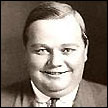
publicity photo
At the age of 46, he died in his sleep, shortly after he and his wife returned from their night on the town. The cause of death was medically heart disease. His close friend Buster Keaton said, “He died of a broken heart.”
However, it should be remembered that he had made a successful comeback. He was also happily married. Thus, it is realistic to believe that, for all his bad luck, including dying at a young age, Roscoe Arbuckle died a happy man. He certainly deserved to.
Sadly, Arbuckle is often remembered today as “the man who raped a girl with a Coke bottle” or “the man who tried to rape an actress and killed her.” He was neither of these things. Sometimes people recall him, correctly, as falsely accused of a murder. It would be most appropriate if he were remembered as a genius of comedy. Those smart enough and lucky enough to see his films will know him as a brilliant comedian. Roscoe Arbuckle loved to make people laugh and he was very good at it. Several decades ago, on a horrible day, the laughter stopped. It is long overdue for it to start again.