
Beverley Allitt: Suffer the Children — The First Victim — Crime Library

highlighted
The new nurse seemed very attentive with the children on the sick ward, although it seemed odd that she never picked up crying babies and showed no feelings when they died. Within two days of coming on the job at the Children’s Ward Four at England’s Grantham and Kesteven Hospital in Lincolnshire, Beverley Allitt, 23, took to it enthusiastically. No one knew her history or they might have thought twice before allowing her to get close to vulnerable charges.
According to Terry Manners in Deadlier Than the Male, the area in central Britain where Allitt served as a nurse had a population of nearly 100,000 people, one third of which were children. More than 2,000 were born each year and the highest percentage of them were born at the hospital where Allitt worked. Although she had a history of excessive sick leave and had repeatedly failed her nursing exams, she had been granted a temporary six-month position at the understaffed hospital. While relieved, she was also bitter that she had been turned down at another hospital 30 miles away in Nottingham. She was determined to show the hospital administration just how competent she was and also get the attention she craved.
On February 21, 1991, the mother of seven-week-old Liam Taylor brought him into the hospital with congested lungs. He had pneumonia, says Manners, but the Kellerhers say in Murder Most Rare that it was a simple chest cold. Liam’s father arrived and Allitt made herself available to both parents. She reassured them that the boy was in good hands and sent them home to get some rest. When they returned, Allitt told them that Liam had gotten worse. He’d been rushed into emergency care and had recovered.
As he got better, Allitt once again reassured the parents that she would watch over him. She had even volunteered for extra duty on his second night at the hospital. Liam’s parents elected to stay as well and went to bed in a room for this purpose.
Just before midnight, Liam went into another respiratory crisis, but everyone involved felt that he’d gotten through it and would rest. They all left Allitt alone with the boy and then things really got bad. She sent two nurses to fetch some things she needed, and one of them returned, she saw Allitt standing next to Liam, who appeared to be pale as a ghost. Then red blotches appeared on his face and Allitt yelled for the crash team.
The other nurses were confused. If Liam had stopped breathing, alarms should have sounded, but they hadn’t. Soon the boy suffered cardiac arrest and the doctors worked hard to get him breathing again. However, their efforts were in vain. Liam Taylor was alive only because of the life-support machines that kept his lungs breathing. He’d suffered severe brain damage and there was no reason to try to resuscitate him. His parents made the difficult decision of removing their baby from life support to allow him to die. This young boy with no history of heart disease had mysteriously succumbed to heart failure.
Beverley Allitt watched the entire incident without a word, and then put on her coat and went home. No one ever asked her about her part. She went back to work that afternoon as if nothing had happened. She had committed murder and she believed that no one would ever know.
Within the next two months, she attacked nine children and murdered four. Yet to the suffering families, she was an angel of mercy, someone who was always available for their needs. How could a person be so caring and so demented at the same time?
Yet things were to get much worse.
Nursing depends on trust, because nurses are often alone with their patients. If they abuse that trust, the entire medical system suffers.
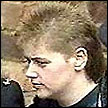
On March 5, two weeks after Liam Taylor died, the Children’s Ward Four received another patient. This 11-year-old boy, Timothy Hardwick, had cerebral palsy. He had suffered an epileptic fit and was brought to the hospital. Allitt quickly took over his care. She was quite solicitous in attending to the boy, but a few minutes after she was left alone with him, she came racing for help, yelling that he was going into cardiac arrest. The staff rushed to Timothy and found that his heart had stopped and he was turning blue. A specialist in pediatric medicine tried to save him, but finally pronounced him dead. It was completely unexpected. Even an autopsy failed to provide an obvious cause of death, although his epilepsy was officially blamed.
Five days later, Kayley Desmond, just over a year old, had been hospitalized on March 3 with a congested chest. Allitt attended to her, too, and she appeared to be recovering to everyone’s satisfaction. Then, in the same bed where Liam had died, Kayley went into cardiac arrest. The crash team revived her and she was transferred to a hospital in Nottingham. Physicians there gave her a thorough examination and they found an odd puncture hole under her armpit. Near it was an air bubble, which they attributed to an accidental injection. There was no investigation.
Stymied by this missed opportunity, Allitt struck again and again — three times over the next four days.
On March 20, Paul Crampton, only five months old, was diagnosed with bronchitis. It wasn’t a serious case, but he was placed into the children’s area. Just before he was to be discharged, something appeared to go wrong. Allitt was attending him by herself when she called out that he had taken a turn for the worse. He seemed to be suffering from insulin shock, and on three separate occasions he went into a near-coma. Each time, the doctors pulled him out of it, but they were mystified as to why his blood sugar kept dropping. When he was taken by ambulance to the hospital in nearby Nottingham, Allitt rode with him, and he was again found to have too much insulin. He didn’t die, but he came very close.
The next day, five-year-old Bradley Gibson had pneumonia, but quite suddenly he suffered a heart attack. The team saved him after half an hour of strenuous effort, and to its amazement, blood tests showed that his insulin was high. It made no sense. When he had another heart attack later that night, after being attended by Allitt, he was transported to Nottingham, where he recovered.
At this point, things should have seemed suspicious, but no one around Allitt was looking over her shoulder. She continued with her quiet aggression, but rested for a day before trying again.
This time Yik Hung Chan, age 2, turned blue and appeared to be suffering some attack when Allitt raised the alarm, but he responded well to oxygen. Then a few hours later it happened again, so he was taken to the larger hospital in Nottingham. He had come very close to dying, but his symptoms were attributed to the fact that he’d fallen from a window and fractured his skull.
At that point, Allitt turned her attention to twins, but in a bizarre twist, the mother actually befriended her.
The two baby girls were just two months old. Katie and Becky Phillips had been born prematurely and had remained in the hospital for a while before being sent home. There they seemed to thrive, but then suffered from gastro-enteritis. Becky came into Ward Four on April 1, 1991, and Allitt took over her care. Two days later, the nurse went running for help when Becky appeared to be hypoglycemic. She was cold to the touch, Allitt claimed, but the nurse who responded could find nothing wrong. Little Becky went home with her mother.
During the night, she went into convulsions and cried out in apparent pain. Her parents tried to do what they could, and even summoned a doctor, but he thought she simply had colic. To keep watch over her, the parents kept her in their bed that night, where she quietly died.
Taken again to the hospital, Becky’s small body was tested, yet the pathologists could find no clear cause of death.

To take an extra precaution with Katie, the remaining twin, the doctor had her admitted to Grantham, and as fate would have it, the nurse on duty was Beverley Allitt. It wasn’t long before she was running with the baby in her arms, shouting out, “Cardiac arrest!” Indeed, Katie had stopped breathing and was quickly succumbing to the lack of oxygen.
She was saved, but the same thing happened two days later. This time, her lungs collapsed and it proved difficult to encourage her to breathe again. Once they did, they transferred her to Nottingham, where it was found that five of her ribs were broken. They felt sure that she had suffered serious brain damage from her oxygen deprivation.
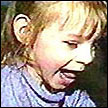
Ironically, Katie’s mother, Sue Phillips, felt so grateful to Allitt for saving her baby’s life that she asked her to be Katie’s godmother. Allitt accepted the honor. She acted as if she’d been a hero when in fact thanks to Allitt, this child now had cerebral palsy, paralysis, and damage to both her sight and hearing. Little did the Phillipses know.
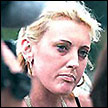
Phillips
Allitt continued attacking the children at the hospital. Four more who had been more or less healthy succumbed to the same kinds of disorders. Allitt was always involved in the child’s care, yet no one at Grantham was asking why so many children in such a short span of time under the care of the same nurse should be suffering from the same life-threatening conditions. However, people at Nottingham’s hospital were beginning to suspect that something was amiss.
It was the death of a 15-month-old girl that finally brought the spree to an end.
Claire Peck was asthmatic and she was taken to a treatment room to have a tube put down her throat to help her breathe. Allitt was left alone with her for a few minutes, and in that space of time, the child had a heart attack.
“Arrest!” Allitt called out. The team ran back in and revived her. Then they left her alone with Allitt once more, and once more she shouted, “Arrest!” Again the doctors worked to stabilize Claire, but this time they failed. When she died, one of them said, “This should never have happened.” He was right.
While an autopsy indicated that Claire had died from natural causes, an inquiry was held regarding the high number of cardiac arrests over the past two months on Ward Four. They checked for an airborne virus, but nothing was found. A test that indicated a high level of potassium in the last victim’s blood made the inquiry more urgent. Yet according to the Kellerhers, it still took 18 more days for the police to be called in.
They exhumed Claire for further tests and found traces of the drug lignocaine in her tissues, a substance used in circumstances of cardiac arrest, but never in a baby. Superintendent Stuart Clifton believed they had a killer on their hands.
He examined some of the other perplexing cases and found inordinately high doses of insulin. He also learned that nurse Allitt had reported the key missing to the refrigerator that contained the insulin. He checked all records, talked with parents of the victims, and installed a security camera into Ward Four. He even learned about Munchausen by Proxy syndrome, in which people harm others in order to get attention in some fashion, typically from a medical community.
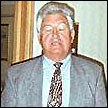
Stuart Clifton, head
of the Allitt inves-
tigation (Dr. Marc
Feldman)
Detectives going over the daily nursing log found pages missing that corresponded to the time period when Paul Crampton had been in the Ward. That was suspicious. They then counted up 25 separate suspicious episodes with 13 victims, four of which were dead, and looked for something they all had in common. The pattern was clear: Beverley Allitt was the only person who had been part of every episode. Within three weeks, they arrested her.
Allitt denied that she had any part in the attacks, apart from caring for the victims. She showed no nervousness under interrogation, but a search of her home revealed parts of the missing log.
While the initial evidence seemed damning, the parents of little Katie who had invited Allitt to be a godmother hired a detective to help clear her. They were soon to regret the trust they had placed in her.
In the meantime, the police were looking into her background. They came up with a pattern that pointed to a very serious personality disorder.
Beverley Allitt was thought to have suffered from both Munchausen Syndrome and Munchausen by Proxy syndrome. These conditions belong to the group known as factitious disorders, which are characterized by physical or psychological symptoms that are feigned, exaggerated, or self-induced. It’s not common to find both in the same person, but the core motivation — getting attention through illness — is common to both. Let’s first discuss Munchausen syndrome, a disorder in which people fake an illness to obtain medical care.
One of the worst cases on record is that of Wendy Scott, a British woman who was admitted to more than 600 hospitals in 12 years and underwent a shocking 42 unnecessary surgeries. Scott’s illness, she believed, had developed from the attention of a kind nurse during childhood, an experience she’d never had before. When she started to work in a depressing job as an adult, it wasn’t long before she realized that illness brought her the affection she sought from others. Thus began her odyssey as a “hospital hobo.” Eventually she recovered and started a support group, but she had done more damage than she realized.
When she eventually experienced genuine problems, it was difficult to get help. London physicians knew her record of faking complaints and turned her away, so she tried elsewhere, but the multiple scars on her abdomen alerted caregivers to her disorder. Finally she got help in the U.S., but it turned out that she had inoperable intestinal cancer. Six months later, she died.
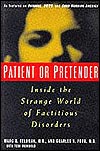
or Pretender
Dr. Marc Feldman, a psychiatrist at the University of Alabama and co-author of Patient or Pretender: Inside the Strange World of Factitious Disorders, says that people who suffer from Munchausen syndrome generally present dramatic symptoms, including serious self-mutilation or injecting themselves with a toxin. Often, they return to a healthcare facility over and over. They mostly just seek attention and care, although a small percentage of them have a different motive: they want to baffle a physician so they can feel powerful. If the medical staff at one place suspects fakery, the patient moves on to another.
Most Munchausen patients are male, and they range in age from children to the elderly, although the illness often peaks in middle age. Females may stick to a set of symptoms and bond with one doctor, but both genders know how to lie in great detail and to disguise what they are doing. They usually know as much about their disorders as their doctors.
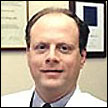
Of the percentage of patients faking a disorder, only 10 percent have Munchausen syndrome, although it is difficult to be accurate. “We can only count a case for statistical purposes,” says Feldman, “when the deceptions have failed. If someone is very crafty, he or she will never be caught and so there will never be the opportunity to add the case to the list.”
British physician Richard Asher published the first account of Munchausen syndrome in 1951. He described three people who went from doctor to doctor with fake illnesses. Since these imposters often tell whopping lies, Asher named the condition after Hieronymous Karl Friedrich von Munchausen, an eighteenth-century German baron who wowed his friends with endless tales of exotic adventures, all of which he fabricated.
Almost every disease has been mimicked by Munchausen patients, making diagnosis tricky. Even so, Munchausen syndrome is not hypochondria. These people know they are not ill and they tend not to improve. They don’t wish to. It also differs from malingering, which involves faking for clear external gain. A criminal who mimics mental illness to avoid a trial is malingering. For Munchausen sufferers, the point is the treatment and they will do whatever it takes to get it. In his book, Lies! Lies!! Lies!!!: The Psychology of Deceit, Charles Ford describes a patient with the ability to mimic renal colic who more than once caused the emergency landing of a commercial airplane.
It appears that the childhood experience of many of these people includes a sadistic, neglectful, or rejecting parent. They may also have had some experience with a caregiver during a long illness that made them feel special, or they found that faking an illness got attention while being well did not. The motives are simple to understand, but the condition is nearly impossible to treat.
The most common signals to doctors include
- A textbook case of symptom patterns
- A long and varied history of medical work-ups
- Numerous surgical scars
- Inconsistent lab tests
- Evidence of lying in other areas, such as a name, address, or previous physician.
For Munchausen patients, the prognosis is poor, because they tend to ignore psychiatric referrals. Instead, they move on to the next healthcare facility.
As dangerous as these people can be toward themselves, it’s when the syndrome makes a substitution of others for self that it becomes truly depraved. That’s what Beverley Allitt eventually did.

school (Dr. Marc Feldman)
As a child, Allitt wore bandages and casts over wounds that she would use for attention but not allow to be examined. One of four children, she seemed happy for a while, but became overweight as an adolescent. From that time on, as the Kellerhers write, she suffered from a volatile temperament, becoming aggressive toward others and complaining of a series of physical ailments that sent her into a hospital. She had gall bladder pain, headaches, urinary infections, uncontrolled vomiting, blurred vision, minor injuries, appendicitis, back trouble, and ulcers, to name a few. In Deadlier than the Male, Manners brings out that fact that Allitt actually persuaded a doctor to remove a perfectly healthy appendix, and then failed to heal because she kept plucking at the surgical scar. She also injured herself with a hammer and glass. Doctors soon had her number, aware that she was wasting their resources, and she ended up going from one to another.

Cocks (Dr. Marc Feldman)
She became a nurse, and even as she trained to be a caretaker, she did odd things that got her noticed. Manners says that when she worked in a nursing home, she was suspected of smearing feces on the walls and putting it into the refrigerator for others to find. She also missed an inordinate number of workdays for reasons of illness. Her boyfriend of two years said later that she was aggressive, manipulative and deceptive, and she would pretend that she was pregnant when she was not. She even said she’d been raped. Then she got involved with another nurse and ended her relationship with him.
When she found that her illnesses were not inspiring the positive attention they once had, she found another venue by abusing children, and her behavior exhibited what is known as Munchausen by Proxy syndrome (MHBP). First identified in 1977, the common pattern is that of an apparently devoted parent bringing her child over and over to the doctor to treat some mysterious illness that he or she cannot seem to cure. It’s the mother who makes the child ill, say Betty Alt and Sandra Wells in Wicked Women, but she denies any knowledge about the source of the illness. She may “feed the child poison to induce abdominal pain, aggravate or infect existing sores, induce apnea by smothering, or twist to break bones.” One mother even injected her child with fecal matter. In other words, they injure another in order to bring attention to themselves.
The MHBP mother comes across as a martyr, taking her child dutifully from one specialist to another, but there is evidence that she also tries to thwart the caregivers. Laura Berman wrote about Mary Bryk, the child of a MHBP mother who was a nurse and a physician’s daughter. Mary got her start as an invalid by “falling” down a flight of stairs, but in point of fact, her mother would hit her legs with a hammer to keep her from healing. She would also open her wounds with a nail, yet all the while to others she appeared the caring mother. She warned Mary that if she ever told, she’d be locked up, which effectively scared the child into silence. When Mary finally stood up to her mother, the abuse on her stopped but started up with her younger brother.
Deborah Shurman-Kauflin says that people with this disorder “receive a sense of importance and self-worth from harming a child, then ‘saving’ the infant by rushing the child to medical care.” If the child remains ill, the person is calm, but if the child recovers, the person gets agitated.
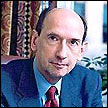
Psychiatrist Philip Resnick says that 85% of the time in Munchausen by proxy, the mother is the likely perpetrator and the mortality rate for these children is significant. One mother was even filmed on a hidden video-camera in her child’s hospital room intentionally smothering him when he seemed to get better.
A psychiatrist visited Allitt in prison and he believed she had these disorders, as did a pediatric specialist who spoke with her twice. Neither could get her to confess what she had done. After a series of hearings, Allitt was charged with four counts of murder, eleven counts of attempted murder, and eleven counts of causing grievous bodily harm. As she awaited the trial, she rapidly lost weight and succumbed to anorexia nervosa — one more indication of her psychological problems.
After numerous delays due to her “illnesses,” she went to trial at Nottingham Crown Court, where prosecutors showed the jury how she had been present at each suspicious episode, how she had craved attention most of her life, and how she had showed a cold manner while the babies suffered. They also pointed out that the mysterious attacks had stopped when she was taken off the ward, and indicated the high readings of insulin and evidence of drug injection in each of the victims. She was accused of cutting off their oxygen, either by smothering or by tampering with machines.
The pediatrics expert, Professor Roy Meadow, explained Munchausen syndrome and Munchausen by Proxy syndrome, pointing out how Allitt demonstrated symptoms of both. He also talked about her odd post-arrest behavior. When she was hospitalized in 1991, she tampered with the thermometer to produce readings that puzzled the nurses and doctors, and she apparently punctured her right breast to inject herself with water. Having seen a number of cases of the syndromes himself, Meadow indicated that such people can harm others with no awareness of how much suffering they’re causing. They close themselves off to it. In his opinion, Beverley Allitt could not be cured. That meant she was a clear danger to others.
After a trial that lasted nearly two months (and in which the defendant attended only 16 days due to illness), on May 23, 1993, Allitt was convicted and given 13 life sentences for murder and attempted murder. It was the harshest sentence ever given to a woman, but according to the judge, it was in part for the victims, in part for the families, and in part for how she had brought doubt upon the integrity of a noble profession.
Going to prison didn’t stop her, however. She began to injure herself again to get attention by stabbing herself with paper clips and pouring boiling water on her hand. Eventually she admitted to three of the murders and six assaults. She is one of Britain’s most prolific female serial offenders.
Alt, Barry, and Sandra Wells. Wicked Women. Boulder, CO: Paladin Press, 2000.
American Psychiatric Association, Diagnostic and Statistical Manual of Mental Disorders. Ed. 4, Washington DC, 1994.
Asher, Richard. “Munchausen syndrome,” Lancet, 1951; 1:339-341.
Berman, Laura, with mary Bryk, “How her Mother Hurt her in the Name of Love,” Redbook, February 1998.
Feldman, Marc D., Charles V. Ford, and Toni Reinhold, Patient or Pretender: Inside the Strange World of Factitious Disorders. New York: John Wiley, 1994.
Ford, Charles V. Lies! Lies!! Lies!!!: The Psychology of Deceit. Washington, DC: American Psychiatric Press, 1996.
Kellerher, Michael D. and C. L. Kelleher. Murder Most Rare: The Female Serial Killer. New York: Dell, 1998.
Manner, Terry. Deadlier than the Male: Stories of Female Serial Killers. London: Pan Books, 1995.
McClure, R. J., Davis, P.M., Meadow, S.R. and Silbert, J.R. “Epidemiology of Munchausen Syndrome by Proxy, Non-accidental Poisoning and Non-accidental Suffocation,” Archive of Diseases in Children, 75: 57-61, 1996.
Schreier, H.A. and Libow, J.A. Hurting for Love: Munchausen by Proxy Syndrome. New York: Guilford Press, 993.
Schurman-Kauflin, Deborah. The New Predator: Profiles of Female Serial Killers. New York, Algora, 2000.
www.Munchausen.com
www.emedecine.com/emerg/topic322.htm
www.shpm.com/articles/chronic/factit.html
www.forensic-psych.com/articles/artPretender.html