
Grace O’Malley the pirate queen of Connemara the Crime Library — Return of The Pirate Queen — Crime Library

While much has changed in the more than four hundred years since Grace O’Malley ruled the West Coast of Ireland, the rugged, windswept natural beauty and ever-changing skies, gaunt brown mountains rising from the mist still distinguish the lands of the O’Malleys, Burkes and O’Flahertys.
In this land of happy wars and sad love songs lived the most famous of the O’Malleys, a strong female warrior, as fierce and powerful as any man. Much more than just a pirate, this Gaelic princess was a remarkable leader respected not only by her own people but by the English rulers that were their adversaries.
From her earliest days, she rejected the role of the sixteenth century woman, instead embracing the life on the sea with the fleet of O’Malley trading ships. Ambitious and fiercely independent, her exploits eventually became known through all of Ireland and England. Finally, the English could no longer ignore her and sent a fleet to stop her predatory sieges, but had to retreat when Grace attacked. Finally, Grace met with Queen Elizabeth and reached an alliance that benefited them both.
Why now does she rise up from centuries of legend to once again spring into our consciousness in a Broadway musical? Because Grace O’Malley embodies the essential spirit of the Irish feisty, defiant and indomitable.
Life in 16th century Ireland was one of hardships, rebellions and social and political upheavals. The country was still a tribal society with independent chieftains ruling 60 counties under ancient traditions and laws. These local chieftains were often in conflict with each other to gain power and maintain control of land.
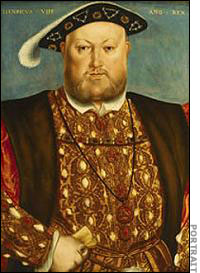
English assimilation and dominance of the Irish increased under the rule of King Henry VIII. The King was determined to strengthen his hold on Ireland to ensure that the colony would not be vulnerable to foreign attack. His reformation policy of “Submit and Regrant” offered the Irish chieftains English titles and the lawful right to keep their lands and wealth if they surrendered to English rule and swore allegiance to the Crown. Centering in Dublin, the enforcement of this policy began to spread toward the western coast of Ireland to County Mayo.
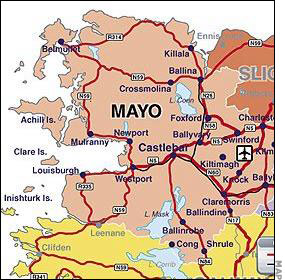
Far away from Dublin, the rugged west coast of Ireland was slow to conform to English rule. The Gaelic chieftains maintained much of their culture without interference because the English rarely ventured into what was essentially uncharted land. This Gaelic independence was firmly entrenched in the O’Malleys.
The O’Malleys were a famous seafaring clan since the 12th century. Their fleet of ships traded goods between the West Coast of Ireland and Spain and Portugal. They were known for the sailing prowess and were experienced enough to avoid the ever-present risks of the dangerous weather that can suddenly take over the seas off the Irish coast and the even more dangerous pirates that lay in wait in the sheltered coves and inlets. The O’Malleys had ruled the lands around Clew Bay in County Mayo for centuries and became, for awhile at least, independent from their English masters.
Grace was born in 1530 to the sea captain chief of the O’Malley clan, Owen “Black Oak” O’Malley and Margaret O’Malley, a high-born woman from another part of the clan.
Owen was a skilled and daring seaman who could master the open sea and navigate the treacherous reefs and shallow channels that lay off the western coast of Ireland.
Owen O’Malley was a successful and proud man who tenaciously clung to Gaelic traditions. He hated the enactment of English rule. Trade was a major source of his family income and English rule stifled it. Now only English ships could transport goods to ports that were under English rule. Irish ships were prevented from doing so. Denying him use of these ports for personal gains, only served to exacerbate Owen’s feelings toward the English.
A haughty Owen O’Malley circumvented English restrictions by sailing his ships out of Clew Bay to trade with France, Spain, Scotland and Portugal. These were dangerous voyages because the sea and channels were filled with lurking pirates and many sea captains would not traverse them.
Not just a trader, many times O’Malley would waylay and plunder unfortunate vessels that strayed too close to his home port, and would impose fees on ships fishing in and near the O’Malley territorial waters. He would also transport Scottish mercenaries to warring Irish clans. This all was in keeping with age-old O’Malley family practices and Owen had no intention of letting English rule change them. The political and legal ploys implemented by England had indeed aroused his ire and there was no turning back.
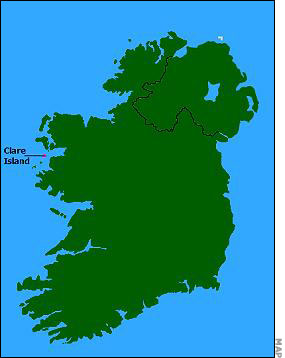
They say that the apple does not fall far from the tree and so, “Black Oak’s” wild daughter came by her fiercely independent nature honestly. Reportedly she was born on Clare Island in Clew Bay, but spent her childhood at Belclare Castle.
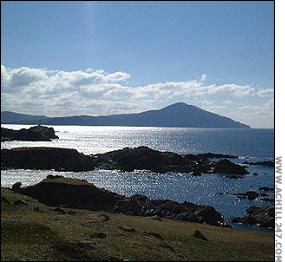
Owen O’Malley instinctively knew his daughter was special. As a young girl, Grace O’Malley would sit and listen to her father tell tales of his adventures on the high seas and the many different ports and towns he visited.
She often accompanied him down to the bay and to go onboard a ship with him. Grace enjoyed standing on the ship’s bridge, letting the wind from the sea toss about her flowing, thick hair. She would pretend to be a sea captain…shouting out commands to her men as the craft charged through billowing waters.
Grace O’Malley knew she was born to sail the sea. Its beckoning call captured her soul and swirled in her blood. It was too difficult to ignore, but it was not yet her time.
Sailing on O’Malley ships was a most unsuitable activity for an Irish princess. Her mother strongly discouraged it, but eventually she got her way and her father, who saw so much of himself in his daughter, let her come with him on his voyages to Spain.
And, so that her long hair wouldn’t get caught up in the lines, she cut it short, put away the long flowing dresses and wore boy’s clothing instead, ignoring the insults of her peers.
Owen O’Malley knew how much his daughter loved the sea. He was more than delighted to instruct her in the skills of seamanship and trading. There is little doubt that Owen saw Grace more as a son than a daughter.
Grace was not only a willing student, but also proved to be quite adept at understanding all she was taught. She could read and predict the winds, weather, and tides, as well as he could. This pleased Owen so much that he began taking his daughter on some of his trading ventures so she could exercise all that she had learned. It was not long before Grace became as good a seaman as her father. There were some who believed that she eventually was even a better one.
On her return from one voyage to Spain, the family heard a most remarkable story. Her father had ordered her to hide below deck if his ships were ever attacked and on the way back from Spain, just such an event occurred when an English pirate ship attacked. Instead of going down below, she climbed up onto the rigging and when she saw a pirate coming up behind her beloved father with a knife, she jumped down from the rigging, screaming loudly and biting the man.
Grace’s astonishing bravery saved her father’s life and helped turn the tide of the battle to their favor. This was only the beginning.
In keeping with the custom of the times, Owen O’Malley arranged a politically motivated marriage between his only daughter and the son of a neighboring clan’s chieftain. Grace was 15 or 16 years old when she married Donal O’Flaherty and their union served to strengthen the alliance between the O’Malley and O’Flaherty clans. It was not a happy marriage for Grace. Donal was an irresponsible and reckless man who with a violent temper and warlike ways, earning him the nickname “Donal of the Battles.”
Anne Chambers mentions that Donal had a sister, Finola, who was married to David Burke. David was earmarked to become chief of the Burkes of Mayo, the elected leader of what was known as the McWilliamship. The McWilliamship was a 300-year old alliance between the Burke, O’Malley, and O’Flaherty clans.
David and Finola had a son named Richard (also known as ‘Iron Dick’). David also had another son, Walter, from a previous union. Walter was next in line as successor to the McWilliamship title, but Finola wanted her son, Richard, to inherit the title instead of her stepson, Walter. Chambers notes that Donal murdered Walter inside one of the O’Flaherty castles.
Grace and Donal had two sons and a daughter, Owen, Murrough and Margaret. Grace became disgusted as she watched her unpleasant husband waste and gamble away huge portions of his inheritance. Trade restrictions imposed by English rule had already severely impacted the clan’s ability to survive and Donal’s inability to properly manage the clan estate was accelerating its decline. To shore up his finances, he levied excessive tributes on his fellow clansmen. Facing inevitable starvation, the clansmen had no choice left but to turn to Grace for help.
Grace O’Malley realized the law made it firmly clear that no woman could attain the title, or role of clan chieftain. Still, she decided to take the reins from her husband to try to lead their people from destitution. The resourceful and strong-willed Irishwoman turned to what she knew and did best…the sea and trading.
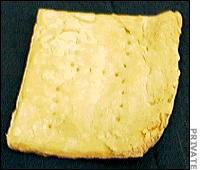
It did not take long for Grace to show her natural leadership abilities once she had taken command of her husband’s fleet of ships. More than two hundred men decided to follow their chosen and trusted leader, many of whom were from different clans. Life at sea was extremely rugged and primitive. The wind and salt spray chapped and weathered a person’s face into a tanned and leathery mask. There was no privacy on-board and personal hygiene was poor. The food was very simple and cold, consisting mainly of hardtack, salt pork and a bit of ale. One always wore the same clothing. It was the last place where one would expect to find a woman. But Grace O’Malley loved every second of it.
Grace resumed trade with several European countries, fished the open sea and conducted raids on Irish towns that accepted English rule. She and her swift ships roamed the shallow bays and channels of the western shores, looking to intercept ships that traded with the towns. Her ships were not only fast and highly maneuverable, but her crews were spirited and loyal men who supported and admired her mettle and cunning.
Grace and her men would quickly swoop down on unsuspecting merchant vessels. She would then demand payments for providing them with unsolicited pilots and safe passage through the dangerous reefs and currents. If anyone refused, she would boldly threaten to take whatever she wanted. Many captains complied with her demands. Those who did not, ended up having their ships plundered by Grace and her men.
While Grace was busy trying to replenish and maintain her husband’s estate, Donal O’Flaherty was still up to his old ways. His spending habits had not improved and his aggressive temperament became worse. The McWilliamship had already been lost to another member of the O’Flaherty family who had defeated the British in a recent battle. The loss of the McWilliamship title and his wife’s success on the sea upset the truculent Donal.
Donal stayed true to his warring ways and made a failed attempt to violently take land from the Joyce clan. Angered by such an act, the Joyce clan sought revenge against Donal and launched an attack against him at Cork’s Castle.
The heavily fortified castle, which was located on an island in the middle of a lake, had once belonged to the Joyce clan. Donal and his men successfully defended the castle, despite repeated assaults by the Joyce clan. Because of his courage during the ferocious battle, the Joyce clan nicknamed Donal “The Cock.” But the Joyce clan still wanted their revenge. Legends tell that, sometime later, Donal O’Flaherty was mysteriously killed while on a hunting trip.
Upon learning of her husband’s death, possibly at the hands of a rival clan, Grace O’Malley and her men prepared for another attack by her husband’s killers. The Joyces attacked again, only to encounter another savage and defiant defense of the Cork’s castle. But they were repelled a final time by the stalwart widow of Donal O’Flaherty. Grace got her revenge for her husband’s murder. Her indomitable courage and leadership in the battle earned Grace the nickname “The Hen.” Cork’s Castle has since been known as “Hen’s Castle.”
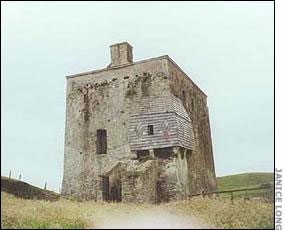
In defiance of Brehon law, the O’Flahertys denied Grace the rightful benefits due the widow of a clan chieftain. She would have received a third of her deceased husband’s possessions, which had grown through her efforts. Grace stubbornly refused to give in to enforced poverty. Taking her children, she returned to the O’Malley family home at Clare Castle. Grace knew she had to make a living and decided to once again turn to the sea. Her loyal crews remained with her, as they went to sea under her family motto “Terra Marique Potems” (Powerful by Land and Sea).
The legendary exploits of Grace O’Malley grew rapidly throughout the years. This aggravated the English, who began monitoring her movements with the hope of catching her in the act of pirating. They would then have grounds to seize her and her vessels. The English saw this as a prodigious step toward quelling the rebellious Irish.
The lady pirate and her crews dominated passage in the coastal waters along western Ireland. Clare Island proved to be a perfect lookout for watching Clew Bay and the coastline for oncoming merchant ships.
A story is told that one day a violent storm hit the coast and Grace saw a ship foundering on the reefs in a channel. She set sail right away to relieve the vessel of its cargo. But, it was gone by the time she arrived at the site. Only one person from the wrecked ship had survived, Hugh de Lacy. Grace took the handsome half-dead sailor onboard her ship and headed home.
Grace personally undertook the task of nursing de Lacy back to health, and at the same time, they became lovers. But theirs was a short-lived love affair because Hugh de Lacy was killed by members of the MacMahon clan while on a hunting trip.
A very angry Grace set out to avenge her lover’s death. She caught the MacMahons while they were on a pilgrimage at Cahir Island, burned their boats and then killed them all. She then sailed back to their castle of Doona, overwhelmed and defeated its defenders and took possession of the castle. Since that day Grace O’Malley has been known by the nickname “The Dark Lady of Doona.”
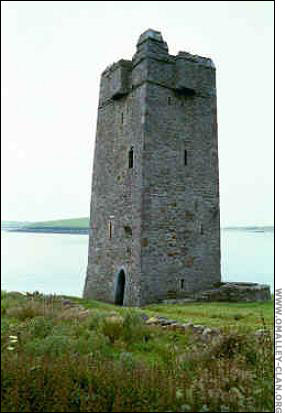
There was another particular castle that Grace coveted. She needed it to realize her dream of having complete control of Clew Bay. Rockfleet Castle was owned by the chieftain, Richard “Iron Dick” Burke, Grace’s nephew by her marriage to Donal. Grace promised him there would be fruitful gains and benefits if they were to marry. The gullible Richard was already so enamored of Grace that it did not take much to convince him to go along with her plan. In 1566, Richard Burke married the widow, Grace O’Malley O’Flaherty, and she and her three children moved into Rockfleet Castle.
Exactly one year after their marriage, Grace used her knowledge of Brehon law to implement the final part of her plan on her unsuspecting husband. Richard returned home one day to find that his devious wife had locked him out. She had taken command of Rockfleet Castle with her clansmen and loyal followers. She shouted down to him from the castle ramparts that she was dismissing him.
Now, according to Brehon law, this was enough to end a trial marriage at the end of a one year period. Grace got her divorce, gained control of the castle, and still kept an ongoing relationship with her adoring Richard. Throughout the years, Richard Burke remained an integral part of Grace’s adventurous life.

In 1567, Grace and her crew were returning from a trading mission, when she gave birth to a son, whom she named Theobald, nicknamed “Tibbot.” The day after giving birth, Grace was resting in her cabin when their ship was attacked and boarded by Turkish pirates. A vicious hand-to-hand fight between them and her men ensued.
Anne Chambers writes of Grace hearing the tumultuous battle raging outside her cabin, as she lay in her bunk. It did not take long for her ship’s captain to realize they were outnumbered. He fought his way to Grace’s cabin and told her they were losing the fight. Grace immediately jumped up from her bunk and railed at him for not being able to carry on without her for a single day.
Grace stormed onto the deck, emptying a blunderbuss at the Turks. When Grace’s men saw this defiant act from their fearless leader, they became so reinvigorated that they won the battle and confiscated the Turkish ship.
Over the next several years, Grace continued to lead her men on many plundering expeditions in the Irish channels and on the open seas. Her fleet now numbered twenty ships and her notoriety had rapidly grown to legendary proportions.
There was little doubt that this female pirate had become a powerful force to be reckoned with. Her blatant acts of maritime piracy were seriously impacting English trade revenues. Confronted with this reality, the English decided to stop this pirate chieftain’s forays by defeating and capturing her.
English soldiers from Galway attacked Grace at Hen’s castle. She did not have many men with her and was facing a dismal situation. Unwilling to surrender, Grace ordered her men to strip the castle’s lead roof and to melt the lead. She also sent a man through an underground tunnel with a message for help.
When the English attacked again, the melted lead poured over the castle walls upon their heads. The English troops quickly withdrew to regroup. This allowed Grace and her men time to escape from the castle to reach their awaiting ships. They sailed away to join up with the gathering Irish reinforcements. Upon her return to Hen’s castle, Grace and her followers handily defeated the English troops. However, this defeat did not deter English attempts to capture her.
Another attempt occurred in 1574 when Captain William Martin set sail with an expedition to capture Grace. They managed to trap her and her men at Rockfleet Castle. For several days Martin and his forces laid siege by land and sea. But Grace was not to be defeated. Through the sheer force of her iron will, she turned the tide of the battle by leading a counter-attack against the English. The vicious and unexpected assault forced Martin and his troops to flee in defeat.
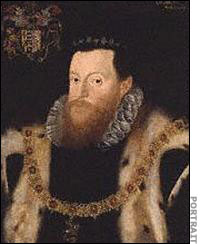
The O’Malley and McWilliam clans met with Sir Henry Sidney, Lord Deputy of Ireland, and finally submitted to England by swearing allegiance to the English crown. Grace O’Malley was no fool. She knew it was only a matter of time before the English would either kill or capture her. She had to come up with a way of keeping the baying English hounds off her heels. Emily Arnold McCully in The Pirate Queen tells how Grace met with the English in Dublin and reluctantly gave a pledge of good behavior and loyalty to the crown. Sidney described Grace as “‘a most famous feminine sea captain.’ “

Despite pledging her loyalty, Grace still had no intention of stopping her raids.
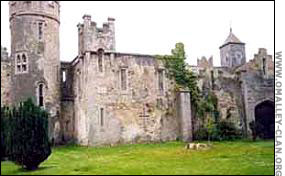
It has been told that Grace and her loyal men were returning from a successful pillaging voyage. It was evening and they all were wet, tired and hungry. The exhausted sailors landed their ships near Dublin at a landing place called Howth. Grace went to seek hospitality for herself and her men from the lord of Howth Castle in accordance to Gaelic custom.
The castle gates were locked she was told that the lord, Christopher St. Lawrence, was dining and could not be disturbed. Grace stalked away, furious at having been refused entrance, so she kidnapped his son and heir and took him back to Connaught with her.
When the lord of Howth learned of his son’s abduction, he immediately went to Grace and pleaded for his safe release. He promised to pay her any ransom, which Grace refused to acknowledge. Instead, she angrily demanded that the gates of Howth Castle remain open and to never be closed to any visitors seeking hospitality.
The lord was told that compliance to this demand was the only way she would see fit to return his son. When the distraught and humbled man agreed to honor her demand, he was given his son.
To this day, more than four hundred years later, the gates of Howth Castle have remained open to all visitors. Every day, an extra setting has been placed on the table in Howth Castle’s dining hall. This remains a tradition, followed in accordance with the demands of Grace O’Malley.
In 1577, Grace was captured by the Earl of Desmond, sentenced by Lord Justice Drury and imprisoned in Dublin for eighteen months before being released.
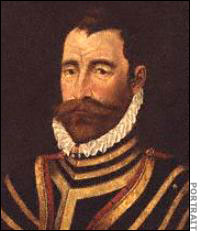
Grace returned to Connaught and managed to keep a low profile for a short time. Seeds of rebellion were springing up throughout the area. Her husband, Richard was one of the rebel leaders. Grace knew that it was a losing cause. She urged Richard to stop being involved and to submit a pledge of loyalty to England.
Fortunately, the chieftain of the McWilliamship died. Grace put her all of her efforts into helping Richard to become The McWilliam. Unfortunately, Richard did not hold the title long. He died of natural causes in 1583, two years after being knighted and titled. Richard was the last person to hold title to The McWilliamship.
It was 1584 and the pirate queen was fifty-four years old. She had returned to what she did best, sailing and pillaging. Her children were now all grown. Margaret had married quite well within the clan. Owen and Murrough and Tibbot were sailing at their mother’s side, sharing in her plundering. Grace knew this was the only way she could provide for her clan, because of the political situation. Spain and England were at each other’s throats and war seemed imminent.
England’s Queen Elizabeth was already sending her privateers to harass and plunder Spanish ships. She also feared the Irish siding with Spain. Some of the Ulster chieftains had already joined forces with the Spaniards. There was no love of England among them.
During these tumultuous times, Sir Richard Bingham became the appointed Governor of Connaught. He had little love for Ireland and wanted to install English ways. The insensitive Bingham was charged with the responsibility of bringing order and sovereignty to this troubled land. He also made it his personal goal to make sure Grace O’Malley was brought to justice for piracy.
Bingham did all he could to make Grace’s life miserable. He impounded part of her fleet and captured and held Grace’s son, Tibbot, hostage. He finally caught Grace, threw her into prison and built a gallows. While bravely waiting to be hanged, Grace regained her freedom when some Mayo chieftains arranged a hostage exchange for her. This exchange consisted of her son-in-law and a thousand cattle.
Murrough O’Flaherty, Grace’s second son, joined forces with Bingham against his mother. Grace was so angry that she set sail and attacked and burned the town where her son lived. The ruthless Bingham retaliated by taking many of Grace’s possessions and imprisoning her youngest son, Tibbot, on the charge of treason. Her oldest son, Owen, was taken hostage by Bingham’s brother. While in his custody, Owen was brutally murdered. Numerous rebellions were incited by Bingham’s actions. At the end of it, Grace had little income and very few possessions.
Grace had been left destitute and devastated by Bingham. Her life was now one of hardship and resentment. She spent years trying to recoup her losses, but was continuously thwarted by Bingham. Unable to ply her trade by sea or land, Grace’s frustration increased her hatred for the man. The years passed and Grace eked out whatever income she could to take care of herself and her people.
In 1588, the Spanish Armada sailed toward England and was defeated by Sir Francis Drake. Bingham returned to Connaught. Shortly afterwards, a rebellion broke out in Ireland.
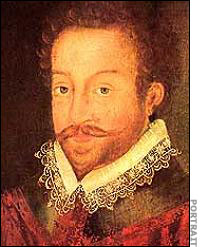
Eventually, peace talks were established. Demands were made by the Burke, O’Malley and other clans for the removal of Sir Richard Bingham as governor. Demands were also made for the re-establishment and recognition of the McWilliam title. Irish chieftains presented a signed book of charges against Bingham. Bingham was acquitted and vengefully mounted attacks against the rebellious Burkes and all their supporters.
Anne Chambers relates that Grace finally had enough. She decided to go over Bingham’s head to a higher authority. In 1593, Grace O’Malley began sending petitions and pleas by correspondence to Queen Elizabeth I. In her letters, Grace shrewdly assessed and presented her dire straits by saying that the situation “constrained your highness fond subject to take arms and by force to maintain herself and her people by sea and by land the space of forty years.”
Grace also promised that if she could maintain her power and army, they would “during her life to invade with sword and fire all your Highness’s enemies whosesoever they are or shall be without any interruption of any person or persons whatsoever.”
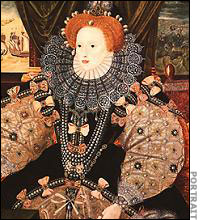
Elizabeth, who knew of Grace’s reputation, was surprised at the fiery female pirate’s command of the English language and responded with a list of eighteen questions. Grace further amazed and intrigued Elizabeth by sending back a set of astute and intelligent and answers. But corresponding did not satisfy Grace. She set sail for England to personally present her pleas to Elizabeth.
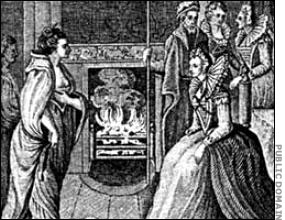
Grace arrived at Greenwich Castle and announced herself at court to everyone’s surprise. Everyone expected the Queen to have her arrested and executed for her brashness. But, instead, Elizabeth granted Grace an audience in her private chambers. To this day, nobody knows what exactly transpired between Grace and Elizabeth behind those closed doors. Out of whatever favors were granted, one was quite obvious. Bingham was ordered to release Grace’s son, Tibbot.
Grace returned to Connaught and the lands and possessions which had been returned to her. Two years later, a recalcitrant Sir Richard Bingham was dismissed from his office in disgrace. Grace continued on through the years as chieftain of her clan.
In 1603, Grace died at Rockfleet Castle at the age of seventy-three. Grace is said to be buried in the abbey on Clare Island, near Belclare Castle, where she was born.
There has never been a female pirate who could equal Grace O’Malley. Her foresight, resolve, and seamanship skills surpassed all others. She was a force which knew no barriers.
Her life was an adventure and she lived it fully and completely. She knew no fear and was a true swashbuckler who loved the sea. Throughout the centuries, many poems and songs have been created to expound the legendary feats and life of Grace O’Malley “The Queen of the Irish Seas,” “The Dark Lady of Doona,” “The Pirate Queen of Connacht,” and “The Sea Queen of Connemara.”
Granuaile (Grace’s Gaelic nickname)
The walls of Carrick Clooney
Now lie crumbling and low
Its battlements dismantled are
All most over every stone.
But the rebel youth in Westport
Feel their Irish hearts aglow
When they tell how Grace O’Malley
Fought and conquered in Mayo
Irish Minstrelsy Vol. II
Chambers, Anne (1979). A Notorious Woman: Granuaile, The Life and Times of Grace O’Malley c1530-1603, (paperback edition 1983); Wolfhound Press, 68 Mountjoy Square, Dublin 1
McCully, Emily Arnold (1995); The Pirate Queen, G.P. Putnam’s Sons, NY. N.Y.
Westport, County Mayo, Ireland; Grainne Ni Mhaille 1530-1603; anu.ie/Westport/history/grainne
Vallar, Cindy; Granuaile (aka Grace O’Malley) Irish Pirate; cindyvallar.com/granuaile
Colombraro, Rosemarie (2000); Vol. 1, Issue III; Grace O’Malley; recentral.com/oct_nov_vo11/graceomalley
Stringer, Helen; Queen of the Seas: The Story of grace O’Malley; themediadrome.com
Ireland before the Plantation; The legal system; bbc.co.uk/cgi-bin/history/render plain.pl=history/war/plantation/Ireland_bef