
All about Randy Weaver and Ruby Ridge, by David Lohr — Government Gone Wrong — Crime Library
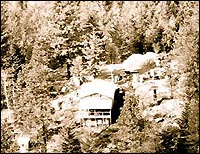
In August of 1992 Americans tensely watched as events began to unfold on a remote ridge in Northern Idaho, involving a white separatist family and the FBI. Eleven days after it had begun, a 14-year-old boy, a 42-year-old mother, a federal marshal, and one yellow Labrador retriever had all been shot dead.
The incident ultimately led to one of the most intensive and controversial investigations in recent history. The FBI faced widespread resentment and Attorney General Janet Reno established a Justice Department task force to investigate what had happened. National debates on the case were said to have fueled anti-government sentiments, which eventually played a role in the Waco, Oklahoma City, and the Freemen conflict. Timothy McVeigh’s bombing of the government building in Oklahoma City is said to be at least partially motivated by revenge for what happened at Ruby Ridge.
Prior to the incident, the Weaver family had moved to the remote mountaintop to escape what they viewed as a sinful world. Randy Weaver lived with his wife and four children in a cabin he himself built on Ruby Ridge, just 40 miles south of the Canadian border. The cabin had no electricity or running water. According to friends, the Weavers simply wanted to be left alone as they awaited Armageddon. While many may have viewed their intent as unusual, it appeared to be quite harmless to most who knew them.
Almost a decade later many questions remain: What went wrong at Ruby Ridge? Why did over 400 members of the FBI, military and local law enforcement converge on the mountain? Why did so many have to die? These and similar such questions are not easily answered, however; some answers may lay hidden within the details provided.
Randall Claude Weaver was born on January 3, 1948. He was the only boy of four children born to Clarence and Wilma Weaver, a farming couple from Villisca, Iowa. The Weavers were deeply religious, however they had a difficult time finding a denomination which matched their views, hence they often bounced back and forth from Evangelical, Presbyterian, and Baptist churches. As Randy grew up, he strove to make his father proud. He earned decent grades in school and enjoyed a variety of sports and ultimately accepted Jesus as his savior at the age of 11.
Graduating from high school in 1966, Randy enrolled in Iowa Central Community College, where he met a pretty young student named Vicki Jordison. Following a school dance the two started dating and began to grow very close. Vicki Jordison was a year younger than Randy and had grown up in Fort Dodge, Iowa, just 50 miles north of Randy’s childhood home. Similar to Randy, Vicki had also been raised with conflicting religious teachings. Her mother was a Congregationalist and her father a Mormon. Throughout her childhood, her father would often attempt to foretell current events as he compared the Bible’s prophecies with the newspaper. As she grew into a young woman, Vicki was considered highly intelligent by her peers. She excelled in school and eventually became vice president of the Pleasant Valley Future Business Leaders of America and an active member in the Pixies 4-H group. Her younger sister, Julie, later stated that she was the kind of person that everyone liked and envied. In 1967 Vicki graduated from Fort Dodge High School and enrolled in Iowa Central Community College.
Despite the growing passion between Randy and Vicki, the war in Vietnam was beginning to escalate and Randy had a strong desire to fight for his country. In October of 1968 he said his good byes to Vicki, dropped out of school and joined the United States Army. Randy excelled in the military and quickly qualified for the Green Berets. The training is extremely demanding. Candidates must learn to survive with little food and equipment in the harshest of conditions, while becoming an expert in all forms of combat weapons and explosives. Randy again excelled and was promoted to the rank of sergeant following his training.
Randy’s first assignment was at Fort Bragg in North Carolina. While most would have relished in the state side duty, he highly resented it. Randy could not understand the point of going through all the special training and not being able to put any of it to use. Friends later said that he became bitter over the fact that men who wanted nothing to do with the war were being sent over every day, and yet he, a trained warrior who had volunteered to go, sat at an Army base with minimal duties. As Randy waited for combat duty, Vicki Jordison was finishing her college studies, earning a two-year degree in business and was busy securing a job at the United Way.
In 1970 Randy secured a temporary leave from Fort Bragg and returned to his hometown for a visit. He had already decided to finish up his duties with the Army as quickly as possible and wanted to inform his family of his plans. It did not take long for him to look up Vicki and the two picked up where they had left off almost two years earlier. Within weeks, they were engaged to marry.
Vicki’s family was concerned when they learned of the couple’s quick engagement. In their eyes, the two had not courted long enough and were rushing into something for which they both were not prepared. Vicki explained to her family that she truly loved Randy and that they would have probably married years earlier if Randy had not enlisted in the military. In striving to keep their daughter happy, Vicki’s family relented and gave the couple their blessing.
On October 8, 1971, following three years of duty, Randy Weaver received an honorable discharge from the Army and moved back home. One month later, in November of 1971, Randy and Vicki were wed during a small ceremony at the First Congregationalist Church in Fort Dodge, Iowa. In an attempt to please Vicki’s family, two ministers conducted the ceremony, one from the Reorganized Church of Latter Day Saints and the other a Congregationalist pastor.
Following the wedding the newlyweds moved into a small apartment two hours east of Fort Dodge, in Cedar Falls. Randy enrolled at the University of Northern Iowa to take criminal justice classes, intending to become an FBI agent. Nonetheless, the young couple found the cost of school to be too much for them and Randy eventually dropped out. The couple started selling Amway products to support themselves.
In 1973 the Weavers gave up on their career as Amway marketers. Randy secured a job at the John Deere tractor plant in Waterloo, just outside Cedar Falls, and Vicki got a job as a secretary at a Sears department store. They were both earning modest paychecks and eventually purchased a ranch-style home for $26,000 in a well-kept Cedar Falls neighborhood. They were seemingly quite happy — they had plenty of money and Randy was always buying boats, motorcycles and sports cars.
In 1973, Egypt invaded Israel, causing an Arab-Israeli war. An oil embargo quickly followed, which caused tensions throughout the world. Vicki and Randy viewed these events as the coming of Biblical prophecies and were upset that none of the churches were preparing their members for the end of the world. They soon concluded that preachers were in denial and did not want to admit that the end was near.
shot (AP)
Randy and Vicki’s first child, Sara, was born in March of 1976. Vicki was crazy about children and relished motherhood. Whenever a friend became pregnant, Vicki was the first to offer advice on everything from morning sickness to breast-feeding. She was a loving mother and felt very comfortable in the role.
During 1978, following Sara’s second birthday, Vicki began to talk of a recurrent vision, which she perceived as an omen. Vicki saw a beautiful mountaintop retreat where her family would be safe from evil and the apocalyptic events which she believed were imminent. She also saw two other children in her vision, yet to be born, who would be called Samuel and Rachel. The Weavers soon began to think that all organized religions had strayed from the written word of the Bible and that Roman Catholics and Jews were so far removed from the Bible that they had become enemies. The Weavers formed a study group and taught their small group of followers that the Bible was the literal word of God — or Yahweh — as they began referring to him and should be acknowledged as the truth. They would only read from the King James Version of the Bible, because they considered other versions to be influenced by pagans. Although it had been written so long ago, they felt that the Bible was opening their eyes to the current events around them, including conspiracies involving their own government, which they began referring to as “ZOG” (Zionist Organized Government), a Jewish controlled government. During one particular study session, the group was reading Matthew 24, according to the King James Version, in which Jesus reportedly spoke of the Apocalypse. Those passages made everything clear to Vicki, especially when she caught notice of a particular section referring to the mountains as a safe harbor and a place to be saved. Vicki was now convinced that her visions were in fact an omen. The Weavers decided to find the mountain in Vicki’s vision.
In July of 1978, as they prepared for their ultimate journey, the couple’s second child was born. The Weavers named him Samuel. As they savored their new bundle of joy, they became more and more serious about their journey. Randy began collecting guns, which he felt would be needed to protect his family and Vicki began to study the Amish and self-sufficient lifestyles.
In 1982, the couple’s third child, Rachel, was born. This was no casual event, as it enforced the belief in Vicki’s recurrent visions that they would have another daughter. The couple put their home up for sale and, in August of 1983, they received some $50,000 for it. Vicki’s family strongly objected to their plan, but there was nothing they could do to change her mind. The Weaver family drove west to Montana in hopes of finding their new home. However, when they reached Montana, they considered property there to be overpriced and decided to head for Idaho.

Upon arriving in Idaho, it did not take long for the Weavers to find a beautiful spot southwest of Bonners Ferry in the Selkirk Mountains. The property overlooked Ruby Creek and on a clear day you could see Montana and Washington in the distance. A writer for the New York Times, Philip West, later stated that the view “could make you weep for the power of God’s hand.” The Weavers paid just $5,000 for the 20-acre parcel.
By March of 1984, Randy had built a cabin from scrap lumber and the family began living on the mountain. There was no electricity or running water, but for the Weavers it was paradise. Vicki home schooled the children and the couple soon had a close group of friends throughout the area. One of these friends in particular was a 15-year-old boy named Kevin Harris. His father had died when he was just 2 years old and his young mother found it too difficult to raise him along with his three siblings. As with many troubled youths, Kevin turned to the streets and eventually drugs. Randy Weaver met Kevin through mutual friends sometime during the mid 1980’s and took a liking to the young man. He made it his mission to save Kevin from the evils of the world and took him under his wing. Kevin moved in with the family and Randy and Vicki considered him as their own son.
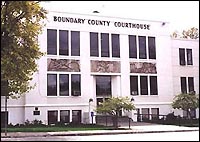
Many of their new friends held extremely racist views and eventually persuaded the Weavers to adopt some of these views. Vicki accepted as justification for these racist views passages in the Biblical apocrypha, the so-called lost books of the Bible, which describe the African race as sinners and “mud people.” The Weavers’s philosophies were ever changing, but bascially they accepted those who fit into their world, such as Kevin Harris, and rejected those who did not.
During the mid to late 1980’s many of Randy and Vicki’s friends stopped coming up to the cabin. Several people had accused them of theft, while others decided that they could no longer take their continuous preaching. Regardless of the cause, this situation led Vicki to file a document in the Boundary County Courthouse, which named several people in a supposed conspiracy to harm them. Interestingly enough, several members of the FBI, Secret Service and Boundary County Sheriff’s Office were named in the document. Their belief that there was a conspiracy against them could be what prompted Randy to run for Boundary County Sheriff in 1988. However, he lost the primary and only collected 10% of the vote, probably because of his strongly racist ideas and his contempt for both local and federal governments. Randy never made any promises during his brief campaign, however one of his tactics involved handing out “get out of jail free” cards, claiming that anyone arrested for a nonviolent crime would get a second chance if he were elected. This publicity stunt may have been why the government began to focus its attention on the Weaver family.
Even though the Weavers disagreed with many of the views held by the Aryan Nations, a white supremacist group, the couple attended several of their meetings throughout the mid to late 1980’s. Bikers, skinheads, Klansman and neo-Nazi’s usually attended these meetings, however it was common knowledge that undercover agents and informants also attended them in hopes of discovering illegal dealings or terrorist plots. It was during one of these meetings in 1989 that Randy met a tall, heavy-set biker named Guss Magisono. Randy explained to Guss that he had been having a difficult time making ends meet for the past few months, so Guss offered Randy money in exchange for illegal sawed-off shotguns. Randy was reluctant about the deal and only relented after Guss continued to badger him about how much he could earn, promising him that the guns would be sold to inner-city gang members — the plan supposedly being that the black gang members would kill themselves off. Following the Aryan Nation meeting, Randy agreed to meet Guss a few weeks later with two sawed-off shotguns in exchange for $300.00.
What Randy did not know was that Guss Magisono was actually an informant for the Bureau of Alcohol, Tobacco and Firearms (ATF) named Kenneth Fadeley. The ATF had previously arrested Fadeley for gunrunning and had offered him clemency in exchange for becoming an undercover informant for the Bureau. What happened next is still in dispute. On October 24, 1989, Randy met with Fadeley at a park in Sandpoint, Idaho, where he supposedly sold him two sawed-off shotguns. What is not known was the exact condition of the guns at the time the exchange was made. Following the sale, Fadeley reported that the guns were sawed-off, however Randy later argued that he had suspected Fadeley of being an undercover agent and that both guns were of legal barrel length at the time of the sale. Randy accused Fadeley of sawing the barrels off later.
Regardless of who actually sawed the barrels off, ATF Agent Herbert Byerly submitted a case report to the U.S. Attorney’s office in Boise, Idaho, recommending that Randy be prosecuted for the sale of two illegal sawed-off shotguns. On June 12, 1990 Byerly and another agent, Steve Gunderson, approached Randy and offered him a deal. If he would agree to become an informant regarding illegal activities of Aryan Nations’ members, the charges against him would be dropped. This would have been a difficult deal for most people to turn down since the sale of sawed-off shotguns is a violation of federal statutes and can result in stiff sentences and fines. Nonetheless, Randy felt he was being set up. He told the agents he had done nothing wrong and that he would not become a “snitch” for the government. Following the brief meeting, Randy called the Aryan Nation headquarters and notified them that the government was trying to infiltrate their organization.
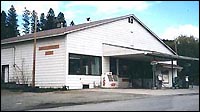
bought supplies (David Lohr)
On December 13, 1990, Randy Weaver was indicted on federal firearms charges. Federal agents decided it was too risky to confront Randy at his home, so they decided to wait him out. A neighbor of Randy’s agreed to cooperate and was provided with a walkie-talkie so that he could inform agents whenever Randy was spotted coming down the mountain. On January 17, 1991, agents received the call they had been waiting for: Randy and Vicki were on their way down the mountain to buy supplies.
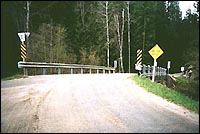
(David Lohr)
As the Weavers made their way down the winding mountain roads, they spotted a pickup truck with a camper shell parked on the bridge that crosses Ruby Creek. The hood of the vehicle was up and a man and a woman appeared to be looking under it. Randy pulled off to the side and decided to see if he could help the couple.
As Randy looked under the hood, he felt the cold hard steel of a pistol against the back of his neck. He spun around, knocked away the pistol, and reached for a .22-caliber pistol he kept in his pocket. Before he could pull out his weapon, several federal agents that had been waiting inside the camper of the truck tackled Randy. Vicki ran back towards the truck to grab a .38-caliber handgun, however she was quickly tackled by a female agent and thrown face first into a snow bank. After the agents read Randy his rights, he looked at the agent who had posed as the motorist and said, “Nice trick; you’ll never do that again.”
Randy was placed in the Boundary County jail and appeared in court for his arraignment the following day before U.S. Magistrate Judge Stephen Ayers. No one was present for the government at the arraignment, nor did counsel represent Randy. He pleaded not guilty to the charges against him and his bail was set at $10,000. Ayers then made a drastic mistake that most likely prompted all of the forthcoming events. “Well, you need to understand that…if you’re found guilty of this charge, you will probably be required to reimburse the government for the cost,” Ayers said. He then read a pretrial report, which concluded that Randy’s only real asset was his land, which had been assessed at $20,500. Following the arraignment Randy was set free on bail. The way Ayers had mistakenly explained the procedure, Randy walked away convinced that no matter what he did, the government was going to take his land from him. Out on bond, Randy went back to his cabin and debated his next move.
On January 22, 1991 Randy received a letter stating that his court date was scheduled for March 20, 1991, however the letter contained one crucial error – the actual date was February 20, 1991. It is unknown why Randy was provided with the wrong date and it has since been declared a typographical error. When Randy failed to show up at his February hearing, US Attorney Ron Howen asked Judge Harold Ryan to declare Randy Weaver a federal fugitive. Even though both men had just been informed of the date mix-up, Ryan agreed with Howen and issued an arrest warrant for Randy. The warrant was then turned over to the US Marshals, whose job is to seek federal fugitives and process federal prisoners while they are in transit or at trial.
When the Weavers learned of the arrest warrant, they were outraged and convinced that it was a government conspiracy against them. They vowed that they would never again set foot off their mountain. They were at war now, and the federal government was their prime enemy. Vicki began writing letters to government agencies peppered with phrases like “The tyrant’s blood shall flow” and “Whether we live or die we will not obey you…war is upon our land.” For the next 16 months, the Weavers stayed atop their mountain and survived off the land. No one, not even the children, ever left the house unarmed. During this time Vicki became pregnant again and on October 24, 1991, Randy delivered a healthy baby girl, which they named Elisheba Anne Weaver, which translates to “El is my savior.” There was no birth certificate and only a single log in Vicki’s Bible recorded the birth.
As the Weaver family awaited a showdown with the government, the US Marshals began making plans to send in a Special Operations Group or “SOG,” a voluntary unit in the Marshals Service specifically trained to handle dangerous or complex matters. The marshals wanted the SOG unit to gather intelligence information on the Weavers’ cabin and to try and determine a weakness, which would cause Randy Weaver to leave his home. Following jet reconnaissance overflights of Ruby Ridge and the placement of high-resolution video equipment that recorded activity by the Weaver family from sites one and a 1/2 miles away, SOG Deputy Commander Louis E. Stagg briefed Commander John Haynes and Idaho’s U.S. Attorney Maurice Ellsworth about his findings. Stagg recommended against a tactical assault on the Weaver compound and recommended that the indictment be dismissed and the files sealed. Stagg then requested an opportunity to present his findings to Chief Judge Ryan, however Ellsworth refused the request. Stagg then said that this “was the worse (sic) situation he had seen in 23 years.”
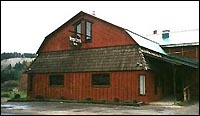
gated (David Lohr)
The SOG team set forth its final findings in a Law Enforcement Operations Order, which portrayed the situation as exceedingly difficult and Randy Weaver as “extremely dangerous and suicidal.” The team concluded that the Weavers had been looking for a war with law enforcement and that Randy had most likely established numerous fortifications and defensive positions on his property. It is also concluded that since Randy was a former Green Beret, he had probably placed booby traps or command-detonated explosive devices throughout the property.
On March 4, 1992, Chief Deputy Marshal Ronald Evans and Deputy Marshal Jack Cluff decided to drive up the mountain road leading to the Weaver cabin. They were in plain clothes and rode in an unmarked four-wheel drive vehicle. As the two men made their way up to the Weavers’, they saw signs reading, “White Power is Supreme” and “Bow Down to Yahweh.” Cluff and Evans then saw Randy Weaver, armed with a rifle, and a boy and a girl, also armed, standing above them on a rock formation. When Randy informed them that they were trespassing, the two marshals said that they were interested in buying property. Randy told them to return with a realtor. Cluff and Evans left. It was then determined that additional reconnaissance would be necessary.
On August 17, 1992, a U.S. Marshals “SOG” team consisting of Larry Cooper, William Degan, Arthur Roderick, David Hunt, Larry Thomas, and Frank Norris, arrived in Sandpoint, Idaho to set up a command post on Schweitzer Mountain. The objective was to survey the Weaver property for a final threat assessment. The undercover surveillance operation was expected to take approximately two weeks and there was no plan to arrest Randy Weaver during any excursion. Two days later, on the evening of August 19, the team reviewed standing orders that they were to avoid all contact with the Weaver family. In preparation for their first mission, the marshals discussed the terrain; the people who were believed to be on the mountain, and the weapons the Weavers were known to have. They also reviewed surveillance videos, photographs, and other information. It was then decided that the team would make its first survey of the Weaver property on Friday, August 21, since local weather forecasts indicated favorable night illumination and weather conditions for that day. In preparation for the mission, the marshals acquired three .223 caliber M16 rifles, a .223 caliber M16A2 Colt Carbine, a “sniper” rifle, a shotgun, and a “suppressed” .9mm NATO Colt Carbine. In addition, the team members brought their own personal service weapons.
At about 2:30 a.m. on August 21, 1992, the heavily armed “SOG” team left its command post on Schweitzer Mountain and drove to an informant’s residence just below Ruby Ridge. They team members arrived at approximately 4:30 a.m., and set out on foot up the mountain towards the Weaver cabin. Their plan was to move under the cover of darkness to various surveillance positions and conduct a few hours of surveillance. Each marshal was equipped with radios and night vision equipment and wore camouflage tops, pants, and boots. Even though bulletproof vests were available, no one chose to wear one. Marshal Degan carried one of the SOG M16s; Thomas and Norris each had rifles; Roderick had a M16; and Cooper had the “suppressed”. 9mm. Hunt was carrying camera equipment, so he elected to take only his service weapon. They did not bring the sniper rifle with them.
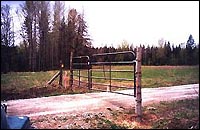
Soon after entering the woods surrounding the mountain, the group reached a trail, which split into a Y. The group then decided to split up into two three-man teams. The first team, the Observation Post (“OP”) team, consisted of Hunt, Thomas, and Norris; the second team, the Reconnaissance (“Recon”) team, was comprised of Roderick, Cooper, and Degan. The OP team left the Y and took the left fork of the trail through a canopy of trees and a fern field. It then proceeded up the hill to a north switchback road and set up an observation post, about 900 feet above, and one half of a mile from the Weaver cabin. As the OP team made its way up the mountain, Roderick led Degan and Cooper further up the trail from the Y toward the Weaver cabin. The team stopped at the edge of some trees approximately 250 to 300 yards from the Weavers’ driveway.
Soon after its arrival, the OP team, equipped with a spotting scope, a still camera, and a 8mm video camera, began to observe activity around the cabin. The marhalls saw Sammy Weaver and Kevin Harris conduct what appeared to be a security check around the cabin. The Weavers’ dogs began barking, however Randy came out of the house and yelled at the dogs to “shut up.” At about 9:00 a.m., Roderick Cooper, and Degan joined the other marshals at the observation post and both teams discussed their observations.

(AP/Wide World)
The OP team reported that members of the Weaver family had run to the outcropping several times in reaction to the dogs’ barking. Norris stated that he had seen Harris with a long gun, Sammy with a side arm and a long gun, Randy with a long gun, and Sara with a side arm in a holster. The Recon team stayed at the observation post briefly and watched the Weaver family with their spotter scopes. The men discussed different approaches to the property and the layout of the compound, including the various outbuildings and their possible purposes. Roderick wanted to show Cooper and Degan a spot he determined to be a good location for a “counter-sniper” for a possible undercover operation. The three men then crawled to the spot, which was near a large rock embedded in a hill some 250 yards from the Weavers’ cabin. Roderick and Cooper then left Degan behind and made their way down to another rock about 50 yards below the first rock. They determined that this point lined up perfectly with the base of the Weaver driveway, approximately 100 yards away.
It was at this time that Roderick decided to toss some rocks to see if the dogs would react. He threw a total of two rocks and noted that there was no reaction from the dogs or the Weaver family. About 15 minutes later, Roderick and Cooper rejoined Degan and the three backtracked to the “switchback” road. Roderick then decided to take Cooper and Degan closer to the house to collect more data on the Weavers’ cabin and surrounding buildings. Since no members of the Weaver family were outside, Roderick Cooper and Degan moved in closer to the cabin. Sensing their presence, the Weavers’ dogs began barking frantically, thus alerting the Weavers of a possible threat. Randy came running out of the cabin, followed by Kevin Harris, Sammy Weaver, Sara Weaver, and Rachel Weaver. All of them were armed and looking around the cabin to see what was going on.
Roderick presumed that the Weavers would take defensive positions and instructed Cooper and Degan to take cover. Hunt immediately radioed Roderick and informed him that the situation appeared to be “a typical vehicle response” by the Weavers. Nonetheless, his assessment quickly changed. Rather than taking defensive positions at the rock outcropping, the Weavers began jogging down the driveway. Hunt warned Roderick, “You’ve got them all coming down the drive.” Roderick then saw a large Labrador retriever running toward his position, followed by an armed Kevin Harris.
What happened next was not immediately clear. In the following two chapters we shall look at the accounts as those involved in the confrontation later described them.
The following account is taken in part from the “SOG” teams’ unreleased 542-page report, which was later obtained by Lexis Counsel Connect:
When Cooper reached the entrance to the Y, he reportedly saw Randy Weaver coming down the trail from the cabin, approximately 40-feet away from his position behind some brush. When Randy first noticed Cooper, he appeared shocked. At the time, Cooper had assumed that Roderick and Degan were covering Randy and he turned his attention to Harris and the dog, which were still behind him and yelled out, “Back off, U.S. Marshals,” fearing that he had been set up for an ambush.
When the dog caught up to Cooper, it began growling and snarling, however Cooper decided not to shoot the dog, as he did not want the killing to invoke a firefight between himself and Harris. After circling Cooper a few times, the dog ran past him and headed towards Roderick’s position. Cooper left the trail and dove behind a rock approximately 15 feet behind Degan.
Roderick, who was farther up the Y, saw Randy Weaver running up the trail to the cabin. Weaver was wearing a camouflage jacket and screamed something unintelligible. Roderick yelled, “Stop! U.S. Marshal” at Weaver. Roderick could not tell if Weaver continued up the trail or if he ran into the woods.
Cooper radioed Degan to join him, but Degan failed to respond. He then saw that Harris and Sammy were walking directly in front of Degan. Cooper observed Degan squatting behind a stump, facing up the trail. When Harris and Sammy stepped out into the clearing, about six to ten feet from Degan’s position, Cooper assumed they had escaped detection. Regardless, he was taken off guard when Degan unexpectedly raised his weapon and aimed it at Harris and Sammy Weaver. “Stop! U.S. Marshal,” Degan yelled out to them. Cooper then stood up from his position and repeated the phrase, however before he could get all the words out of his mouth, Kevin Harris wheeled around and fired at Degan with a 30.06 rifle. Cooper looked over and saw Degan fall back, realizing that his comrade had just been shot. Cooper then fired a three-round burst at Harris with the “suppressed”. 9mm. According to Cooper, Harris dropped to the ground “Like a sack of potatoes.” Cooper was convinced that Harris was out of commission and then turned his weapon towards Sammy Weaver, but he could not tell if Sammy had a gun, because of trees blocking his view, so he did not shoot at Sammy. Cooper did not realize that Degan had returned any fire before being shot.
Meanwhile, Roderick had moved south down the path. He heard a shot from the direction he had last seen Cooper, Degan, Harris, and Sammy. He was uncertain who had fired the shots, although he thought that it sounded like a heavy caliber weapon. When the first shot was fired, the dog stopped and turned its head back toward the marshals. Concerned that the dog would attack or lead Weaver, Harris, and the others toward the marshals, Roderick shot the dog with his M16 rifle, striking it near the base of the spine. After he shot the dog, Roderick saw Sammy Weaver enter the Y and run up the trail. Sammy called Roderick a, “son of a bitch” and shot two rounds at him. Roderick quickly dove behind a tree.
During this time, Cooper heard two shots and Sammy Weaver yelling “You son of a bitch.” He then began taking fire and heard Degan call out, “Coop, I need you.” Cooper replied, “As soon as I can get ’em off our ass.” Cooper then rose to his feet and fired a second three-round burst in the direction from which he had last received fire, to provide cover as he tried to get to Degan. Following these last shots, Cooper saw Sammy run out of view up the trail to the cabin. Cooper did not think that any of his shots had hit Sammy Weaver.
When Cooper reached Degan’s position he realized Degan had been hit once in the chest. He was lying on his left side and within a few brief moments, he lost consciousness and died. Cooper then radioed to Roderick that Degan had been hit and needed help.
Randy Weaver’s account of the incident comes from a statement he later dictated to his daughter Sara:
“The dogs started barking like they always do when strangers walk up the driveway. Randy, Kevin, and Sam ran out to the rock with their weapons. Randy was carrying a double barrel 12-gauge shotgun. Kevin was carrying a 30-06 bolt-action rifle. Sam was carrying a 223 mini 14. When they got to the rock, our yellow dog Striker was down at the pump house barking up into the woods. Randy, Kevin and Sam went down to investigate. Sam said he heard something, or someone running west, so they followed. Sam and Kevin followed Striker. Randy dropped down on the old logging road headed west. “I (Randy Weaver) didn’t have any idea what they were chasing, but I was hoping it was a deer.”
“When I reached the first fork in the logging road, a very well camouflaged person yelled ‘freeze RANDY,’ and I immediately said ‘f—k you,’ and retreated toward home 80-100 feet. I realized [sic] immediately [sic] that we had run smack into a ZOG/NEW WORLD ORDER ambush. I stopped to see if I was being followed.
“About that time I heard a gun shot and Striker [the dog] yelped. Then I heard two more shots and Striker stopped yelping. I started yelling for Sam and Kevin to return home, and that they had shot Striker. I also fired my shotgun once into the air to draw attention to myself praying that would help. I replaced the empty shell with a new one, jamming the shotgun. I drew my .9mm handgun and fired 3-4 rounds up into the air and I yelled again for Sam to return home. Sam responded ‘I’m coming dad!’ I then walked backwards up the hill toward home yelling to Sam and Kevin to come home. All the while I heard many shots ringing out from the direction of the ambush.
The account by Kevin Harris also comes from a statement he later dictated to Sara:
“Me (Kevin Harris) and Sam followed Striker through the woods until we came out on the road that forks off the one Randy was on. Striker reached the corner first, then Sam, and then me. A camouflaged [sic] person was in the road and he shot Striker. Sam yelled ‘You shot Striker, you son of a bitch!’ And they pointed a gun at Sam. Sam opened [sic] fire. I took cover behind a stump and Sam headed up the road toward home. It appeared [sic] as though Sam had been wounded in the right arm. The men were still shooting at Sam, so I shot one of the sons of bitches. After they killed Sam one of the Fed’s jumped out of the woods and for the first time declared he was a federal marshal. The Fed’s then grabbed their wounded and left. I then headed home up the road and spotted Sam’s body laying in the road without a doubt shot in the back.”
In a separate statement later given to the FBI, Harris said that he raised his rifle and fired at Degan after he saw Sammy had been shot. Harris then heard Degan call out that he had been hit. Harris claimed that after he fired at Degan, the shooting came to a halt for a few seconds before he heard another shot. Sammy “yelped,” then was silent. Harris said he fired one more shot in front of a camouflaged man “to scare him.” Harris remained behind the stump “approximately ten more minutes,” when he heard “the sound of a vehicle down the hill.” He then retreated to the Weaver house. About 15 minutes later, Randy and Vicki Weaver, along with Harris, retrieved the body of Sammy Weaver.
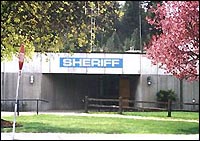
(David Lohr)
Shortly after the initial gunfight, the “SOG” team heard a tremendous discharge of gunshots on the trail to the Weaver house, followed by the sound of male and female voices wailing. The marshals also heard a woman shout, “Yahweh;” a man yell, “You son of a bitch,” and others scream, “You tried to kill my daddy.” Roderick, Cooper, and Norris waited in the brush with Degan’s body, while Hunt and Norris left for help at approximately10:45 a.m. Roderick maintained radio contact with Hunt and Norris as they made their way down the mountain and informed them on several occasions that they were pinned down under heavy gunfire. It took Hunt and Norris nearly an hour to make their way down the mountain to the closest neighbor. Hunt immediately placed a call to the Boundary County Sheriff’s Office and told the dispatcher: “I have an emergency situation on my hands…I got one officer dead. I got (inaudible) pinned down. I need help quick…I want the State Police, I want all the help that I can get. I gotta go back in for more officers that are trapped.”
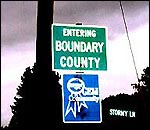
(David Lohr)
Following the call, Hunt contacted the Marshals Service Headquarters in Washington, DC and told Tony Perez, Chief of Enforcement Operations, that before the shooting began, a dog had picked up the marshals’ scent and that they had run to avoid a confrontation. Hunt then spoke of a “heck of a gunfight,” which resulted in Harris killing Degan. Upon learning of the firefight on Ruby Ridge, the Marshals Service “Crisis Center” was activated under the direction of Deputy Director of Operations Duke Smith. At 12:05 p.m. Hunt called the Crisis Center and reported, “Local sheriff has SWAT team on the way to the scene…team was trying to pull out when Weavers’ dog alerted, team drew multiple volleys of fire from the house. Degan was struck in the chest. Return fire killed one of Weavers’ dogs. The rest of the team is still located on the mountain…unable to withdraw without exposing themselves to hostile fire.” Tony Perez briefed FBI Special Agent Donald Glasser at approximately 1:00 p.m., and used the term “pinned down” to describe the marshals’ state.
By this time, agents from the Boundary County Sheriff’s Office, the U.S. Border Patrol, and the Idaho State Police had reached the scene, and the Idaho State Police Critical Response Team (“CRI”), the Idaho National Guard Armory, the FBI Hostage Rescue Team “HRT,” a specialized full-time tactical team, based at the FBI Academy in Quantico, Virginia, and another group of the Marshals Service SOG units were en route.
A command post was set up at the base of the mountain and all routes going in or out were secured. At approximately 8:30 p.m., a 10-man team made its way to the remaining “SOG” team members, who were still on the mountain. It took nearly two hours for the men to make their way to the marshals at the Y. They then secured Degan’s body and headed back down the mountain. The group did not arrive back at the Command Post until 12:46 a.m.
The following morning, “HRT” Commander Richard Rogers submitted an amended proposal of the FBI’s standard rules of engagement. The standard policy only authorizes deadly force when an agent or another is in imminent danger of death or serious bodily harm, however Rogers felt that the situation at hand dictated a serious enough threat to amend temporarily these rules. The proposal submitted to the FBI field office read:
- If any adult male is observed with a weapon prior to the announcement, deadly force can and should be employed, if the shot can be taken without endangering any children.
- If any adult in the compound is observed with a weapon after the surrender announcement is made, and is not attempting to surrender, deadly force can and should be employed to neutralize the individual.
- If compromised by any animal, particularly the dogs, that animal should be eliminated.
- Any subjects other than Randall Weaver, Vicki Weaver, Kevin Harris, presenting threats of death or grievous bodily harm, the FBI rules of deadly force are in effect. Deadly force can be utilized to prevent the death or grievous bodily injury to oneself or that of another.
World)
FBI headquarters did not approve the amended rules because a negotiation plan was not included. Nonetheless, Larry Potts, assistant director of the FBI’s criminal division, informed Eugene Glenn, special agent-in-charge and Ruby Ridge field commander, that they had been approved and could be put into effect. It remains unknown why Larry Potts falsely submitted the rules to Eugene Glenn. Regardless, Glenn saw no reason to doubt his orders and immediately briefed his men on the amended rules.
As word of the Ruby Ridge firefight reached the media, it did not take long for small crowds to begin gathering at the base of the mountain. Many of those present were awestruck as they watched police cars; military vehicles and armored personnel carriers continually make their way through a roadblock to the staging area on the opposite side. Even though little information was available, it was known that some sort of confrontation between Randy Weaver and federal officials had taken place. Some of the onlookers began shouting at the vehicles as they made their way through, demanding information. The mood amongst the group was quickly becoming angry.
On Saturday, August 22, 1992, as numerous newspaper reporters and television crews began setting up at the base of the mountain, the mood within the Weaver cabin was solemn. Sammy Weaver was dead and the Weavers were convinced that the government had set them up and was planning to come up the mountain to assassinate them. Their belief in this was strengthened even more when a radio report they were listening to mistakenly reported that Randy had ambushed federal agents from his pickup truck and killed one of them in cold blood. The Weavers felt that the government was passing the false reports through the press in order to justify its actions, and that they would be killed so that the truth would never be told.
As the day wore on, the Weavers decided to visit Sammy’s body, which was laid out in a shed next to the cabin. They wanted to view the body one last time and pray with it, before deciding on a proper form of burial. Nothing seemed to be happening outside and it appeared to be safe to exit the cabin.
Unbeknown to the Weavers, Lon Horiuchi, the HRT “Blue” sniper/observer team leader, had been deployed to mountainside overlooking the Weaver cabin, as instructed by FBI Special Agent Lester Hazen, the HRT sniper coordinator. Horiuchi’s position was at a slight angle above the cabin, approximately 646 feet from the front door. At approximately 5:57 p.m., Horiuchi heard a helicopter and an armored personnel carrier start their engines, and saw the helicopter take off from the command post below the mountain. When he looked back towards the cabin, Horiuchi saw Randy, Sara and Kevin exit the cabin with rifles in hand, and walk towards a shed a few yards away from the cabin.
Ruby Ridge (AP/Wide World)
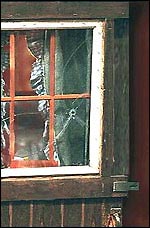
As Randy reached to unlatch the shed door, Horiuchi fired one shot, without warning, and hit Randy in the upper right arm. Randy exclaimed, “Mama, I been shot,” and the three ran towards the cabin door. Vicki had heard the shot and Randy cry out for help, so she ran to the cabin door with baby Elisheba in her arms and held it open so that they could make their way inside for cover. As Kevin Harris made his way through the doorway, Horiuchi placed the cross hairs of his rifle’s scope on the edge of the door and fired a second shot. The bullet penetrated the door window, passed through Vicki Weaver’s head and struck Kevin Harris in the left arm and chest. The bullet had miraculously missed baby Elisheba. Vicki Weaver fell to her knees, still holding her baby, and cried out in agony for approximately 30 seconds before slumping to the floor and succumbing to her fatal injury. Kevin Harris and Randy Weaver lay on the floor moaning from the massive wounds they had suffered.
As the echoes from the shots subsided, Randy and Sarah noticed that Vicki was not moving. Randy turned Vicki over and then screamed out in horror as he realized she was dead. Her skull had literally exploded and her face was unrecognizable. Randy and Sarah dragged Vicki’s body away from the doorway and everyone sobbed uncontrollably.
On Sunday morning, August 23, 1992, “HRT” Commander Richard Rogers took two teams of “HRT” personnel to the Weaver cabin in armored personnel carriers. Using a bullhorn, Rogers announced that there were arrest warrants for Randy Weaver and Kevin Harris and asked Randy to accept a negotiation telephone. Randy shouted back, “Get the f—k out of here,” and made other statements that could not be understood. Rogers then delivered an ultimatum that if they did not come out, he would knock down the outbuildings and then start knocking down the house. Randy replied that he would not take the telephone.
Later that evening, armored personnel carriers began to destroy the outbuildings, such as the shed, and the water tanks, near the Weaver cabin. During the destruction of the shed, the body of Sammy Weaver was reportedly “unexpectedly” discovered. According to later statements by federal authorities, they were not aware of Sammy Weaver’s death before the discovery and initially presumed that Randy had begun killing his own children.
The discovery of Sammy Weaver’s body brought more aggressive tactical actions. The carriers destroyed every standing building around the cabin and placed high-powered spotlights around the entire perimeter, aiming them directly at the cabin. When the lights were turned on they were so bright that they were visible from over a mile away in any direction. As soon as the lights illuminated the cabin, Randy yelled out the door, “You killed my f—king wife!” Elisheba then began crying out, “Mama, Mama.” Kevin Harris was in so much pain, that he began pleading with Randy to kill him and put him out of his misery.
The psychological warfare became even worse the following day. “Good morning Mrs. Weaver,” Fred Lanceley, an FBI negotiator, called out. “We had pancakes this morning. And what did you have for breakfast? Why don’t you send your children out for some pancakes, Mrs. Weaver?” Following the statements made by the negotiator, the whole family began sobbing loudly. The phone, which had been placed outside the cabin door, rang continuously every 15 minutes as the negotiator continued yelling through the bull horn, at times stating that if they failed to come out, they were all going to die. A robot was soon deployed in an attempt to take a telephone inside the cabin by breaking out a front window. Randy was convinced that the robot would use tear gas on them and shouted, “You’d f—king better back off,” and stated that he would shoot the robot if it came any closer. Following his statements, the robot retreated and a negotiator began speaking again, “Vicki, how’s the baby?” he said. “Let me know if there is anything that can be done for the baby.”
As news of the Ruby Ridge casualties reached the press, the small group assembled at the bottom of the mountain began turning into a mob. Signs were held up to oncoming vehicles — “Death to Zog” and “Baby killers.” Those present later stated that they had never seen such an angry crowd before in their life. At one point a group of heavily armed anti-government sympathizers were arrested as they made their way up the mountain to support the Weaver family.
(AP/Wide World)
As the days wore on, none of the maneuvers being employed by the “HRT” appeared to be working and they decided to try one last tactic. On Friday August 28, 1992, the FBI brought in Colonel Bo Gritz, in hopes that he might be able to negotiate with the Weaver family. The Washington Post at one time named Colonel Bo Gritz the “American Original” and The Atlanta Constitution had referred him to as a “Renaissance Green Beret”. Decorated 62 times for valor during his combat service in Vietnam and elsewhere, Gritz became a prominent figure on the right-wing fringe after leading several unsuccessful commando-style missions to rescue alleged American POW’s in Vietnam during the 1980s. He ran briefly for Vice President in 1988 and was currently running for president on the Populist Party ticket. Gritz was also the founder of several survivalist-oriented land developments, for the purpose of paramilitary boot camps. With close ties to both the anti-government movement and white supremacists, Gritz seemed to be the perfect nongovernmental negotiator.
When “HRT” Commander Richard Rogers met with Gritz, he informed him that a special operations group would launch a full-scale assault against the Weavers on Monday if Gritz could not negotiate surrender. With the weight of the situation seemingly on his own shoulders, Gritz was taken up to the cabin at approximately 5:00 p.m. Randy Weaver was well aware of who Bo Gritz was and had often times referred to him as the original “Rambo,” so when Bo announced his presence outside the Weaver cabin, Randy agreed to speak with him through the door. Randy and his daughters told Gritz that they had developed an intense hatred for Fred Lanceley because of remarks directed to Vicki and questions he asked about what they were having for breakfast. Randy said that the remarks “Pissed them off,” and strengthened their resolve. When informed of Kevin and Randy’s current condition and the wounds they had both received the previous week, Gritz pleaded with Randy to let him get medical attention. Nonetheless, Randy quickly shot the idea down and stated that he would not leave the cabin under any circumstances.
Negotiations between Gritz and Randy continued again the next day and, after much persuading, Randy finally agreed to allow Gritz to step inside the cabin so that they could talk face to face. As the cabin door opened and Gritz made his way inside, he was immediately struck by the foul odor of death. Nearly seven days had passed since Vicki Weaver’s death and it did not take Gritz long to find the origin of the horrendous odor. Lying on the kitchen floor, partially under a table, Gritz saw the body of Vicki protruding from a cloth, which had been placed over top of her. Gritz told Randy that Vicki’s body should be removed and they should surrender, so that Kevin and Randy could get immediate medical attention. Randy, convinced that law enforcement personnel wanted to kill each of them, refused to surrender. But, he ultimately did agree to the removal of Vicki’s body.
On Sunday August 30, 1992, Bo Gritz returned to the Weaver cabin with a body bag to remove Vicki’s body. Gritz had been outfitted with a transmitting device this time, so that the command post could monitor any conversations between himself and the Weavers. Following a brief conversation with Randy, Gritz and a family friend of the Weavers, Jackie Brown, carried Vicki Weaver’s body out of the cabin and placed it in a vehicle to be transported down to the command post. After delivering the body, Jackie Brown returned to the cabin with some water and began cleaning blood from the floor of the cabin. Brown later reported that, at her request, she was given two five-gallon buckets of water, three white bath towels, and a roll of paper towels. Brown said she cleaned Vicki Weaver’s blood from the cabin floor because she did not want the Weaver girls “to deal with cleaning the blood of their mother.”
Gerald McLamb, a retired Phoenix police officer who was assisting Gritz in his campaign for President, returned to the cabin with Gritz to help in the negotiations. Both negotiators focused their conversations on Weaver and Harris and their need for medical attention. Kevin Harris was in a serious mental and physical state and had given up his will to live. Randy, not wanting to watch his friend die before his eyes, agreed that Harris should surrender and get the medical attention he desperately needed. Following the brief conversation, Gritz and McLamb carried Kevin outside to an armed carrier where he was then transported down the mountain for medical supervision. Deciding not to push Randy too far too fast, Gritz and McLamb then left the cabin, promising to return the following morning for further talks.
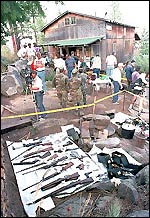
Weaver compound (AP /Wide
World)
The following day, Monday August 31, 1992, Gritz and McLamb returned to the Weaver cabin. The pressure on the two men was more intense, because if they could not persuade the Weavers to surrender, a tactical team would over run the cabin later that day to bring the standoff to a final end. If the operation were to take place, it would most likely result in the death of Randy and perhaps even his children.
Prior to arriving at the cabin, Gritz had spoken with Gerry Spence, a renowned attorney from Wyoming, who was known around the world for representing the poor, the injured, the forgotten and the damned against what he calls “the new slave master,” mammoth corporation and mammoth government. He had previously tried and won many nationally known cases, including the Karen Silkwood case, and had not lost a case since 1969. Spence had more multi-million dollar verdicts without an intervening loss than any lawyer in America. After Gritz contacted Spence and explained the situation, the attorney agreed without hesitation to defend the Weaver family in court. Gritz had also obtained a handwritten note from Assistant U.S. Attorney Ron Howen to Randy Weaver, which agreed to allow Randy to present his account of the situation to a grand jury.
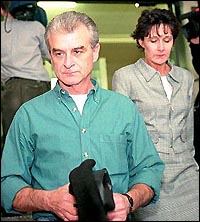
(AP/Wide World)
When Gritz informed Randy of the deal he had made with Gerry Spence and the note he had obtained from Ron Howen, Randy began to waiver. The children, sensing their father was about to make a terrible decision, begged with him not to surrender himself to the “ZOG Government,” however the mental and physical strain had taken its toll and Randy felt that he could no longer hold out in the cabin. After a brief discussion with his children, Randy Weaver agreed to surrender and exited the cabin with Bo Gritz. As soon as the men stepped outside the cabin door federal agents handcuffed Randy and the entire Weaver family began to cry as they were escorted down the driveway. Snipers and camouflaged agents began crawling out of the woodwork and as the Weavers noticed multiple armored carriers, helicopters flying overhead and a massive tent city at the base of the mountain, they could not believe their eyes. “All this for one family,” Sarah muttered as tears ran down her face.
As the gunsmoke began to clear on Ruby Ridge, prosecution of the Weaver case was assigned to U.S. Attorney Ron Howen. Randy Weaver and Kevin Harris were commended to the Ada County Jail and eventually charged with ten counts, including murder, aiding and abetting murder, conspiracy and assault. With the wealth of information to sift through, the trial would not begin for another eight months, during which time Kevin and Randy remained incarcerated.
On April 13, 1993, a jury consisting of seven women and five men, along with six alternates was selected at the Federal Courthouse in Boise, Idaho, with U.S. District Court Judge Edward J. Lodge presiding. The trial began the following day and ultimately lasted for a total of 36 days. During the trial, the prosecution called 56 witnesses, while the defense, confident that the government would destroy their own case, called none. The entire ordeal was bizarre to say the least and almost everyone of the prosecution’s witnesses contradicted or countered the testimony of a previous witness. The prosecution spent several days going over the Weavers’ religious views, trying to establish that they were racist and had a long-lived conspiracy to violently confront the government. Marshall service witnesses described pre-siege scenarios to root Weaver out of his cabin, however when pressed by the defense, they said they never considered simply knocking on the door and arresting him. In addition, government agents admitted that the FBI had tampered with evidence and that the crime scene photos given to the defense were phony reenactments. Even though the prosecutor knew this, he had failed to inform the defense and it was only during the trial that these facts came to light. For prosecutorial misconduct, the judge ordered the government to pay part of the defense attorneys’ fees — an action almost unheard of in a criminal case. Prosecutor Ron Howen was also was forced to apologize in open court.
The defense countered the prosecution’s conspiracy arguments by stating that the Weaver family had moved to northern Idaho in 1983 to practice their religion in peace. They wanted to be left alone. It was then alleged that Randy had been set up on the weapons’ charge and that federal agents sought to arrest him when he refused to become an informant. The resulting failure- to-appear charges were then brought because Randy Weaver was given an incorrect court date and then indicted before that date. The defense continued by arguing that the shootout was a direct result of federal agent Arthur Roderick’s actions, in which he killed the Weaver family dog in proximity to Samuel Weaver, which caused Samuel to return fire in self-defense. Finally, the defense claimed that Vicki Weaver was murdered in cold blood by FBI sniper Lon Horiuchi.
As the trial came to an end, Prosecutor Howen began his closing arguments, during which time he reiterated the Weavers’ racist views and hatred for the government. It was obvious to those in the courtroom that Howen was unnerved, however everyone was surprised when he collapsed during the middle of his closing statement, telling the judge, “I can’t go on.” When Gerry Spence made the closing arguments for the defense, he drilled home earlier statements regarding misconduct by government officials and again claimed that the Weavers acted in self-defense. “This is a murder case, but the people who committed the murder are not here in court,” Spence told the jury as he finished his closing argument.
Following the trial, the jury deliberated for nearly three weeks before finding Kevin Harris not guilty of murder or any of the other charges that had been brought against him. While Randy Weaver was also found not guilty of any federal felony counts, the jury did find him guilty of failing to appear in court and guilty of violating his bail conditions. Randy was then sentenced to 18 months in jail, 14 of which he had already served and fined him $10,000. After the jury announced its decision, Gerry Spence told {The New York Times}, “A jury today has said that you can’t kill somebody just because you wear badges, then cover those homicides by prosecuting the innocent. What are we going to do now about the deaths of Vicki Weaver, a mother who was killed with a baby in her arms, and Sammy Weaver, a boy who was shot in the back?” Randy Weaver also spoke out from behind bars while serving his remaining four months, and denied being a white supremacist or having had any affiliation with white supremacist groups. “I’m not a white supremacist. I’m a white separatist,” Weaver said. “I was born white. I can’t help that. If I was black I’d probably be affiliated with Louis Farrakhan’s group, but as it is, I don’t belong to anything. I don’t believe I’m superior to anyone, but I do believe I have the right to be with my own kind of people if I choose to.”
After a Justice Department investigation, it reported that the late disclosures by the prosecution during the trial were, “unnecessary, were embarrassing and damaged the integrity of the government…the late production of materials related to the shooting incident report were particularly devastating to the prosecution. The FBI is responsible for that incident. We hope that corrective procedures are instituted to prevent a similar occurrence in the future…although we do not view that incident as having been intentional, we think that if more care and attention had been directed to the original search and production of the materials, it would have been avoided.”
Following his release from jail, Randy Weaver flew back to Iowa with his children and filed a wrongful death lawsuit against the government for the killing of Samuel and Vicki Weaver. In an out-of-court settlement, Randy was given $100,000 and his daughters were granted $1 million apiece. “The government got caught with its pants down,” Randy stated after the settlement. “They broke a whole bunch of serious laws, they were totally embarrassed, and they settled our lawsuit out of court because they didn’t want a lot of questions asked. This became a personal vendetta with the government when I laughed in the face of the agent who offered to drop my charges if I became an informant. They admitted in court that crime is about as serious as a traffic violation.”
Federal prosecutors eventually ended a two-year long probe into several FBI officials for their role in the Ruby Ridge standoff. Following the investigation, Danny Coulson, former head of FBI headquarters, was given a letter of censure; Michael Kahoe, who had been involved in researching the rules of engagement, was censured and suspended for 15 days; Richard Rogers, head of the hostage rescue team, was censured and suspended for 10 days; Larry Potts, the man who had approved the rules of engagement, was censured; Eugene Glenn, Ruby Ridge field commander, was censured and suspended for 15 days, and Lou Horiuchi, the HRT “Blue” sniper/observer team leader, received no punishment for his actions, which resulted in the death of Vicki Weaver.
Randy Weaver eventually relocated to Montana with his daughters and purchased a car lot. Kevin Harris moved to Republic, Washington, where he currently works as a welder. The Weaver cabin still stands on Ruby Ridge and, as of this writing, remains unoccupied. Since the shoot out at Ruby Ridge, Randy Weaver has been deemed the patron saint of militant gun owners, a living martyr whose infamous shoot-out with federal agents helped ignite “A seething backlash in the country,” as the N.R.A. puts it. This backlash, along with the Branch Davidian’s standoff in Waco, Texas, was later said to have caused the bombing of the Alfred P. Murrah federal building in Oklahoma City, by Timothy McVeigh.
Randy Weaver: Siege at Ruby Ridge
Bibliography
Books:
Ambush at Ruby Ridge, by Alan W. Bock September 1996, Berkley Pub Group; ISBN: 0425157296
Every Knee Shall Bow, by Jess Walter July 1996, HarperCollins Collins; ISBN: 0061011312
Television:
“Ruby Ridge Investigation”, by Nightline 1995, ABC News; ASIN: B00005BK47
CNN
Newspapers:
Spokesman-Review – Spokane, Washington
The Associated Press
Internet Web Sites:
Court TV
About.com Law Library
Ruby Ridge
Amerika