
Predicting Extreme Fatal Violence — “I’ll be Famous” — Crime Library
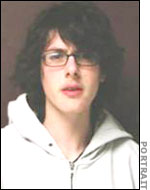
By the age of six, according to the Omaha World-Herald, Robert Hawkins, the killer of eight Christmas shoppers at an Omaha mall in 2007, had been on medication for depression. At the time, he lived with his father and stepmother, his father’s second wife. When he was two years old, his father had separated from his biological mother, an alleged substance abuser, and had taken him and his older sister away. He had gained two stepsiblings when his father remarried, and he had soon developed serious behavioral problems. He often acted out, biting, kicking, and hitting, so he was sent to therapy.
A fierce custody battled ensued, with the mother blaming the father for these problems, but the father countering with attacks on her allegedly poor parenting skills. A judge left the children with the father.
Robert continued to seek attention through quirky behaviors and general trouble-making. Finally, when he was fourteen, he threatened to kill his stepmother and so was admitted to a psychiatric hospital. He remained in treatment for nine months, but subsequently had two more admissions for a mood disorder, attention-deficit disorder, and oppositional defiance disorder. He also abused alcohol and drugs, so he ended up in foster care and group homes, as well as treatment programs. He seemed to enjoy the attention, especially from kids in the programs who looked up to him. However, he yearned to be home. He also failed to respond positively to the treatment, instead continuing to get into trouble in school and, according to some, selling drugs.
By his junior year in high school, Hawkins decided to drop out. He moved in with his father again, but, by his account, he was soon kicked out and so moved in with a friend’s family. Seeming like a “lost pound puppy,” he developed a belief that the world was against him. It made him feel as though he were a burden to those he loved, and this bothered him a great deal.
In November 2007, the nineteen-year-old faced a hearing for being in possession of alcohol. Then a girlfriend broke up with him, and, over an alleged theft, he lost his job at a local McDonald’s. Angry and disappointed how life was turning out, he obtained, either by permission or theft, an SKS semi-automatic Russian military rifle owned by a relative. On December 6, he penned a suicide note which indicated that “now he would be famous,” and went to the Westroads Mall in Omaha, Neb. There, dressed in a camouflage vest, he proceeded to the Von Maur department store and started shooting. Eight people died and five others were wounded. Finally, Hawkins turned the weapon on himself. It seemed he’d decided that life wasn’t worth living, but in keeping with his recurring bids for attention had decided to pay the world back for his pain and make sure he was noticed. That’s generally the goal of mass murders committed by adolescents.
Hawkins gave several signals that he could turn violent, given the right set of triggers, but, like some other notorious killers, successfully hid his true intent.
Scott Esposito, 38, had hoped to get back together with his girlfriend, Kathryn Miller. Esposito lived with his elderly parents and disabled sister in Pennsylvania, mainly to care for them. People knew him as a church-going Catholic who often helped others. He purchased a dozen balloons to take over to Kathryn, who also lived with aging parents. Scott and Kathryn had met on an Internet dating site and had been together nearly two years. Some said they had broken up five months earlier, but Esposito’s family affirmed they were still together.
In either case, on May 11, 2007, Esposito took the balloons to Kathryn’s home and knocked on the door. When her father answered, Esposito shot him to death, then entered and found Kathryn in the family room. He turned the gun on her. Wounded, she ran outside, where he shot her again, and she collapsed and died. Esposito then got into his car and drove away, shooting himself in the mouth. He had purchased the ammunition the night before.
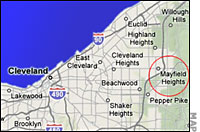
was staying with her father.
Nothing now known about Esposito indicated that he would suddenly commit a double homicide, let alone kill himself. Had anyone guessed, others might have tried to intervene. But not only was the act in stark contrast to what people knew of this man, he had carefully concealed his plan from everyone. He even left behind family who needed and depended on him, for whom he had made no arrangements.
There was no indication that he suffered from delusions or any other mental disorder that would explain his violence. Yet it was not out of character, as many people insisted. In The Myth of the Out of Character Crime, Dr. Stanton E. Samenow maintains that people “always act within character.” People who were surprised by Esposito’s act simply did not know him well enough to see what he might do. If one digs deep enough, all the factors are there that would precipitate violence in such situations.
It could be as simple as deep shame over the break-up and the embarrassment of lying to his family that they were still together. Sometimes people suppress such inner conflicts, which then build to a breaking point. But the challenge is knowing a dangerous person that well, because offenders who are aware of the wrongness of their contemplated acts tend to make their fatal plans in secret.
Predicting who might become violent in the future is like predicting the weather: while there’s a science to calculating the probabilities, there are always surprises in practice. In addition, risk assessment implies the ability to step in to prevent predictable violence. While few seek a Minority Report situation, in which people with violent potential are snatched out of society, most do hope that science can help find ways to intervene before tragedies like the Esposito incident occur.
An extremely high-profile case that drew global attention to challenges of predicting violence was the massacre which occurred in the spring of 2007 at Virginia Tech.
In the aftermath of the massacre at Virginia Tech on April 16, 2007, there were accusations thrown at the administration for its tardy alert that a shooter was on the grounds, and soon the comments became more pointed: critics averred that officials should have known that Cho Seung-Hui was ready to explode. His problems and his risk to others, they maintained, had been visible.
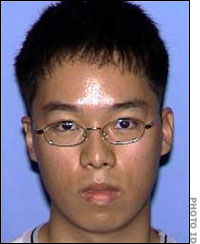
Cho shot two people at a dorm at 7:15 a.m., mailed off a video recording full of paranoid clips to the NBC network, and then proceeded to enter another building and kill thirty more students before taking his own life. He was a senior English major with a litany of grievances that enraged him. By all indications, he’d been angry for years and had patiently planned his mass execution.
Cho had worked out in the preceding weeks, had purchased handguns — even waiting the required thirty-day period. He intended to carry out a grandiose gesture of violence, similar to the Columbine massacre (and only days from its anniversary) but stamped with his particular signature. He aimed to be remembered for a long time, everywhere, for the “punishment” he exacted. An otherwise quiet and sullen non-entity, Cho had a fantasy of being “someone” and a clear agenda in his own mind to achieve it. He aspired to kill the greatest number of people to make history.
People had seen his problems long before the fatal incident. In 2005, Cho was removed from a classroom because students feared him. A teacher had perceived that his profanity-ridden plays bespoke a potentially dangerous mind. He was temporarily institutionalized as a danger to himself, and had allegedly cyber-stalked a couple of girls. Even officials at his high school were aware of his behavioral problems. A sustained intervention and system of tracking him might have made a difference, and such programs are possible because statistical analysis of past such incidents have given us a solid set of danger signals. It’s no so much about divining motive as about collecting behavioral signals that alert professionals in threat assessment to advise careful handling.
There have been many motives for mass murder, from jealousy to payback to the need to make a public statement, with a great deal of damage as its punctuation. On October 16, 1991, George Hennard rammed his truck into a Luby’s Cafeteria in Killeen, Texas, got out, and started shooting. Yelling, “This is payback day!” he left 23 dead or dying and 22 wounded before killing himself. Charles Whitman, the notorious 1966 campus shooter, picked off victims from his vantage point on the observation deck of the clock tower at the University of Texas at Austin. He killed 15 and wounded 31.
The school shooters, Dylan Klebold, Eric Harris, Kip Kinkel, Michael Carneal, Barry Loukaitis, and Luke Woodham, all had issues with bullies or with feelings of failure, and all selected attacks on classmates as their reaction. Klebold and Harris also killed themselves. At the heart of their attacks was rage and frustration, and they were often well-armed and quite practiced with guns.
Rampage killers tend to be better educated than typical murderers, are usually rigid in temperament, express resentment against others, and are often self-defeating or suicidal. The most significant influence on their outburst appears to be some form of mental illness or psychological dysfunction, along with an inability to absorb life’s disappointments. Often, they’ve made threats in the past and had fantasies about using violence to get their way. They usually arm themselves in preparation. What they do is not from impulse; it’s the result of long-term planning with an ultimate goal. They usually act alone, although people who know them have seen the early warnings.
Some behaviors show up in these incidents often enough to become significant in risk assessment. The backgrounds of most killers who were not psychotic indicated that they might explode one day. Veiled threats, angry outbursts, or retaliations against others signal of a person’s potential for large-scale physical violence, especially if these initial acts fail to satisfy them. A dangerous buildup of frustration derives from a need for control that hinders the ability to develop resilience. Those exposed to violence in their childhood environment appear to have a greater tendency to duplicate it, especially if they also develop sensitivity to rejection, failure, or frustration. Their fantasies absorb the conflicts and offer solutions that make sense to the person. More alarming, these fantasies feel good.
Revenge fantasies are at the heart of many mass murders. “The most ominous fantasies,” says Frank Robertz, a criminologist who studies school shootings, “gradually consume ever more psychic space and become buttressed by a distorted sense of what it just.” Some target specific victims, while others pinpoint symbolic targets anonymous to the killer. Some killers focus on a specific goal, while others kill reactively. Some incidents have clear triggers, while others remain a mystery. Mass murderers may feel victimized and, to compensate, develop an inflated sense of self-worth.
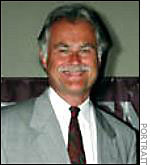
J. Reid Meloy.
Among the most common traits or behaviors that compose the constellation of red flags for the potential for mass murder are a preoccupation with themes of violence, low frustration tolerance, significant stressors, a tendency to collect injustices and blame others for one’s problems, withdrawal and alienation, poor coping skills, and a sense of entitlement. Spree killers also seek to punish others for how life has treated them or for some specific incident they think is too unfair to be ignored.
Forensic psychologist J. Reid Meloy, author of Violent Attachments, says that sudden violent crimes may occur as the result of “catathymia,” a gradual build-up of anger and frustration that threatens to overwhelm a person’s fragile sense of self. Sufferers desperately fear a loss of control that could turn into psychosis, so they construct layers of stabilizing deceptions. When the first ones work, they continue with more and more. But when reality intrudes, the possibility of losing their mask threatens to overwhelm them. Then something stresses them to a crisis point. The sudden flow of desperation capsizes their meager defenses, and they act out. Sometimes they murder, even if they’ve never committed an act of violence before.
It seems that underlying conflicts that have a strong emotional charge give otherwise normal concerns exaggerated proportions. The emotional energy turns an idea into a fixation with momentum, defeating all attempts by reason to waylay it. Whatever plan develops during this time of build-up, it seems the only possible way out. As inner tension increases, the need for violence as the response becomes demanding and the urge to act is nearly overwhelming. Psychologically, this process may be a safeguard within the self against the formation of a disabling psychosis.
But is that what happened with Cho?
Officials knew it was imperative to undertake a study to determine if future such incidents could be assessed for threat and prevented. An eight-member panel released its report on the Cho incident August 30, 2007. The first level of evaluation related to the shooter, the second to the institution’s response. Both parts pinpoint communication flaws as the heart of the problem.
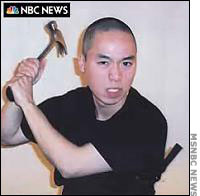
Cho’s fantasies and behaviors signaled to even the untrained eye that he was likely to attempt some type of violence. He was enamored of the Columbine incident; he was a loner who expressed extreme anger; he expressed his outrage in violence stories; and he was emotionally unstable. He thought others should be punished for just being who they are. Diane Strickland, a panel member, interviewed forty-four people, including Cho’s closest relatives, faculty who knew him, and acquaintances. She also read his tormented writings. Yet still she concluded, “I don’t feel that I know him.”
Also analyzing the situation was Roger DePue, a former FBI profiler, who wrote about what may have motivated Cho, based on what is known about other mass killers. Such people “act out of a distorted sense of unfairness and disappointment stemming from their own actual inadequacies and unsatisfied needs for attention, adulation, power and control.”
Cho experienced plenty of weakness during his sickly childhood — often humiliating for a boy – and he failed to grow emotionally—strikingly similar to Kip Kinkel, a school shooter in Oregon. Other kids shunned him, which only contributed to his feeling of failure. Those pursuits in which he did well failed to satisfy him. He developed anger but no means to absorb or dispel it. Thus, he became catathymic. Other people paid little attention to him and thwarted him by rejecting his writing and his ideas. It’s likely that there was an undiagnosed mental illness.
Even if we figured Cho out and knew exactly what triggered him and what we could have done to prevent the tragedy in this case, the next one up to bat who really wants to carry out his or her plan is likely to find a way around the safeguards to achieve his goal. Once such people envision what they want to do, they are unlikely to be stopped by inconvenience alone.
Risk assessment is tricky business, and even experienced professionals who make such assessments every day have no formula. It’s easy to miss the significance of some crucial factor. Professionals who undertake it need statistical databases not clinical guesswork. No psychologist can afford to neglect this area of expertise, because in so many contexts, thanks to a case in California, the burden generally falls on them.

Prosenjit Poddar attended the University of California at Berkeley in the late 1960s and met Tatiana Tarasoff at a dance. They became friends, and he developed a strong romantic interest in her. When they shared a quick New Year’s Eve kiss, he interpreted this as a sign that they were engaged. Tatiana was uninterested in such a relationship, which confused Poddar, an Indian immigrant. He developed a delusion that she had feelings for him, and this obsession became increasingly more intrusive. He soon suffered an emotional breakdown and attempted to end all contact, but she called him to tell him how much she missed their discussions. His obsessions returned and became paranoid to the point that he believed he would have to kill Tatiana.
During the summer of 1969, Poddar sought outpatient psychiatric services at a hospital in Berkeley. The treating psychiatrist diagnosed paranoid schizophrenia. He prescribed antipsychotic medication. He then referred Poddar to a psychologist, Dr. Lawrence Moore, for counseling. Despite their sessions, Poddar persisted in his delusion that Tatiana would one day love him. To prove himself, he purchased a handgun to orchestrate a life-threatening situation from which he could rescue his beloved. Dr. Moore, learning of this from Poddar, stated that he might take steps to restrain him, which sent Poddar angrily from his office. His honor, apparently, was at stake.

California at Berkeley campus.
Dr. Moore talked with colleagues about these threats and informed campus police that Poddar was unstable and threatening to kill a girl. Officers found and questioned Poddar but thought he appeared rational. He promised to stay away from the girl. Moore’s department chief believed that he had over-reacted to the situation and ordered him to change the records to remove his contact with police.
Then in October, Poddar’s delusions reached a breaking point and he went to Tatiana’s house, armed with a knife and pellet gun. She ran from him and he shot her, then stabbed her fourteen times, killing her. Poddar turned himself in and at his trial pleaded not guilty by reason of insanity. He was convicted of second-degree murder and after serving five years was released.
Tatiana’s family instigated a civil case of negligence against the Regents of the University of California. In 1974, the California Supreme Court found that, despite patient-psychotherapist confidentiality, a duty to warn exists when the therapist determines a warning is essential to avert a danger rising from the patient’s condition.
The mental health profession quickly responded to this decision, claiming that they have no inherent ability to predict violence and that such a ruling violated their “special” relationship and would prevent patients from trusting them. It could also generate false positive predictions as a means of diverting liability just in case something happened. Overall, this would be a detriment to those needing treatment, as well as a deterrent to clients who might otherwise expose their violent fantasies.
The court agreed to rehear the case and issue a second opinion. It still found that therapists have a duty to potential victims, but they need only use “reasonable care” to protect the person. That is, the therapist may only have to civilly commit or voluntarily hospitalize the patient to avoid the potential for harm. Most jurisdictions now recognize a Tarasoff-type duty, although some are less stringent than others.
Psychologists cannot be expected to be clairvoyant, but they can make an informed assessment whether a patient is likely to act out, and devise a behavior management plan to decrease the likelihood of actual violence against a specific target. There are several standardized instruments for assessment, but among the hindrances to effectively using them are the secrets that potentially dangerous people keep. One man’s fatal obsession went almost completely unnoticed by those who knew him.
Despite the hype devoted to dangerous celebrity stalkers, little is known about what makes certain people develop an obsession so extreme it becomes homicidal. Ricardo Lopez, a suicidal man who in 1996 stalked Icelandic musician Bjork, left an obsessive 803-page journal and twenty-two hours of videotape about his evolving plan to harm her. He was driven to become a significant person in her life, and violence appeared to him to be his only option.

He was twenty-one when he sent a bomb infused with sulfuric acid to Bjork’s London address, concealed in a hollowed-out book. He envisioned that when she opened the book, the bomb would detonate and spray acid in her face, killing or disfiguring her for life. He even demonstrated for himself how it would work by exploding a trial bomb against a photo of her. However, even the best laid plans can fail.
Once Lopez mailed the bomb from his Florida residence, he filmed himself committing suicide while listening to Bjork’s song, “I Miss You.” Decomposition odors eventually alerted a neighbor, who notified police. Thanks to the videotapes found in his residence, police learned how Lopez had assembled and mailed the bomb. They contacted Scotland Yard’s anti-terrorist branch, whose officers intercepted the package before it came into Bjork’s hands.
Apparently, Lopez believed that, in death, he would achieve his longed-for union with the singer. His detailed accounts provide a vivid picture of a hermetically sealed world, reminiscent of Brando’s ‘Kurtz’ in Apocalypse Now.
Despite the fact that none of Lopez’s relatives or friends noted the development of his extreme psychosis, he did display behaviors that flagged his intent and the likeliness that he would act. Apparently, while he once had fantasized about Geena Davis without incident, he became so obsessed with Bjork that he felt intimately connected to her. When she became engaged to another musician, Lopez was furious. Once he decided to kill her, he acted quickly, so it’s fairly easy to see those aspects of his personality and fantasy life that formed a lethal combination.
Lopez was unemployed but had worked for his brother in a pest control business. He was overweight, introverted, anxious, and suffering from a severe lack of self worth. In fact, he loathed himself. Although he came briefly under the care of a psychiatrist, he was skilled at hiding his aggressive fantasies. Yet some people did realize that Lopez wanted to mean something to the singer and that he was angry over her engagement.
In terms of risk assessment, certain items stand out that are shared with other such stalkers who have used violence:
-
an unhealthy level of obsession
-
delusional expectations of the celebrity
-
anger about something the celebrity did
-
access to or knowledge about a means of punishing the target person
Growing tension in the stalker signals internal conflict that could erupt in homicidal violence: what these people often lack is insight about themselves and the explosive nature of their personal issues.
J. Reid Meloy, a forensic psychiatrist who specializes in violence research, created a self-assessment of reported violence inventory (SSRV) believing it’s important to observe a criminal’s level of insight regarding his thoughts and feelings before, during, and after a violent act. “The unwillingness or inability to evoke memories of intrapsychic experience concurrent with violent behavior is a poor prognostic indicator, and suggests a borderline personality organization with either psychopathic or histrionic traits, respectively.” Yet sometimes a person who seems to have insight is completely deluded about himself.
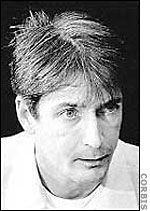
Gary Gilmore had spent his youth in reform school and prison for numerous delinquent activities. After being released and then committing armed robbery in 1973, he went to trial again. He asked permission to address the court, telling the judge that he had been locked up for the past nine and a half years since he was fourteen, with only two years of freedom. He argued that “you can keep a person locked up too long” and that “there is an appropriate time to release somebody or to give them a break…I stagnated in prison a long time, and I have wasted most of my life. I want freedom, and I realize that the only way to get it is to quit breaking the law. I’ve got problems, and if you sentence me to additional time, I’m going to compound them.”
The judge told him that he had already been convicted once for armed robbery, so there was no option but to sentence him to another nine years. Gilmore was hurt and angry. As promised, he became more violent while in prison and tried to kill himself several times. That got him transferred to a maximum security penitentiary. Then, only three years into his sentence, a parole plan was worked out. He was released in April of 1976, but by July was back in prison for the cold-blooded murder of two men.
The question is, was Gilmore such a risk that even he did not know how dangerous he was, or might having given him a break earlier in the process made a difference? Much has happened in the area of risk assessment since the 1970s that would help answer this question. Early recognition and intervention has become the central theme.
The idea of “dangerousness” has been a paramount issue in the forensic psychiatric arena for many years, yet establishing an empirical body of data from which to make accurate predictions has been difficult. According to John Monahan and his colleagues, who looked at the over-prediction of threat during the 1980s that resulted in a high percentage of unnecessary commitments, such research must meet specific criteria. Notably, risk factors must be segregated into component parts, the potential for harm should be assessed only in terms of probability, and the research must be done on representative samples.
Monahan claimed that these criteria were met in a study undertaken by the MacArthur Foundation, wherein researchers examined the relationship between mental disorder and violent behavior. (Others complain that it was not representative.) They devised a comprehensive list of risk factors across four domains: the person’s disposition, his or her history of violence, the context for potential violence, and any past or current clinical issues. Of the four domains, only contextual and clinical were deemed relevant to risk management, because these factors could be changed.
But among those factors that were most significantly linked with violence were the following: being male, having a prior record of violence or aggression, physical abuse in childhood, having a parent who was a substance abuser or criminal, living in a disadvantaged neighborhood, having a diagnosis of an adjustment disorder or substance abuse, evidence of psychopathy (the strongest factor), a suspicious attitude toward others, an experience of an auditory hallucination that commanded a violent act, and thinking or fantasizing about harming others.
The latest update on the MacArthur Violence Risk Assessment Study indicates that, compared to other instruments that assess those already hospitalized, its results appear to be highly accurate. However, it is a complex and time-consuming approach, so professionals have now devised computer software to assist the process. It’s become clear that clinical appraisal is too subjective to be effective, and replacing that with statistical data is both more scientific and more reliable. The study observes, “our data are most consistent with the view that the propensity for violence is the result of an accumulation of risk factors, no one of which is either sufficient or necessary for a person to behave aggressively toward others.” In other words, there is no single path in life that results in violence.
The researchers found that among the best predictors of future violence was the Psychopathy Checklist-Revised (PCL-R), created by Dr. Robert Hare and his colleagues. However, not all potential offenders have been assessed with this instrument, so its utility is limited to those who have.

So, back to Gary Gilmore. Given what we know now about the threat of violence compared with his history, freeing him would likely have ensured repeat offenses. He had numerous incidences of impulsive delinquency, had poor anger management skills, was 27 years old, male, of a deprived social class, with mental illness in both parents, was abused as a child, had a poor record of school attendance, showed a history of violence toward self and others, abused alcohol and drugs, and knew how to get quick and easy access to guns. His social networks were mostly other criminals and his family structure was unstable. He had numerous attachment issues. Violence, in short, was all he knew.
In fact, his armed robbery offense had occurred while he was already on a qualified probation plan, which allowed him to go to art school to see if he could live responsibly. Instead of registering for school his first day, he got drunk, located a gun, and held up a convenience store. Thus, the very chance he’d requested late in his incarceration had been granted once, and for reasons that seemed beyond his own comprehension, he had not taken advantage of it to improve his life.
But while Gilmore killed twice, each time was a single individual. A further burden placed on threat assessment is to spot mass murderers who are intent on harming as many people as possible.
A Long Island McDonald’s customer noticed a spiral-bound notebook lying in the store’s parking lot. When she glanced through the handwritten journal to identify its owner, she realized it was a disturbing and detailed account of a proposed Columbine-type plot against a high school nearby. She turned the journal over to the school’s authorities, who quickly involved the police.
Two youths were soon identified: the journal’s author, age fifteen and thus too young to name, and his McDonald’s co-worker, seventeen-year-old Michael McDonough. Both were arrested on July 13, 2007, on conspiracy charges, perhaps thwarting a future incident of school violence. In many ways, the journal seemed an ominous depiction of things to come.
“I will start a chain of terrorism in the world,” the 15-year-old had written, as reported in The Washington Post. He appeared to be the primary instigator. Recently suspended for making violent threats at school, he listed a number of targeted individuals by name, both students and staff members. He apparently hoped to make history with a crime he believed would be “perfecto.” With McDonough, he aspired to “take out everyone there [at the school]” before turning a weapon on the arriving police and then himself.
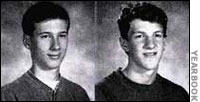
McDonough apparently helped devise the deadly plot, planned for April 20, 2008, the ninth anniversary of the day on which Eric Harris and Dylan Klebold had used bombs and guns against students and teachers at Columbine High School in Littleton, Colorado. In mimicry, the two suspects hoped to use the same approach at Connetquot High in Bohemia, Suffolk County. Some two-thousand students attend the school, including the fifteen-year-old suspect. He apparently hated everyone there.
His stated reasons for the attack were similar to those expressed by many of the school shooters from the 1990s: he’d had it with what he felt was bad treatment by others. He didn’t like his life or the world in general, and at the very least this act could gain him some notoriety. According to records on his computer, seized by police, he had tried several times to make online purchases of the ingredients for explosives and of several weapons, including an Uzi and an AK-47 assault rife. The police have yet to determine if he had succeeded.
Police did discover a videotape the boy had made of himself in which he angrily described the future bloodshed he envisioned. There’s little doubt he was inspired by the videos that Cho had made during the Virginia Tech massacre. At that time, many commentators mentioned that Cho had made history as a mass murderer and he clearly received enormous international attention. Even then, people worried that the media’s intense and graphic coverage might spark a copycat of this nature. Indeed, the fifteen-year-old’s journal indicates as much: “I want to leave a mark on the world.”
Like others, Michael Kelleher, who wrote about mass murder in Flash Point, views the evolution of an obsessive fantasy as central to such an offender’s development. “The consideration and thought that are given to the crime,” he writes, “are often in the form of unrelenting and hostile fantasies of a long-standing nature.” The fantasy becomes an obsession mixed with the need for domination and control.
The fantasy itself may begin early in life, because the person has been unable during childhood to deal with life’s punches. They look outside themselves for the cause and decide they must destroy all hindrances.
Others are devalued as meaningless, and the potential offender becomes driven by his need to maintain control. He “typically depersonalizes at the moment of attack.” Some mass killers have already killed, such as those experienced with warfare, and for them, depersonalization comes more easily.
Dr. Samenow insists that a criminal’s way of thinking is vastly different from that of responsible people and that the “errors of logic” derive from a pattern of behavior that begins in childhood. Criminals, he says, choose crime by rejecting society and preferring the role of a victimizer. This appears to be consistent with the perspective of many mass murderers. They devalue and exploit others toward ends to which the criminals feel entitled. They don’t learn to respond more appropriately because they don’t think appropriately.
Some theorists look specifically at the earliest years of a child’s development to understand how that child may become violent in later years. According to Robin Karr-Morse and Meredith S. Wiley in Ghosts from the Nursery, the roots of violence develop in the first two years of life. With the exception of certain head injuries, they claim, there is no specific biological or sociological factor that predisposes a child to violence.
In other words, violence seems to be the result of the cumulative effect of a combination of factors, along with the failure of normal protective systems in the environment. Among those factors associated with violence, these researchers list harmful substances ingested by mothers during pregnancy, chronic maternal stress during pregnancy, low birth weight, early maternal rejection or abuse, nutritional deficiencies, a low verbal IQ, and trouble with attention deficit and hyperactivity.
But in a specific case, how can we pinpoint which child is more likely to become violent than others?
Different levels of risk are associated with different types of threats. When threats to return for “payback” are vague, implausible, inconsistent, or indirect, with no specific targets mentioned, this is considered low-risk. The risk level rises with specific details and with evidence of actual planning. A medium-level risk threat would be one that could be carried out, but indicators of the place and time remain vague or general. When preparatory steps are clear and the threatener has access to weapons, the threat now becomes high risk.
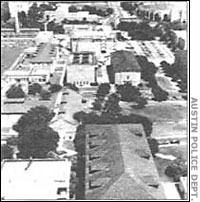
Those messages that are direct, specific, credible, and show planning are the ones to take most seriously. For example, Charles Whitman, with access to weapons, indicated he had recurring fantasies of climbing up the Texas tower and shooting people from it. He had access to weapons, he had anger issues, and he was depressed.
While not all mass killers signal their intent via threats, many do, and when they do, their words should be evaluated for the likelihood that they are ready to do what they are threatening.
For medium to high threat level, among the specific traits or behaviors that we should watch for not just one but several together – are:
- A time-consuming preoccupation with themes of violence, especially attention to other such incidents in the news media
- Low frustration tolerance in stressful situations, and few or no behaviors that indicate resilience
- Significant recent stressors, such as broken relationships, loss, humiliation, or a number of such incidents in quick succession
- Clear loss of personal power over a situation
- A recent humiliation, followed by burning resentment
- Collecting injustices (lists of names or targets)
- Vocal blame against specific others, with detailed descriptions about what should happen to them
- Sudden social withdrawal
- Incidents that reveal persistent, unabated anger
- Excessive need for attention
- Intolerance and rigidity
- Suspiciousness and paranoia
- Increased substance abuse
- Mental instability that involves aggression
- Collecting weapons
While no country, company, school, or person can ever be entirely free of threat from someone who intends them harm, and while there will always be violence motivated by some irrational impulse, there are ways to diminish the danger.
There are certain strategies that utilize these insights. For example, a company can avoid firing people during high stress periods, such as Christmas holidays. They can also try to determine what most raises a target employee’s anxiety level and seek a way to address it peacefully, such as assisting him or her with a job search. If a potentially violent employee is terminated, then security, coworkers, and local police should be notified.
At schools, while “outsider” behaviors are no indication of future trouble, counselors should be alert to kids who are persistently bullied, who withdraw, or who show signs of depression that disrupts school attendance or motivation. Kids who cannot envision an end to their pain may look for weapons that give them a greater sense of control.
In each type of place, counselors or managers can assist in developing anger management programs. While not everyone will respond (the school shooters at Columbine High School did not), it’s still possible to assist those who do see that they have a problem and desire to overcome it. When they can envision options, or when they feel as if someone’s listening to their issues, stress might dissipate.
Counselors can also be attuned to specific stressors, such as divorce, death in the family, demoralization, or other incidents that threaten a person’s sense of self-esteem. People in the workplace or at school should know what resources are available to talk through their difficulties, and should be made to feel comfortable using them.
If you are in a situation in which a potentially violent person is threatening imminent danger, there are several things you can do. Validate their feelings, avoid shaming or blaming them, listen, keep eye contact, and don’t try to be humorous or ask them to “just calm down.” Guide the situation toward describing the issue at stake, but if you don’t know what to say, say nothing. That way, you won’t inadvertently insult the person and fuel the fire.
While incidents of “uncharacteristic” extreme assault or mass murder derive from a range of contexts and precipitators, making it more difficult to develop a full comprehension of their causes, it’s nevertheless clear that pent-up frustration and anger play a significant role, complicated by attitudes of blame and entitlement, the rigid need to control others, and the obsession to “be someone.” The better our attempts to develop stress tolerance strategies for people at risk, the more likely it is that we can avert at least some potential tragedies.
Predicting Extreme Fatal Violence
Sources
Begley, Sharon. “The Mind of a Killer,” Newsweek, April 30, 2007.
“Brain Scans Show Pattern in Violent Behavior.” CNN.com, July 27, 2000.
“Brain’s Inability to Regulate Emotion Linked to Impulsive Violence.”
www.scienceagogo.com, July 30, 2000.
Cleckley, Hervey. The Mask of Sanity. St. Louis, MO: C. V. Mosby, 1941.
Garbarino, J. Lost Boys: Why Our Sons Turn Violent. New York: Free Press, 1999.