
The McMartin Daycare Case — How it Began — Crime Library
In legal tradition, it is the province of the judge to determine whether an expert witness is truly an expert. In the case of one of the longest trials in American history, a better judgment call on that score could have prevented horrendous damage.

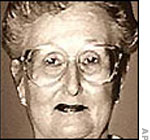
Virginia McMartin, 79, lived in the small oceanfront community of Manhattan Beach, California, just south of Los Angeles. She had opened a preschool on the main drag and hired members of her family and church to help build and run it. Her daughter, Peggy Buckey, 59, was the administrator. The school was considered so exemplary that the town had given Virginia an award.
Then one day in 1983, according to Debbie Nathan and Michael Snedeker in Satan’s Silence, a woman named Judy Johnson dropped off her two-year-old son Matthew at the daycare center. They center was full and had already told Johnson so when she called, but she left him there in the yard anyway. There was discord among the staff whether to accept him, but ultimately they did. It would be the single most regrettable act they would ever do.
Judy, separated from her husband, mentally unbalanced and struggling to make ends meet, became obsessed with Matthew’s anus. He said it hurt him to have bowel movements, so she took him to a doctor, who declined to examine him. On August 11, she examined Matthew in the morning and he seemed okay. However, when he returned home from the preschool, she claimed, his anus was red and itchy. She did not associate it with his diarrhea. Instead, she began to perceive something more nefarious: She believed that Ray Buckey, the only male teacher at the school, was abusing her son.
Judy confronted Matthew, asking him quite directly if Ray Buckey had done something to him. Matthew denied it. She kept up this line of questioning, which got her nowhere, so she switched tactics.
Since her son was playing doctor and giving people “injections,” she asked Matthew if Ray had ever done that to him. Again, he said no. However, he did admit that Ray had taken his temperature, and Judy Johnson jumped to the conclusion that this was a disguised form of sexual abuse. She took Matthew to the hospital for a rectal examination.
From there, reports are conflicting. Some say that there was no evidence of actual sexual abuse, while others say that Matthew admitted that he had seen Ray Buckey’s penis and that Ray had photographed him. Judy contacted the police.
This was not the first report about child abuse in a daycare center, so the authorities were determined to find out what was going on. Judy spoke on her son’s behalf, claiming that he had been photographed naked and tied up. Not only that, he’d seen this done to other children as well. Judy was told to take Matthew to some specialists in child abuse at Children’s Institute International (CII) at UCLA.
Unfortunately, the person who examined him was an inexperienced intern. She saw the redness and accepted Judy’s interpretation. Based on no real evidence and on no experience with such injuries, the intern diagnosed penile penetration as the cause of the irritation. Thus began the terrible saga that was to be labeled as America’s 20th century witch-hunt.
Judy then took Matthew to Richstone Center, a counseling program for sexual abuse victims. She made more allegations based on what she claimed Matthew said. Lawrence Wrightsman reports that Judy said her son had seen a live baby beheaded and Ray Buckey fly. Around the same time, the police began an investigation of the McMartin Preschool, and Ray Buckey in particular.
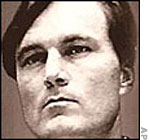
Ray, at 28, was a tall, thin, likeable guy with no particular ambition. He enjoyed working with the children and he was shocked to learn that someone had accused him of child abuse. He thought it could only be a little girl who had grabbed his crotch, because her father allowed her to do this to him. No one told Ray his accuser was a boy.
Yet to his greater alarm, townspeople began to recall odd things about him — the way he looked at girls or stared into space — and these things they told to inquiring police. They talked about how he wore loose shorts and no underwear, and when he sat in a certain way people had seen his genitalia unintentionally exposed. If he sat around like that with the children, then perhaps there was something to the rumors.
Police began to contact parents to urge them to ask their children about things that Ray might have said or done. Not a single child offered anything, but that failed to allay any fears or dampen the investigation.
Judy Johnson fanned the flames by reporting more stories about Matthew’s odd behavior and blaming it on Ray Buckey. (One can only wonder why she kept sending her child back to the preschool if she was so certain he was being abused.)
On September 7, 1983, the police searched the preschool and arrested Ray. However, without any evidence against him and no confession forthcoming, they were forced to release him. Yet they were determined to find something and they used the school records to send letters to every parent who had ever had a child in the daycare center — some 200 families. They stated that Ray was under investigation for suspected child molestation and urged parents to come forward if they had any information. They even spelled out the acts — oral sex, fondling, and sodomy — about which the parents were to question their children.
Alarmed by the allegations, mothers began to talk to each other. They questioned their kids, and even innocent games like “Naked Movie Star” began to sound ominous. Hysteria was taking root and growing: Ray had taken photographs; Ray had tied up their child; Ray played “Horsey.” While many kids denied that anything had happened, some parents refused to accept this and interrogated them until they heard what they wanted to hear. It wasn’t long before those children who talked and got plenty of attention began to embellish. As in Salem during the 1600s, they began to name others involved who had not yet admitted to the “games.”
Many children were taken to CII for further questioning. Parents continued to talk and compare notes, certain now that there had been a wholesale attack on their children. The police searched again, but could not find any of the alleged photographs or any other evidence associated with the crimes. Authorities urged parents to continue to document stories, told some of them that their child had been named by others as a victim and insisted that they not take “no” for an answer.
As Nathan and Snedeker report, the chief accelerant for the firestorm was a political race in which child abuse became an issue. Los Angeles District Attorney Robert Philibosian needed to get voters’ attention. He knew about the McMartin situation and saw it as an opportunity. He assigned the case to Assistant DA Joan Matusinka, who launched her own independent investigation. Her prosecutorial specialty was the sexual abuse of preschoolers and she was passionate about the case. She had a friend at CII, social worker Kee MacFarlane, so she urged parents to take their children there.
Priests who believed in satanic conspiracies held meetings with parents to educate them about the risks of child abuse. Particularly dangerous, the parents were told, were those caregivers that appeared kind and normal.
UCLA’s Neuropsychiatric Institute supported a program called SCAN, which employed child abuse specialists. Some of them were studying repressed memories, satanic ritual abuse, multiple personality disorder and other issues associated with the maltreatment of children. The therapeutic goal was to “recover” repressed memories of childhood traumas. Unfortunately, many therapists forced their patients to conjure memories of non-existent child abuse.
During the late 1970s and early 1980s almost anything was construed as a sign of child abuse — even if concrete evidence refuted it. Even when there was no physical evidence that a child had been sexually violated, some counselors insisted it must have happened anyway, because a child’s overt behavior told a different story from the medical reports.
One of these people was Kee MacFarlane at CII, who was a member of the Preschool-Age Molested Children’s Professional Group. They devised ways to interview children and bring out explicit details of what might have happened to them, using toys and projective techniques. MacFarlane wanted to write a book about sex abuse victims and had devised a way to talk with children by using hand puppets and anatomically correct dolls. That meant showing children dolls with a penis and scrotum, pubic hair, breasts and a vagina. The “immature” dolls had no pubic hair and underdeveloped breasts. Supposedly these devices permit young children to reveal aspects of their experience for which they have no words. Wrightsman points out that therapists anticipated that abused children would play sexually with the dolls. Later studies about the efficacy of this technique are mixed; some have said the dolls are irrelevant indicators.
The CII staff encouraged children to talk about sex and genitalia, and they thought (based on no research) that using the puppets as toys that could “speak for them” about their secrets would make them feel better.
It wasn’t long before they had a population of children on which to experiment — 15 alleged victims of Ray Buckey. To gain the community’s trust, the assistant DA introduced MacFarlane to the parents and had her explain her methods. She encouraged more parents to bring in their children.
What MacFarlane did not explain was how she pressured and steered the children into showing her what she wanted to see. When one girl persistently refused to say that Ray Buckey had pulled up her dress, MacFarlane said that she must talk about it and she produced the anatomically correct dolls to get some details. When that didn’t work, she claimed to know “secrets” told to her by other children at the school, intimating that they involved her reluctant subject. She used dolls to show the girl how a penis went into a mouth and urged her to say it was “yucky.” Finally the girl named someone who had seen the supposed abuse — Peggy Buckey.
From all of this ambiguous data, MacFarlane concluded that the girl had been molested and went to tell her mother. She urged the mother to praise her daughter for being “open.” This positive reinforcement only served to bolster the child’s story. Then she reported what she “knew” to the assistant DA.
One more “symptom” was added to confirm the diagnosis: those children who denied being abused were going through a phase of saying it about “someone else,” because they could not admit it to themselves; they weren’t ready.
Thus, for the accused, it was a no-win situation. Whether or not the children said they were abused, they could still be considered victims of abuse, and that meant they had abusers.
The children were put into therapy, where counselors continued to reinforce whatever symptoms they saw and gathered more details. Recovered memories became the latest vogue in psychiatry. Many thought recovered memories were reliable and as a result, many were imprisoned on the basis of testimony about these recollections. Only later did it become apparent that memory — including suppressed or recovered memories — is highly malleable and error prone.
Older children were brought in who had been students at the preschool during its earlier years were also questioned. When they denied being abused, they were berated and told they weren’t being as cooperative as their friends (friends who often had not yet even been interviewed). A variety of coercive methods were deployed to add new names to the roster of victims. Some were told that those who were asked to remember were considered “smarter” than the other children.
Eventually a number of children who at first had denied that anything had happened to them were talking about sodomy, oral sex, fondling, and pornography. One boy described a “secret room” and trap doors going into underground tunnels. Some children, who had never met Ray because he was not at the school when they attended, began telling far-fetched stories about things he had done. A few said that they’d been taken to a cemetery to dig up coffins and watch the staff cut up the corpses.
The fact that many of these tales were patently absurd and that there was no corroborating evidence seemed to escape the investigators. The attitude was that if the children said it, it must be true. Children don’t make such things up. Parents made posters that said in large letters for camera crews, “We believe the children.”
Judy Johnson was still in the game as well, offering increasingly bizarre accounts of what Ray had done to her child — as other adults at the preschool stood and watched. But Matthew was not the one speaking, it was his mother. And for some reason, everyone listened. No one considered the possibility that she might be fantasy-prone, delusional, or just plain in need of attention. No one realized she suffered from alcoholism and paranoia.
More meetings were organized with parents and more tales became embellished. Then Judy Johnson started naming more names, claiming these people had not only watched the abuse; they had participated in it.
Nathan and Snedeker detail the following items from Judy Johnson’s account:
- a teacher had stepped on Matthew’s stomach
- Peggy Buckey, 59, had forced him to engage with her in oral sex
- The children were taken from the school and given over to others to sodomize
- Matthew was made to ride horses nude on the beach
- Ray had tortured and killed animals
- Ray wore the costumes of a priest, clown, Santa Claus and Satan while he performed the abuse
- Matthew was taken in a plane to see some goatmen and had to stick his finger in a goat’s anus
- The children were taken to a ranch and a hotel
- Ray flew in the air and Peggy drilled children under the arms in a ritual
- The female teachers dressed as witches
- They buried Matthew in a coffin
- They gave him an enema
- They put staples in his ears and nipples
- They let a lion hurt him
- A baby’s head was chopped off and Matthew had to drink its blood
This boy, Matthew, was not even three years old and was barely able to talk. Yet Judy Johnson’s accounts were taken at face value and parents were horrified.

The DA’s office, led by a passionate assistant DA, Lael Rubin, looked for more children victims of the McMartin staff. The word spread quickly and McMartin family members were often attacked on the street. The Eberles report in The Abuse of Innocence that Peggy Buckey was actually stabbed in the crotch. People wrote terrible graffiti on the school building and then someone set it on fire. Death threats were the norm — even against those parents who had children there but who expressed doubts about the allegations.
In the HBO film made from the records of this case, the grand jury heard the evidence and indicted the entire staff of seven people with more than 150 counts: Ray Buckey, his mother Peggy, his sister Peggy Ann, his grandmother Virgina, and three female teachers, two of whom were over 50. The DA added more counts, bringing the total to 208. They were imprisoned in April 1978. They all depleted their savings to finance defense lawyers.
The prosecutor claimed that the defendants had threatened the parents and children, so that made them a danger to the community. Inexplicably and without grounds, the judge accepted the conspiracy theory and denied bail. Next, she launched the longest preliminary hearing on record — 19 months, at the cost of $4 million. Virginia McMartin was the only person allowed to post bail, and against her was only a single charge: conspiracy.
The defendants were subject to frequent abuse and terror while in prison. (In the hierarchy of convict society, child sexual abusers are at the lowest rung.) Guards overlooked the abuse and sometimes even added to it. Although they weren’t convicted, they were treated as if they were.
Back in Manhattan Beach, parents drove their children around and had them point out homes and businesses where they had been taken and abused. Paranoia swept the town and everyone kept an eye on people they didn’t know — and sometimes people they did. One woman said that the Mayor’s wife was riding with corpses in her car.
More children were gathered and taken to CII for counseling. They were urged to reveal their “secrets,” and most said they had none. But no did not mean “no”; rather it was an indicator of repressed memories. The more adults told the children of the accusations about the McMartin staff, the more the children thought about those teachers and even began to dream about them, and to have nightmares. This, too, was taken as a sign of abuse.
They were learning words they never knew and were using them in bizarre contexts, but just the fact that they were talking about nipples, vaginas and penises told the adults — who had supplied them — that the children had been exposed. One child told about eating Ray’s feces with chocolate sauce and drinking his urine. Then she was allegedly forced to touch corpses.
Princeton professor Elaine Showalter, in Hystories, her book about social contagion, points out that everything the McMartin children said was common to what children elsewhere were saying about day care molestation. It was fed by television and adults who believed in satanic ritual abuse — an allegedly widespread activity investigated by the FBI. They found no evidence to support a single complaint.
As investigators looked for corroboration for the children’s reports, some of the DA’s staff were beginning to have a few doubts. They wondered how it could be that the teachers were slaughtering animals as large as horses, taking children into hidden tunnels and locked churches and public markets, and taking so many naked photos without a single piece of hard evidence turning up.
A few people read the letters of Judy Johnson and questioned her mental state, but no one stopped to consider that paranoid schizophrenia might have been the cause of the hysteria. Johnson began to name other people as molesters of her child. Then she claimed that someone had raped her dog. She wrote one letter admitting that she did not know fantasy from reality — something the prosecution marked as a paper to be kept from the defense team. At this point, the authorities just ignored the woman. They wanted her to diminish in significance so they could get on with the more serious work of bringing the child molesters to justice.
An ABC television reporter, Walter Satz, began breaking story after story about the case. No one understood how he got them. He aired the first official report in February of 1984, to the chagrin of his competitors.
Satz had taken the lead in lurid descriptions in Los Angeles during the rampage of the Hillside Stranglers, Kenneth Bianci and Angelo Buono, during the 1970s. He now reported the children’s tales of rape and animal sacrifice as truth and he wrote with a presumption of guilt against the alleged perpetrators. He fuelled the hysteria with metaphors of innocence ravaged. Other reporters took up the crusade.
DA Philobosian was quoted in one account that the true purpose of the McMartin School was to procure young children for adult pleasures. An assistant DA insisted that there were millions of pornographic photographs. But no one ever produced them. The FBI searched; the agents found nothing.
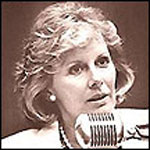
CII’s Kee MacFarlane was now telling the world about her theories of widespread child-molestation rings. Appearing at a congressional hearing, MacFarlane cited a current rhyme children were telling each other, “Naked Movie Stars”, as concrete evidence of the child abuse conspiracy. The people in this organization, she said, had great legal and financial resources — in part, from selling children for sex — and were clever enough to conceal themselves.
National magazines and television shows joined the fray, assuming the guilt of the defendants long before trial. The McMartin Preschool was termed a “sexual house of horrors.” Television “hosts” exchanged commentary, clucking over the damage to the children and how they would never get over it. In short, irresponsible journalism reigned. It seemed that in cases that involved innocent children, such speculation was justified, no matter who it might harm.
By 1985, children had spread their accusations from the McMartin staff to neighbors, sports coaches and babysitters. But no other arrests were made. The hysteria had fed on itself, facts be damned.
During 1984, Judy Johnson disintegrated. When her husband left, she accused him of sodomizing Matthew and called the police. She also claimed she was being followed. She barricaded herself into her home, threatening those who came to help. Finally, she was forcibly removed and diagnosed with paranoid schizophrenia. She was eventually released, but Matthew was sent to live with relatives, while Judy lost herself in drunken binges.
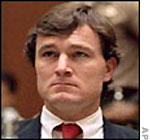
But the preliminary hearing was already underway, with numerous children testifying against the McMartin staff. Sometimes they were inconsistent, and their stories were often quite incredible. One boy talked about how Ray had taken him to a house in which he let loose lions, using them to threaten the children into obedience. Another, when asked to point to the person in a series of photos who had molested him, picked out the actor Chuck Norris, a city attorney, and four nuns in a faded photograph taken 40 years earlier. Those who tried to recant were said to be suffering from the symptoms of child abuse — fear or a repressed memory.
Defending Ray Buckey was Daniel Davis, while public defender Dean Gits represented Peggy Buckey. Both lawyers were at their wits’ end with the sort of “evidence” allowed at the hearing. But the judge brushed aside their objections.
The so-called solid medical evidence — hundreds of photographs of the anuses and vaginas of the children — were brought into evidence, but no one could quite see what the expert medical interpreter did. Even the three medical doctors for the prosecution could not agree on what they saw.
At the end of the long preliminary hearing, in January 1986, the judge charged Ray Buckey with 81 felony counts, Peggy with 27, and the others with a sundry of charges. Then the DA’s began to break ranks. Prosecutor Glenn Stevens resigned, claiming that they were putting seven innocent people through an ordeal and he wanted no further part in it. Another member of the original team, Christine Johnson, also eventually asked to be removed.
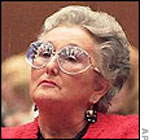
court
Some two and a half years into the case, DA Ira Reiner, Philobosian’s successor in 1984, was forced to drop charges against five of the defendants for lack of evidence. Assistant DA Lael Rubin was vehemently opposed, but Reiner felt he had no choice. There was no evidence against these defendants that would hold up in court. Reiner let the charges stand against Ray Buckey, and many observers believed it was to spare himself the embarrassment of admitting how much had been spent on an unwarranted case.
So Ray Buckey remained in jail, although Peggy, now in her 60s, was finally released on bail. But jail had changed her. She suffered from agoraphobia — a fear of venturing from one’s home.
Eventually, defense lawyers learned that certain letters that were written by Judy Johnson had been withheld. A hearing was held on prosecutorial misconduct. While the hearing unfolded, Judy Johnson was found dead in her home from complications of alcoholism.
Glenn Stevens testified in the six-week hearing about what he knew about Lael Rubin’s intentional hiding of evidence. He said that Rubin had lied about the defendants at the preliminary hearing so they would not get bail. In the end, Judge William Pounders permitted the trial to go forward. There was sufficient evidence to try Ray and Peggy.
Davis and Gits commissioned an opinion survey to support their motion for a change of venue. An astounding 97.5% of people in the area believed the defendants were guilty, one of the highest figures of prejudice ever recorded in a poll. But their motion was denied.
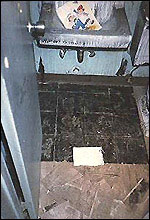
look for tunnels
By the time this case reached trial, the investigation had employed three DAs fulltime, 14 investigators from the DA’s office, 22 task force officers, two fulltime social workers, 20 part-time social workers, a fulltime detective and four part-time detectives. They had searched 21 residences, seven businesses, three churches, two airports, 37 cars, and a farm, but had come up empty-handed. They had interviewed 450 children and 150 adults and conducted lab tests on clothing and blankets, all to no avail. They had excavated the schoolyard looking for tunnels that the children had described, but found only some boxes that Ray had used on the playground for the children to crawl through.
Inexorably, the trial lurched onward. Of the 360 alleged cases of child abuse committed at the McMartin Preschool, only 11 children were presented at trial — those who had not embarrassed the prosecution during the preliminary hearing. Meanwhile, the defense was denied the opportunity to view all of the videotapes of all of the interviews. The judge ignored their claims of lack of due process.
Jury selection began in April 1987, almost four years after the first complaint by a woman now dead.
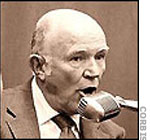
The prosecution’s cases rested on the results of the interviews at CII and on medical evidence. They had also used a snitch planted in Ray’s cell who ended up admitting he was not really credible. One doctor, William E. Gordon, testified that the photographs did show evidence of abuse. He was an “expert.” Gordon had testified in some 300 trials on the same issue. But he admitted he was not a certified pediatrician, but a professor, and had no formal education in diagnosis. It then turned out that he had been banned in another country from examining children and that some organizations had complaints registered against him. He had even discarded a videotape in one case in which a child had denied being molested. Apparently, as reporters wrote, he was a prosecutorial zealot.
Gordon’s testimony was interrupted, but was completed later in the summer. His expert insight consisted of pointing out to jury members, who could not see what he was talking about, photographs of alleged vaginal and anal penetration. He claimed there was scarring, but he was also caught in several inconsistencies from earlier testimony. He pointed out suspect “white tissue.” The tissue, it was revealed, was reflections of light on the photographs. Observers were not impressed.
Another witness, a police investigator, committed suicide the evening before he was to testify. His death was as mysterious to many as Judy Johnson’s death had been. There were rumors that he had been blackmailed.
Lack of empiricism did not only extend to the witnesses. At one point, some jury member sent a note to the judge asking for the locations of the emergency exits. They needed to know because this was the day that Nostrodamus had predicted a terrible earthquake.
The prosecution’s most important witness was Kee MacFarlane from CII. She took the stand in August 1988. Outside the courtroom, Davis pointed out to reporters that she had no credentials. She was a grant writer who had no actual training in child abuse assessment. Inside, he showed portions of her videotaped interviews with the children and she defended her techniques.
In their book, the Eberles observed that the videotapes gave evidence of Pavlovian conditioning, hypnotic trance induction, and brainwashing through exhaustion. The children always appeared to be suffering from fatigue.
On cross-examination, MacFarlane was evasive about why she said certain suggestive things to the children or why she often represented the teachers with black dolls. She denied using scare tactics and insisted that something had happened at the McMartin School. She said that she had been trained in her technique but she could offer no names for validation.
To discredit her, the defense brought in a psychiatrist. Unlike MacFarlane, he had genuine credentials, training and experience.
Dr. Michael Maloney was a physician, clinical psychologist, and professor of psychiatry at University of Southern California School of Medicine. The Eberles provide a full account of his testimony in The Abuse of Innocence, summarized here.
Dr. Maloney had evaluated hundreds of children alleged to have been abused and felt that the interviews with the children at CII were “invalid.” He had seen around 50 of the videotapes (although his testimony was limited to the videotapes involving the children who had come into court) and he felt that the process of interviewing them had so contaminated their memories of the experience, if they’d even had any, that no conclusions could be drawn. The true source of their “memories” was difficult to pinpoint with any accuracy. He had prepared a bar graph that indicated that the adults doing the interviews had done most of the talking. He was not allowed to show it to the jury, however.
Clearly the children had things to say, he observed, but were prevented from doing so. Instead, they were led into saying only what the questioners wanted them to say. Maloney called it “stage setting.” The goal should have been to get information from the child, not form the child’s memory. The interviewer’s job is to listen, but that’s not what was done in these interviews. The child was not allowed to organize his or her own history.
“The more you use an interviewer to effect that,” he said, “or provide them with information that could contaminate them, the less you can rely on anything you get out of them… In these interviews the kids were all machined through the exact same process.”
He noted the coercive questioning, and the way each child became passive and resorted to pointing or asking questions to see if they were right or wrong. The interviewers had used a set script, which hindered spontaneous revelation. It meant that there was no tailoring for the individual cognitive development of each child, and thus, one could not conclude much from what the child said.
“They are all considered as a homogenous mass,” he pointed out, “that you must treat the same way.”
He also noted that each tape began as the interview was already in process, so that no one knew what might have gone on before it started. It was also clear that the children were led into talk about sex and that they were made to believe that the games they played were considered “yucky” and that Ray was a bad man. The interviewer controlled the process completely and communicated to the child in a number of ways that this was the setup.
Maloney also felt that for some children it may have been inappropriate to start explicitly naming sexual body parts. They may not have been prepared. Such a strategy also meant that the interviewer did not learn what the child actually knew.
Even worse was the use of the sexually correct dolls, known as SAC dolls. They were introduced in silly terms, making the children laugh. “In many cases, the way it was presented was in a derogatory way, a negative way.” The dolls were also pushed on the children already unclothed, which was the improper way of introducing them. The children were to become familiar with the dolls while the dolls were clothed. The children were then to “experiment” with them. The issue of sex was forced on the children, rather than volunteered by them or even gently guided. In addition, the dolls could be used as a “rehearsal strategy,” a way to get the children to indulge in fantasy and make things up. They were being taught and prepared rather than interviewed. What they were told could then set in their memory as a true memory, when it wasn’t.
The entire context presented to the children was that something was wrong and they needed to tell the adults about it. Among the problems was that when photographs of the teachers from the school were shown to some of the children, they did not recall who those people were.
Maloney then went on to discuss that the dolls were named after teachers at the school. They were personified as people. Peggy was the fattest doll, and they made fun of her, calling her “Miss Piggy.” Sometimes, according to the film based on court records, Ray was represented as a black doll, and the black doll was then used in a derogatory manner.
Finally, there was some discussion with the children about “stuff” coming out of Ray Buckey’s penis. None of the children said that Ray had ejaculated. The social workers had suggested it. The children were even asked to say what it tasted like, as if they had been forced into oral copulation.
Maloney also discussed how the children’s stories shifted with repeated interviews. One boy who did not even know Ray Buckey — he was not at the school at the time — nonetheless made several allegations against him. When the boy could not produce the answer Macfarlane wanted, she told him he was dumb.
The interviews, Maloney said, exerted a strong negative influence and were inappropriate. He knew of no experts who would support CII’s approach. He was an impressive witness.
Even so, Judge Pounders told the defense that he had done some research himself to determine the admissibility of Maloney’s testimony. Apparently, he had not liked what he’d heard. Yet many people wondered why Pounders did not feel the same about MacFarlane, an unlicensed social worker with no real training. At least the doctor had genuine credentials. Pounders also excluded another defense psychologist, on the grounds that the testimony would be time-consuming. The defense considered this a crucial setback.
However, Davis and Gits did manage to call Sandra Krebs, one of the social workers MacFarlane taught to interview the children. She admitted that her only background was some courses in college and some conferences. She said that she had interpreted long pauses from the children as signs of fear, and that most of her evaluations were speculative and highly subjective. Although she had admitted during the preliminary hearing that she had told parents their child or children had been molested, she now denied doing so. She, too, had used a naked black doll to represent one of the teachers — notably, Peggy.
It’s interesting to note that all of the children interviewed at CII initially denied any experience or knowledge of abuse. All of them, except for one who told such outlandish and strange stories that no one wanted to deal with her, let alone bring her to court. Those nine who testified (two had backed out or were held back) were considered the “strongest” witnesses for the prosecution, and even they had problems keeping their stories straight.
More striking was the fact, as reported by the Eberles, that since the McMartin case had begun, CII had received millions of dollars in grant money from government agencies and private donors. Kee MacFarlane, assisting the investigation, was the agency grant writer.
While the McMartin trial droned on, child sexual abuse fever gripped the nation. Parents began to wonder about daycare workers. Some of the professionals in the McMartin case even suggested that there was a nationwide conspiracy of daycare workers who were all engaged in abusing children. No one knew who they were and parents could not be too careful. It seemed that nearly everyone with a child in a preschool was afraid.
In 1985, according to Mary Pride in The Child Abuse Industry, one million people were falsely accused of child abuse. Every little gesture became suspicious and teachers who made physical contact were questioned, sometimes fired, and even imprisoned. Conferences devoted to child abuse received more papers on the “reality” of satanic ritual abuse. Some of them even claimed that a large percentage of cases of child abuse were, in fact, part of satanic conspiracies.
Paul Eberle told columnist Paul Carpenter, of Allentown, PA’s Morning Call that almost all of the accusing families in the McMartin case were practicing Catholics. Their local church held rallies where placards intoned, “Ray must die.” The church, Eberle said, had accommodated a lynch mob.
Very little was known about pedophilia, but grown men like Ray were suspect. Why would a man want to work in a preschool with young children unless he had some sexual interest in them? Could any sexually normal man really have such low-level aspirations? He had to be there for more nefarious reasons. There was widespread agreement on that point, even by people who knew almost nothing about the case.
Elaine Showalter’s Hystories: Hysterical Epidemics and Modern Culture, points out that anyone is susceptible to hysteria. When anxiety mounts on a cultural scale, collective narratives — which she calls “hystories” — begin to emerge and build. Whole masses of people develop common physical symptoms that she believes are emotional in origin. The form these symptoms take depends on what kinds of behavior are acceptable within a given culture — and then promoted by journalists, therapists, physicians, drug companies, or whoever else might benefit from them.
Showalter places chronic fatigue and gulf war syndromes in the same category as alien abduction fantasies, multiple personality disorder and satanic ritual abuse. They are culturally fashionable narratives that blame an external source. Not that she means this in a disparaging way. Recent work in psychoneurology indicates that mind and body are inextricably linked. Emotional states such as trauma or depression can be physically encoded into our cells. That is, the symptoms are real. They just aren’t attributable to aliens, abusers, chemicals, or viruses.
The problem, as Showalter explains it, is that we fail to respect psychogenic illnesses. Rather than viewing the mind as being just as forceful and relevant in our illnesses as these other factors, we dismiss or diminish its status: Hysterics are overly feminine, weak, flighty, or just plain nuts.
When that happens, we seek physical reasons that “firmly place the cause and cure outside the self.” As a consequence, we avoid the real problem and become vulnerable to its spread — made more potent via talk shows, self-help books, medical or psychological gurus, ill-informed movies, journalists who uncritically embrace unsupported rumors, and technology like the Internet that spreads them faster and wider.
It’s striking that each of these seemingly diverse narratives, according to Showalter, exhibit similar plot lines. “It starts with a group of people who share common ailments,” she says. “Then there are doctors who identify the first cluster of sufferers. They give it a name and a rationale, and publicize the symptoms. They then become a center for pilgrimages, especially if they open a clinic. They may say that they aren’t being allowed to research it properly, which makes them victims of a conspiracy. Others come to study with them, and as the patients accumulate, they form into self-help groups, and self-help groups since AIDS have become political groups. For some people, the illness becomes their life, their identity. They have journals. They have political lobbies. They may become very powerful.”
As people join these groups, they gain further exposure to the accepted beliefs. “Statistically, the longer they stay in the groups,” says Showalter, “the less likely it is that they will be cured.” They also grow more sensitized to those who contradict them — people who then become The Enemy. “There’s always an enemy or a conspiracy against them.”
While Showalter limits her studies to these maladies, others have seen potentially larger applications. Jon Katz, for example, writes in Wired, that Showalter’s analysis of these psychosomatic illnesses is just as relevant to media’s coverage of the Internet. Whenever something negative occurs in cyberspace, such as an online romance ending in murder or a child getting access to pornography, the media describe these rare events as “epidemic disorders in need of urgent recognition, redress, and attention.” Irresponsible information becomes contagious, promoting paranoia and the sense of pervasive victimization.
How can these “epidemics” gain such force? Showalter won’t go so far as to say that we have a cultural subconscious that stores repressive material just waiting to be triggered. Nor does she think fads like Beanie Babies are on the same level as psychogenic epidemics: one is short-lived, while the other builds into a virtual movement. Yet there do seem to be similarities in the way that some things create an overwhelming desire to belong to a group that exhibits certain behaviors, has access to “secret knowledge,” or owns something deemed precious, while others simply fail — try as they might — to get the desired effect. Showalter points out that something like hypoglycemia, which was once a fashionable diagnosis, never got organized, so it did not develop into a social epidemic the way things like multiple personality disorder has.
As the trial lumbered along for 28 months, several jurors complained that they could lose their jobs if things did not conclude shortly, so Judge Pounder struck six more witnesses from the defense’s list. The possibility of a mistrial loomed as only one alternate juror of the six who began the trial remained. By this time, the legal expenses to the state were approaching $15 million.
Finally in January 1990, both sides rested their cases and it went to the jury. They hung on 13 counts, but acquitted the defendants on the rest. The unresolved counts all centered on Ray. That meant a second trial, which began five months later. That jury also ended in deadlock, and the charges were dismissed.
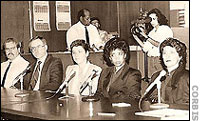
In the end, 360 children were diagnosed at CII as having been abused at the McMartin preschool. It was the longest and most expensive legal proceeding in American history. Ray, with no evidence against him, remained in jail five years before he was finally released on bail. After seven years from the first accusations and endless heartache to the defendants, no one was convicted. It had cost the community almost $16 million and had cost many parents their peace of mind.
Some were not happy with the results and said they would organize and press the same charges again. A few of the children went on talk shows to claim that they had told the truth, and cases were brought against other daycare workers around the country that did end in convictions. It took a while for the stir to die down.
Now that such an event has happened, can we learn from it? Could it ever happen again? It seems that we did not learn from the Salem fiasco, where there was also no evidence and where many innocent citizens not only went to prison but twenty were executed. Human nature is what it is, and if Showalter is to be believed, we seem to be vulnerable to contagious anxieties that drive us to do things we might otherwise believe we’re not capable of.
But apparently we are.
In the wave of hysteria during the 1980s, hundreds of people were arrested on the suspicion of child abuse, especially people working in daycare centers. In part, this was thanks to the therapists and investigators involved in the McMartin Preschool fiasco who announced on national talk shows and to Congress that a network of well-financed satanic ritual abusers was operating secretly across the country. Despite the fact that children were being coached, even coerced, to describe outrageous stories for which there was no corroborating physical evidence, and some of their tales bordered on the preposterous, suspected adults were convicted based on this testimony alone.
As the hysteria died down during the 90s, order was restored and some of the accused managed to repair their broken lives, but not all. A few people went to prison and there they have remained until recently.
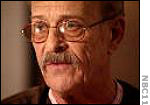
One such man, John Stoll, has been locked up for 20 years. He was one of three men and a woman accused of molesting children at group sex parties in Bakersfield, California.
In that area, 46 people were arrested, alleged to be participating in from four to eight separate child abuse rings. Thirty were convicted, but 22 of them had their convictions reversed for reasons ranging from technicalities to prosecutorial misconduct. Some who were vindicated settled successful lawsuits against the county to the tune of several million dollars.
Of the eight remaining people, one died in prison and the rest served their time. Some were later identified as victims of false allegations, but others were not, despite the fact that a 1986 attorney general’s review of many of these cases criticized poorly trained personnel and flawed interrogation techniques. Among those singled out, say news reports, were lead investigators on John Stoll’s case.
It was Stoll’s contention that his former wife started the allegations as payback over their bitter custody dispute for their son, Jed. While Jed steadfastly maintained that his father abused him, and still does, he cannot offer actual details or names of other children that he allegedly witnessed being abused. He was apparently unavailable for comment to news sources.
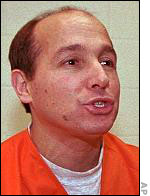
According to the Associated Press reports in February 2004, most of the six witnesses against Stoll have come forward to admit that they had lied about him. They were children at the time, never examined by physicians. Now they are adults. When contacted by investigators for the Innocence Project of the California Western School of Law, they admitted their deception. Four of them said they had been manipulated by investigators who nagged them during long interviews until, weary, they fabricated tales that seemed to take the heat off. When questioned recently, they affirmed that there had been no such incidents. A fifth person, who had been in years of therapy for troubles stemming from his alleged abuse, said he simply had no memory of the events either way.
To reporters, former accuser Eddie Sampley said, “I can’t fathom what the authorities could have done, what finally pushed me over the edge. I feel this void inside, like a part of my life has been taken away.” He believed the police had exploited him to get what they wanted, victimizing him and the other children as much as the adults who were convicted. Recanting his prior testimony was a relief, albeit one mixed with deep remorse as he acknowledged the damage he unwittingly did to Stoll’s life.
Stoll, now 60, faces release next year but not vindication, which would categorize him as a sex offender for life and send him to state hospitals. He insisted in an interview that he wants to clear his name. His attorney from the Innocence Project says that absent any evidence, the recanted testimony should be sufficient to prove his factual innocence. His legal pursuit of this should be settled in May.
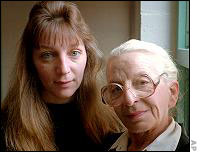
In another case covered in Boston area papers, prosecutors in Boston announced that they would not extend the imprisonment of a man convicted in 1986 of molesting eight children (some sources say nine). Gerald Amirault, 50, was working at his family’s Fells Acre daycare center in Malden, MA, with his mother, Violet Amirault, and sister, Cheryl Amirault LeFavre. They supervised as many as 70 children at a time and had been in business for 18 years without a complaint.
Then one day in April 1984, Gerald, who ran errands and did maintenance for the school, was asked to change the pants of a boy who had wet himself, and that was the source of the initial allegations of abuse. When the boy was later discovered in sex play with his cousin, according to an Internet site (users.rcn.com/kyp/amirault.html), he offered accusations against Gerald.
That triggered a wide scale investigation in which, similar to the McMartin case, the police told parents of children at the school to question their kids. They brought in social workers, therapists, prosecutors, and a nurse to assist. Also similar to the McMartin case, the questions were leading and coercive, and anatomically correct dolls were improperly used. No child made a spontaneous confession but parents were told that they had probably been abused anyway. As one source put it, yes meant yes and no meant yes, so any response was indicative of abuse.
An experiment done in 1990 using the same techniques in the Amirault investigation drew forth false confessions from 75% of three-year-olds and 50% of a group of children ages four to six. The possible implantation of false memories has also been demonstrated in subsequent research.
But no one knew that during the 1986 trial. In fact, the prosecutors against the Amiraults consulted with the McMartin prosecution team for ideas. Eventually the children produced accusations against the Amirault family and three teachers. They also accused an imaginary man and even the nurse who had been questioning them. Only the Amiraults were charged.
The prosecution maintained that the Amiraults were producing and selling child pornography. However no pornographic photos were found. The children said that they had rehearsed their stories, and in court they told about being threatened by robots, killing dogs, being slashed with knives, and swallowing frogs.
All three members of the family were convicted. Gerald received a sentence of 30 to 40 years in prison, while in a separate trial the two women received sentences of eight to 20 years.
Amirault’s sister and mother won temporary freedom in 1995 on appeal, and two years later Violet Amirault died from stomach cancer. Then Cheryl’s conviction was reinstated in 1999, but a judge ruled that the eight years she had served was sufficient. That gave impetus to the movement to free Gerald Amirault, saying that his extended prison term was unfair. He was granted parole in October 2003 after 19 years served and was released in 2004, but several former witnesses, now adults, claimed that their stories were true. They and their parents were disappointed to learn about his release.
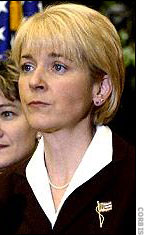
District Attorney Martha Coakley indicated that she lacked sufficient evidence to admit Amirault as a sexually dangerous person, but noted that after release his behavior will still be supervised under strict controls.
Carpenter, Paul. “Keep McMartin Case in Mind as Hysteria Looms,” The Morning Call, May 19, 2002.
Earl, John. “The Dark Truth about the Dark Tunnels of McMartin,” Issues in Child Abuse Accusations, Vol. 7, #2, 1995.
Eberle, Paul and Shirley. The Abuse of Innocence: The McMartin Preschool Trial,” New York: Prometheus, 1993.
Indictment: The McMartin Trial, Mali Films, directed by Oliver Stone, 1995.
Nathan, Debbie & Michael Snedecker, Satan’s Silence: Ritual Abuse and the Making of A Modern American Witch Hunt. New York: Basic Books, 1995.
Pride, Mary. The Child Abuse Industry. Westchester, IL: Crossway Publishers, 1986.
Showalter, Elaine. Hystories: Hysterical Epidemics and Modern Media. New York: Columbia University Press, 1997.
“The Underground Tunnels of McMartin Preschool,” www.religioustolerance.org
Wrightsman, Lawrence. Forensic Psychology. Belmont, CA, 2001.