
Mary Kay Letourneau Facts Of The Case – Full Story — Love in a Van — Crime Library
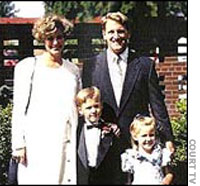
It was a late June afternoon and Steve Letourneau — handsome, blond-haired, ruggedly built — headed home from his job as an airline baggage handler. He was in a bad mood. He worked hard, as did his pretty, thin, schoolteacher wife, Mary Kay, but they could not keep up with the bills. The couple fought frequently, almost constantly, over money. Other problems added to their marital tension. Their Des Moines, Washington (the “s” in the “Des” is pronounced) home was always cluttered. Steve knew that 34-year-old Mary Kay suspected, rightly, that he had been cheating on her. But he had no intention of giving up the extramarital affairs that gave him both solace and excitement.
On top of all that, Mary Kay always had an ex-student from her sixth grade class over at the house. It was summer and school was out. Why should that boy, 13-year-old Vili Fualaau, always be hanging around? It seemed like his wife wanted to informally adopt that kid. She had more than enough responsibilities as it was. He and Mary Kay had four children of their own. Moreover, Steve was tired of Mary Kay constantly singing that Samoan-American boy’s praises. Maybe he was a good artist for a kid his age but so what? That didn’t make him a genius. Like most people, Steve thought Vili was a nice enough boy but he was just a boy, gangly, awkward, sometimes shy and other times self-consciously daring. Mary Kay did not seem to want to put her foot down around her former student the way an adult should. She even allowed him to smoke cigarettes in their house.
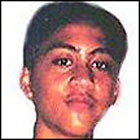
younger
Making his way through the chaotic rooms, Steve found Vili and one of his own children working on an art project. The dark-complexioned, curly haired boy was clad as he usually was in the popular “gangster” style of baggy shirt and pants. Steve slammed down a box full of bills and papers on the kitchen table. “The school year’s over!” he shouted at his wife. “Get busy working on this.”
As Steve shouted, Vili made a quick exit. Mary Kay jumped into the family minivan and took off after him. She found the teen walking along a nearby marina. She slowed the vehicle down and stopped. Vili got in. A distressed Mary Kay apologized to the boy for her husband’s rudeness. Then she started crying.
Vili felt a variety of strong emotions churning inside of him. Despite a 21-year age difference, he had long felt a great closeness to Mary Kay. Vili would later claim that he had started puberty at 10 so it is perhaps not shocking that he sexually fantasized about this woman who singled him out for praise and shared so many of her most intimate thoughts with him. For a long time he had believed, or at least hoped, that she shared his feelings. In a display of adolescent bravado, he had even bet a friend $20 that he “could sleep with the teach.” Some reports say that Vili was a gang member who always carried a knife. He was eager to grow up.
As he comforted the weeping woman, holding her, he felt emboldened to go farther. He kissed her. To his joy, she returned the kiss. The two were embracing, touching each other intimately, and kissing deep and passionately.
Flashing lights interrupted the scene. A night watchman thought the parked car might be suspicious and called police.
“What is going on here?” an officer asked.

Mary Kay gave her full name and said she was a schoolteacher. She was watching Vili overnight because his mother worked a late shift. The boy appeared to be hiding under a sleeping bag.
“How old is the boy?” she was asked. “Eighteen,” she replied.
The police were perplexed. According to a book on the case, If Loving You Is Wrong by Gregg Olsen, an officer “wondered if she was being held captive by the boy or perhaps he was being held against his will.”
They prodded Vili. They could tell by looking at him that he could not be 18. He had neither a driver’s license nor a state ID card.
“How old are you?”
“Fourteen,” was the reply.
The police took the pair down to the station. Officers phoned Vili’s mother, Soona Fualaau. The attractive, plump woman, who wore her black hair in waves cascading down her shoulders, told the police that she trusted Letourneau. “If he’s with her,” Soona said, “It’s OK.”
The two were free to leave.
A few days later, 34-year-old Mary Kay Letourneau and 13-year-old Vili Fualaau first had sexual intercourse. Vili would later claim they had sex some 300 to 400 times. The scandal would shock much of the country. No one would be more stunned than Mary Kay’s friends and family. They had always seen her as a kind of “All American Girl” (a phrase that would become part of the title of a made-for-TV movie about the case). What they didn’t know was Mary Kay was in some ways repeating a sordid chapter in her family history.
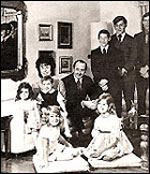
Mary Katherine Schmitz was born on January 30, 1962. She was the fourth child and first daughter of college professor John Schmitz and homemaker Mary Schmitz, both devout Roman Catholics. Her dark-haired father was so thin he was almost bony. But he was handsome, and with his mustache he looked like movie actor David Niven. Her mother also had black hair and was pretty and slim.
At the time of Mary Katherine’s birth, the Schmitz family lived in sunny southern California in a one-story house in the Orange County community of Tustin. The family attended mass regularly and Mary called their station wagon “our Catholic Cadillac.” John enjoyed children and possessed a good sense of humor as well as a flair for the dramatic. He took a part-time job at Disneyland as a “Cobblestone Cop.”
Soon after Mary Katherine’s birth, her family began calling her “Mary Kay.” John nicknamed her “Cake.” No one else ever called her that. It was the special name from her Daddy. Cake was a daddy’s girl, always closer to him than to her mother. “My first memories of my father,” Mary Kay would later recall, “were of him always lying on the couch with a book. And he always had his pipe.” The pretty little brown-eyed blonde girl liked to sit on the other end of the couch.
When Mary Kay was two years old, John began a political career. He ran for a seat in the state legislature. He was very conservative, as were most people in his district, and was a member of the John Birch Society. At campaign appearances, John and Mary made a striking couple.
John won easily. The family moved to Sacramento.
The family continued to grow. Mary Kay’s sister Terry was born in 1965. Her sister Elizabeth was born, then baby brother Philip. When Mary Kay was 7, she had a sexual encounter with one of her older brothers. She saw his penis, and he began fondling her. Later, Mary Kay would downplay the importance of these incidents. “I was not forced into anything,” she recalled, “but when I decided it was wrong, I said no. And guess what? It stopped.”
In 1970, John ran for a seat in the U.S. House of Representatives and won. The family moved to Washington, D. C. John sometimes took his lovely “Cake” to Congress with him and proudly showed off the well-behaved and bubbly young girl.
Reporters found that John Schmitz spoke his mind without reservation and often without concern for whose feelings he might hurt. He was unabashedly homophobic. “They like to be called gays,” he said. “I prefer to call them queers.”
His wife was getting increasingly involved in conservative political causes. She campaigned against the Equal Rights Amendment and became known as the “West Coast Phyllis Schlafly.” When the ERA went down to defeat, Mary put up a cardboard tombstone for it on her lawn.
John Schmitz became the 1972 Presidential candidate of the extremely right-wing American Independent Party. No one expected him to win or even to garner as many votes as its previous standard bearer, the far better known Governor George Wallace. However, about one million Americans voted for him, adding up to about 1% of the popular vote.
After this loss, the family moved back to California but not to Tustin or Sacramento. They bought a far larger and more impressive home, complete with a sparkling swimming pool, in the exclusive Spyglass Hill area of Corona del Mar.
On August 11, 1973, the family and some friends had a little get together in their backyard. Mary Kay, then 11, was supposed to be watching her 3-year-old brother Philip.
Suddenly Mary Kay asked, “Where’s Philip?” and a panicked family began looking for the baby. They found him unconscious at the bottom of the pool. He was dead.
A police officer who was first on the scene would recall that Mary Schmitz kept repeating, “I only left him for a minute. Just a minute.”
When asked about this tragedy, Mary Kay would say that it was just an accident and that “nobody” was blamed for Philip’s death. Others close to her would say that Mary felt her parents blamed her.
As she grew up, Mary Kay turned into a very attractive teenager. She made the cheerleading squad at her Roman Catholic high school. Schoolwork was not terribly important to Mary Kay so she tended to let her grades slide. Her best friend was Michelle Rheinhart (now Rheinhart-Jarvis), another pretty, high-spirited blonde who enjoyed a good time. They were drawn together because they both liked parties and boys and traveling.
According to Michelle, the friends had a private saying of their own, “It just doesn’t matter,” that they would chant when throwing caution to the wind. They drove to Mexico for the weekend and went to frat parties at a nearby university.
While her oldest daughter was enjoying her youth, Mary Schmitz got a position on a television political commentary program called Free For All, in which she would debate with several other people on various issues of the day. Mary made a good impression as she spoke out for her strongly conservative viewpoint. Always well groomed, she came off as intelligent, aggressive, logical, and articulate.
On one Free For All, Mary Schmitz made an impassioned plea for the importance of marriage and the family on the program – just a few weeks before a sex scandal involving her husband broke.
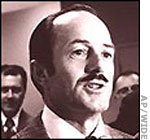
It turned out that John Schmitz, champion of traditional morals and family values, had been having a longtime affair with a former student of his named Carla Stuckle. What’s more, he had fathered two out-of-wedlock children with her.
The second family of John Schmitz became public knowledge because Carla was suspected of having abused or neglected her first child by John, a boy she had named John George.
Carla Stuckle, then 43, phoned her adult daughter from a previous marriage, Carla Larson, to tell her of some distressing news about John George, then an infant. Stuckle wept as she told her that the little boy’s penis had been injured and would require surgery. “I took him to the doctor,” Carla Stuckle sobbed. “He said the baby has a hair wrapped around his penis and it had been there for some time.”
“Oh, my God!” Larson shouted. “Don’t you ever bathe him? How could this have happened?”
“I don’t know,” said her mother.
Later, Stuckle called her daughter with more bad news. The surgery had gone well and John George would suffer no lasting damage. But Stuckle wasn’t being allowed to take the baby home.
Bits of hair or other fibers often get trapped in babies’ diapers and can cause infections and other ills. But at least one physician treating John George had become convinced that the boy had had a hair deliberately wrapped around the organ. He would recall it as being “tied in a square knot.”
Child abuse investigators went to Stuckle’s home. Still caring for her second child by Schmitz, a daughter named Eugenie, the woman appeared worn and frazzled. She had diabetes and worked long hours in two different jobs to support her youngsters in addition to caring for them. She answered all the questions that investigators put to her until they started asking about the children’s father. She did not want to drag him into this.
“Until we find out and get this thing all done,” a detective told her, “you’re going to jail. Chances are you’ll never see your son again. . . .”
“Well, it’s John Schmitz,” she said.
“John Schmitz,” repeated the flabbergasted officer.
“John Schmitz, the state senator,” she calmly stated.
Detectives thought the woman was almost certainly lying. Perhaps she wanted to make trouble for the outspokenly pro-family politician. Maybe she was deluded. But they had to check it out.
A detective took the politician aside at a John Birch Society meeting. “Well, is it your son?” the officer asked, after explaining why he was there.
“Yes, he is,” Schmitz replied, “but I do not and will not support him financially. It is her responsibility to take care of him.” He said he knew nothing of the hair on the boy’s penis or how it happened.
Soon the second family of John Schmitz made headlines throughout the country. His political career was over. So was his wife’s stint as a political commentator. However, their marriage survived. The couple separated for a period, then reconciled.
Investigators concluded there was not enough evidence to charge Stuckle with child abuse or neglect. John George was returned to her care. In 1994, Stuckle died from complications from the diabetes that had long ravaged her. John George was 13, his sister, 11. John Schmitz had no desire for custody of his two youngest children. The famous psychic Jeanne Dixon, who was a close friend of Mary Schmitz, took them in. When Dixon died in 1997, the children became wards of the state and went to an orphanage.
In the shadow of this scandal, Mary Kay took her father’s side. She told friends of hers that her mother was a cold person and denied her father the affection he needed and deserved as a husband. When talking about it, she would comment, “She drove him to it.”
She did not allow herself to become obsessed by the scandal swirling around her beloved father. She had her own life to live and she was enjoying it as a college student at Arizona State University. There she continued her party-animal ways.
Never at a loss for dates, she met Steve Letourneau and the two of them had an immediate, strong, physical attraction. He was a gregarious sort and they had fun together. Michelle would recall, “You know, there’s Mr. Right and Mr. Right Now. He was definitely Mr. Right Now.”
Steve was one of two children of Dick and Sharon Letourneau. The other was his sister, Stacey, who was four years his junior. As a small child, Steve had moved from the state of Washington to Anchorage, Alaska. His father was transferred there by the food products company for which he worked in sales.
Shortly after the move, the Letourneaus divorced. Steve was 13 and Stacey 9 at the time. Both youngsters stayed with their father by their own choice. Sharon lived nearby and was always an active mother. However, Dad was always the main guiding force in the lives of the Letourneau kids.
In 1985, Mary Kay discovered she was pregnant. Like her parents, she strongly opposed abortion and would not consider it as an option. When she was in the early stages, before she had a chance to confide in her mother and father and was still fretting about whether to marry Steve or try to raise the baby as a single mother, she was in class and felt herself start to bleed.
She left the class. The flow worsened and she went to the hospital. She was having a miscarriage. From the hospital, she called her mother who was then living in Washington, D. C.
Mary Schmitz talked to the doctors and told them not to do a dilation and curettage or D & C. After all, Mary Kay could be pregnant with more than one embryo and that procedure could destroy a potentially healthy one.
It turned out that Mary Schmitz’s speculation was true. Mary Kay had been pregnant with twins and would still be pregnant after miscarrying one.
She consulted her parents about what to do. They urged her to marry Steve. Mary Kay did not believe she was in love with Steve. Although she enjoyed his company, he did not seem especially mature in her eyes. She also believed he was not as smart as she would have liked. However, he was willing to marry the woman he had impregnated.
Despite her doubts, the couple wed. They also dropped out of college. A few months later, she gave birth to their first child, Steven, Jr. The couple moved to Anchorage, Alaska, Steve’s hometown, where he got a job as a baggage handler for Alaska Airlines. Their marriage was troubled right from the start. Financial problems were constant. They often simply could not make ends meet and Mary Kay sometimes begged her parents for money. Steve did not take his marriage vows seriously. He thrilled to extramarital affairs, often making his wife jealous and neglecting her emotional needs.
A year later, Steve was transferred to Seattle, and the family moved. Their second child, Mary Claire, was born. Two more children followed. Mary Kay cared for her family during the day and took courses at Seattle University during the evenings. She wanted a degree so she could be a teacher.
Her greatest gift was her ability with children. She liked them and they liked her. She had patience with them. She loved being a mother and wanted to instruct other people’s youngsters. According to Gregg Olsen, she seemed to relish the experience of pregnancy itself, such as the maternity outfits and the comments about her big stomach.
In 1989, she graduated from Seattle University. That fall she got a job teaching the second grade at the Shorewood Elementary School in Burien, a Seattle suburb.
Kids at the elementary school liked Mrs. Letourneau and wanted to get into her class. The pretty, energetic, soft-spoken, nicely-dressed teacher radiated caring and interest in children. She had an instant rapport with youngsters and knew how to nurture them. “Before students left,” she said, “I made sure I gave them a choice of a high-five, handshake, or a hug. H.H.H. I got it from a teacher at Seattle U. and I did it every day with every student since my first second-grade class. It was a way of touching base, ensuring contact.”
Colleagues considered her a good instructor. However, she always had a problem disciplining her charges. She did not seem to want to set down rules and, as a result, a certain amount of chaos often ensued in her classroom.
Like so many other women, Mary Kay struggled to meet the demands of her family while holding down a job outside the home. She was chronically late to work and other appointments. When asked about this, she said that Steve wanted the kids kept up until he got home so she often had little time to prepare lesson plans unless she herself stayed up late at night. The result was that she had punctuality problems the next day.
The Letourneau marriage was in increasing trouble. The Letourneaus fought frequently over money as well as Steve’s infidelities. Mary Kay did her best to keep up appearances, outfitting herself and her growing young children in good clothes even when the family had their phone cut off and fell behind on many bills.
As a teacher, Mary Kay often took a special interest in children she considered especially gifted. A boy in her second grade class was talented in art and Mary Kay made an extra effort to encourage him to develop this talent. That child, whose name would someday be famously linked to hers, was Vili Fualaau. His father was in prison for armed robbery and his mother, Soona Fualaau, was working in a bakery as she struggled to support her family. The Fualaau father was the type of man who bragged that he had fathered 18 children by different women.
The Fualaau family lived in an impoverished area of Des Moines, Washington called White Center. Olsen wrote that, “The name is a big joke among Seattleites who don’t live there. Toss a rock, they say, and you couldn’t hit a white person if your life depended on it.” That is not quite accurate. The area is home to a lot of Russian immigrants along with Cambodians, Samoans, and African-Americans. The depressed, rundown area is also nicknamed Rat City for its rodent infestations.
In 1995, Mary Kay had a miscarriage. Later that year she found out that her father had terminal cancer. Mary Kay tried to turn to Steve for comfort. He shrugged it off. Mary Kay was devastated by his callousness. John’s cancer went into remission. Mary Kay was happy for her father even as she continued to be disappointed by her husband and he by her.
Also in 1995, she got a promotion at Shorewood Elementary School. She was assigned to teach both fifth and sixth graders. Students loved her and badly wanted to get into her class. The principal would eventually issue an evaluation stating, “Mary Letourneau is not only a gift to Shorewood Elementary School, but a gift to the entire Highline School District.”
One of the students in her class was familiar to her. He was Vili Fualaau, then 12 years old, whom she had met and been impressed by when he was a second grader. Vili was one of a handful of students who would become known as this teacher’s pets.
Increasingly, she focused specifically on Vili. Steve Letourneau later said, “I guess she saw the opportunity to kind of nurture him and I thought that was all it was.” By the time the school year ended in April 1996, other teachers were perplexed by the closeness between teacher and student. Some commented that their interactions were less like those of an adult with an elementary student than that of two adolescents flirting.
Over the summer, Mary Kay and Vili continued spending much time together. They took classes together at the Highline Community College and at a Seattle art store. Mary Kay persuaded her husband to let Vili accompany the family on a trip to Alaska.
Vili and his older brother Perry were often at the Letourneau house. Neighbors were disturbed by reports that Vili and Perry were smoking and drinking there and Mary Kay was permitting it.
Steve Letourneau was upset that the Fualaau boys were spending so much time at his house. His wife had more than enough to do without catering to those kids. Their house was a mess and their finances were a wreck so why were these kids, especially Vili, getting so much of his wife’s concern and attention?
While most people looked at Vili and saw the kid as a kid, Mary Kay apparently saw him as an adult in a boy’s body. She would say, “He dominated me in the most masculine way that any man, any leader, could do. I trusted him and believed in him and in our future.” Others would wonder about the psychological maturity of a 34-year-old woman who was “dominated” by someone barely in his teens.

In October 1996, an excited Mary Kay phoned her friend Michele Rheinhart-Jarvis to tell her that she was in love. According to If Loving You Is Wrong, “She practically gushed into the phone, spewing out adjectives and descriptions of the most wonderful person in the world. He was the person that she had been searching for her entire life… She’d found the perfect love. There hadn’t been any sex, she claimed, but they were considering it.”
Mary Kay said, “We talk about everything. He’s my soul mate… “
A few weeks later, Michele got another phone call from Mary Kay.
“I’m pregnant,” the teacher and mother of four revealed, “and it’s not Steve’s.” She wanted Steve to think he might be the father while she was pregnant, Mary Kay confided, so she had lured him into making love with her. However, she did not believe the deception could last after the birth.
Why?
“Because it’s going to have black hair and dark skin,” Mary Kay said.
Apparently Steve soon realized the truth. He swore some of his relatives to secrecy but told them he believed his wife was “pregnant by that 13-year-old.”
It was only a few weeks into his wife’s fifth pregnancy that he began hitting her. He would frequently shout at her, often in front of their children. She would later claim that he once repeatedly punched her in the stomach to try to cause a miscarriage of what he called the “nigger baby.” When somewhat calmer, he urged her to get an abortion. Mary Kay claimed that her own mother, staunch pro-lifer Mary Schmitz, also advised terminating the pregnancy.
On February 25, 1997, a cousin of Steve Letourneau made an anonymous phone call, first to Child Protective Services and then to the Highline School District to report that Mary Kay had had sex with a 13-year-old. Child Protective Services forwarded the report to the police.
Vili was now a seventh-grader attending Cascade Middle School. The day after the phone tip, a detective questioned him there. As quoted in If Loving You is Wrong, the policewoman wrote in her report: “I asked him what kind of relationship it was. He was very quiet and did not say anything at that time. I asked him if it was a boyfriend-girlfriend type relationship. He said it was. I asked him if it went any further than that. Vili said they had sex.” However, he told the officer it had only been about four or five times. Later, he told others he downplayed the amount of sex for fear of sending Mary Kay to prison for life.
That same day, an obviously pregnant Mary Kay was called out of a teacher’s meeting and placed under arrest for statutory rape. She broke down in the police interrogation room, weeping frequently.
TV and newspapers were filled with the story of the teacher and the 13-year-old. Like her father before her, Mary Kay was at the center of a sex scandal that would rip her family apart. Also like John Schmitz, Mary Kay was having a child with someone who had formerly been her student.
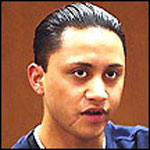
Some were concerned that Mary Kay might have had sex with boys beside Vili. Investigators quickly concluded that she had not touched any other child in any inappropriate way and that there had been no incest with her own children. Crime writer Ann Rule has called Mary Kay Letourneau “the Humbert Humbert of the female sex.” That is an apt description. Like her famous fictional counterpart becoming obsessed with the off-limits because underage Lolita, Mary Kay was only entranced by one youngster.
Later, released on bail, Mary Kay went home to an empty house. Steve was gone and so were her children. Her mother, Mary Schmitz, phoned to tell her that her four children had been taken in by relatives.
When the case broke, Vili maintained that he was not the “victim” he is routinely called and was not traumatized by anything that happened with Mary Kay. His mother, who disapproves of their sexual relationship, also said her son is no victim and thought the case should never have been prosecuted. However, some children definitely were traumatized by the Letourneau case. Among them were Mary Kay’s four children who were suddenly ripped away from their mother and who heard her described as a “child rapist.” Other youngsters upset by the matter were those who had been in her class. They lost the teacher they adored and were confused by hearing at least some of the tawdry facts of her life.
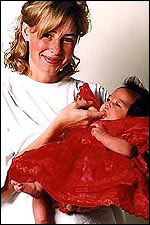
daughter Audrey Fualaau
Mary Kay underwent a series of court-ordered psychiatric examinations. Dr. Julia Moore found that Mary Kay had extreme mood swings and diagnosed her as suffering from bipolar disorder (formerly called manic-depression). The doctor prescribed mood-stabilizing drugs and psychotherapy.
In May 1997, Mary Kay gave birth to her fifth child. It was a daughter and Mary Kay named her Audrey Lokelani Fualaau. She was named Audrey after an aunt of Mary Kay’s; “Lokelani” is a Samoan name meaning “rose of heaven.”
With her husband and first four children gone, her career permanently derailed, and facing the possibility of a lengthy prison term, Mary Kay nevertheless appeared to forget her many troubles in her joy over her newborn. Defying the court, Mary Kay allowed Vili to spend much time at her house. The 14-year-old father changed his baby daughter’s diapers and heated her formula.
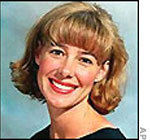
The case of Mary Kay Letourneau and her 13-year-old lover focused attention on questions of sexism, gender bias, and biological gender differences. Many observers thought the elementary school teacher was getting far more public sympathy than a man would who committed a similar offense. Her insistence that she did not deserve punishment for a sex act motivated by love grated on the sensibilities of those who believed a man who made such an excuse would be laughed at.
On the other hand, some pointed out that the case is far different from that of an adult man having sex with a 13-year-old girl in one very vital respect. Vili did not get pregnant and go through birth and never had any possibility of doing so. Mary Kay did. Regardless of age differences or anything else, the female alone bears the child and the physical and psychological costs of pregnancy itself. As a woman who knew the principals in the case commented, “A 13-year-old girl getting pregnant is a heck of a lot different physically than a 13-year-old boy getting someone else pregnant.”
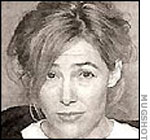
Another vital, biologically imposed distinction lies in the construction of male and female genitalia and how that is expressed in the act of sexual intercourse. The female does not have to be aroused in order to engage in sexual intercourse; the male does. California’s statutory rape law defines the crime as “an act of sexual intercourse accomplished with a female not the wife of the perpetrator, where the female is under the age of 18 years.” The constitutionality of the statue was challenged on grounds of gender discrimination in the case of Michael M. v. Sonoma Superior Court, 450 U.S. 464 (1981). The Superior Court, then California’s state Supreme Court, and finally the U.S. Supreme Court upheld the statute as constitutional. The latter ruled that, because “one of the purposes” of the law is to “protect women from sexual intercourse and pregnancy at an age when the physical, emotional, and psychological consequences are particularly severe” and men do not get pregnant the “gender classification is not invidious, but rather realistically reflects the fact that the sexes are not similarly situated in certain circumstances.”
In the case of Mary Kay Letourneau and Vili Fualaau, both parties agree that Vili initiated and enjoyed sex with Mary Kay. But because the child rape law in Washington State is gender neutral she is legally a rapist and he a victim.
In July 1997 her lawyer worked out a deal for Mary Kay. She would plead guilty to child rape, take her medication for at least six months and serve three months in jail when she would be released on probation. After being released from the three months in jail, she would participate in a treatment program for sex offenders.
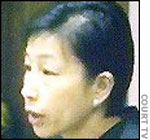
That August, Mary Kay spoke in a televised court hearing. The slender woman in powder blue and looked pretty but pale, wan, and frail. Under her blonde curls dark roots were easily visible.
Mary Kay spoke to Judge Linda Lau before sentencing.
The defendant’s voice sounded thick with shame and fear. “Your honor,” she began, “I did something that I had no right to do, morally or legally. It was wrong and I am sorry. I give you my word that it will not happen again. Please help me. Help us all.” She sniffled as she spoke and appeared to fight back tears.
Judge Lau accepted the plea bargain with two conditions. One was that Mary Kay give up custody of Audrey to Vili’s mother until her release. The second was that she never again have any contact with Vili. The defendant agreed to both conditions.

After serving three months behind bars, Mary Kay was freed in January 1998.
On February 3, 1998, Seattle police officers who were on a routine neighborhood patrol pulled up along a gray Volkswagen Fox sedan. The windows were steamed up and two people appeared to be having sex. Officers ordered the people inside to open the doors. The police instantly recognized Mary Kay Letourneau. She was arrested for violating parole. Vili Fualaau, then a high school freshman, was in the vehicle with her.
Three days later, Mary Kay was back in court. Television viewers saw an unkempt, devastated looking Mary Kay in contrast with the well-groomed woman of previous appearances.
Judge Lau came down on Mary Kay like a ton of bricks. “This case is not about a flawed system. It is about an opportunity that you foolishly squandered,” she told Mary Kay. The judge, vacating the plea bargain, sentenced Mary Kay to seven and a half years in prison, the maximum for child rape.
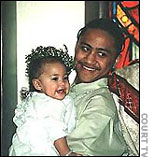
Prison officials soon found out that Mary Kay was pregnant for the second time by Vili Fualaau. They made the decision not to prosecute her for an additional charge of child rape. Seven and a half years would be enough for her. In October 1998, Mary Kay gave birth to a daughter she named Georgia. Like her older sister Audrey, Georgia is being raised by her grandmother Soona and dad Vili.
In November 1999, Mary Kay was placed in six months’ solitary confinement because letters she had tried to send to Vili were intercepted.
John Schmitz died of cancer in January 2001. Mary Kay asked to attend his funeral. Her request was denied.
Vili and Soona co-authored a book that has only been published in France. Written in French, Un Seul Crime, L’Amour (Only One Crime, Love) has not been published in the United States for a couple of reasons. One is that it names a woman Steve Letourneau supposedly impregnated who passed the child off as her husband’s. Another is that Mary Kay disputes the accuracy of some quotes.
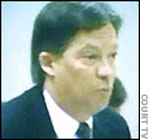
Vili and Soona Fualaau filed a lawsuit against the Des Moines Police Department and the Highline School District. They sought $1 million in damages because these organizations had failed to prevent the relationship between the boy and his former teacher. The financially strapped family supposedly wanted the money to help raise the teenager’s two children. The jury found against them and refused to award any damages.
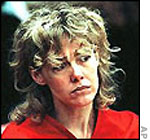
As of this writing, Mary Kay Letourneau is still confined in the Washington Correctional Facility for Women. She will be eligible for parole in 2004. She will be 42 years old. Vili will be 23. He has had several scrapes with the law. He has pled guilty to auto theft, received probation, and paid a fine. Mary Kay is said to still hope that Vili’s love will last, that he will wait for her, and that they will marry and build a life together. Those close to her believe that it is unlikely that Vili’s adolescent crush will last.
Mary Kay’s friends hope that she will be able to cope if he ends the relationship. As Michelle Rheinhart-Jarvis commented, “I just hope that this is as bad as it has to get before she deals with all her childhood traumas and faces all her demons. I just hope that this is as bad as it gets.”
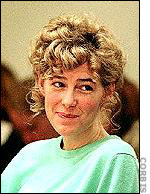
Mary Kay Letourneau was released from prison Wednesday, August 4, 2004 at age 42.
The story of Mary Kay continues to fascinate and outrage. Her attorney David Gehrke said, “We’re being contacted by news media almost daily.” When a Washington state newspaper, The Peninsula Gateway, did a story on the August 26, 2003 Back to School Carnival at the Washington Corrections Center for Women, Mary Kay was prominently featured. Her photograph appeared on the newspaper’s front page and she was heavily quoted.
According to the article, Mary Kay was delighted to learn about the prison’s plan for a Back to School Carnival as were the other inmates. “Everybody looked forward to this,” she said. “We all just about burst into tears when it was announced a few months ago.” Her two youngest children, 6-year-old Audrey and 4-year-old Alexis – both conceived in what were legally Mary Kay’s rapes of their father – spent what Gateway reporter Jim Thomsen called “a little touching time with their mother.”
However, the Back to School Carnival was far from the first time Mary Kay’s children had visited her in prison. The prison’s mother-child program allows frequent visits between inmate mothers and their children and the four children Mary Kay has by Steve Letourneau as well as the two by Vili Fualaau saw their mother often over the years of her confinement. The Gateway quoted Mary Kay as saying of Audrey, “She’s really grown up here; she doesn’t understand that it is a prison.” But Mary Kay added that she was especially happy about this visit because it was “the first chance I’ve had to tell [Audrey] about what it’s going to be like for her in school.”
An index of how much strong feeling Mary Kay still provokes is demonstrated by the fact that the week after this article ran, the publisher of The Peninsula Gateway, George Le Masurier, felt compelled to publish an explanation for why the newspaper had chosen her picture to illustrate the piece. That explanation said, “We’ve received many phone calls and letters to the editor questioning our decision to print pictures of Mary Kay Letourneau. Some callers said they enjoyed the story, but wished we had chosen another inmate to feature in the front-page photograph.” People objected to Mary Kay’s picture on the grounds of the seriousness of her crime or believed the Gateway “sensationalized the story by playing on the infamous celebrity status of Letourneau.”
Le Masurier defended the photograph on the grounds that it was newsworthy. “Letourneau has not allowed herself to be photographed since 1998, and never with her daughter,” he wrote. “We call that a ‘scoop’ in the news business.” He noted that “Everyone in that prison is there for a reason.” He also acknowledged, “We did use her celebrity to draw attention to a story of national importance occurring right here in our community.”
Mary Kay Letourneau registered as a convicted sex offender with the sheriff’s office. She will have to register in whatever county she lives and will have to do so for the rest of her life unless that obligation is lifted in writing by a judge. She will also receive court-ordered treatment as a sex offender. Can she return to her chosen profession of teaching? Gehrke says, “In this state, and I assume most states, she’s barred from teaching minors. However, she is an excellent teacher and has been a volunteer at the GED program at the prison. I’ve gotten many letters of support from parents and former students. She’s got the talent and ability to teach so teaching adults would be one area in which she could work but I’m not saying she will work in that area.”
When Mary Kay went to prison in 1998, she was certain that her adolescent lover, Vili Fualaau, would be waiting for her when she was released. In an A&E Television Biography broadcast in 2001, she said, “If Vili and I are together – and I really shouldn’t say ‘if” because I know we will be … We’ll be together because it’s right for us to be together.”
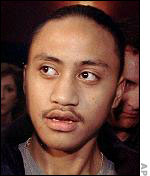
In February, 1999, Vili appeared on The Oprah Winfrey Show and said, “I plan to marry her. She’s my world, she’s my life and they all know that I have her ring on still and it’s never going to change.”
But apparently it did. Komo 1000 News reported that three years later, in a deposition for the losing lawsuit Vili and his mother filed against the Des Moines Police Department and the Highline School District, the 18-year-old Vili said, “I’m not in love anymore.” The Seattle Post-Intelligencer Reporter wrote that, in the trial itself, he testified, “I can’t see us together in the future. Personally, I’ve lost feelings for her.”
“There was no-contact order between them,” Gehrke revealed. “A lot of people think they could see each other now because he’s an adult but the no-contact order is because he’s a victim.” Vili would have to go to court to get it lifted; otherwise the order will last for life. “I know he wants to get it lifted so they can parent better,” Gehrke comments. “They want to be able to take their daughters to school events and outings and things like that and the no-contact order will obviously make that hard.”
On Friday, August 6, 2004, a judge in Seattle lifted that no-contact order.
Why does this case so intrigue the public? Gehrke believes, “It’s because of the question, ‘is she a rapist or is it a love story?’ She’s been held in limbo so no one’s been able to tell but I think everybody’s actions over the next six to twelve months will tell.” Freedom will give Mary Kay a chance to show whether her unlawful relationship with a child was an aberration in the behavior of an otherwise good and healthy person or symptomatic of something deeply twisted in her character.
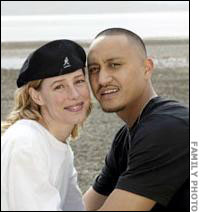
and Vili Fualaau.
Despite Vili’s earlier disavowal of feelings for Mary Kay, he found his love rekindled when she was freed. The couple decided to marry. The engagement surprised many observers who believed Vili had experienced a childhood infatuation that would have run its course by adulthood.
One who was not shocked was Mary Kay’s attorney David Gehrke. “I was with Vili when he got the phone call from his attorney saying the no-contact order was lifted,” Gehrke recalls, “and I knew what the message was by seeing his shoulders lift and his face lift and the big smile. I knew right then that they were going to be married because I could see it in his face.”
Gehrke had long believed this relationship was different from most cases of adult-child sex. “Everybody just assumed that because of the age difference there could not be love,” he comments, “and that it had to be lust or power or whatever.” Although Gehrke thought his client could genuinely be in love when she started a sexual relationship with then-13-year-old Vili, he had cautioned her when she was awaiting trial, “Love is not a defense.”
On October 11, 2004, Mary Kay, an engagement ring on her finger, appeared on Larry King Live to discuss her crimes, imprisonment, and upcoming nuptials. According to CNN.com, the parolee was unemployed and living as a guest in a friendly couple’s home at the time of the interview. She told King that when she began having sex with Vili she did not realize “it was a felony” for an adult to have sex with a 13-year-old although she knew it “just wasn’t normal.”
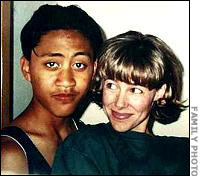
Letourneau.
Mary Kay continued that when she first became aware of her attraction to the sixth-grader she “didn’t think about the age” but “thought about running, far and fast” only because she “didn’t want to be in love at that time in my life.” Once the relationship got underway she gave little thought to his age because “we were so much in love.”
King asked Mary Kay about the seven and a half years she served in prison and she replied, “I never expected to spend that much time there.” She also said that, for her four older children, “I’m sure that me going to prison was as hard as [the] death of a parent.” Convicts are notorious for persecuting inmates imprisoned for sex offenses but Mary Kay asserted that other inmates had not harassed her. She continued, “I have very, very many friends, still some close friends at the prison, friends that I have a lot of respect in, and they do with me.” She indicated that some of her experiences with authorities were “pretty bad” although “never physical” but said that the prison had “some really decent staff members.”
Mary Kay said she considered her life “blessed” because “I’m healthy. My children are healthy. And I still have a mother. And I come from a very loving family. And I have Vili.”
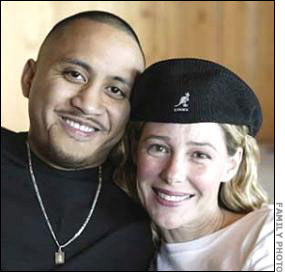
The couple set a wedding date of May 20, 2005 and granted exclusive access to the ceremony to the television program Entertainment Tonight that paid for that access. They also gave their first joint interview to ET reporter Jann Carl.
Carl asked Vili, “When you look in Mary’s eyes, what do you see?”
Vili replied, “I see my youth. I see heaven.”
Asked the same question, Mary Kay answered, “I see a long history. There’s just a long, deep history and it’s something familiar to me.”
Discussing her imprisonment, Mary Kay said, “It sounds dramatic, but it’s a real feeling of fear in a place like that. For me there were a few times at the prison that the only thing I cared about was getting out alive.”
The ET website reported that the bride had picked a white wedding dress for her second time around. Mary Kay said Vili and she would honor a wedding tradition, “He’s not going to see me until he looks back and I am in it.”
The wedding took place at the Columbia Winery in the Seattle suburb of Woodinville. Like virtually everything else connected with the couple, their wedding attracted a media outpouring. A Seattle Post-Intelligencer article wrote, “Satellite trucks, waiting camera crews and a news helicopter flying overhead — all became part of the spectacle.” However, only ET reporter Jann Carl and camera operators were allowed inside.
Mary Kay’s brother Timmy gave the bride away. Her maid of honor was her teenage daughter Mary Claire and her bridesmaids included a woman she had met in prison. Mary Kay and Vili’s two daughters, 8-year-old Audrey and 7-year-old Alexis were the flower girls. The couple recited vows they had written themselves. Mary Kay has followed the custom of taking her husband’s last name.
Some observers have cautioned that the seemingly happy ending to this story should not obscure the harm done by adult-child sex in general or even the harm done to Vili in this case in particular. Columnist Leonard Pitts wrote that the public should remember, “that she is a convicted rapist and he is her victim.” He went on to decry the implication in some of the publicity that “these two are Romeo and Juliet, star-crossed lovers” and noted that boys just out of the sixth grade “ought not to be having sex with anybody, period.”
Gehrke echoes Pitts when he discounts the possibility that their lasting love means that the law should not forbid sex between adults and minors. “In every system of laws there are going to be individual inequities and injustices,” he says, “and I think children are more deserving of protection because the Marys and Vilis are the exception and not the rule. Most of the time it is victimization and we need to protect the children.” He does believe the case indicates that a legal gender distinction regarding sex between adults and minors could be valid. “The state of New York has a different age of consent for males and females,” he elaborates, “and that has withstood a court test because the potential harm to young females is greater because of pregnancy. The law should reflect that.” He also thinks the law needs more consistency in how it treats minors as victims and as offenders. “When he had sex with Mary, poor little Vili was not responsible at all for his acts because he was just a child,” Gehrke notes, “but if he shoots someone or steals a car at that same age, all of a sudden he has personal responsibility. If he commits a crime like an adult, he’ll be held responsible like an adult.”

As an adult, Vili has committed a crime. According to the New York Daily News, at 12:20 a.m. on December 22, 2005, an officer in SeaTac, Washington spotted a silver Cadillac DeVille going 55 m.p.h. in a 35 m.p.h. zone and pulled the driver over for speeding.
Vili was behind the wheel of his wife’s car. She was not in the vehicle but a male passenger was. The Daily News article quotes King County Sheriff’s Sgt. John Urquhart as reading from an incident report describing that passenger as “very intoxicated, almost passed out.”
The officer noticed alcohol on Vili’s breath and saw that his eyes were blood-shot. He asked him if he had been drinking and Vili admitted he had had four shots of vodka. The officer asked Vili to take a field sobriety test that he declined. In two separate blood-alcohol breath tests, Vili blew .135 and .133. The legal limit for driving under the influence in Washington State is .08.
Vili pled not guilty and hired attorney Scott Stewart to defend him. A jury convicted Vili of drunken driving on April 28, 2006.
Mary and Vili gave an interview to People magazine that was published on May 15, 2006. Living on the money they received for the TV rights to their wedding, they make their home at a rented three-bedroom in Normandy Park, Washington. Mary’s four children from her marriage to Steve Letourneau, including the oldest two who are now adults, visit the couple regularly as do Mary and Vili’s own daughters who are still in the custody of Soona Fualaau.
Mary claimed that their lives are not too different from those of couples without sensational histories. “We do normal things,” Mary told People interviewers. “We all went out to dinner at our favorite Mexican restaurant, then over to Blockbuster to get a movie.”
Vili admits there are tensions between him and Mary’s children from her previous marriage. “I feel like I don’t really have a place except that I’m their mother’s husband,” he says. “I feel out of line asking them to clean up, but I have a right to — it’s my house.”
Despite the age difference, Mary says the marriage is structured along traditional gender lines. “He is the master of the house,” she explains. “He can be strict or sensitive.”
The artistically talented Vili hopes to become a professional tattooist. He practices the craft on inanimate objects like grapefruits and has tattooed a family crest on a cousin.
Gaining custody of their daughters is the most urgent item on the Fualaaus’ agenda. Mary looks forward to a day when she and her husband can take their daughters on outings “and not have to ask the state or notify Vili’s mom.”
Vili acknowledges that he cannot help but think about what his life would be like if things had been different. He says, “I think, what would my life have been like if I had never made a move on Mary? What if I had kept it as a crush and left it at that? Where would I be and where would she be — what would life be like?”
However, he realizes the futility of wondering about things that cannot be changed, concluding, “This is my life and I accept it.”

In the years since their marriage, Mary Kay and Vili Fualaau have not hidden their lights under a bushel. In 2009, they cashed in on their notoriety by participating in “Hot for Teacher” evenings at a Seattle bar called the Fuel Sports Eats & Beats. Mary Kay acted as hostess, greeting people as they entered the bar, while Vili disc jockeyed under the moniker “DJ Headline.”
An article in The Seattle Times reported that bar owner Mike Morris said, “Letourneau has served her sentence, she’s married her former student, and it’s OK for them to have some fun on a Saturday night.” A NY Issues piece let Morris expand his defense of these events. “It’s turned into a sort of love story,” he asserted. “I realize it had a sick twist at the beginning, but they’re both adults now. They’re both married by the state of Washington. So it’s just go and have fun on a Saturday night — and if people are looking to have some fun, just come check us out.”

After that event, the couple appeared at similar events cashing in on their reputations. At a Seattle bar called Dante’s, Vili worked as DJ Headline and Mary Kay danced. She was attired as Max from Maurice Sendak’s classic children’s story Where the Wild Things Are. Dressed in the furry white wolf costume, sporting a lei around her neck and sometimes a paper crown on her head, Mary Kay posed with Dante’s customers. Perhaps Dante’s manager or Mary Kay herself thought allusion to the fantasies of a child fitting for the adult who gained infamy for illegal sex with a child.
However, that is not Mary Kay’s only employment. She also works as a paralegal.

Both of their daughters, Audrey Lokelani and Georgia, live with them. Mary Kay’s attorney, David Gehrke, sees the family regularly in the community as the Fualaau home is about halfway between his own home and his law office. “Their daughters are strikingly beautiful, happy, artistic, talented, musical and doing well in school,” Gehrke relates.
Does Gehrke believe Mary Kay and Vili are happily married? “Absolutely,” he replies. “They’re coming up to six years of marriage. I think if they weren’t happily married, they would have said, ‘screw it,’ and gotten divorced. They seem happy together.”
FindLaw, U.S. Supreme Court, Michael M. v. Sonoma County Superior Court, 450 U.S. 464 (1981).
Esteban, Michelle, “Fualaau Says He Hid Relationship For 6 Years.”
A& E Biography, Mary Kay Letourneau: Out of Bounds.
Olsen, Gregg, If Loving You Is Wrong, St. Martin’s Paperbacks, New York, NY, 1999.
Robinson, James, The Mary Kay Letourneau Affair, Leathers Publishing, Leawood, KS, 2000.
Johnson, Tracy, “Depressed Fualaau: ‘I wish I wasn’t who I am,'” Seattle Post-Intelligencer Reporter, April 5, 2002.
Le Masurier, George, “Scoop du Jour,” The Peninsula Gateway, September 11, 2003.
Reece, Kevin, Vili Fualaau Scheduled to Take the Stand Today, April 2, 2002.
Thomsen, Jim, “Back to school, behind bars,” The Peninsula Gateway, September 4, 2003.
Sources for Chapters 10,11 and 12.
“CNN Larry King Live,” CNN.com, October 11, 2004, http://transcripts.cnn.com/TRANSCRIPTS/0410/11/lkl.01.html.
“LeTourneau says she and former student are engaged,” CNN.com, October 12, 2004, http://www.cnn.com/2004/US/10/12/letourneau.king.
“Their First Interview Together: Mary Kay Letourneau & Vili Fualaau,” ET Celebrities, April 28, 2005.
“Mary Kay’s Wedding Dress: The Tearful Exclusive,” ET Celebrities, May 2, 2005.
“Who Will Give Mary Kay Away?” ET Celebrities, May 3, 2005.
“Letourneau marries Fualaau amid media circus,” Seattle Post-Intelligencer, May 21, 2005.
Pitts, Leonard, “You may now kiss the . . . rapist,” Atlanta Journal-Constitution, February 23, 2005.
“Vili Fualaau Arrested for Suspected Drunken Driving, SeattleInsider.com, February 16, 2006.
Caruso, Michelle, “Teacher’s pet mess, Mary Kay boy toy in DUI rap,” New York Daily News, February 16, 2006.
“Vili Fualaau Found Guilty in DUI case,” KIROTV.com, April 28, 2006.
Tresniowski, Alex, Benet, Lorenzo, Wilson, Stacey, “One Year Later,” People, May 15, 2006.
DJ Headline. http://www.myspace.com/djheadline.
“Letourneau, young spouse to host ‘Hot for Teacher’ night. The Seattle Times, May 21, 2009.
“Mary Kay Letourneau Dances, Vili Fualaau (DJ Headline) Spins at Dante’s.” Seattle Weekly.
http://www.seattleweekly.com/slideshow/mary-kay-letourneau-dances-vili-fualaau-dj-headline-spins-at-dantes-28665912/
“Mary Lay Letourneau Hosts ‘Hot for Teacher’ Night at Nightclub.” FoxNews.com, May 22, 2009.
“Mary Kay Letourneau Latest Update, Mary Kay Letourneau Wedding.” NY Issues. March 12, 2010.
The author thanks David Gehrke for answering her questions.