
Gregg O. McCrary Interview by Katherine Ramsland — Introduction — Crime Library

(McCrary)
Gregg McCrary is one of the world’s most experienced profilers. In 1969, he became a Special Agent with the FBI just as the profiling pioneers at Quantico were beginning to shape the Behavioral Science Unit (BSU). With a background in criminal justice and psychology, he conducted research on violent offenders, and after the National Center for the Analysis of Violent Crime (NCAVC) was formed in 1985, his duties ranged from analyzing crime scenes and offender “signatures” to constructing behavioral profiles and teaching the complexities of threat assessment.
Throughout his 25 years with the FBI, McCrary consulted on thousands of domestic and international cases that involved homicide or sexual assault. With other experts, he assisted in the development of the Crime Classification Manual, a system for standardizing violent crimes, and in 1993, he was the principal instructor of the First International Symposium on Criminal Investigative Analysis in Vienna, Austria, which he also chaired.
Two years later, Gregg McCrary retired from the FBI but continues his work by consulting and providing expert testimony in cases in which crime scene analysis is key. He also offers commentary on violence for television documentaries and gives seminars to professional organizations. With the Threat Assessment Group, Inc. (TAG) he advises corporations about workplace safety and assists with school violence programs.
As an international expert on violence, McCrary’s insights are derived from many years of experience, and he agreed to share some of those insights in the following interview.
INTERVIEW WITH
GREGG O. MCCRARY
VIOLENT CRIMES EXPERT
The Art of Criminal Analysis
What is Behavioral Criminology International?
That’s my consulting business, and I testify as an expert witness in both criminal and civil litigation that typically involves violent crimes. I also work as an independent contractor on workplace violence for another group, the Threat Assessment Group, Inc. (TAG) in Newport Beach, California, which is run by Dr. Park Dietz. TAG has trained 150 or more of the Fortune 500 companies in workplace violence prevention and a number of them are fulltime clients.
Can you tell us about a case where you provided expertise?
About a year ago, I testified in one of the more interesting cases I’ve had since retiring from the FBI. It was the old Sam Sheppard homicide case. I conducted a criminal investigative analysis of the crime and crime scene. The State of Ohio was being sued civilly; the complaint being that Sam Sheppard had been wrongfully convicted and imprisoned. The plaintiff offered an affirmative defense, claiming that Richard Eberling, a local handyman and window washer, had murdered Marilyn Sheppard. Before my involvement in the case, I had heard something about a handyman’s DNA being found at the scene that exonerated Sam Sheppard as the murderer, so if I was biased in any way going into the case, it was in the belief that Sam Sheppard was innocent. Once I had the opportunity to objectively analyze the crime, crime scene, related pertinent documents, and forensic evidence, my opinion changed.
So what did you think?
(AP)
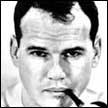
In my opinion, the murder of Marilyn Sheppard is a classic example of a staged domestic homicide. Based upon the evidence I reviewed, I believe that Sam Sheppard killed his wife, Marilyn, and then tried to stage the crime scene to look as though an intruder had entered the premises and attacked her. Sam Sheppard was an undeniably intelligent man, but like a lot of otherwise intelligent people who attempt to stage a crime scene, he was criminally unsophisticated and he didn’t know what a real crime scene looked like. With people who do this, their frame of reference regarding crime scenes is typically limited to the books they have read, the movies they have seen, and news reports they’ve heard. The only reason an offender stages a crime scene is because, without the staging, he would become the immediate suspect. This is where experience plays an invaluable role. After examining hundreds, perhaps thousands, of actual crime scenes, it’s clear to me that a staged scene-even one presented by an otherwise intelligent offender-leaps out as being staged.
Sam Sheppard made the mistakes a lot of criminally unsophisticated people make; he tried to stage it to look like three different types of crimes:
- He tried to make it look like a sexual crime, in that Marilyn’s body was on the bed, partially naked, legs spread in a sexually provocative position. However, she was not sexually assaulted. This is a phenomenon we find common to husbands or intimates who kill the woman and want to stage it to look like a sexual homicide. She’s never actually sexually assaulted. The killer doesn’t want to have sex with her; he just wants to kill her, for whatever reason. This particular homicide was very brutal. She was bludgeoned badly and if it had been a sex crime, the sex would have been brutal as well, with a lot of vaginal and probably anal trauma. There was none of that.
- He also attempted to stage it to look like a for-profit burglary. Many desk and dresser drawers were pulled out and sometime the contents were dumped on the floor, which could be consistent with an actual for-profit burglary. Yet the most significant indicator of staging in such crime scenes is the overall sense of proprietary interest evidenced by the ‘burglar.’ In other words, the offender doesn’t seriously damage much of anything because it is his property. Drawers were pulled out but the contents were carefully dumped on the floor, as opposed to someone who’s really ransacking the place and doesn’t give a damn about the property. The other significant indicator of staging was that nothing of value was missing from the crime scene. For example, Marilyn Sheppard’s watch was taken from her wrist but left at the scene. Sam Sheppard’s watch was also alleged to have been taken, but it was recovered outside of the house. If the offender were committing a ‘for-profit’ burglary, then it’s more likely than not that having gone to the trouble of removing the watches from his victims, he would have taken them from the scene.
- Then there appeared to be a drug-related crime. This was evidenced by Dr. Sheppard’s medicine bag found standing on end and with some of its contents gently spilling onto the floor, while two other compartments were closed and apparently undisturbed. Dr. Sheppard claimed that there were ampoules of morphine missing from the bag. Yet a true drug-related crime would likely appear much different, as the offender would probably have taken the entire bag and quickly left in order to put as much time and distance between himself and the murder scene as possible. None of that happened.
Another issue was the disparity between the injuries that Sam received and the injuries to Marilyn. His story was that he was asleep on a daybed at the foot of the stairs and he heard Marilyn yelling, “Sam! Sam!”and I think she probably was yelling that-and that he ran upstairs and interrupted this offender (or offenders, depending on which version of his story we choose to accept). This offender was in a homicidal rage, had a heavy blunt object, and was repeatedly and brutally bludgeoning Marilyn. To buy Sam’s version, we have to believe that the offender’s homicidal rage immediately subsided, he dropped the weapon, and just hit Sam with his fist. Sam says he was knocked unconscious. His wife has sustained approximately 35 injuries with over 20 of them being potentially fatal and the only undisputed injuries Sam Sheppard had were a bruise under his eye and a chipped tooth. There was a report that he sustained a fractured vertebra, but the validity of that injury is in dispute.
One of the indicators of a staged homicide occurs when the individual who presents the biggest threat to an intruder sustains non-fatal or minimal injuries while less threatening individual(s) are murdered. If Sam actually interrupted an offender who was clearly in a homicidal rage, it’s more likely than not that the offender would simply have turned on Sam and beat him just as he had Marilyn. But that didn’t happen. Sam’s injuries were not at all similar to the injuries sustained by Marilyn.
What else did you notice about the crime?
Sam then claims to regain consciousness, checks Marilyn’s pulse and determines she is dead. He hears the offender rummaging around downstairs, apparently committing this alleged burglary. Sam runs downstairs and chases this guy out and down onto the beach, where the two of them get into another struggle. Sam is knocked out a second time, this time apparently also being choked. His story is that he comes to with the waves of Lake Erie lapping at his legs, so he runs up to the house and checks Marilyn’s pulse again, and she’s still dead. He claims that he wandered around the house trying to figure out what to do and then called for help. Interestingly, he didn’t call for the police or for an ambulance. He called the mayor.
To a degree, Sam Sheppard outsmarted himself. Whoever bludgeoned Marilyn would have been covered in a lot of blood. There was a lot of castoff blood at the crime scene, all over the doors and walls, with some on the ceiling. So clearly whoever committed this murder would have a lot of blood on him. One of Sam’s defenses was that he had no blood on him, so how could he possibly be the killer? Initially that makes some sense. But if you look at his story, you realize that he should have had some blood on him. He claims to have checked his wife’s pulse at the neck two or three times, and she’s just covered with blood on her face and neck. There’d be no way he could have taken her pulse from that area without getting transfer blood on his hands, yet he had none.
Also, if you believe Sam’s story, there was blood where there shouldn’t have been. While there should have been blood on his hands and fingers, and there wasn’t, there were fine spots of blood on the face of his watch that would be consistent with castoff blood. It certainly appeared that whoever murdered Marilyn Sheppard was wearing Sam’s watch when he did it.
I also wrote a report regarding my analysis of this homicide, which, among other things, was used to rebut a forensic psychiatrist who testified that the murder of Marilyn Sheppard was a sexually sadistic homicide. Her murder had nothing even remotely to do with sexual sadism. All of the elements necessary to classify a homicide as a sexually sadistic sexual homicide were absent.
The psychiatrist’s report stated that Marilyn Sheppard’s homicide was a sexually sadistic homicide committed by Richard Eberling. I concluded in my report that this was a staged domestic homicide committed by Sam Sheppard. I knew that I would not be allowed to testify as to the ‘ultimate question,’ as that would invade the province of the jury, so as expected, the judge limited some of what I could say. I couldn’t say that Sam did it and I couldn’t use the word ‘staging,’ but I was allowed to use the phrase, ‘altered crime scene.’
The plaintiff also claimed that they had DNA from blood at the scene that excluded Sam Sheppard as the donor but that could be Richard Eberling’s. Their theory was that the offender was cut and bleeding at the scene, based on the fact that Marilyn’s teeth were knocked out. They believed that she bit the offender during the assault and when he pulled his arm out of her mouth, he pulled her teeth out of her head. That’s a stretch for me. I reasoned that having teeth knocked out of her head was far more consistent with the facial trauma she sustained while being bludgeoned about the head. Anyway, that was their theory and they believed that the offender was dripping blood. Before he died, they got a court order to draw Richard Eberling’s blood to compare with some blood from the scene. That was one of the pieces of evidence that they were hanging their hat on.
How did that affect the case?
They had a respected DNA analyst conduct the test, but there had been a fundamental omission in the testing. No one had bothered to type the blood: They didn’t do an ABO grouping. This blood they were claiming was Eberling’s was type O and Eberling had type A. It doesn’t matter how the DNA probes line up, the blood at the scene could not be Eberling’s blood as there is no way type O blood can be type A blood. It was a dramatic moment in the trial. They let the plaintiff’s expert go through this whole thing with the probes and then hit him with this question about typing the blood sample. In a stunned moment of realization, the expert admitted that they had not typed the blood and in effect had to agree that Richard Eberling could not have been the source of the blood at the scene. Marilyn’s blood was type O and it certainly could have been her blood.
So what happened?
The jury found for the defense, the State of Ohio, apparently concurring that this was a staged homicide committed by Sam Sheppard.
We are now using current state-of-the-art technology in forensic and behavioral science to go back and analyze old crimes-in this case, one that is almost 50 years old. If used appropriately, today’s techniques can be helpful in analyzing yesterday’s crimes.
As part of your consulting business, you offer expert testimony on a variety of topics, like crime classification, signature analysis, motive, and profiling. I’ve noticed how often members of the news media misunderstand the concept of profiling. Do you find that to be common?
Yes, I do. I’ve had to file affidavits explaining why the profiling we do is different from generic profilingan example of which is racial profiling. Generic profiles are an attempt to create a template for a specific type of offender such as a drug dealer, a terrorist, a skyjacker, or someone like that. The proposed purpose is to take that template and overlay it on a population group in an attempt to identify the type of offender you’re looking for. It doesn’t really work well, and what we do as criminal profilers is exactly the antithesis. We start with an actual crime and crime scene, and then work backward to talk about the characteristics and traits of that particular individual who might have done that crime. It’s not a template; that is, it’s not generic and it is not necessarily something that can be generalized. It’s a specific profile of that offender based on the facts of that case. People do get them confused.
Also, we have to have a crime scene. Unless there’s a crime or crime scene, as well as some forensic and behavioral evidence to analyze, we can’t construct a profile. In trials I’m often busy educating judges and juries about what profiling is and isn’t. We refer to the overall process as criminal investigative analysis, which is a method for analyzing violent crimes. Profiling is one service we offer. That is, we analyze and interpret crimes and scenes, and a profile is a product that may emerge from that process, but there is more to the process than a profile. People can get blinders about that. Profiling is a sexy, glitzy concept that’s incorporated in the movies, and people think that’s all that we do.
One behavior you’ve encountered during a criminal investigation that we know little about is the idea of false allegations. What’s that?
That’s an interesting phenomenon. Anyone who’s in law enforcement for any length of time will encounter false or unfounded allegations of a crime. This can happen for a myriad of reasons, but it’s something of which the public in general isn’t aware. There is a fairly recent case of school violence that typifies this issue.
It was October 25, 2000, in Las Vegas, Nevada. A woman named Dylena Pierce, who was a mother of two and a popular 31-year-old English teacher at Silverado High School, found a note in the school mailbox threatening to bomb the school soon. She immediately reported it to the principal, who evacuated the school. The fire department and local bomb squad responded and conducted a search. No bomb was found. The following week, Ms. Pierce received three additional threatening notes from this unknown offender. The investigators contacted the FBI’s “profilers” and asked their opinions regarding a couple of areas:
- A threat assessmentthe chance that someone was actually going to bomb the school, and
- A profile to help identify the offender.
Once the FBI profilers completed their analysis, they reported two things back to the investigators:
- The bomb threat was not credible, and
- Ms. Pierce, the victim, was the probable offender.
Then on November 3, Ms. Pierce initially confessed to an FBI agent that she was responsible for all four notes, and then she confessed to everyone else. She was subsequently charged with two felony counts of making bomb threats, and she asked for mental health assistance.
Overall these types of cases are not that common, but we see a good number of them. I’ll give you another example of a rape case in which I was involved. After a year of unproductive investigation, a police department came to us to ask for our assistance in profiling a rape case. They advised us that they’d initially gone to a local psychologist who’d constructed an in-depth, 25-page profile of this unknown offender. Normally we don’t “re-profile” a case. If it’s been profiled once, we typically let it alone, but they really wanted our input. After reviewing the evidence, another agent and I concluded that the “rape” was a false allegation. We did not know that this was consistent with the opinion of the police department as well until after we’d advised them of our opinion. Yet this psychologist had constructed a profile with incredible detail, such as the fact that the offender was an amateur artist who liked to finger-paint as child, and none of it was true. So we helped the police construct an interview strategy that would allow the pseudo-victim to tell the truth, and she tearfully admitted that she had fabricated the entire incident and was greatly relieved to put it behind her. It was no wonder they couldn’t find the guy that the psychologist had profiledhe didn’t exist.
You have to be trained in a lot of different areas to engage in criminal investigative analysis. Part of it is assessing for false allegations and that’s done in every crime evaluated. Many times that isn’t the core issue and may be done almost unconsciously, but in order to ensure a thorough analysis, it’s a necessary part of the analytical process.
Is there a concern about investigative analysis being done badly?
One of the issues with profiling now is professionalism. Anyone can raise his hand and declare himself a “profiler.” This discipline is in its embryonic stages and perhaps it’s a bit like medicine was in the Wild, Wild West. You get a lot of quacks and snake oil salesmen running around. There currently are no board exams or licensing requirements, but hopefully as the discipline grows, standards will emerge. There is a movement in that direction right now. The International Criminal Investigative Analyst Fellowship (ICIAF) is a group of FBI-trained “profilers” who have started their own organization and are conducting training sessions and setting up standards. In my opinion, one of the most important prerequisites is that a would-be profiler needs to be an experienced investigator, as this is an investigation-oriented discipline. You are going to be in a position of offering investigative or interview strategies to already experienced investigators. If you have no such experience, you really have no credibility and that’s a huge issue.
In fact, the FBI selects its “profilers” from the ranks of experienced agents. When an already experienced FBI agent comes into the unit, there is a period of approximately two years of work and study, not only under the wing of an experienced profiler, but also attending outside schools. For example, one must attend the Armed Forces Institute of Pathology to study forensic pathology, and also go to various interview and interrogation schools in addition to the FBI’s interview and interrogation school. Other types of training must also be completed before the FBI determines that an already experienced agent is fully competent to do this type of analysis. And there’s only one place to get experience with crimes and criminal behavior and that is in law enforcement. It’s like any other area of expertise: You need to be in it every day. There are charlatans out there claiming they can teach you to “profile” after a one-day, three-day or five-day school. Some pretenders offer courses over the Internet as well. It’s a shame.
INTERVIEW WITH
GREGG O. MCCRARY
VIOLENT CRIMES EXPERT
Violence In the Workplace
How do you do a threat assessment for a corporation?
Threat assessments are preventive in nature. In other words, we’re trying to assess the credibility of a threat before a crime occurs so that appropriate intervention strategies may be invoked. It’s important to realize that not all threats and not all threateners are created equal.
Threateners can be either anonymous or known. With an anonymous threat, there is obviously less to work with, but in many cases anonymous threats are less credible. Yet it’s not uncommon for us to get calls from our corporate clients or from schools where they’re getting anonymous threats of some sort. Anonymous threats may provide information on which to construct a profile of the unknown threatener, which, like any profile, can be used to identify the threatener. However, with a known individual, we have a richer environment to work with. In either case, we assess the threat and then give practical advice about what to do.
Is threat assessment different for the workplace than for schools?
Much of it’s the same. You can be hit with similar problems. It’s parallel to the degree that you can have the same construct, such as an anonymous threat. Or you may have to work with false allegations, where the alleged victim is the offender.
John Monahan at the University of Virginia has done some of the best work on dangerousness assessment, with the MacArthur Risk Assessment. That’s the best framework to use when we’re in that arena. He works in four basic domains:
- The personal and dispositional factors of an individual: impulsiveness, anger, personality issuesis this a psychopath or not?
- The developmental or historical domain: past behavior is the best predictor of future behavior. So we look at what the person has done in the past and what coping mechanisms he has used; we also look at family history.
- Context or situational variables: Where are we right now with this individual? We’re looking at perceived stress and the means of violence: Has this person gone out and bought guns and is he under a lot of stress?
- Clinical factors: This is the mental health issue, where we evaluate the psychopathology or what’s wrong with the person.
That’s Monahan’s approach, but there are other variations on this as well. For example, one may look to see if there is any apparent psychopathology evident that is, a mental health issue such as psychosis. Next, one can look at the personality or character issues for a given individual. These are related but separate issues. There may be no mental health problem; it may all be just character issues, like a hardcore psychopath. Then we look at the vulnerability of potential victims. Do we have a specific targeted victim? Finally, there’s the vulnerability of the potential setting, which is a security issue.
A critically important issue is verifying the key facts derived from an investigation, as these facts form the basis for the assessment. Sometimes the case is not what it seems when you first get it. Sometimes it’s worse, sometimes it is not quite as bad.
When you’re called in, what are the steps you take?
It’s a decision-making tree. You start by determining if the threatener is known or unknown. If known, then we can begin our analysis as I just indicated. If unknown, we have to proceed in a different direction. We look at how the threat was communicated. Was it verbal or written? If written, how was it written? Almost no one uses a typewriter anymore, so that’s not usually an issue now, but we look at whether it was word-processed or handwritten. Then we do content analysis.
If it’s verbal, we teach clients that if someone’s phoning in a threat, hit the record button if one’s available. If not, the person who takes the call needs to write down right away as much as he can remember verbatim about what the person said and how he said it. We’re interested in specifics.
We look at issues such as whether the person might be delusional. Schizophrenics who are delusional make no sense. Clinicians refer to “poverty of content.” If they communicate in writing they tend to write all over the place. They write around the paper, in circles, around the margins, and on the envelopes. Schizophrenia by itself tends to be a mitigating variable, in that the people may be “crazy” but they’re typically not dangerous. Even if they’re writing something that appears threatening, what are the chances they can actually act out on it? That’s the other issue: the plausibility of the threatswhether they can actually follow through.
In general terms, the more specific the threat, the more credible it may be. For example, someone might threaten product contamination. He will write in and say, ‘We’re going to poison your food product.’ That may be a less credible threat. On the other hand, if he provides credible detail or provides a sample of a contaminated product or perhaps sends you to the store to find the productaisle three, lane seven, and it’s got a blue stickerthat enhances the credibility, which in turn shapes the recommended intervention strategies.
I had one case when I was with the FBI where a company that produced a lot of food products was being extorted with threats to poison one of their products. They were considering a massive recall. Obviously that was their decision, but our analysis indicated that the threat was not credible. Letters from twelve or fourteen different cities were sent to the corporate headquarters, supposedly from different people from the same organization, an alleged terrorist group. They said, even if you arrest us in one city, we’ve got many other people out there, so don’t try to arrest us when we pick up the money because the others will carry through with the threat. This is pretty daunting to a corporation, but our analysis was that it was one person, not a group, and that the threat continued to be less than credible. We felt confident that using our investigative resources we could identify and arrest the lone offender without increasing the danger to the public or the liability of the corporation, which is just what happened. Our agents identified and arrested the offender, and a follow-up investigation determined that he’d acted alone and that not only were no products contaminated, he had neither a plan nor the capability of carrying one out.
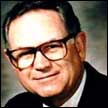
In another case we had, Sydney Reso, the president of Exxon International, was kidnapped from his home in Morristown, New Jersey, and held for ransom. Tragically he died of a gunshot inflicted during the abduction. This was unknown to investigators, but as time went on our concern for his safety grew. The kidnappers demanded that the money be put into Eddie Bauer duffel bags, and they gave us more instructions, but to give you a window into content analysis, one of the things that caught our attention was the Eddie Bauer duffel bag. Why Eddie Bauer? From that, along with other content issues examined in their demands, we developed the profile of a “yuppie” couple. Then forensic analysis revealed trace evidence of golden retriever dog hair in with some of the notes. Sure enough, our hunch was exactly what we ended up with, a would-be yuppie couple with a golden retriever.
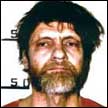
Content analysis is very important. We’re looking for indications of personalitywho they are and any identifying characteristics. We look at grammar, syntax, and level of vocabulary, which gives us an idea of the educational level. The content can be very telling. You can’t write very long without revealing things about yourself. There’s a leakage of clues about who you are. You expose yourself unconsciously. The Ted Kaczynski case was a great example of that. He wanted his 35,000-word manifesto published under threat of extortion, which became an ethical issue for the New York Times and other media sources. From an investigative point of view, our unit strongly recommended that the manifesto be published because we reasoned that this could be the key: He could not have written that many words without revealing himself. Somebody is going to know this guy. It’s like a fingerprint. And his brother’s wife read it and recognized it.
How do you gather information like this about someone who’s paranoid? Aren’t you afraid you might trigger him?
It’s common for us to deal with paranoid individuals and care is always appropriate. I don’t want to get too clinical, but there is a difference between paranoid schizophrenia, which is a true mental health problem that can be treated effectively through medication and therapy, and a paranoid personality disorder that cannot be treated effectively with medication. The intervention strategies obviously have to be different and are tailored on an individual basis. We don’t want to provoke the violence we’re trying to prevent. So we have to look at the nature and focus of the paranoiawho is it or what is it that the person is paranoid about? Sometimes it’s very fixed and other times it’s generalized. If he’s paranoid about, say, management in a company, he may think their supervisor is out to get him. So right away, we’ll take that person out of the mix.
Even if the allegations have no basis in fact, it doesn’t matter because it’s that individual’s perception of reality that counts. Say hypothetically that a paranoid individual perceives his supervisor as threatening, even though that is not true. It’s this person’s reality that we have to understand. The wrong thing to do is ignore the troubled individual’s perception because it is ‘factually’ wrong. Having that individual’s supervisor sit down and talk to that employee about the issue could have unwanted consequences. Even if that’s the chain of command and it’s what company or school policy advocates, it’s the wrong thing to do. So you think more creatively. You look for someone you might be able to use to bridge the gap and then develop a strategy for approaching this troubled individual in a benevolent and non-threatening manner.
We had a guy who was paranoid and depressed. He blamed every problem he had on the company, from his work environment to his sex life. He’d had back surgery and was in pain and on mediation. There were many problems in his life. He was repeatedly making threats and the decision was made that he had to be removed from the workplace. It was important that the termination be constructed so it would be difficult for him to conclude that the company was out to hurt him. We had to be creative. He was given a generous severance package and his health insurance was continued so that he could continue to receive the necessary medical care for his back. We shaped the termination to be as benevolent as possible.
The goal is to make it difficult for them to be angry with the company. We want each troubled employee to understand that the company has gone out of its way, which it did in that case, to look after him. When you do that, you reduce the potential for violence. The flip side is that you can elevate the potential for violence by being very hard and cruel, even if you’re right. The question we often pose to companies or schools is, “Do you want to be right or do you want to be safe?”
When you deal with situations in schools, do you encounter misperceptions about kids and violence?
Yes and that’s why it’s important to put the problem in the proper context and dispel the existing myths. There is currently about a one in two million chance of a school-associated violent death. That’s extraordinarily rare. When you overlay school-related violent deaths with violent deaths of children everywhere, the chance of a child being killed outside of school is about forty times greater than in school, but the public’s perception is quiet different. Polls indicate that most people believe that a school related violent death is likely to happen in their school. Therefore, the first thing to do, as with any problem, is to define it and put it into the proper perspective.
The problem we’ve had is an over-reaction to the threat of school violence, as seen in the implementation of many “zero-tolerance” policies. The results can be seen regularly in our newspapers and on the evening news, such as the incident in which an honor student was arrested when a kitchen knife was spotted on the floor of her car in the parking lot. It was there because she’d helped someone move over the weekend. She didn’t know that it was there and there was no credible threat, but now this young lady has a felony arrest record and may lose her college scholarship. There are also reports of elementary school children being suspended for mumbling things they heard at home. It can be quite bizarre. That’s an unintended consequence of not thinking about the long-term implications of such policies. Zero tolerance far too often equates to zero thinking. Each situation has to be handled on a case-by-case basis, and you have to make a reasoned judgment about the probability of danger. Sometimes there’s a clear need to suspend a student, but you can’t have a draconian response to something that’s not a real threat.
The checklist approach to kids [evaluating them in terms of a set of “risk traits”] gets us back to the generic profile. The problem is that you’ll get a false positive so many times, which means they’ll identify many people as being potentially dangerous who aren’t. And even when you have identified a troubled student, the situation can be made worse by treating him/her inappropriately. You don’t just kick the problem out of school. You have to take the time to do an evaluation to determine the most appropriate intervention strategies.
Do you find that school officials need to be educated in the development of violence, since there’s so much emphasis on the idea that someone can just snap?
Yes, that’s a big myth. No one just snaps. That’s one of the myths that we try to dispel, both for the workplace and in schools. No one is perfectly normal and content one day, and the next day comes in with guns and bombs and kills and commits multiple homicides and/or suicide. It just doesn’t happen. There’s generally a long painful devolutionary process, or a downward spiraling that’s taking place. Those closest to that individual are able to sense that. They’re the ones in the best position to do something about it. Many times the person gives off warning signswe refer to it as leakageand the people around them are in the best position to perceive a problem and seek help. No one just snaps. Many times, what becomes detectable is the withdrawal or an increase in paranoia. In the workplace, over half of these murders end in suicide. That speaks to the level of depression, and depression can be successfully treated. When a company or school engages in the benevolent act of treating troubled employees or troubled students with care, that action sets a positive tone that improves morale and lessens the potential for violence.
What about an obsession with violent entertainment?
That’s a factor, but it can be overemphasized. This is a parallel issue to pornography and sex crimes. Some people want to blame pornography for all sex crimes: An individual sees a sexually explicit film and then rapes someone. But it doesn’t work that way. The issue is that people with violent tendencies may be drawn to violent pornography because it validates what they want to do.
In a lot of contemporary films, the communicated message is that the hero solves his problems through violence, which often means killing a lot of people. Obviously this is not a good message. The good news is that most of us who view such movies know that’s wrong and would never be motivated to act out in such a manner. The problem arises with troubled individuals who may be at risk for violence. There’s a good book by Deborah Prothrow-Stith called Deadly Consequences: How Violence is Destroying our Teenage Population. She talks about this issue. She sees the problem as violence without consequences. If the consequences of violence are made known, that tends to weigh against violence being a good alternative. We know, however, that such an approach is less likely to work with the psychopaths among us who cannot empathize with the plight of others and are interested only in self-gratification, but that doesn’t mean we shouldn’t work to create a better and more civilized environment. Violence in our schools and in our workplaces is not an epidemic about which we need to panic. These are problems that we can address meaningfully and in so doing decrease the potential for tragedy.
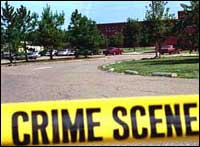
School violence, like workplace violence is not just the school’s problem or a company’s problem, and therefore neither are the solutions. Educators, parents, students, mental health professionals, law enforcement, and the community at large are all stakeholders. The best chance of minimizing the potential of this type of violence occurs when all of these major groups work together in a solution-generating process. That’s what we’ve got to continue to do.
Too often there’s a schism, such as that between law enforcement and mental health. There’s prejudice on both sides of the camp. I enjoy bringing these groups together in seminars to get them to interact, because they find out they’ve got more in common than they realized. No one likes violence. Everyone wants to do the right thing and prevent it, and working together is our best solution.