
Murder and a Movie: The Jeffrey Lamb Case — A Date with Death — Crime Library
A 911 call came late in the day on June 15, 2004, sending the Palm Beach County Police to Silver Beach Road in Lake Park, the home of Jeffrey Lamb. Lamb had been the caller, claiming through tears that his wife Cathy had been murdered. He’d come home from his job as a tow truck driver and found her on the kitchen floor, apparently bludgeoned to death. He stated that when he had tried to find a pulse, she had been unresponsive.
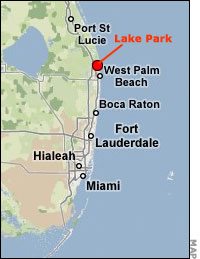
Emergency personnel found Lamb hysterical and hyperventilating, crying over his wife’s body. There were bruises on both her face and head, and part of her brain protruded through a vicious fracture in her skull. They were unable to detect any sign of life, so they transported Cathy to a hospital, where she was pronounced dead. An autopsy was ordered, and her body went to the morgue for further examination.
Although Lamb, 31, said he thought the house had been burglarized, the fierce bludgeoning of Cathy raised red flags. Someone intending burglary does not typically beat a homeowner so viciously. The police wanted to eliminate possible enemies who might have staged a false burglary to cover the murder. The place had been ransacked, certainly, and it appeared that items had been taken. In fact, Lamb told them, his wife had a pair of diamond earrings, one of which was missing.
There was no apparent murder weapon on the scene, but Lamb had blood on his pants. He had an explanation: When he found Cathy, he’d tried to help her, getting blood on his thumb, which he’d wiped off on his pants. As a routine precaution, detectives requested his clothing.
But there was another odd aspect to the crime: Police noticed that whoever had killed Cathy had also clobbered two of three dogs in the home. One was a mixed-breed pit bull, the other a German shepherd — guard dogs. Both had been beaten badly in the head, but had survived. Closed into a bedroom, the third dog, which belonged to Jeffrey Lamb, was unharmed. He said that when he came home, the dogs had seemed spooked and refused to come near him.
Police were familiar with one of the dogs, because they’d been called into a neighborhood incident in which the dog bit someone. Detectives believed one of these dogs might have bitten the intruder, which meant they might get DNA from inside their mouths. A crime scene processor carefully took swabs for testing. Then it was time to ask Lamb more questions.
It turned out that June 15 was the Lambs’ eleventh anniversary. Lamb admitted that they’d had some problems, resulting in a separation, but recently he’d moved back in. That evening they had planned a celebration: dinner and a movie. He and Cathy were getting along again and were discussing a reconciliation.
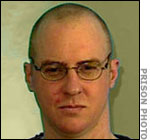
That all sounded feasible, but Lamb could not be ruled out as a suspect, especially when another woman, Joey Lee Steidel, showed up looking for him, claiming to be Lamb’s fiancée. Clearly, he had been lying to one or the other of these women. But it turned out that she, too, was married and had been living with Lamb off and on for the past five years.
When questioned about this, Lamb admitted he’d been engaged to her, but what made his story sound altogether hollow was Joey Lee’s statement that she had come to the house because she had heard that something had happened there. Since no news reports had aired, the only way she could have known was if Lamb had called and told her — or she had known about it ahead of time. The entire incident now looked even more suspicious. In fact, Ms. Steidel seemed a viable suspect. If Lamb was indeed reconciling with his wife, she might have been possessive enough to attack Cathy to keep Jeff for herself.
Investigators had a few questions for her as well, and she seemed amenable to telling detectives what she could. She said he had worked all day as a waitress at the Hurricane café and then heard that there was some commotion at the house where Jeffrey was staying. He’d been evicted from his own place, but had signed a lease that month to move in with her. Her coworkers verified that she had been there at the café, but just to be certain, police also administered a voice stress analysis.
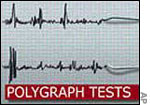
Since the early twentieth century, police agencies have been trying to find or invent fool-proof ways to detect when someone is lying. The early machines measured systolic blood pressure, under the assumption that blood flow changed during deception, and these attempts evolved into the polygraph.
Detectives might also use a method called statement analysis. Rather than using a question-and-answer format that might reveal too much information about the crime, the investigator simply asks a suspect, “What happened?” and leaves the person to fill in the blanks. He or she provides a written statement, either as a description of a specific event or as an alibi, but it can also be delivered verbally or on a recorder. The subject picks the starting and ending points, which can indicate more to detectives than if they asked, “What happened at 3:00 on Sunday, the 15th?”
Determining the truth of an account by analyzing certain aspects of how the narrator tells it supposedly presents a reliable way to check for deception. Analysts look for what’s revealed and what’s left out, as well as for inconsistencies or subjects that were clearly avoided. Statement analysis focuses on three parts: events leading up to a crime, the crime itself, and its aftermath.
Investigators note whether subjects provided more information than was requested or skipped over something crucial. Also, if the tone or speed of delivery changes, that can indicate something about the narrator’s feelings. Another clue is a change in language regarding another person, or sensitivity over some point, indicated by such things as a shift from first- to third-person. The analyst pays attention to the nuances, and the more experience they have the more efficient and accurate they are.
One idea about lying is that it is a more complicated activity than truth-telling and thus produces certain physiological reactions, such as a heightened pulse rate, dilated pupils, and certain behavioral manifestations. This is especially true if the stakes are high. However, some people get nervous under any circumstance and to further complicate the problem, psychopaths and pathological liars are good at deception. They appear to have lower levels of autonomic nervous activity and are not as adversely affected by the idea of punishment.
In general, however, the conditions under which people tend to be apprehensive about lying include situations in which: 1) the interrogator has a reputation for reading lies, 2) the interrogator acts suspicious, 3) the deceiver has little experience lying, and 4) the consequences of being found out are serious.

A device utilized by many police departments is the Psychological Stress Evaluator (PSE) for stress levels. People who advocate this method claim that the voice itself reveals deception by reaching a higher pitch, even when that person is unaware of being evaluated. The PSE does measure variations in emotional stress, although there is little evidence that it is accurate for deception. The machine detects and records it, showing the results on a readable graph. The advantage of this machine over the polygraph is that analysts avoid physical contact with the subject, and instead of using sensors rely on a microphone or tape recorder into which the subject speaks. PSE technicians claim it can detect differences in the voice not available to the human ear. The analyzer can even be used over the phone and in a variety of conditions, without the subject knowing.
However, American Polygraph Association’s study on the device concluded that for deception detection the voice stress analysis is no better than chance. They also pointed out that, while the Department of Defense uses polygraphs, it does not employ voice stress analysis in any investigative context.
At any rate, Joey Lee Steidel passed the test. Unless she was very good had controlling her physiological reactions, she was not lying. She also had no dog bites on her person.
The medical examiner, Dr. Barbara Wolf, did an autopsy on Cathy’s body to record and document the wounds, as well as determine the cause and mechanism of death. The cause was obvious: homicide. She had been hit reputedly with a blunt implement, and several clear impressions showed that, whatever it was, it had a hexagonal shape and made a repeat pattern. It had effectively crushed Cathy’s skull, leaving deep wounds, which indicated that the perpetrator was strong, so probably male, and that the weapon was heavy. Wolf estimated that Cathy had been beaten between 2:00 and 4:00 p.m.
While it’s difficult to be precise about time of death estimates, the sooner after a death they’re made, the more accurate they tend to be. Based on what Cathy had eaten that day for lunch and on other physiological indicators, such as developing rigor mortis and livor mortis, it appeared she had been dead for a while before the emergency call was made.
Detectives got busy canvassing the neighborhood. Since this crime had occurred in the middle of the day, they hoped to find area residents who had been home at the time and who might have seen someone they did not know, especially near the Lamb house. In case the intruder lived among them, investigators asked everyone about someone who might have recently received a dog bite. At each place where they questioned someone, they came away empty-handed. No one had seen anything and there were no injured men. That was discouraging, and precious hours ticked by without result.
The next task was to go through burglary reports to try to find someone who had used a similar MO, especially nearby. In the records they found a young man who’d been arrested in a home the day before Cathy’s murder, close to her neighborhood. This looked like a very good possibility. Police tracked down the perpetrator to ascertain his whereabouts during the time in question, but to their disappointment he proved he’d been elsewhere. He had no cuts, scratches or bites that revealed a recent struggle or a tangle with guard dogs, so there was no reason to detain him.
Yet the more they considered the incident at the Lamb house, the more one thing that bothered them: A burglar had entered a home with two vicious dogs. Even with a weapon, it was a high-risk situation, and hardly worth doing just to come away with a few pieces of jewelry — especially with other homes around that did not have such protection. It just didn’t add up.
The mouth swabs from the dogs came back negative for human DNA, so to acquire more information about how these dogs would act if a burglar came into the home, detectives consulted a specialist in canine behavior.
Animal Behavior consultants analyze the problems, needs, and patterns of animal-owner relationships. They educate owners about what they might be doing to elicit bad behavior in their dogs, show them how to enhance the relationship, provide behavior modification based in behavioral science methods, and make referrals. Their aim is to study the cycle of inappropriate behavior and institute state-of-the-art training to assist owners in better understanding the nature and temperament of their dogs. Some specialize in different breeds and can predict the risk of aggressive behavior, as well as determine when a dog’s problems are beyond salvaging. In this case, investigators wanted the behaviorist to tell them the most likely scenario should an intruder enter the Lamb residence.
When the expert looked at the dogs, which were typical for their breed, it was clear that Cathy’s dogs would not have cowered away from an intruder, but instead would have attacked without hesitation. A stranger wielding a weapon that made the blows to their heads might have gotten to one but not both. It therefore appeared that the dogs were familiar with whoever attacked them and had been in a non-defensive position, unprepared to be assaulted. Only the owner or someone living in the house — Cathy and Jeffrey — could probably get that close without sustaining severe biting.
Now the police turned their attention back to Jeffrey Lamb. He’d said that the dogs had seemed spooked and would not come near him. In addition, only Cathy’s dogs had been attacked; his had been safely in another room. Police had confiscated the clothing Lamb had worn that night, so they asked crime lab analysts to go over them — especially where blood had gotten on the jeans. Thus, the next special area of forensics was blood spatter pattern analysis.
Blood pattern analysis is a complicated discipline that requires experience with many different situations to be able to perform an accurate reading. Even then, it’s an interpretive art. Different types of bloodstains indicate how blood was projected from a wound. It may drip out, spray out, ooze, trickle, or be flung off a weapon raised to strike another blow. Scottish pathologist John Glaister formally classified blood patterns during the 1930s into six distinct types:
- Drops on a horizontal surface
- Splashes, from blood flying through the air and hitting a surface at an angle
- Pools around the body, which can show if it’s been dragged
- Spurts from a major artery or vein
- Smears left by movement of a bleeding person
- Trails, either in form of smears when a bleeding body is dragged, or in droplets when it is carried.
Any of these patterns or shapes can be traced to their point of origin by considering such factors as the surface on which it fell, the angle at which it hit, and the distance it traveled from the source. Thus, bloodstain patterns can assist investigators in interpreting the positions of wounded bodies and the means by which a victim and suspect moved through a crime scene. A reconstruction of the scene helps the investigators determine which of the witnesses and suspects is telling the truth or lying. With Cathy Lamb, there was castoff from the implement striking her several times, and her own movement before she died. There was no evidence from blood that she had been moved from where she was killed. There was not much of any complication at this scene.
However, the blood on Lamb’s jeans was a different matter. The shape of a blood drop, when it lands, can reveal significant information. The proportion can reveal the amount of energy needed to disburse droplets of those dimensions and the shape can illustrate the direction in which it was traveling and angle at which it struck the surface. Basic trigonometry enables investigators to develop a three-dimensional recreation of the area of blood’s origin.
If blood falls a short distance—around twelve inches—at a 45-degree angle, the marks tend to be circular. If it falls several feet straight down, the edges may become crenellated, and the farther the distance from the source to the surface, the more pronounced the crenellation. If there are many drops less than an eighth of an inch across, it may be concluded that the blood spatter resulted from an impact. If the source was in motion when the blood leaked or spurted, or if the drops flew through the air and hit an angled surface, the drops generally look like stretched-out exclamation marks.
Blood pattern analyst Stuart James analyzed the clothing seized from Jeffrey Lamb and found numerous spots of blood. Lamb had said he’d wiped off his thumb after getting blood on it, but this was no wipe mark, or even transfer from contact with the body.
Under a microscope, it was clear that the bloodstain was made by blood in flight that hit the denim fabric hard and penetrated. It was a pattern of droplets that went into the threads. Thus, Lamb had not only lied; he’d also been near his wife when she was bludgeoned.
More interesting than this discovery, according to the Palm Beach Post, was what they found in the jeans pocket: the missing diamond earring. However, this evidence was not part of the trial record, at least as reported by the local press, so it’s possible that the reporter got this part wrong, or that Lamb had said one earring was missing and this was the other one. In any event, no other article subsequent to this one noted it.
As investigators were exploring a case against Lamb, he drew attention to himself in a way he didn’t want.
On July 12, Lamb was arrested for choking, punching, and attempting to put handcuffs on his girlfriend at the home they shared in Jupiter. He was charged with misdemeanor battery and committed for psychiatric evaluation. It was the second such charge against him in the past three years, wrote Libby Wells in the Palm Beach Post. He was already on probation for a battering incident with another woman, allegedly a live-in girlfriend, from a 2001 incident. While neither was named, in court it came out that the July 12 incident involved Joey Lee, and since he had been dating her in 2001, it seems safe to assume that she may have been the victim in the first incident as well. This was not clarified. Lamb was also on probation for an embezzlement incident in 2000. Thus, he was dishonest, aggressive, and it was not out of character for him to hurt women.
To make a stronger case, investigators got Lamb’s cell phone records from June 15. Although he had claimed to be at work all day, since he was a tow truck driver he could have left without anyone noticing. Records of the places where he’d used his cell phone indicated that at one point during the day, he was not far from home — just about the time at which Cathy was attacked. Shortly after the murder, Lamb had also filed for a life insurance payment of $27,000.

On August 26, over two months after the homicide, officers from the Palm Beach County Sheriff’s Office arrested Lamb, charging him with cruelty to animals, filing a false insurance claim, and first-degree murder. They didn’t have far to go, as he was already in the county jail for violating his probation with the assault incident. Whether the murder had been a heat-of-the-moment attack or a pre-planned event had yet to be determined, but given the manner of cover-up and staging, it looked more like a premeditated event.
Then another piece of potential evidence turned up. One of Lamb’s coworkers from Superior Towing alerted police to a tire iron tossed onto the warehouse roof. It looked like a viable weapon — heavy and the right shape to have crushed a skull and made the peculiar wounds. If Lamb had handled it, using it to bludgeon his wife and pets, the evidence should be on it, so the implement was sent for testing and examination.
According to the press, the ME spotted the pattern right away as a match for the wounds. The tire iron had two heads, made specifically for Dually trucks, which Lamb drove, and this double head would leave a distinctive pattern. DNA testing, however, was less revealing: the weapon had been thoroughly cleaned. While it could not be tied to Lamb, it seemed to be a good candidate for the implement used on Cathy. The rest would be for a jury to decide. Lamb claimed to be innocent, but if found guilty he faced execution by lethal injection.
As the prosecutor, Craig Williams, prepared the case, there was yet another striking discovery. A lab technician going over the evidence discovered a spot of blood on the bottom of Lamb’s dark-colored socks. As with the blood on the jeans, this was clearly not a wipe pattern. The first technician had missed it, which would make the lab look less than efficient, but it was an important piece of evidence nonetheless. Without an eyewitness or smoking gun, the team needed a strong circumstantial case.
Williams opened by stating what he believed had occurred on June 15, 2004: Lamb had driven home from his workplace in his girlfriend’s car, bludgeoned his wife, and then beat off the dogs when they tried to protect her. They had not been prepared to defend her at first because they were used to Lamb. Thus, he managed to avoid getting bitten. Then he drove back to the tow company, got into his truck and returned to the house again as if coming home for the night, and then called 911. He had an “alibi,” in that coworkers had seen his tow truck at work during the time of the murder.
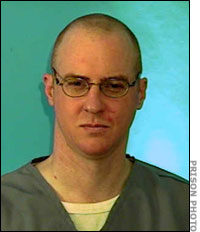
His motive: money. He’d staged a burglary but took the diamond earring himself and filed for the insurance payment. To hide the weapon, he cleaned it and tossed it on the warehouse roof.
Richard Lubin, appointed to defend Lamb, stated that Lamb had an alibi for the time of the murder — he was at work, there was a reasonable explanation for the blood on his clothing, and the crime scene analysis had been too flawed to make a clear determination of guilt. Evidence had not been preserved well, including the blood. In addition, blood spatter pattern analysis was not a science and there were other interpretations for how blood had gotten on his clothing — including being planted at the lab just before the trial to strengthen their case. In addition, nothing tied Lamb to the tire iron and he had fully cooperated with police up until the point at which they’d made it clear they were actively investigating him. His client was an innocent man.
As covered by the Palm Beach Post and South Florida Sun-Sentinel, testimony addressed several of the mysteries about Jeffrey Lamb. A former friend, John Corporal, had known that Lamb had both a girlfriend and wife — “Jeff likes to have his cake and eat it, too,” he said. Lamb had signed a lease for an apartment at the same time he was pretending to reconcile with his wife Cathy and move back in with her. But his girlfriend, Joey Lee Steidel, was in the apartment, and she was aware that he was living at Cathy’s. Corporal had also heard Jeff say ominous things about Cathy, hinting it would be easier on him if she were out of the picture. He’d once stated that he intended to hire someone to kill her.
Joey Lee admitted that she and Lamb had been engaged on and off over the five years they’d dated, sometimes living together, despite the fact that both were already married. Her husband was living in Illinois. She had expected to move into the apartment with Lamb that June, yet during the weeks following Cathy’s murder, Lamb had been in a persistently foul mood, so she had decided to leave him (she was not allowed to explain the circumstances). Joey Lee then described the evening that Lamb had attacked her. On July 12, she came home to find him trying to hang himself from a swing set in the back yard. She helped him to go back into the house, but he turned on her, choking and hitting her. “I damn near passed out,” she testified. “He’s sitting there pushing me and punching me and slapping me and hitting me and trying to get these handcuffs on me.” She managed to call the police to get them to come and arrest Lamb. He was charged and taken to jail. She testified that she then realized that Lamb was fully capable of killing his wife, and at this point she had stopped believing in his innocence.
While Lamb had been in jail awaiting trial, he’d written Joey Lee a letter — which Lubin had tried hard to keep out of the proceedings. In it, Lamb admitted that he’d lived badly, and he now needed her help. It was not an admission of guilt by any means, but Williams said it was suggestive.
Joey Lee then described how she had gone to Cathy Lamb’s home after the murder: she found Lamb there, and he kept telling her he was “sorry.” He did not say for what, but he apparently repeated this phrase over and over.
Lubin cross-examined Joey Lee, attempting to get her to admit that Lamb had been in an impaired state of mind at the time he’d written this letter. He suggested that the date coincided first with his discovery of her in bed with another man, and second, with the anniversary of his father’s death. She declined to affirm either reason.
The trial continued with the expert testimony.
Crime lab analysts took the stand to talk about the weapon and the blood spatter evidence, but the surprise witness was Dr. Barbara Wolf, the Park County associate medical examiner who had conducted the autopsy, was now the Lee County coroner, and who testified for the defense. Inexplicably, Williams had not called her to discuss the autopsy, electing to present evidence about the weapon and wound patterns without her. It was soon clear why. Despite her earlier finding that the tire iron matched the pattern, as reported in the press, she now stated that it could not have been the murder weapon. Apparently she had decided this from the fact that there was no DNA or blood present on it.
Williams insisted that Wolf was offering false testimony for money, although he failed to prove that she had ever definitively stated that the tire iron was the weapon they were looking for. Her credibility would be a matter for the jury to decide. Lubin helped this matter along by stating that other types of weapons could cause this pattern of injury, although he did not describe them — at least, not that reporters noted.
In closing, Lubin challenged every piece of evidence and interpretation, stating that nothing from Lamb’s past life affirmed that money motivated him, so there was no good reason to attribute that motive to him now. The murder of Cathy Lamb had been a senseless act, Lubin said, but they were trying to wrong man for it. Lamb had been trying to make things work with Cathy and had even bought her a car that day for their anniversary. What reason would he have to kill her?
However, Williams reminded jurors that while Cathy’s dogs were both beaten during the murder, Lamb’s dog had been uninjured “Who else would take the time and care to separate those dogs?” he asked. He also reiterated his case and said that there had been no other suspects.
Finally, both sides closed. It seemed that the blood evidence bore the most weight for the jury, because during deliberations members asked to examine Lamb’s sock. An hour later, they had a unanimous verdict.
On September 12, 2006, Jeffrey Lamb was found guilty. As he listened, reportedly his expression was unreadable. Afterward, Lubin stated he’d never been more profoundly disappointed in a verdict in his life. He thought the case was riddled with reasonable doubt and could not understand how the jury had not seen that.
During testimony for the sentencing phase, which included a plea from Lamb’s mother, there was speculation that Lamb would take the stand to ask for mercy. Lubin had said it was a possibility, but in the end Lamb did not. The jury had to decide if the murder had been cold and calculated, or if there were mitigating factors involved, and in Florida this did not have to be a unanimous vote. To give the death sentence, at least seven jurors had to vote for it, according to the Palm Beach Post, but whatever the jury recommended, the judge would not be bound by it.
To wrap it up, Williams emphasized that the murder had been planned for the cash payout and was therefore heinous and unjustifiable. Lubin responded that there was humanity in Lamb, as witnessed by the testimony of his relatives, and there was no reason to exact the worst punishment. Although there appeared to have been no abuse or serious trauma in Lamb’s life to explain such violence, his brother described how difficult their father’s death when Lamb was 12 had been for him. Still, there was evidence of other kinds of criminal behavior — the assault incidents and the embezzlement.
The jury voted unanimously to give him life in prison rather than the death penalty, and on November 1, the judge accepted this recommendation. Lamb continued to proclaim his innocence.
Diaz, Missy. “Killer Escapes Death Penalty: Man Who Beat Wife to Death Gets Life without Parole,” South Florida Sun-Sentinel, September 16, 2006.
Gomez, Alan. “Ex-Pal: Man Wanted His Wife Out of the Picture,” Palm Beach Post, December 17, 2004.
“Insurance Police Allegedly Motivated Jeffrey Lamb,” WPBF.com, August 27, 2004.
Keller, Larry. “State Balks at Request for Fees in Capital Case,” Palm Beach Post, December 10, 2006.
—”Husband Gets Life in Wife’s Murder,” Palm Beach Post, November 22, 2006.
—”Girlfriend Grilled on Suspect’s Letter,” Palm Beach Post, August 23, 2006.
—”Man Gets Life for ’04 Killing of Ex-Girlfriend,” Palm Beach Post, October 14, 2006.
—”Jury Urges Life for Man who Killed Wife,” Palm Beach Post, September 16, 2006.
—”Murderer Unlikely to Testify During Penalty Phase,” Palm Beach Post, September 14, 2006.
—”Silence Leads to Dismissal of Jury, Palm Beach Post, August 5, 2006.
McCabe, Scott. “Officials Charge Husband in Estranged Wife’s Slaying,” Palm Beach Post, August 27, 2004.
Othon, Nancy. “Lake Park Man Convicted of Killing Wife with Tire Iron; Life-or-death Decisions Up to Jurors,” South Florida Sun-Sentinel, September 12, 2006.
—”Jury Weighs Murder Case,” South Florida Sun-Sentinel, September 8, 2006.
Spencer-Wednel, Susan. “Case of Lake Park Man Charged with Killing Wife Opens,” Palm Beach Post, August 18, 2006.
Stoddard, Missy. “Juror Dishonesty Halts Murder Trial,” South Florida Sun-Sentinel, August 5, 2006.
Wells, Libby. “Widower Accused of Abusing Roommate,” Palm Beach Post, July 30, 2004.
“Woman and Dog Beaten with Tire Iron,” pet-abuse.com, June 15, 2004.