
School Killers — The List — Crime Library
In the late 1990s, it seemed like an epidemic had hit American schools: Children were acquiring guns and bombs, and then going to school to kill teachers and classmates. Various cultural influences were targeted for blame, such as Stephen King’s novel, Rage, a film, The Basketball Diaries, and the Pearl Jam video, “Jeremy.” Violent videogames also entered the discussions, as did the influences of cults like Satanism. Yet a look back reveals some of the earlier incidents as well. The following is a timeline of school violence that grabbed national attention:
-
January 1979 — Brenda Spencer, 17, got a rifle for Christmas and used it to shoot into an elementary school across the street from her home in San Diego, California. Eight children and a police officer were injured, and two men lost their lives protecting the kids. When the six-hour standoff finally ended, Brenda explained with a shrug, “I don’t like Mondays.”
-
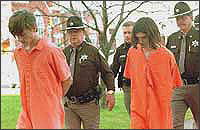
March 2, 1987 — Nathan Ferris, 12, was an honor student in Missouri, where he finally got tired of being teased. He brought a pistol to school and when a classmate made fun of him, he killed the other boy. Then he turned the gun on himself. He had warned a friend not to attend school that day, signaling his plans, but no one had listened to this overweight loner.
-
November 15th, 1995 — Jamie Rouse, 17, dressed in black, went into Richland School in Giles County, Tennessee, with a .22-calibre Remington Viper. He shot two teachers in the head, one of them fatally. Then with a smile, he took aim at the football coach, but a female student walked into his path and was killed with a shot to the throat. Rouse had told five friends exactly how he had planned this killing, but no one had called for help.
-
February 2, 1996 — Barry Loukaitis, 14, dressed up like a gunslinger from the Wild West and went into his algebra class in Moses Lake, Washington. Concealed in his long duster were two pistols, seventy-eight rounds of ammunition, and a high-powered rifle. His first victim was 14-year-old Manuel Vela, who later died. Another classmate fell with a bullet to his chest, and then Loukaitis shot his teacher in the back as she was writing a problem on the blackboard. A 13-year-old girl took the fourth bullet in her arm. Then the shooter took hostages, allowing the wounded to be removed, but was stymied by a teacher who rushed him and put an end to the irrational siege. In all, three people died, and Loukaitis blamed “mood swings.” A classmate claimed that Loukaitis had thought it would be “fun” to go on a killing spree.
-
February 2, 1996 — David Dubose, Jr., 16, killed a teacher in a school hallway in Atlanta, Georgia.
-
January 27, 1997 — Tronneal Mangum, 13, shot and killed another student in front of their school.
-
February 19, 1997 — Evan Ramsey, 16, went to Bethel High School in Alaska with a shotgun. This is the place where other kids called him “retarded” and “spaz.” He killed a boy with whom he’d argued and then injured two other students. Then he went to the administration office and shot the principal, Ron Edwards, killing him instantly. Police came quickly and ended the rampage, which appeared to be motivated only by some amorphous rage. Two fourteen-year-old friends who had discussed Ramsey’s plan with him were arrested as accomplices.
-
October 1, 1997 — Luke Woodham, 16, worshipped Adolph Hitler, perhaps because it made him feel powerful in light of the bullying he received from classmates in Pearl, Mississippi. When his girlfriend broke up with him, he went into a rage. He slashed and stabbed his mother that morning, then went to school with a rifle and a pistol. Right away he killed his former girlfriend and then another girl. Yet he didn’t stop there. Seven other students were wounded before he ran out of ammunition. He returned to his car for his other gun, and that’s where the assistant principal disarmed him. He complained that the world had wronged him and he just couldn’t take it anymore.
“I killed because people like me are mistreated every day,” he said. “I did this to show society: Push us and we will push back.”
Two members of his group devoted to Hitler were charged as accessories to murder, and others were arrested on the basis of a conspiracy, but those charges were later dismissed. Woodham claimed at trial that he’d been possessed by demons that were manipulated by a member of his group.
-
December 1, 1997 — Michael Carneal, 14, liked to wear black and was thought by classmates in Paducah, Kentucky, to be a Satanist. That morning, he brought a gun to school and opened fire on a small prayer group. Three girls died and five other students were wounded. Another student tackled him, and it was soon revealed that Carneal had a pistol, two rifles, and two shotguns, along with 700 rounds of ammunition, all of it stolen. He’d threatened earlier to “shoot up” the school, but no one had taken him seriously.
-
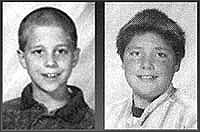
March 24, 1998 – Andrew Golden, 11, and his gun buddy, Mitchell Johnson, 13, dressed in camouflage fatigues and then gunned down fifteen people at the Westside Middle School playground in Jonesboro, Arkansas. Five died, all of them female and four were children. The boys had a van stocked full of ammunition and guns, which they took from their kin. Golden went into the school and set off a fire alarm, then ran to where Johnson lay in position with the rifles. As people filed out for the fire drill, the boys began shooting.
Andrew Wurst (AP)
-
April 24, 1998 — Andrew J. Wurst, 14, liked to threaten other people and then laugh it off. However, no one was laughing when he took a pistol into the eighth-grade graduation dance in Edinboro, Pennsylvania, and killed a popular teacher. Then he opened fire into the crowd, wounding another teacher and two classmates before he ran out. The banquet hall owner went after him, disarmed him, and held him for police, but the boy acted as if the whole thing was a big joke.
-
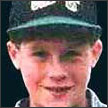
May 21, 1998 — Kipland Kinkel, 15, had just been expelled from school in Springfield, Oregon, for carrying a gun to class. He returned with a semiautomatic rifle and went into the cafeteria, where he started shooting. He killed one student and wounded eight others, one of whom later died, and he also caused a stampede that resulted in more injuries. He was disarmed and taken to the police station, where he withdrew a hidden knife. He claimed he wanted to die. Police officers who went to his home discovered that he’d killed both of his parents and had booby-trapped the house with five homemade bombs—one of which he’d placed underneath his mother’s corpse. His classmates had once dubbed him the student “most likely to start World War III.”
Let’s take a closer look at the influences in Kinkel’s life that might have helped to anticipate his explosion of violence.
School Killers
Kipland Kinkel
yearbook (AP)
When Kinkel was taken from school after being expelled for having a loaded pistol, he was terrified of what his father would say. He’d long felt belittled and ashamed that he couldn’t live up to his popular and athletic older sister, his only sibling and six years his senior, and this incident would just make things worse. He felt that he had nowhere to turn and no choice but to end his parents’ lives. From that moment forward, he planned how he would do it, and then (according to some accounts) how he would make sure that he, too, would die—but not before getting back at classmates who’d made him feel worthless.
Yet there was something else about this kid besides just failing to be part of the popular crowd. The way he planned and carried out what he did on May 21, 1998, speaks to something a bit more malignant: He may have been psychopathic. Child psychologist Jonathan Kellerman, author of Savage Spawn: Reflections on Violent Children, includes him in a list of children who have acted out violence with cold calculation. He recounts how Kinkel slew his parents, spent the night with their bodies in the home, booby-trapped the house with bombs, stole the car, and drove twenty minutes to school the next morning with a semiautomatic rifle and Glock pistol, with the intent to spray many rounds of bullets into people he knew. This was his world and he was wantonly destroying it over something as minor as a school violation. He even had a knife strapped to his leg and some pepper spray, which he tried using against the arresting police officer. His crime showed a finely honed and detailed sense of premeditation, and in fact, over the previous few years, he’d been slowly arming himself with numerous guns and explosives.
“What turns them on,” says Kellerman about children like Kinkel, “is the kick, the high, the slaking of impulse…the subjugation of the rest of us.” According to him, “Bad people are really different.” They can seem quiet and shy, but that may in fact be the emotional flatness that signals psychopathy and that keeps them calm throughout their violent episodes. A good predictor of dangerousness in children, he says, is the combination of a certain temperament with a chaotic environment. Yet Kinkel did not come from a chaotic home—or could it be that the placid environment his sister Kristin had known for several years before he was born had changed and was thus chaotic to him?
Kinkel (AP)
By early adolescence, he set about making himself into someone that others regarded as “dangerous.” He hung out with kids who got him involved in petty theft, and when he was caught, he knew this was yet another disappointment for his parents. He framed the lyrics from Marilyn Manson’s song, “The Reflecting God,” to the effect that there was no salvation, and then became fascinated with explosives. His was a disturbed mind, and he embraced emblems of despair. Unbeknownst to his parents, Bill and Faith, he collected a small library of books about making bombs, and classmates viewed him as something of an expert. Thus, he accomplished a sense of mastery, power, and dangerousness all at once. He was not about to give it up, and instead he added to it by collecting guns and hiding his stash from his family.
In 1999, PBS’s “Frontline” produced a thorough documentary of Kip Kinkel, called “The Killer at Thurston High.” They interviewed friends, school personnel, and even Kristin Kinkel to try to find an answer as to why he’d want so badly for others to regard him as dangerous. From all appearances, he’d been raised by two schoolteachers who were good people, who wanted to get the most out of life, and who provided a nice home out in the country. How could they possibly have raised a killer?
While there’s no formula for knowing exactly what goes wrong in the life of a kid, there appear to be several factors that joined in just the wrong way for Kinkel—factors that were not true for his sister, who was raised in the same home:
- His parents went to Spain for a year when he was young and put him into a non-English-speaking school, which placed him at a severe disadvantage.
- He experienced other failures early, such as an inability to perform athletically like his sister, and once back in Oregon, an inability to do well in school.
- He was dyslexic in the midst of a family that was immersed in academics.
- He was clumsy, while his father was a star tennis player.
- He came to believe that he disappointed his parents, probably through watching their complete approval of their firstborn.
- He was small and weak, and he looked for ways to empower himself.
- He had a poorly-managed temper and he participated in some antisocial activities, such as throwing rocks at cars. He claimed he’d also blown up cats and a cow.
- His father, too, had a temper, which frightened Kip, and he was quick to show judgment. He expected a lot from both of his children.
- Kip set off explosives that he made himself to vent his feelings.
- As he learned about the power of firearms, he struggled against his father, who wanted to keep guns out of the home. Then he changed his mind and allowed Kip to take some gun safety lessons and bought him some rather high-powered rifles, as well as a lethal hunting knife.
- Eventually, Kip’s parents took him to a therapist—a move his father was against—and while the therapist felt that Kip should not have guns, he proudly talked with Kip about his own Glock 9-mm handguns. Thus, Kip got a dose of ambivalence about guns from several authority figures.
- Kip was put on Prozac for depression, but when he seemed to be doing better, he stopped taking it.
- He wrote in his journals about how much he hated himself, how lonely he was, and how he wished he were bigger.
- He had a crush on a girl, who did not share his intense feelings, so he identified with a brutal version of Romeo and Juliet, starring Leonardo DiCaprio, which was then in vogue among teenagers. In this film, violence and suicide are highly glamorized. Kip also wrote about his “cold, black heart,” and added, “As soon as my hope is gone, people die.” To his mind, love only inspired hate.
Given all these factors, which is most to blame? Did Kip’s parents inadvertently handle things badly? Was Kip born with a predisposition such that, no matter what they did, he would have turned out to be violent? Was he influenced by the songs and films that advocated hopelessness and death? Or was there something else?
According to Robin Karr-Morse and Meredith S. Wiley in Ghosts in the Nursery, the roots of violence develop in the first two years of our lives, starting at conception. “With the exception of certain rare head injuries,” they claim, “no one biological or sociological factor by itself predisposes a child to violent behavior. The research underscores that it is the interaction of multiple factors which may set the stage.” In other words, it’s not due to a negative experience, a brain disorder, genetics, or mistakes in parenting, but it could be the result of a cumulative effect of a combination of factors, along with the failure of normal protective systems in the environment.
Among those factors associated with violence, they list
- harmful substances ingested by mothers during pregnancy
- chronic maternal stress during pregnancy
- low birth weight
- early maternal rejection or abuse
- nutritional deficiencies
- low verbal IQ
- ADHD
- lack of consistency among caregivers in early life
- ineffective discipline
- severe neglect
While none are considered causal, in certain combinations and with certain dispositions, they can provoke anger, lack of anger management skills, and violence against self or others. If these kids don’t connect early, there can be problems later in life. “Babies reflect back what they absorb,” the authors say, and that notion has serious implications. If we fail to address the issues of competent child-rearing and healthy pregnancies, one in twenty babies born today will end up behind bars, as Kip Kinkel did.
Because he had access to funds and to people selling stolen guns, he was expelled, but even before that, the negatives were obviously accumulating. Then the police took him away and called his father to come get him, a humiliation in itself, and he had to think once more about what Bill was going to say about this disgrace. He decided then and there that all hope was gone. He went to his room, got his semiautomatic rifle, and then returned to the kitchen and shot his father to death. Then he called a friend and talked for a while as he waited for his mother to come home. She arrived around 6, parked in the garage downstairs and began to go up the steps. Kip came and told her he loved her before he shot her six times.
He covered the bodies of both of his parents with sheets and as he waited through the night, he placed homemade bombs around the home, putting one under his mother’s body. He then turned on the soundtrack to Romeo and Juliet to play continuously, and left a note, “I have killed my parents. I am a horrible son.” In his journal, he’d written, “My head just doesn’t work right. Goddam these voices in my head.”
(AP)
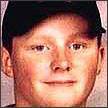
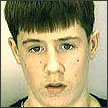
Then he went to school with his rifle and a pistol, and in less than a minute shot 48 rounds into his classmates. He put a rifle to one boy’s head and killed him. He’d also fatally wounded another and hit eight more. Fifteen kids were hurt in the stampede to escape. Some kids wrestled him to the floor and he begged, “Just kill me.” When taken into custody and questioned about why he’d done this, he just kept saying through tears, “I had no other choice…I had to.”
mugshot (AP)
Though he was 15, Kinkel was certified to be tried as an adult. He’d initiated an insanity defense, but dropped it and pled guilty to four counts of first-degree murder and twenty-four counts of attempted murder. He was sentenced to 112 years in prison without parole.
Things seemed quiet for awhile in schools around the country. Then nearly one year after Kinkel’s rampage, on April 20, 1999, on the anniversary of Adolph Hitler’s birthday in 1889, the school killings reached their apex with the tragedy that occurred in Columbine High School in Littleton, Colorado. Two more angry kids acquired guns and bombs and plotted a day their classmates would never forget.
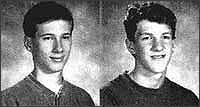
Dylan Klebold, 17, and Eric Harris, 18, had a plan. Obsessed with violent video games and paramilitary techniques, they spent a year collecting an arsenal of semiautomatic guns and homemade bombs with which to perpetrate a crime that the nation would never forget.
Dubbed “the Trenchcoat Mafia” for their habit of wearing black trench coats, the boys had long been bullied and scorned by classmates, so they decided to flex a little muscle. Having no particular reason to live, they decided to kill themselves, but in the process they also wanted to kill as many of their classmates as they could and blow up the school.
The day before their rampage, they sent an email to the local police declaring that their revenge against those who ridiculed them had been accomplished. They blamed parents and teachers for turning their children into intolerant sheep, and then announced their own suicide. It was a bizarre forewarning.
At 11:30 a.m. on April 20, 1999, they hid weapons and bombs beneath their trench coats and then ran through the school, yelling and shooting. When they reached the library, they cornered and killed their largest number of victims before turning their guns on themselves. It all happened quickly, but with devastating impact. After police got into the building, they counted 34 casualties. Fifteen students died in the melee, including the shooters.
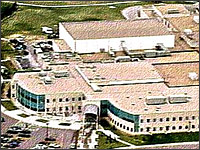
Then Harris’s diary turned up, which confirmed how elaborately they had planned the shocking event. For over a year, they worked at it, drawing maps, collecting weapons, and devising a system of silent hand signals for coordinating their moves. They’d purchased the guns via Harris’s girlfriend at a gun show.
The final report indicated that the two were part of a larger organized network, and that their motives and ideas were intense, but confused. In short, they appeared to have been angry, bitter kids who had access to guns and who were spurred by images of violence to act out their anger against those they most detested—classmates who fit in better than they did.
Yet the Columbine massacre didn’t stop there. Not only did a mother of one of the wounded walk into a gun shop and proceed to shoot herself in the head, but a 17-year-old student was jailed for threatening to “finish the job.”
In fact, around the country there were a number of copycat overtures that closed down schools in several states, and eventually one of them succeeded.
Across the nation after the 1999 Columbine tragedy, other kids called in bomb threats, wore trench coats to school, or used the Internet to praise what Klebold and Harris had done. Only ten days later, on April 30, people feared the eruption of some major event because that day marked Hitler’s suicide in 1945. Schools in Arizona, New Jersey, Michigan, North Carolina, and DC closed to investigate potential threats. It wasn’t Paducah, or Jonesboro, or Springfield that they wanted to imitate; the mantra was “Columbine.”
- On May 13th, four middle school children plotted to force their principal at gunpoint to call a school assembly, at which time they were going to massacre everyone at the gathering. They were then going to kill themselves. Two of the boys involved were 14 and the other two were 13. Classmates whom they attempted to enlist for help turned them in. A judge ordered them to be tried as adults on charges of conspiracy to commit murder.
- On May 20th, Anthony Solomon, a sophomore, opened fire on schoolmates at Heritage High School in Conyers, Georgia, injuring six. It was the final day of classes for the year. Witnesses said that he had a rifle and a revolver, and that he’d placed the revolver in his mouth as if to shoot himself, although he didn’t pull the trigger.
- On June 14th, in Sunrise, Florida, a 13-year-old girl was charged with crafting a scheme to kill her classmates and teachers. She had met with friends three days after the Columbine massacre and showed them a map of the school’s surveillance system. Then she showed them a hit list that included the names of nine students and school personnel, and described her getaway plan.
Then over a year went by with an apparent lull. Parents and school officials breathed a collective sigh of relief. Yet it wasn’t over. Kids hadn’t forgotten.
- In Hoyt, Kansas on February 5th, 2001, three students who admired the Columbine killers were arrested for planning an attack on their high school. In their homes were bomb-making materials, floor plans of the school, ammunition, white supremacist drawings, and a modified assault rifle. They each also possessed a black trench coat. They were charged with conspiracy to commit aggravated arson.
(Mike Blake/Reuters/TIMEPIX)
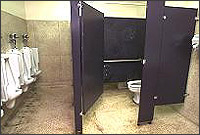
- Then on March 5, 2001, in Santee, California, 15-year-old Charles Andrew Williams went through with his threat at Santana High School. Tired of being bullied for being small and pale, he had told friends that he was going to go on a shooting spree. Then he assured them he was joking. Nevertheless, he opened fire in a high school bathroom that morning with his father’s .22-calibre revolver, killing two students, 14 and 17, and wounding 13 in the nation’s deadliest school attack since Columbine. One witness said the boy had a smile on his face as he fired away. From the bathroom, he stepped out into the quad, reloading as many as four times and randomly firing around thirty bullets. Then he retreated back into the bathroom, where he surrendered.
- Police officers, who removed seven rifles from the home where he lived with his father, said he will be charged as an adult with murder, assault with a deadly weapon and gun possession. While many people believed there was no motive, students who knew him disagreed.
”He was picked on all the time,” said one. ”He was picked on because he was one of the scrawniest guys. People called him freak, dork, nerd, stuff like that.”
Bullying by peers can be brutal, it’s true, but what’s wrong with these kids? Lots of people get picked on, but don’t reach for guns and bombs as the appropriate response. Is there something that makes these kids different?
Some are just angry and may have been influenced by violence in games, movies, or on television shows. However, there does appear to be a group of children that is set apart: those with “rejection sensitivity.”
A study published in 1999 indicates that children who expect to be rejected tend to perceive more hostility and rejection in ambiguous comments than those who are not so sensitive. Such children then behave aggressively and experience increased interpersonal difficulties, along with declining social functioning. That makes them get rejected more often, which deepens the psychological damage. They become distressed and then act out.
However it takes more than just feelings of hostility to form a plan to kill someone—particularly if you have a number of people in mind as targets. Psychologists Derek Miller and John Looney studied adolescent killers back in the 1970s and noted that they often showed a significant capacity to dehumanize others, and this was often produced under stress. Those at high risk to kill saw others as objects that thwarted them. This perspective developed because these kids were often themselves dehumanized—abused, called names, or slighted. They did not view themselves as valuable, so they could not easily view others as valuable. In fact, the extent to which they were dehumanized was a good measure of the likelihood that they would do the same to others.
When kids feel less than human and grow up in a social environment that tacitly permits them to act out violently, they may decide that the only way to rehumanize themselves is to eliminate those who have belittled them.
One professional decided to go to the kids themselves and see what they had to say.
Dr. Helen Smith is a forensic psychologist in Knoxville, Tennessee. She has evaluated over five thousand mentally-disturbed children and adults, and has become an expert on kids who kill. She did a national survey of violent and nonviolent kids, which means she had the opportunity to hear what kids themselves had to say. In her book, The Scarred Heart, she discusses what she believes is behind the recent spate of school violence. While school nerds who were bullied once chose the course of suicide as the way out, she notes, now they see another way to take action and get attention: strike out. Using guns and being violent toward others moves them from powerlessness to power, from nobodies to media celebrities.
On one of the survey forms, for example, she received the following response from a white, 18-year-old senior in New York. When asked what he did when he was feeling bad, he said, “Listen to Metallica because I like the angry lyrics. I enjoy reading and listening to things that talk about the destruction of the standing social order. Sometimes when I am angry or lonely, I look at pornography and fantasize about raping the popular girls at my school. Other times I think about building bombs and lighting shit on fire.”
Later in the survey he said, “Given the current social structures in American schools, serious violence and terrorism by youths is inevitable. Even if a student who is constantly degraded doesn’t commit a serious crime at school, the chances for him or her becoming a violent offender later in life are increased. I use myself as an example. I am already active in the right-wing, and its only a matter of time before I will be willing to follow the example set by Tim McVeigh. I plan to join the military to get the skills I need to take out my rage on others. I am probably a potential serial killer as well. Soon, fantasies about rape and murder of teenage girls will no longer be sufficient. My interest in arson and explosives would also be troubling to anyone who knew of my inner thoughts. Currently, I am planning to torch an abandoned barn and then listen to the fire department on my scanner just to see what it would be like.”
This is a boy who has not yet revealed his violence in action, but it simmers beneath the surface. He may be in the minority, but he’s not alone in feeling anger and the need to lash out.
Smith objects to the way many experts blame violent television, mental disturbance (the “bad seed”), or some rock group’s edgy lyrics for the school killings. Those experts, she contends, aren’t listening to the kids. She believes that violence comes from the accumulation of many distorted thoughts and stressors that finally send a child over the edge. In short, it’s the way he or she processes what they see, hear, and experience. Kids who use violence to solve a problem have already had a number of violent thoughts. They perceive their environment and their situation in such a way that violence seems the best mode of action. That is, children who kill are predisposed to kill. They don’t just snap. They have a restricted view of other people’s rights and they feel they must bring their situation to some dramatic conclusion.
Smith compares the process of understanding these kids to research on cancer: Researchers found that cells become cancerous after a sequence of failures strips away layers of defenses and disease-fighting strategies. Violence in kids is similarly a complex process that builds over time. Some of these kids who appear to be normal may just be going through the motions in order to fit in; they aren’t necessarily feeling normal or good about anything. If a kid gives off any signals, or even warns someone that he might explode, people tend to look the other way—-as many people have admitted in the aftermath of some of the school killings. It’s also true that people just don’t pay attention: While adults who knew school killer Andrew Golden from Jonesboro as a nice kid, those who played with him realized that he could be quite vicious.
School killers stand out from other types of kids who resort to violence; they’re not like gang members, young drug dealers, kids from violent homes, or fledgling psychopaths. They possess different motives and different traits.
“There are a number of characteristics that one can spot in a potentially violent kid,” says Smith. “Some are obvious, such as talking constantly about harming others and making direct threats such as ‘I want to kill my principal.’ Direct threats are more likely to be acted out on than indirect ones such as ‘I feel like killing someone.’ Other recognizable traits are high self-esteem. Suburban kids who kill often are narcissistic and talk about how great they are. They tend to believe others have no rights. They are easily offended if they believe they are being judged. These violent kids may also do other things such as torture animals or siblings, talk about death and have a fascination with guns beyond what is normal for adolescent boys.”
Another conspicuous trait is the feeling of entitlement. “School killers feel entitled to be treated well and they react angrily when they are rejected. A majority of violent kids at school admit that ‘school feels like a jail sentence.’ They feel the rules are unfair—there is one set of rules for the popular kids and another set of rules for the unpopular or the rejected. They almost exclusively feel that other students—and teachers—pick on them or bully them.”
Kids who kill usually are at their wit’s end. “They want the world to know how angry they are and how unjust it has been to them,” Smith explains. “Often they have obsessive thoughts and turn these thoughts over and over in their heads. If some intervention occurs such as therapy or a peer or adult who can neutralize such thoughts, the child may not act on his impulses. But if a kid who already has a predisposition to become violent starts to have distorted thinking and a sense that society owes him happiness, and no one intervenes, the child is likely to do something destructive.”
There’s also a problem of more girls getting violent, although Smith finds that violent girls are different from violent boys. “Violent girls tend to be less direct about their feelings of anger because it is less socially acceptable. A girl who is depressed might talk about harming herself whereas an angry boy will often talk about harming others. A girl might hire a hitman or have her boyfriend commit a killing for her and then feign innocence. Or as Susan Smith did, a female might say that she was trying to kill herself but was actually attempting to kill someone else (in Smith’s case, her children).
In April 2000, marking the first anniversary of the Columbine tragedy, The New York Times published a series about violence that was based on one hundred cases of American rampage killers from the past fifty years. They noted that the incident in Littleton, Colorado was one of thirteen for the year 1999.
Rampage killers tend to be better educated than typical murderers, are likely to have military experience, and are more likely to kill themselves. The most significant influence on their outbursts appears to have been some form of mental illness. One-third had histories of violence and half had made threats. Most attacks were the result of a build-up over time of rage and the effects of depression, and more than half were able to purchase guns easily. “These are not impulsive acts,” says J. Reid Meloy, a forensic psychologist and expert on sociopathic behavior. “There’s a planning and a purpose, and an emotional detachment that’s very long-term.”
Of the 100 cases, nineteen were teenagers, and they showed a pattern that set them apart from the adults:
- While adults tended to act alone, kids often acted with the support of their peers. In some instances, those kids were helped by other kids who drove them to school, showed them how to use a gun, helped them get a firearm, or simply came to watch. There were times when these students were actually goaded into doing it. Quite often the killers boasted about what they were planning and even encouraged friends to be a witness. By contrast, adults acted alone.
- Kids may try to collaborate and get others involved, and some of them kill together, as was the case in Jonesboro and Littleton.
- They will often boast of their plans.
- While mental health problems are common, fewer kids than adults commit suicide.
- The youngest killers are less emotionally detached than older ones.
In forty cases of school violence in the past twenty years, the Secret Service’s National Threat Assessment found that teenagers often told someone before they did the deed. Most of these kids were white and they preferred (and somehow acquired) semiautomatics. Almost half had shown some evidence of mental disturbance, including delusions and hallucinations.
School officials want to know if there are any clear signs to watch for and to tell parents about. They know they must be especially careful because any action they take has the potential of landing them in court. The problem is that few school psychologists have received training on this issue, so they’re not sure what to do or what to look for. As with all dangerousness assessments, the most telling factor in what a child might do is what a child has already done. In other words, a history of violent actions or words is the best indicator of future violence potential.
Any pattern of behavior that persists over time tends to intensify. This does not necessarily mean that a bully will become a school killer, but it means that kids who develop an obsession with weapons or violent games, and who tend to threaten violence are more likely to eventually act out than those who don’t. Some of the behaviors to be especially concerned about include an increase in:
- lying
- blaming others
- avoiding responsibility
- avoiding effort to achieve goals
- using deception, force or intimidation to control others
- showing lack of empathy for others
- exploiting others’ weaknesses
- engaging in petty crimes like theft or damage to property
- getting involved in gang behavior
- having a pattern of overreacting
- having a history of criminal acts without a motive
- experiencing continual family discord
- having a history of criminality in the family
- having a history of running away from home
- showing a pattern of anger
- being depressed or withdrawn
- Showing inconsistencies, such as a sudden uncharacteristic interest in guns
- Developing an intense dislike of school
- Complaining about classmates treating him or her badly
- Having excessive television or videogame habits—three or more hours a day
- Carrying weapons like a knife
- Complaining of feeling lonely
- Showing intense resentment
A year after the Columbine incident, Time magazine published a poll that had been conducted in conjunction with the Discovery Channel and the National Campaign Against Youth Violence. Accordingly, parents and their children appear to have differing perceptions about how safe children feel at school.
Right after Columbine, just over half of the students said they didn’t feel “very safe” at school. A year later, that number rose to two-thirds, despite the fact that there had been no significant media-reported school violence over that year. However, the number of parents who felt that their children were safe had increased from 27% to 42%. That means they had relaxed about the issue, but their kids had not.
One-third of the teens questioned said they’d witnessed a violent incident, but less than 10% of their parents thought that was true. Half of the kids said they’d been picked on or threatened, but less than a quarter of the parents had any idea that their kids had had such an experience. Clearly, there’s a gap in communication. In fact, a greater percentage of parents claim to have had a serious talk with their children about school violence than the percentage of kids who agreed that their parents had talked with them. Yet less then one out of five even wanted such a talk.
“My parents don’t really know what it’s like,” said one fifteen-year-old girl. “They didn’t have this when they went to school. It’s hard to talk with them about it.”
As for beliefs about confrontations, the generation gap is wide: Parents believe that kids would have a hard time walking away from an angry confrontation without being teased, but two-thirds of the students disagreed with that. All of them — parents and children — felt that school-related violence was on the rise, although statistics contradict that. It may be that media coverage has affected their perception, and there are people who claim that it has certainly provoked more incidents.
Nearly a month after the shootings in Littleton, the Society of Professional Journalists and the Associated Student Press joined ranks to discuss how school violence ought to be covered. The point is to try to balance reporting the news with minimizing harm to students across the country. If shooters get their “fifteen minutes of fame”—especially garbed as the heroic outlaw—increasingly more disenfranchised “nobodies” may view violence as the way to become noticed. Reporters pressured to get the story and make it central on the nightly news may not be sensitive to the effects of their coverage in the larger scheme of things.
Thus, an alliance of students and professionals on this issue may have benefits for both groups:
- The student journalists hope to educate the professionals about how to deal with people their age and how to be more aware of their concerns. In turn, the professionals can guide students in how best to cover stories.
- Student journalists can get kids to talk without pressuring them or invading their privacy the way many journalists from out of town have done. Yet working together with the professionals can help them through the process and through the trauma. It may also be the case that student journalists can get through to other students in ways that adults can’t, because students will more readily read something about violence written by another student. “We want to read it from the point of view of someone who knows what we’re experiencing,” said one student.
- Whereas professional reporters come in, get the story, and leave, kids at a school where violence has occurred can continue to cover the story in a long-range manner, and with more breadth and depth. “Kids know there is more depth [in a story],” said Laura Schaub, of the Oklahoma Inter-Scholastic Press Association, “but they can use professional assistance conceptualizing how to get it into the paper.”
Regardless of how the media reports school killings in the future, it’s clear that we need to develop better ways of dealing with kids who view violence as the best means for solving their problems. It’s also clear that we need to encourage students who hear one of their friends make a threat to take it seriously, even if they don’t believe that person would ever really follow through. Bullying by peers may never be eradicated, but listening to kids whose manner of processing such taunts is distorted and disturbed may be the only way to develop appropriate interventions and stop the violence. It has to be treated on the inside rather than through external controls, because kids who feel resentful and angry, and who view the world in violent terms, will always find some way to act out.
Ewing, C. P. Kids Who Kill. New York: Avon, 1990.
Garbarino, J. Lost Boys: Why Our Sons Turn Violent. New York: Free Press, 1999.
Goodstein, Laurie, and William Glaberson. “The Well-Marked Roads to Homicidal Rage,” The New York Times, April, 2000.
Hansen, Randall G. “School Violence: Assessment of Dangerousness in the Schools,” The Forensic Examiner, May/June, 2000.
Heide, K. Young Killers: The Challenge of Juvenile Homicide. New York: Sage, 1998.
Hoge, R. D. & Andrews, D. A. Assessing the Youthful Offender: Issues and Techniques. New York: Plenum, 1996.
“How are we supposed to cover murder, anyway?” PR Newswire, May 5, 1999.
Kelleher, M. When Good Kids Kill. New York: Praeger, 1998.
Lassiter, D. Killer Kids. New York: Pinnacle, 1998.
Lindecker, C. Killer Kids. New York: St. Martin’s Press, 1993.
Morse, Jodie. “The Perception Gap,” Time, April 24, 2000.
Munger, R. L. The Ecology of Troubled Children. New York: Brookline Books, 1998.
Pilcher, James. “Prosecutors Deny News has Influence,” Associated Press, June 12, 1999.
Smith, The Scarred Heart: Understanding and Identifying Kids Who Kill. Knoxville, TN: Callisto, 2000. (www.violentkids.com).
Thompson, R. A. Nurturing an Endangered Generation: Empowering Youth with Critical, Social, Emotional, and Cognitive Skills. Washington, D. C. : Accelerated Development, 1998.