
Sexy Susan Grund kills spouse who wanted divorce — Blood on Her Husband — Crime Library
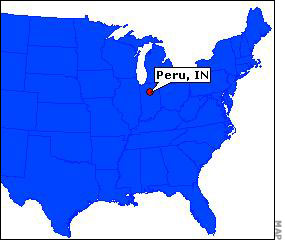
A brand-new widow dialed 911 in Peru, Indiana, a few minutes before midnight on August 3, 1992, to report that her spouse had a problem.
She told an emergency operator, “It’s my husband…There’s blood on him.”
The operator got answers to who, what and where, and soon phones were jangling in the small world of lawyers and law enforcers in Peru (pop. 13,000), an hour’s drive north of Indianapolis.
The victim, James Grund, 47, had been shot through the left eye, and he was dead. This was big news in Peru.
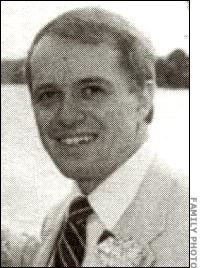
Grund, known as Jimmy, was former county prosecutor. He and his young wife, the slinky and alluring Susan, 33, were notables among the town’s cocktail-and-barbecue set.
Cops who had been to their spacious country home as party guests, now found themselves treating it as a crime scene.
As police and EMTs arrived that night, Susan Grund told them it seemed obvious that her husband had surprised a burglar. The contents of two suitcases were hurled about. A walk-in closet had been ransacked and a jewelry cabinet plundered.
Yet other clues made burglary unlikely.
Grund’s body was on a bedroom sofa in front of a coffee table where he liked to work while watching TV. On the table before him were bills and checks, case notes, and the TV remote control.
One hand clutched a tissue, as though he were about to blow his nose.
It seemed that the burglar had surprised Grund, not the other way around. Something wasn’t right. Why would a burglar stalk in on Grund and shoot him?
It occurred to Dean Marks, an Indiana State Police forensic technician, that the disarray in the house seemed staged.
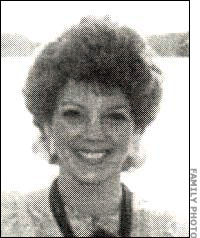
As law enforcers carefully padded about the house, Susan Grund nattered on about her burglary theory, as though she were some kind of crime expert.
But she was, in a sense.
Susan was a hometown Peru girl, although she had been around the block a few times. Her early life had little in common with the lifestyle she enjoyed as wife of a prominent attorney.
She was born Sue Ann Sanders in 1958, one of seven children raised on the poor side of town by an alcoholic father and a farm-raised mother, Nellie.
The family’s problems included any number of pathologies. Her father William, a steelworker, was physically abusive, especially when he was drinking. Sue Ann later said he had sexually assaulted her.
Even before she reached her teen years, Sue Ann was plotting to escape her background. She changed her name to Susan, which she reckoned sounded less trailer-trashy than Sue Ann.
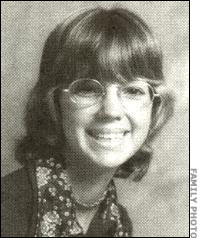
Susan was an attractive girlslim, with a bright smile. Good looks gave her self-confidence, and she was never shy about expressing her opinion.
She grew up fast and was sexually precocious, according to true crime author Wensley Clarkson. To more than a few boys, she became One-Night Stand Sue Ann.
Susan left high school at age 17 and moved 20 miles to the regional hub city of Kokomo, Ind., a car industry town of 45,000. There, she took up with a local rock and roll musician named Ronnie Lovell.

On a lark, they got married just weeks after meeting, in 1975. Susan followed Lovell to gigs, helping to haul gear and hanging out as a band chick.
But rock and roll wasn’t paying the bills in Kokomo, and Lovell decided to take his new bride back to his hometown, Oklahoma City.
The marriage to Ronnie Lovell would prove to be the first of many times that Susan would say “I do.” That part of the wedding vows came easily to her. It was the til-death-do-us-part provision that proved challenging.
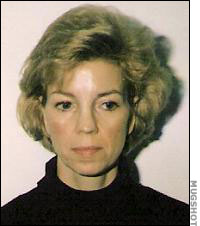
Within days of her courthouse wedding to Lovell, she was bedding other men. Susan was inflicted with the itch she couldn’t scratch, try as she might.
As author Clarkson put it, “Susan’s biggest problem was sex.”
Susan came of age amid the sexual revolution that finally arrived in Middle America in the 1970s. The gold band on her ring finger was largely irrelevant when it came to carnal gratification.
She was not the sort to sublimate her libido. When it came knocking, Susan Sanders Lovell always answered. She would meet a new guy and one thing would lead to anotheroften very quickly. She couldn’t help herself.
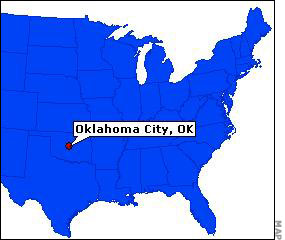
And the sexual itch she developed in Indiana didn’t disappear when she moved to Oklahoma City.
Ronnie Lovell worked days as a construction worker and nights as a musician, and Susan took a job helping to manage the apartment complex where they lived.
Susan met any number of men eager to accommodate her needs, but she eventually settled on one as a regular lover. He was Gary Campbell, 24, a twangy cowboy who made a living driving trucks. Conveniently, he lived in the same apartment complex.
When Lovell finally got hip and confronted his wife about her affairs, she packed her clothes and moved into Campbell’s unita smooth transition.
After getting pregnant with her new squeeze, Susan divorced Lovell and married Campbell in 1979. She was twice a bride and barely out of her teens.
A few months after the wedding ceremony, she gave birth to Campbell’s son, whom they named Jacob.
But her second marriage was doomed to follow the template of the first.
Two or three times a year, Susan and her baby would leave Campbell in Oklahoma and make the 800-mile drive home to Indiana to visit her mother and sisters.
Back in Peru, Susan would often leave her child with a relative, stow away her wedding ring and hit the bars with old girlfriends.
More than once, the friends’ jaws dropped at Susan’s cavalier inclination toward casual sex. If her libido was running hot, she would meet a man and within minutes lead him out to the parking lot for back-seat humping.
Back in Oklahoma City, Campbell began to understand that it would not be a happily-ever-after marriage.
He certainly must have known that his wife was promiscuous, given the circumstances under which they met. But he also soon learned the hard way that Susan harbored deep anger and was prone toward inexplicable violent outbursts.
Once, she stabbed him in the chest with scissors. Another time, she poked him in the leg with a knife.
Campbell said the attacks had a kinky twist: Susan was sexually aroused by the violence and initiated lovemaking afterward.
Whatever relationship the couple had in the bedroom, it was not enough to sustain a marriage wracked by promiscuity and violence. After two troubled years with Campbell, Susan began searching for something better.
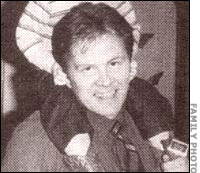
It arrived in the person of Tom Whited, a fellow employee at Perry Filters, the Oklahoma City manufacturer where she had gone to work. Whited was a catcha college-educated former Army captain and homeowner. His wife, the daughter of the Perry factory owner, had recently died of cancer, leaving Whited and his son, Tommy, alone in a handsome house that his father-in-law had given the couple as a wedding gift.
To that point, Susan’s relationships were rather uncomplicated in that her husbands and various lovers more or less shared her moral code.
But the Whited affair would prove to be something different.
Tom Whited, a graduate of Rice University in Houston, had resigned his Army commission in 1981 due to a head injury suffered in a car accident, according to Wensley’s account in his book Deadly Seduction. At the same time, his wife, Cheryl, was being treated for the leukemia that eventually took her life.
After Cheryl died, her father, Lester Suenram, took a personal interest in the well-being of his grandson, Tommy. He also kept an eye on his son-in-law, which made for some uncomfortable moments at the Perry factory outside Oklahoma City.
Suenram noticed, for example, when Whited began flirting at work with Susan, and he wasn’t happy about it.
He cautioned Whited. Cheryl had been gone for only six months, he said, and Susan was a married woman.
But there was no stopping the romance.
Susan divorced Campbell and took custody of Jacob. In the fall of 1982, she and Tom Whited drove to Austin, Texas, and were married.
The blushing bride had gained another surname.
Susan Sanders Lovell Campbell Whited spent her 24th birthday on her third honeymoon.

She moved into Whited’s comfortable home on Rushing Road, a five-minute walk from Lake Hefner, a vast, sailboat-dotted body of water in northwest Oklahoma City. Coincidentally, Tommy Whited and Jacob Campbell, both 3 at the time of the marriage, were just months apart in age.
Rather than go into a complicated explanation about the blended family, Susan often simply identified the boys as twins. She sometimes dressed them in identical outfits, and little Tommy began addressing Susan as “Mommy.”
From the outside, the four seemed like a happy family. They weren’t.
A few months after Susan married Whited, Tommy was admitted to an Oklahoma City hospital with a fractured skull and brain swelling. Susan tearfully explained to her husband, who had not witnessed the injury, that Tommy had fallen and struck his head.
But Tommy gave another account. A nurse asked him what had happened, and the groggy boy replied, “My mommy hit me.”
The early 1980s were hardly the Dark Ages. But in a provincial place like Oklahoma City in 1983, child abuse was still too often treated not as a crime but as a family problem best worked out at home.
Hospital officials failed to report the injury to police, despite Tommy’s account. Susan got the benefit of the doubt, and the boy was returned to her care after several days of hospitalization.
Friends of Tommy’s late mother later told author Clarkson that they suspected Susan was beating her stepson. The bubbly boy was transformed into a nervous wreck after his father remarried. He cried out in fear of a whipping when he spilled a soda, and he once told his birth mother’s best friend that Susan “dropped me on my head.”
The child also revealed that while stepbrother Jacob was allowed to loll around the house all day, Susan lined him up in front of the television set and demanded that he do calisthenics during “The Richard Simmons Show.”
Tommy was back in the hospital four months later, in May 1983, this time unconscious and suffering from a brain hemorrhage.
Susan Whited explained that over several days he had fallen out of a shopping cart and tripped over their pet dog and hit his head on concrete. By her account, he was the clumsiest boy in America.
This time, doctors didn’t buy it. They said his injuries indicated sadistic beatings over a sustained period.
They found bruises to his head, torso and limbs, along with multiple cigarette burns. There was also trauma to his rectum that indicated sexual assault.
Police were alerted, and Susan was booked on suspicion of felony child abuse. She stuck with her absurd clumsiness story, until her own son told the truth.
Detectives sat down with Jacob, who tearfully explained that his mother frequently beat Tommy for no good reason.
Tommy Whited was left brain-damaged and bedridden by the brain injury inflicted by his stepmother.
Susan was charged with felony assault and several related counts. The boy’s grandfather, Lester Suenram, was understandably furious. He blamed Susan, but he also reserved wrath for his former son-in-law for failing to recognize the evil in his new wife.
Suenram sought vigorous prosecution, but he was convinced by the Oklahoma authoritiesperhaps informed by provincial beliefs about child abuse-that the case would be difficult to prove.
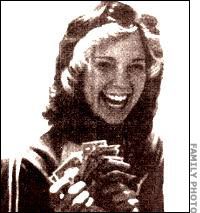
Susan was allowed to plead guilty to a single felony count of child beating. Remarkably, after pummeling her stepson into a permanent vegetative state, she was given a five-year suspended sentence.
The shocking case rated nothing more than a line of agate type in the court record of the local newspaper.
Care of Tommy Whited was entrusted to Grandfather Suenram, who dedicated his wealth to his grandson’s comfort. Custody of Jacob Campbell was transferred to that boy’s father.
And where did this leave Susan and Tom Whited? In bed. They continued to copulate like bunnies even after the woman had beaten to a pulp Whited’s namesake son.
Ostracized by his own relatives, Whited finally spurned Susan, whom he would later describe as “the world’s greatest liar.” She decided to return to her hometown, nine years after she’d left. When she left for Peru in the summer of 1984, she was three months pregnant with a daughter fathered by Tom Whited.
Peru is a quirky little city on the Wabash River in north-central Indiana.
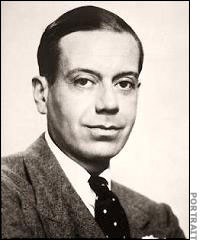
Its most famous native son was Cole Porter, the songwriter. He is buried there, but cynical locals like to point out that he had the sense to leave Peru when he was young and didn’t return until he was in a pine box.
Peru claims a curious title as America’s “Circus City.”
It was a key railroad hub in the late 1800s, during the heyday of traveling circuses. Its circus connection began in 1882, when a local businessman and circus buff, Ben Wallace, bought out a bankrupt “railroad” show that had passed through town.
But Wallace wasn’t satisfied with a cut-rate circus. He collected exotic animals, ordered ornate new wagons and took his show on the road in 1884, as “Wallace and Co.’s Great World Menagerie, Grand International Mardi Gras, Highway Holiday Hidalgo and Alliance of Novelties.”

The Great Wallace Show, as it became known, was one of mid-America’s biggest, and Wallace used Peru as winter quarters to tend the animals, repair equipment and prepare for the following season.
Over the years, the Wallace Show merged with many others, and the winter quarters in Peru were in steady use by one circus or another for most of 50 years. Among them were the most storied of America’s traveling shows, including Ringling Brothers and Barnum & Bailey. Peru residents were treated to free previews of the acts, and circus legends like Emmett Kelly, the sad-faced clown, became regular habitués of Main Street.
The Great Depression slowed the road show gravy train, and the last circus finally pulled out of Peru winter quarters in the 1940s, destined for warmer environs. Sarasota, Florida, became the nation’s circus hub when Ringling moved its winter quarters there.
The circuses forgot Peru, but the city never got the circus out of its blood.

In 1958, Peru began staging an amateur circus that continues today in a weeklong celebration each July. And in 1981, when Sarasota’s Circus Hall of Fame went on the auction block, Peru bought it and moved it back to Indiana.
With three marriages, countless affairs, two pregnancies and a child abuse conviction under her belt, Susan Whited joined the parade of clowns headed back to Circus City.
Susan had left Peru as a sexually precocious teenager. She returned as a sexually confident woman in her mid-20s. Pregnant or not, she arrived in town as randy as ever. And she knew how to work a room, even in maternity clothes.
Through the local bar scene, Susan met a couple of men who worked in law enforcement. As a practical joke, they thought it would be funny to hook her up on a blind date with their friend Jimmy Grund.
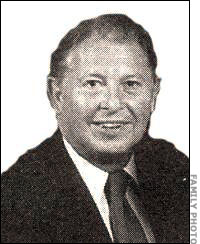
Grund’s was a big name in the legal community of Peru and Miami County, Ohio. Law was the family business. His father, James Sr., had been a prominent attorney, prosecutor and judge in the county. A grandfather and uncle also had served as judges.

Jimmy, born two days before Christmas in 1944, was destined to follow in their footsteps. He graduated from Peru High School in 1962, then went on to college and law school at the University of Indiana, two hours downstate in Bloomington. During his second year of undergraduate school, Grund met a pert, pretty coed, a freshman named Jane Snyder. Jimmy and Jane were married a year later, in 1965, when Snyder got pregnant.

Daughter Jama was born in July 1965, and son David arrived in 1970, just after Grund finished law school. The young family returned to Peru, and Jimmy went to work as an assistant to his father, who was then serving as county prosecutor.
Grund worked from 1971 to 1978 as an assistant prosecutor, then served four years, 1978-82, as the county’s top prosecutor when his father stepped aside.
Grund had a swashbuckling side. He owned an interest in a bar in Peru, where he was an avid customer. He also had a pilot’s license, and he loved to ferry his pals on guys-only fishing trips up north.
Jimmy and Jane’s marriage had faltered during Jimmy’s years as county attorney, and the couple was divorced in 1980. Curiously, they decided to continue to live togetherin part for the sake of their children, and in part because it was economical.
The arrangement continued until the summer of 1984, when Susan walked into Grund’s life.
Jimmy Grund agreed to a blind date with Susan in the summer of 1984 after his friends convinced him that she was sexy. They didn’t mention that she would be wearing a pregnancy smock.
It didn’t matter. Grund was enticed.
What did he see in her? Her age, for one thing.
He was pushing toward middle age at 39 and had begun to display the inevitable side effectsa thickening in the middle and a thinning on top. She was 25, and the 14 years between them were enough to inspire any older man’s ego.
For her part, she found Grund sophisticated and worldly. It didn’t hurt that he had moneyfar more than any other man with whom she had been intimate.
The attraction was practical, as well. She didn’t want to face childbirth alone, and her other top prospect for male companionship at that point was an old flame with whom she had cheated on at least two of her husbands.
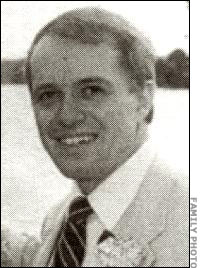
She opted for Grund. A few months after they met, Grund served as stand-in father during delivery of Susan’s daughter, whom she named Tanelle. Days later, the couple and the baby traveled to Florida, where they were married on December 6 in an oceanside rite at Flagler Beach.
In the early months of the marriage, Susan set a goal to regain custody of her son, Jacob, who was living with his father in Oklahoma City. Jimmy Grund proved to be a useful tool for Susan’s endeavor.
Of course, this required Susan to reveal her criminal conviction for child abuse. She presented herself to her new husband as a victim of overzealous prosecutiona scapegoat in a tragic accident.
For 11 years as a prosecutor, Grund had heard a variation on this sort of protest from scores of criminals he’d faced in court. As a sage attorney, he had the wherewithal to reach out to Oklahoma authorities to get a second perspective on the brutal assault on Susan’s stepson. He apparently did not do so.
Blindly in love, he used his money and persuasion to get Jacob back into Susan’s arms. In Oklahoma City, Gary Campbell, Susan’s truck-driving ex, was having financial problems. According to author Clarkson, Jimmy Grund sent several checks to Campbell to help him catch up. Grund then arranged a job for Campbell in Logansport, Ind., near Peru. The father and son moved there, and Susan became caretaker for Jacob.
Soon, Campbell met and married an Indiana woman, and the fledgling couple decided they were better off without the baggage of the boy.
Campbell signed over custody of Jacob, with Grund handling the legal paperwork, and returned to Oklahoma with his new wife. The Grunds also convinced Tom Whited to sign over permanent custody of his daughter Tanelle.
Susan Grund seemed to have everything she wanted, including an affluent lifestyle far removed from her humble childhood.
But it wasn’t enough.
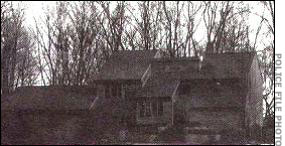
In the summer of 1986, the couple moved into a custom-built, contemporary-style home on a wooded lot at the edge of Peru. Grund spent $175,000 on the housean eye-popping price in a region of the country known for its affordable homes. Grund bankrolled a downtown boutique for his wife, Clothes by Susan, and Sue Ann Sanders from the wrong side of the tracks suddenly found herself an arbiter of fashion in her hometown.
The Grunds were a part of Peru society, such as it was. They were guests or hosts of frequent barbecues and cocktail partiesat which, more than a few people noticed, Jimmy Grund often slurped down one too many gin and tonics.
Meanwhile, Susan ascended another step in society in 1989 when she entered the Mrs. Indiana America Pageant in Indianapolis.
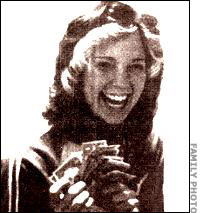
As she entered her 30s, Susan had maintained a girlish figure, and she showed it off as often as possible. The decorative centerpiece of the Grunds’ bedroom in the new house was a nude painting of Susan that Jimmy had commissioned.
She liked to show it to just about anyone who dropped by.
Susan was a dedicated collector of sensual apparel, and she enjoyed showing that off, too. She shot Polaroid photos of herself in her latest acquisitions from Victoria’s Secret or Frederick’s of Hollywood. She would slip copies of the images into her husband’s briefcase, and she always insisted that he take along a couple of the sexy pictures on fishing trips.
But he wasn’t the only man to see her racy knickers up close.
Susan never did lose her wandering eye, and Peru was soon atwitter with gossip about her various assignations. Some joked that her seven-year itch had arrived in seven days.
To be fair, the Grunds were a high-profile couple, and not all stories told by jealous or resentful small-towners are necessarily true. But Susan Grund told many of the stories on herself.
She was forever sharing the graphic details of her sexual encounters with confidantes, including her sisters, her mother and her new clique of women friends whose names popped up in the local newspaper society column.
How many lovers did she have? Only she knew for certain, but Susan certainly got around.
There was the accountant in the next town over. The hunky local cop. The holy-roller from the Baptist church. A couple friends of her husband. The pick-ups at this local bar or that, the one-night stands with strangers at Indianapolis hotels or her sister’s apartment in Kokomo, the local gay man she tried to seduce into changing teams.
There were even whispers that Susan had tried to seduce Grund’s son, David. An adolescent when the couple married in 1983, David had grown into a strapping young man by the early ’90s.
Jimmy heard the gossip. In 1990, his own mother confronted him about Susan’s reputation. He shrugged.
But as the embers of the relationship began to fade, he spent more and more time in the company of his fishing pals and his gin and tonicswhich increased Susan’s opportunities to cat around.
By the summer of 1992, Jimmy Grund had begun to complain bitterly to friends about the state of his marriage.
The couple argued incessantlyboth in private and in publicnot about Susan’s affairs but about her extravagant spending on clothing, jewelry, lingerie and cars.
Grund knew he was stuck with a wife who did not love him. Worse, he had reached the sobering conclusion that he had been inveigled by a seductress who wanted not him but his lifestyle.
Grund wanted out. In mid-July, he visited a fellow lawyer in Peru to ask him to begin the divorce process.
He decided to wait to file the paperwork until he and Susan and her two children returned from a long-planned vacation to Alaska, according to author Clarkson. During that trip, Grund informed Susan that he would file for divorce when they got home.
He didn’t get a chance. They returned to Peru on August 1, a Saturday. Scarcely two days later, at not quite midnight Monday, Jimmy Grund was shot through the eye and killed. His murder was one of those cases that leads to head-scratching by those blessed with common sense.
By the time of the slaying, half of the population of Peruincluding cops and prosecutorsknew that the Grunds’ marriage was on a fast track to dissolution. The other half had slept with Susan.
Did she not expect to be scrutinized?
The investigation began with klieg lights pointed at the widow. From the beginning, law enforcers believed she was responsible. Yet the probe got off to a balky start, stymied for several months by a lack of definitive evidence.
The break in the case came from the usual place: the suspect’s mouth. And it would lead to the undeniable conclusion that Susan Grund may have been sexy, but she wasn’t very smart.
On July 4, a month before the murder, a 9mm pistol was stolen from the home of David Grund, Jimmy’s son.
Coincidentally, Susan had stopped by David’s house that same afternoon and questioned her stepson about where he kept his pistol. When David returned from a fireworks show that night, he discovered that someone had broken in and taken nothing but the gun.
It seemed like an odd coincidence when investigators found a 9mm shell casing beside Jimmy Grund’s body.
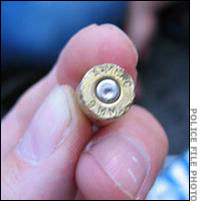
Investigator Brunson spoke with David Grund, who recalled once firing his pistol at a telephone pole. Police retrieved that slug and compared it to the bullet that had killed Jimmy Grund.
It was a match. David Grund’s stolen gun had been used to murder his father.
Within days of the slaying, Susan Grund began the process of trying to collect a $250,000 life insurance policy and to have herself declared executrix of her late husband’s estate. Grund’s children, David and Jama, filed a lawsuit to block Susan from being named executrix. They found allies in the case investigators, including Jimmy Grund’s best friend, Sgt. Gary Nichols, who made it his mission to see that she would never get a penny of Jimmy’s money.
In the meantime, Susan had a niggling secret problem: the murder weapon was still in the Grund house.
She knew it would be discovered eventually and that she had to get it out of the house, but she was fearful to the point of paranoia that she was being watched. She needed help.
On September. 2, she confided in her sister, Darlene Worden, and mother, Nellie Sanders.
“I killed Jimmy,” Susan said.
She said the murder weapon, a 9mm pistol, was hidden inside a Christmas teddy bear stored with holiday ornaments in the laundry closet.
Worden agreed to go into the house and retrieve the heavy teddy bear. The sisters and their mother then placed the gun at the bottom of a metal pot and covered it with 70 pounds of cement.
They stored the object at a nephew’s house. Later, Nellie Sanders got nervous and managed to single-handedly lug the entombed murder weapon up to the attic of her house.
Darlene Worden sat on her sister’s secret for two months.
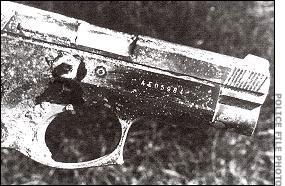
On November 2, she bumped into Bob Brinson, the lead investigator on the case for the Indiana State Patrol. Stricken by a guilty conscience, she felt compelled to confess. Within 36 hours, police arrested Susan for murder. The motive, they said, was the insurance policy money.
Police went looking for the concrete-filled pot at the nephew’s place, at Darlene’s suggestion, but it had vanished. Even without the murder weapon, prosecutor Wil Siders prepared his case for trial in the fall of 1993.
About 10 weeks before jury selection was to begin, Nellie Sanders’ conscience provided what seemed to be the final break in the case.
Nellie explained that she had hidden the murder weapon in the attic of her house. Police found it there, just as Nellie said.
Susan Grund’s murder trial, which began on September 27, 1993, was a Freudian psychoanalyst’s dream, with family secretsor alleged family secretsas the crucible of the case.
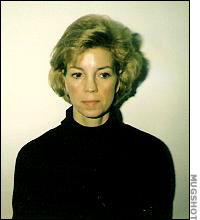
The usual complement of cops and crime-scene experts testified. But the trial’s best tabloid TV moments came from relatives of the victim and the accused. Susan Grund had to testify, of course, to try to explain why she had hidden the gun. She came up with a doozy of an explanation.
Susan testified that she arrived home of the night of the murder, found her husband dead and called 911. She said the murder weapon was lying on the floor. She recognized it as David Grund’s gun, so she said hid it inside a teddy bear because “I thought he might have had something to do with it.”
When questioned further, she blurted out through tears that she was concerned for David “because we’d had an affair.” She explained that she had been having sex with her stepson for two years.
She added, “He said he was going to get rid of his dad.”
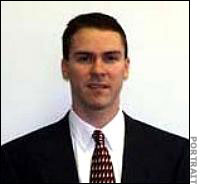
David Grund had finished undergraduate school at Indiana University a few months before the trial began. When he got his turn on the witness stand, Grund treated his stepmother’s assertions with steely contempt. The first words he spoke were, “I never had an affair with that woman.”
Nellie Sanders and Darlene Worden added their own damning assessments of their kin. Darlene said of sister Susan, “She’s a liar. She’s always been a liar.”
At end of her testimony, Darlene broke down, glared at her sister and said, “Why’d you do it?”
Everyone in the courtroom seemed convinced of Susan’s guiltexcept certain jurors. After 15 hours of deliberation, the jury declared itself deadlocked, with at least two members insisting they could not find Susan guilty.
A second trial was mounted seven months later, in March 1994.
Prosecutor Siders made a key change in his presentation, based upon suggestions from interviews he conducted with jurors from the first trial. He called a procession of five new witnesses, all prominent Indianans who had become acquainted with Susan through Jimmy Grund.
Each gave the same clear message: Susan Grund was a pathological liar.
Meanwhile, defense attorney Charlie Scruggs, from Kokomo, made a momentous decision of his own. He ordered Susan not to delve into her alleged affair with David Grundeven though most courtroom wags agreed that that particularly testimony had swayed the holdout jurors in her favor at the first trial.
Siders’ strategy prevailed.
On March 23, 1994, the jury convicted Susan Grund of murder. Prosecutors had not sought capital punishment in the case, and three weeks later, Judge John Surbek ordered Susan to serve 60 years in prison for “calmly, coldly and calculatingly” murdering her husband.
Susan’s children, Jacob and Tanelle, were 13 and 8, respectively, at the time of the murder. They were raised by Jimmy Grund’s sister, Jane, and her husband, Fred Allen.
By the fall of 2007, Grund had spent 15 years at the Indiana Women’s Prison in Indianapolis, housed with some 325 other female inmates. She will turn 50 behind bars in 2008. Her first parole eligibility date will not arrive until 2025, when she would be 67 years old.
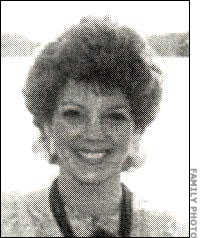
At last word, she was still professing her innocence.
When her parole date arrives, Susan likely will face a vigorous legal argument against freedom by a man with a keen interest in the case.
David Grund, her former stepson and the man she alleged was her lover, completed law school a few years after the second trial. In 1997, he joined his grandfather in the family law practice in Peru.
Newspaper Articles
- “It All Began When Ben Wallace Bought a Circus,” by Nancy Newman, Peru Daily Tribune, July 15, 1986
- “Peru Shooting Ruled Homicide,” Fort Wayne (Ind.) Journal-Gazette, August 5, 1992
- “Widow Arrested in Shooting Death of Prosecutor,” Evansville (Ind.) Courier, November 4, 1992
- “Widow Pleads Innocent,” Fort Wayne (Ind.) News-Sentinel, November 4, 1992
- “Ex-prosecutor’s widow denies she killed him,” Chicago Tribune, November 5, 1992
- “Two Say Accused Killer Shouldn’t Profit From Will,” Indiana Post-Tribune, March 19, 1993
- “Wife to Be Tried for Murder of Ex-Prosecutor Husband,” Indiana Post-Tribune, March 21, 1993
- “Wife’s Murder Trial to Begin Next Week,” Fort Wayne (Ind.) Journal-Gazette, September 24, 1993
- “In Murder Trial, Wife Testifies to Sex With Stepson,” Fort Wayne (Ind.) Journal-Gazette, September 30, 1993
- “Jury Out in Ex-Prosecutor’s Murder Trial,” Fort Wayne (Ind.) Journal-Gazette, October 3, 1993
- “60-Year Sentence for Slaying Mate,” Indiana Post-Tribune, April 17, 1994
- “Details of Ex-Prosecutor’s Murder By His Wife Also Chronicled in Book,” by Donna Volmerding, Fort Wayne (Ind.) News-Sentinel, June 7, 1996
Book
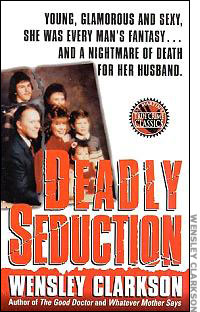
Deadly Seduction, Wensley Clarkson, St. Martin’s Press, 1996