
Alvin Karpis: Pursuit of the Last Public Enemy — Running Wild — Crime Library
|
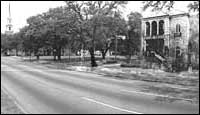 Wide view of the arrest intersection
(Paul Taylor Photography – New Orleans) |
|
The intersection of Jefferson Davis Parkway and Canal Street in New Orleans is a busy one; the auto traffic passing through is supplemented by people walking, especially on one corner occupied by a modern drug store and its parking lot. Yet, amidst all the present-day business rush, there are two monuments on the parkway commemorating the past. And there should be another. For a few years in the early and mid 1930s there were several outlaws, and outlaw gangs, running wild in the American Midwest. Memories of the Wild West were vivid enough to frequently refer to them as desperadoes. Some of these Depression-day criminals became infamous nationwide through both media and law enforcement attention to their crimes. It was the era of the Public Enemies; they robbed banks with machine guns, kidnapped rich people for ransom , engaged in furious shootouts with lawmen, and when apprehended, often made spectacular jail breaks. Everything they did was considered newsworthy by prominent publications like the New York Times down to pulp magazines such as Startling Detective. It was exciting, escapist cops & robbers entertainment for the public of the grim 1930s – unless the innocent people being shot, robbed, and killed were friends or family members. A few of these criminals are still known today by their colorful names: Dillinger, Baby Face Nelson, Machine Gun Kelly, Bonnie & Clyde, Pretty Boy Floyd, and the Barker- Karpis Gang.
 Young J. Edgar
Hoover (CORBIS) The Barker-Karpis gang was not the least of these. FBI Director J.Edgar Hoover, in the book The FBI In Action said, Ma Barker and her sons, and Alvin Karpis and his cronies, constituted the toughest gang of hoodlums the FBI ever has been called upon to eliminate…Looking over the record of these criminals, I was repeatedly impressed by the cruelty of their depredations…murder of a policeman …murder of two policemen ….machine gun murder of an innocent citizen who got in the way during a bank robbery …kidnapping and extortion…train robbery…mail robbery …the protection of high police officials bought with tainted money…paroles bought. |
|
Hoovers statement is true except for including Ma Barker in these activities. Although the gang is largely remembered today because of her criminal reputation, it probably never happened that way. Alvin Karpis wrote in his autobiography, The Alvin Karpis Story, many years later, The most ridiculous story in the annals of crime is that Ma Barker was the mastermind behind the Karpis-Barker gang…the legend only grew up after her death…to justify how she was slaughtered by the FBI…She wasnt a leader of criminals or even a criminal herself. There is not one police photograph of her or set of fingerprints taken while she was alive…she knew we were criminals but her participation in our careers was limited to one function: when we traveled together, we moved as a mother and her sons. What could look more innocent?
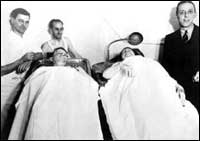 Ma Barker and son Fred Barker in
the morgue (CORBIS) |
|
Furthermore, when Hoover writes about Ma Barker, he uses accusatory but not lawbreaking wording, it has been said that Ma Barker trained her sons in crime and certainly she became a monument to the evils of parental indulgence and there is hot-eyed, hard featured Ma Barker in a jealous rage berating her boys. Then she is the motherly individual smoothly settling details of the rent with an unsuspecting landlord for an apartment hideout. An FBI internal memo summarizing the history of the Barker-Karpis gang up to early 1936, contains the statement, Kate Barker was killed for resisting arrest. This should be amended to killed while her son was resisting arrest. Harvey Bailey, a veteran bank robber that sometimes worked with the Barker-Karpis group, said of the issue, the old woman couldnt even organize breakfast. There is no controversy about her four sons being outlaws. And two of them survived to the advanced phase, or career criminals – Fred & Doc (Arthur), who along with Alvin Karpis formed the nucleus of the Barker-Karpis gang in the years 1931-1935. Karpis described Fred Barker as a natural killer and said about his brother Doc, Doc Barker didnt look dangerous, but he was a lethal operator. One childhood acquaintance of the Barkers recalled them as violent and unmerciful.
 Alvin Karpis (CORBIS)
The two Barkers and Karpis might have looked physically incongruous to the people they encountered during their robberies; both Fred & Doc were just a few inches over 5 tall, and Karpis was about 510, weighing only 128lbs. But wielding machine guns and forty-five automatics made their unimposing physical appearances only a factor insofar as helping victims or eyewitnesses identify them to law enforcement officers. Sources vary as to why Karpis was nicknamed Old Creepy. J.Edgar Hoover said it was a reaction to the way other mobsters felt when he turned his cold, fishy stare upon them. |
Alvin Karpis was a career criminal from the age of ten. Growing up in Topeka, Kansas he started out running errands for petty gamblers, pimps and bootleggers, saying later, I just naturally liked the action. Jumping ahead fifty yearsafter serving thirty-three years in prisonhe summed up his crime career:
My profession was robbing banks, knocking off payrolls, and kidnapping rich men. I was good at it. Maybe the best in North America for five years from 1931-1936. In another set of circumstances, I might have turned out to be a top lawyer or a big-time businessman or made it to any high position that demanded brains and style, and a cool, hard way of handling yourself. Certainly I could have held the highest job in any line of police detection work. I out-thought and defeated enough cops and G-men to recognize that I was more knowledgeable about crime than any of them – including the number-one guy, J. Edgar Hoover of the FBI.
Not much of an argument for prison rehabilitation.
Karpis and Fred Barker had met in a Kansas prison. When they both were free in 1931, the gang began to develop. At first, there were nighttime burglaries of various shops, like jewelry and clothingstores, but soon they moved into daylight bank robberies. The participants were almost always Fred Barker and Karpis (and Doc Barker when he was out of prison in 1932). Then, depending on the conditions and requirements of the targeted bank, in the early 1930s there was an informal underworld workforce of experienced thieves and stickup men from which the remaining crew was selected (resembling todays Temporary Help agencies.)
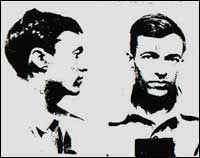
A partner with Karpis in crime, Fred Hunter, described him as super-smart. The friendship between Karpis and Fred Barker, who shared an organized, planned approach to each job, helped the gang to be so prolific and earn them so much money that they lost count of the grand total. In 1932 alone, they robbed eleven banks that Karpis – who had a nearly perfect photographic memory – could recall offhand. Apparently there were even more.
Consider what the fluctuating, part-time members of the gang represented to the FBI and potential prosecutors; they had to sort through several aliases trying to find matches with particular (but not all) crimes known to be perpetrated by the Barker-Karpis mob. Not only were there multiple crimes across many states, but also several suspects using numerous aliaseseven the informants co-operating with the FBI may not have known the offenders correct name. On one occasion, Karpis and Fred Hunter were using the same alias (King) simultaneously.
This was long before the computerized instant identifications available today which can sort and match the aliases, eyewitness testimony, fingerprints, photos, etc. in seconds and reach automated conclusions about which suspects committed certain crimes. Also, surveillance cameras in the 1930s banks were non-existent. It actually may have been easier to track Karpis and Fred and Doc Barker because they were more recognizable due to their notoriety and were full-time robbers, whereas the other gang members came and went.
Karpis pointed out several times in his autobiography the charges and even convictions leveled at other outlaws for crimes the Barker-Karpis bunch actually committed. Some of these arrests/convictions were supported by eyewitness testimony – well meant, but incorrect.
Investigations complicated by aliases resulted in the FBI departing on incredibly time-consuming wild goose chases into states like North Dakota pursuing leads on possible gang members, or people that might have had a fleeting role in the Karpis-Barker gang. And, at least on one occasion, the search was for a person who was already dead – Doc Moran. He was a real doctor who had performed gruesome fingerprint removal operations on Fred Barker and Karpis. His downfall came when the two patients found out that he was telling hookers about his unusual medical skills. When he vanished, Fred Barker informed Karpis, Doc and I shot the son of a bitch; anybody who talks to whores is too dangerous to live.
In early 1936, the typewritten FBI memos recording the pursuit of Doc Morans Ghost in the Dakotas and elsewhere, and attempts to track down a con man named William Mead to determine if he was a Barker-Karpis kidnapping conspirator (he wasnt), represent approximately 15%-20% of an FBI file. Mead had used twenty-five aliases.
In 1931, when the gang started forming, Alvin Karpis was twenty-three years old, Fred Barker thirty, and FBI director J.Edgar Hoover, who was to become the personal nemesis of Karpis, was thirty-six. Hoover had been appointed Director of the Bureau seven years earlier.
During 1931-1933, the Barker-Karpis gang successfully looted banks at such a rapid pace, it became routine. As part of the planning and strategy for each bank, the gang tried to carry more firepower than they anticipated the police would have. The machine guns came from either a connection in New York or the gang members walked into a (rural) police station after midnight and told the officer on duty, at gunpoint, they wanted the machine guns. In other words, armed robberies of police stations.
Their operational area was the Midwest, and they shuttled back and forth among St. Paul, Chicago, Toledo, and Cleveland. Other secondary cities they hit were Reno, Kansas City, Tulsa As the heat became more intense, beginning in 1934, Hot springs, Cuba, Florida, New Orleans, east Texas. Also, they began to scatter, rather than move en masse, at this latter time.
They followed the old fugitive adage of continuously shifting locations. As Karpis stated in his autobiography, It wasnt good for our nerves to spend too much time in the same few rooms.
The two kidnappings for ransom the Barker-Karpis group committed were suggested to them by the middlemen the gang worked with in St.Paul, Jack Peifer and Harry Sawyer. Both kidnappings occurred only six months apart. William Hamm (of Hamms Beer) was snatched in June 1933, and Edward Bremer, a banker, in January 1934. Hamms ransom was $100,000 and Bremers $200,000. Colossal money in the 1930s.
However, after the Bremer kidnapping, Hoover later stated, Things began to get complicated for the gang at this point. For several reasons:
It may have been the worst social climate in which to kidnap people. The kidnapping death of Charles Lindberghs son in 1932 was still in the news. Aviator Lindbergh was a national hero for his solo plane flight across the Atlantic.
There was also another kidnapping – of Charles Urschel – committed by different outlaws, including George (Machine Gun) Kelly.
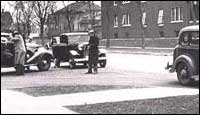
The father of the gangs second kidnap victim was Edward Bremer Sr., and he was a friend and political donor to President Franklin Roosevelt, who mentioned the kidnapping in one of his radio fireside chats. It seems unbelievable that the gang knew beforehand about Bremer Seniors ties to President Roosevelt, and then still proceeded with the kidnapping. Yet, Karpis wrote that he discussed this with Fred Barker who responded, Why are we wasting our time talking about heatweve had nothing but heat since 1931.
During this time the FBI gained authority to arm its agents and make arrests for federal crimes such as bank robbery, interstate flight, and kidnapping. Rather than wait for agents to reach a weapons proficiency level allowing them to match the Public Enemies, Hoover went for a quick fix and decided to go out west, to states like Texas and Oklahoma and recruit tough, experienced lawmen.
So, the FBI came up with a special group of agents that were called the Flying Squad. This was a 1930s posse formed to run down the Public Enemies.
Among the new agents were two outstanding western officers: William L. Buchanan who was previously the Captain of Detectives for the Waco, Texas police dept; and Clarence Hurt of the Oklahoma City police department where he had been Assistant Chief of Police.
Clarence Hurt, a fifteen-year police veteran in 1934, was granted a leave of absence to go hunting with the FBI. In 1933, he had been in on a gunfight with a notorious Oklahoma outlaw Wilbur Underhill, called the Human Cougar of the Southwest.
Buchanan started out in 1923 as a Waco motorcycle policeman at age twenty-three, rose to a Waco detective in five years, and up to Captain of Detectives six years later in 1934. One month after that promotion, he left Waco and joined the FBI. The FBI documents of the day show that Buchanan became respected by at least one high-ranking agent,E.J. Connelley, who recommended him for important duties.
1934 turned out to be a disastrous year for Public Enemies: John Dillinger was killed in Chicago by the FBI (with Clarence Hurt one of the shooters); Bonnie & Clyde were killed; Baby Face Nelson was killed; so was Pretty Boy Floyd.
Alvin Karpis got the message; of this time he later wrote, The cops were knocking off all the big crooks.
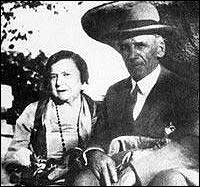
The two Barkers and Karpis (and Ma Barker) exited 1934 alive and free, but there had been some nerve-racking moments. Karpis recounted three of them:
From time to time, to keep us from forgetting just how constant the heat really was, an incident would come along to scare the hell out of us. There was, for instance, the issue of Liberty magazine in the spring of 1934. It ran large pictures of Pretty Boy Floyd, Baby Face Nelson, Doc Barker, Freddie and me, and it offered a $5,000 reward to any man who brought us in dead. The story called us mad dogs and made a big point of underlining the fact that it would pay no reward if we were taken alive.
Freddie and I took Ma to a movie and a special announcement was flashed on the screen. These men are public enemies, it read. And then came the pictures: John Dillinger, Baby Face Nelson, Doc, Freddie, and me. The punch line was, Remember, one of these men may be sitting beside you. The lights went on in the theatre. The audience looked around and giggled.
We left Cleveland abruptly on the night of the day Freddies girl Paula got drunk in a bar, so drunk that the cops arrested her and started checking into her contacts. It didnt take them long to pin her down and start after Freddie and me. Freddie, Doc, and Harry Campbell (a stickup man from Oklahoma) came knocking on the door of my bungalow in the dead of the night. We decided to clear out immediately, but there were machine guns in the house that Freddie and Paula had been living in and in the rooms Doc and Campbell shared. We decided to scout the house and apartment and rescue the guns if the coast was clear.
We drove to Campbells apartment. It looked safe enough. Freddie, Doc, and Campbell hopped out of the car and started across the street. A light went on in the front room of the apartment. The three guys froze in the street. The light stayed on thirty seconds, and we could see shadows moving. Some dumb cops goof had saved us…. We took another drive past Freddies house and spotted six cars parked in a row outside the building, with four or five men in each one.
That was 1934; then, within the first month of 1935, the Barker-Karpis gang was shattered and destroyed.
Alvin Karpis: Pursuit of the Last Public Enemy
Manhunt
|
In the early evening of January 8, 1935, as Doc Barker and his girl friend left his apartment near Lake Michigan in Chicago, he was surprised and seized by FBI agents. Upon searching him and finding no weapons, agent Melvin Purvis asked him where his gun was. Doc replied, Home, and aint that a hell of a place for it? That was it for Doc Barker. Guilty of the Bremer kidnapping, he was sent off to Alcatraz to serve a life sentence. In 1939, after an ill-advised escape attempt gone bad, Doc kept walking to the ocean and was gunned down by the guards…among his final words, Im all shot to hell. Doc Barkers fingerprints on a discarded gasoline can had been found along the Bremer kidnap route and was part of the evidence implicating the gang.
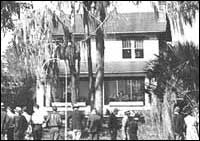 Ma Barker’s House in Florida (AP)
When the FBI searched his apartment after his arrest on January 8th, they found a map of Florida, with the Ocala region circled. The FBI had an informant named Monty (Byron) Bolton who was a participant in the gangs Hamm kidnapping, and he offered information about Fred (and Ma) Barkers location in Florida. |
|
It took the FBI one week to find the cottage Fred and Ma Barker were renting on Lake Weir. By one account Special Agent E.J.Connelley (who functioned as an Assistant Director whom the other agents often received their orders from) actually went up to the house, knocked on the door, and when it was answered by Ma Barker. He told her that the FBI was there to arrest Fred Barker. Ma went to tell Fred this while Connelley waited. Naturally, Fred Barker opened up with a machine gun and Connelley was lucky to escape unharmed. After a shootout that lasted for hours Fred and Ma Barker were dead.
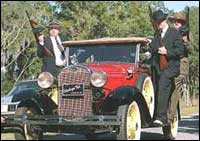 Re-enactment of Barker shootout (AP)
|
|
Alvin Karpis had visited the Barker cottage in December, after he spent some time vacationing in Havana, Cuba. Fred and Karpis had driven up to Cleveland to meet with Doc Barker who came down from Chicago and they planned a score for later in the winter. Then Karpis went down to Miami with his pregnant girl friend, Dolores Delaney and gang member Harry Campbell and his girl, Wynona Burdett. They wanted to go fishing in the Atlantic, and planned to revisit the Barkers at Lake Weir soon.
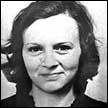 Dolores Delaney
(CORBIS) |
|
The inevitable moment came when the FBI finally caught up with them in Atlantic City shortly after Karpis heard of the violent deaths of Freddie and Ma Barker. Karpis planned to go into hiding the next day, but it was too late. The next morning, Karpis recounts in his autobiography,when he opened the door to his room, his landlady screamed to the agents below: Heres one of them! Here he is! Come out of there, the agent called. Come out with your hands up. Karpis played innocent and spoke loudly enough for Harry in the next apartment to understand what was happening. The agents wanted Karpis to get Harry out of his room which Karpis proceeded to do. I opened Harrys door, jumped back, and flattened against the wall in the hallway. Harry let fly with his machine gun. I knew he would. He sprayed the hall but didnt hit any of the cops. One burst of bullets blasted chunks of wood off the wall, and a flying splinter caught one cop in the head. He screamed…probably thought he had been shot. Harry ran into the hall, still firing. The cops rushed…down the stairs. They were too busy running to shoot back. Harry swung the machine gun after them. He was firing like a wild man. The bullets ripped into my room. Dolores screamed. I ran to her. One of the bullets had hit her in the thigh. She was bleeding. Eight months pregnant and now a bullet wound. I tied the wound quickly with a strip of bed sheet…I put on my shoes, pants and an overcoat. And I packed my forty- five. The four of us started down the stairs, Harry and me in the lead, me with the forty-five, Harry with the machine gun. We could see the detectives from the second floor landing…they didnt see us, and we slipped down to the first floor and made our way through a back hallway that led to an alley…I gunned the engine and wheeled out into the street…Harry jumped into the back. He leaned out the window as we turned away from the hotel and fired some shots at the cops. I didnt know Atlantic Citys downtown streets…(one) turn took me to a dead end at the Boardwalk. The cops knew wed trapped ourselves. They waited for us to turn around. Well run right through, I told Harry. Get the gun ready. I wheeled the car in a 360-degree turn and raced it straight at the waiting cops. But partway down the street, I saw an alleyway I hadnt noticed before. We skidded and threw burning rubber all over, but we made the turn. Karpis and Campbell completed their escape, ending at Toledo, Ohio in Edith Barrys House of Prostitution; Karpis moved in with Edith Barry and sat back to read the papers and await developments. As far as the general public knew, after the January Atlantic City incident Karpis was next seen in August, 1935 watching horse races in Saratoga Springs; then he vanished for nine more months. His actual travels at this time included a long drive through the eastern U.S. during the summer of 1935. The FBI wasnt letting up on their hunt and Karpis was still planning robberies. Hoover recalled this phase as, perhaps the most amazing sequence in the whole fantastic case. He evidently was referring to an April, 1935 Warren Ohio mail truck robbery of $70,000 and a November, 1935 train holdup at Garrettsville, Ohio for $30,000(which included a private airplane flight to Hot Springs as part of the getaway.) Karpis and Campbell performed these two crimes with new accomplices, including a gambler and ex-convict named Fred Hunter. (Two innocent men were convicted of the first crime twice – after an original trial, and a re-trial.) Both Ohio holdups were carried out in the face of ever-closer tracking pressures by the FBI. The November train robbery, especially, provided the Bureau with a fresh trail on Karpis.
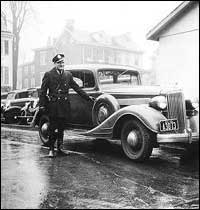 Policeman with getaway car in PA
(CORBIS) The new Karpis associate Fred Hunter was thirty-six in 1935. His hometown was Warren, Ohio. He was convicted there in 1923 for car theft and then for attempted jailbreak. Although he worked sporadically as a welder, his mainoccupation and interest was gambling, until he met Alvin Karpis. This meeting, according to FBI files, probably occurred in January 1935 at Warren, Ohio soon after the Atlantic City shootout. Karpis and Campbell told Hunter they were referred to him by a friend who said Hunter could find them a place to stay…Hunter said he was going to Hot Springs, Arkansas and, would look the place over to see if the town was cool. (Harry Campbell had been to Hot Springs in 1932.) In June of 1935, Hunter and Karpis traveled from Warren to Hot Springs where they located a place to stay. |
|
Hunter originally suggested the $70,000 robbery mentioned above. Fred Hunter was afflicted with a noticeable speech stutter, which disappeared during the high tension of a robbery. In his later years, whenever he saw a police car, friends recalled, he would repeat excitedly, theres one of themoh boy-oh boy-oh boy-oh boy. After he was recognized in Saratoga Springs in the summer of 1935, Karpis wrote, (we) pulled out for Hot Springs in a big hurry. Wed already made contacts earlier there…Grace Goldstein was my girl friend there and Freddie went around with one of Graces hookers, a girl named Connie Morris.(Both Hunter and Connie later independently stated that Karpis and Hunter first arrived in June, 1935.) Karpis described Grace as, a peroxide blonde about thirty five, and she ran the finest whorehouse in Hot Springs…she maintained great connections. The mayor had a big crush on her. She entertained all the top crooks who visited and all the top cops and politicians. Grace was a genuine big leaguer…she rented houses and cottages for me…when the feds started breathing closer to me, they latched on to Grace. They put her through some rugged times and, for the most part, she stood up to them with a lot of courage. The police force for the United States Post office – the postal inspectors- entered the Karpis manhunt because the November train robbery loot included bags of U.S. mail.
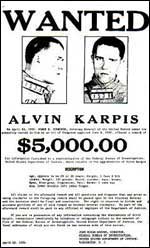 Wanted poster for Alvin
Karpis (FBI Evidence) Depending on various sources, Karpiss known, plus suspected, crimes from 1931 to the end of 1935 totaled three kidnappings, three-to-fourteen murders, countless bank robberies, and the train and mail truck hold-ups. By 1936, he had two major federal agencies tracking him; several states wanted him for murders and robberies; multiple rewards were offered for his capture (which presumably inspired ordinary citizens and bounty hunters to join the search); and he was the last big name Public Enemy still free, so the forces chasing him could remain undiluted. He was red-hot at this time, quickly heating to white-hot. |
|
A brief glimpse of a Public Enemys life on the run in 1935-1936: setting a handgun on a chair beside him at meals; a pistol always under a pillow when sleeping; a gun on him or next to him while driving; listening to a short-wave police radio installed in every car; wearing glasses as a disguise; pulling a hat far down his face almost to the nose; relying on associates to transact everyday business with the public whenever possible; evaluating every strangers stare; changing autos and transient hideouts every few weeks; keeping an eye out for the cops every second of the day and night…. And trying to maintain calm, rational thoughts and actions, because any panic or mistake could be fatal. It was a psychological atmosphere of extreme paranoia yet totally realistic. The prolonged pursuit was not helping J.Edgar Hoover. The FBI, prior to Hoovers appointment as director in 1924, was only a fledgling agency. A Hoover Foundation article said it was perceived as an, ill-regarded Bureau beset by scandal and run by hacks, ex-convicts, and political appointees with little professional law enforcement experience. Hoover cleaned up and professionalized the Bureau, but there was still criticism. He was derided for never personally making an arrest and called a swivel chair detective. And in early 1936 Senator Kenneth McKellar, chairman of an appropriations committee, lopped off $225,000 from the FBI budget (later restored) and accused Hoover of irresponsibly spending governmental money. McKellar: Did you ever make an arrest? Hoover: No, sir, I have made investigations. McKellar: How many arrests have you made and who were they? Hoover: I handled the investigations of Emma Goldman, and I prosecuted that case before the immigration authorities up to the Secretary of Labor. I also handled the Alexander Beckman case, and the case of Ludwig Martens, former Bolshevik ambassador to the U.S. McKellar: Did you make those arrests? Hoover: The arrests were made by the immigration officers under our supervision. McKellar: I am talking about actual arrests. Hoover: We did not have Power of Arrest. McKellar: You never arrested them, actually? Hoover: We had no Power of Arrest until a year ago……. As Karpis recalled it, I enjoyed reading about Hoovers problems, but I had worse troubles of my own. The FBI was aware that the postal inspectors were in the chase. Within the Bureaus documents concerning the Barker-Karpis gang, J. Edgar Hoover is extremely distrustful of other law enforcement agencies. Whatever reasoning elicited this attitude, it certainly was justified in this case, because of the numerous local corrupt officials Karpis and the Barkers had paid off to be forewarned of imminent arrest raids. However, Hoover realized that the postal inspectors might have information the FBI didnt, so he co-operated with them to some extent. By December 1935, the FBI learned from the postal detectives which car had been used in the train robbery, and, the (postal) inspectors working on this case are satisfied in their own minds that subjects Karpis and Campbell were involved in the holdup. The FBI distributed a full account of the car to its field offices, which then requested the state auto licensing offices in the region to check registration records for this car. However, Karpis paid the pilot of the small plane used in the getaway, a man named Zetzer, to cut apart the car with torches and then sink it in Lake Erie. Zetzer was known as a crackerjack pilot, and he smuggled liquor in from Canada during Prohibition. The FBI memos during this stage often have the fugitives cars identified and Karpis is just as often trading in the car and buying a new one, or abandoning the vehicle. Sometimes doing so in a rural area, with the motor running, so when found without gas lawmen might conclude they were on foot in the vicinity. The FBI was very busy in Ohio in late 1935-early 1936. The usual dead-end leads, short-lived leads, and false leads, many of which came from ordinary people who might have seen Karpis in the past, confronted them. But none of them knew anything about his current presence and hideouts in Hot Springs. When the FBI showed Karpiss photo to people during the manhunt, his notoriety caused potential confusion. Witnesses may have seen newspaper or magazine photos at an earlier time and mistakenly thought that was the same person they were being asked to identify now. The agents often disqualified witness recognitions due to this phenomenon. Dolores Delaney, captured in the January 1935 hotel shootout in Atlantic City, supplied the Bureau with several places and hangouts she knew about in Ohio where Karpis had been. But that applied to 1934; and he probably anticipated the FBI might collect this information from her. So, he either stayed clear of past locations or the FBI simply decided they couldnt stake out all the places he might appear. He had moved his base of operations to Hot Springs months before the train robbery in November, 1935. During January and February 1936 the FBI established temporary phone taps on gamblers in Cleveland who knew Karpis, and the Bureau also set up a procedure to scan mail at a Cleveland post office for the known aliases of the crew participating in the train robbery. Another stratagem the agents used was to try to identify people that received phone calls from Karpis, or his associates, from a hotel room where they had stayed. Karpis knew quite a bit about what the FBI was up to during this phase, through the last months of 1935 and early 1936 I had to keep moving to keep some distance between me and the feds. The FBI was really collecting its forces to pin me down…in Cleveland and Toledo they were ransacking all my old haunts and they were keeping a constant watch on the apartment in Chicago where my parents and my baby son lived. They thought there was an outside chance Id risk a visit to the baby Id never seen. But I couldnt. When he says constant watch, this would include, per the FBI files, …the parents, being Lithuanian…are covered by a telephone tap on which an interpreter is being used, also by a mail cover, and surveillance of the apartment building. In February 1936, the FBI prepared a fifty-six-page guide in alphabetical order listing names and addresses of approximately two hundred people that knew Karpis in the past, and/or peripheral persons the FBI thought might have future knowledge about him. Copies were distributed to the Bureaus field offices with instructions, renew investigations and where contacts appear to be active or information might be obtained as to the location of Alvin Karpis constant investigative activity should be maintained, and reports submitted at least twice monthly. Another memo to the field offices contained a section on Karpiss habits, …good conversationalist, never calls person by correct name; refers to person by some place or incident (note: this trait evidently was to avoid implicating others in crimes). Smokes one pack of Chesterfield cigarettes per day; drinks canned beer and expensive whiskey; gets drunk; never talks when drunk; does not use narcotics; reads all newspapers; reads Detective Story and True Story magazines; desires female company regularly and likes to maul them; gambles-dice and poker; usually stays at tourist camp when traveling. Omitted from this memo, but known to the FBI, was the fact Karpis was an avid fisherman. Not all the information the FBI assembled to track him was gathered through pure detection procedures. In fact, the most critical leads may have been from informants. There were three basic methods to develop an informant: threats, money, or promised reductions in prison sentences or severity of criminal charges. During 1935-1936, the agents had derived major intelligence from the following informers: · Volney Davis a friend of Doc Barker and former associate in the Barker-Karpis gang · Monty (Byron) Bolton a Chicago mobster who had been part of the Barker- · Karpis gang for the Hamm kidnapping and stayed for other crimes. · George Burrhead Keady an Oklahoma middleman who functioned as an intermediary between the gang and corrupt state officials. · John Brock accomplice in the November, 1935 train robbery. And there would soon be an Informant Nonpareil emerging in 1936.
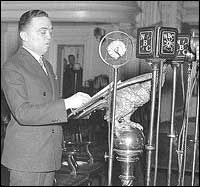 J. Edgar Hoover in 1934 (CORBIS)
|
|
There may have been several other informers who still remain unknown. The FBI files at this period are rife with references to their informants. Developing an accurate informer could circumvent tedious and time-consuming investigative labor and allow the law officers to leap significantly closer to the fugitives. Doc Barker and Karpis demonstrated the opposite of informing – never revealing anything of value. When Doc Barker was arrested in 1935, a husky FBI agent supposedly broke two telephone books on his head and back. This failed to yield results. Karpis was a prison escapee in 1930 when Kansas City police who found safecracking tools in his car arrested him. He then absorbed a physical beating that lasted an entire night and resulted in his front teeth being knocked out, and my face busted in. But he hadnt talked either. There may have been more than one path that led the FBI down to Hot Springs in early 1936. Agents knew that Harry Campbell had been to the city in 1932. A March 10, 1936 memo written to Hoover from D.M. Ladd, the Special Agent in Charge of the Chicago office said, In reviewing the file, it was noted that Harry Campbell is afflicted with gonorrheal rheumatism. In the past he has frequented mineral wells and health resorts in an effort to obtain relief….Previous reports indicate that Campbell has visited the baths at Hot Springs, Arkansas and Mineral Wells, Texas…It is suggested that efforts be made to properly cover such health resorts…in case Campbell appears for treatment. Even though Campbell apparently was not in Hot Springs at that time, the FBI may have acted on this memo and dispatched an agent(s) there. The Karpis version of how the FBI came to Arkansas, Another news story came along that reported sixty FBI agents converging in Little Rock, Arkansas. Hoover said that his men were merely holding a regional conference, but the underworld news told me differently. The feds were in Little Rock following up a lead they had that I was holed up somewhere in the area. They were almost right – I was living in Hot Springs at the time…. After the train job, Freddie and I moved back to Hot Springs. We didnt settle in any one house. It wasnt good for our nerves to spend time in the same few rooms. Grace rented us a cottage on a mountainside on the outskirts of Hot Springs. It was isolated and suited me perfectly. But a couple of weeks after we set up in the place, Freddie brought Burrhead Keady around. I didnt like it. I didnt want anybody to know where I was staying. I especially didnt want Burrhead to know anything about me. Burrhead was a nice guy, but he was a lush, and guys who drank usually talked. We moved again. NOTE: George Burrhead Keady was clearly revealed as an informant in FBI files in February 1936 – and probably earlier. The FBI memo in February said about him, this man is an informant of the Oklahoma City Bureau office. In the past he has supplied data as to the activities of Campbell and, in view of that, he is valuable. Karpis said he was more worried about the postal inspectors than the FBI because the postal authorities were better investigators: They had scored a big victory up in Tulsa. There had been a bad shootout there that had riled up the Tulsa police, and they conducted a series of raids on all the joints around the city…. they busted into a safe that Burrhead Keady owned, and some of the money in the safe came from the train job. One of the guys on the job, Brock, had turned the money over to Burrhead to change into clean bills. The postal people got in on the act, and it didnt take them long to trace the money back to Ohio. They grilled Burrhead, and he told them about Brock and the train robbery. They got their hands on Brock, and he really sang. He confessed to them about Edith Barrys whorehouse in Toledo, about how it was a traditional hideout, and all the details of the train heist, including the part about my plane trip from Ohio to Hot Springs. That information brought the postal cops and the FBI into Arkansas in greater numbers than ever before. Fred Hunter later confirmed that he and Karpis worried about the postal inspectors for much of the time they were hiding out in the Hot Springs area. Periodically, the two fugitives would drive to downtown Hot Springs at night – and circle the Post Office attempting to learn if there were any postal inspectors in town. Presumably this was based on viewing the automobiles parked there. Regardless of who, or what, led the FBI to Hot Springs, by March, 1936 they had established that Grace Goldstein and Connie Morris were associating with Karpis and Hunter. The only imperfection with this news, from the FBIs standpoint, was that the quartet always seemed in perpetual motion, conforming to a cardinal precept in the Fugitives Handbook. A bewildering itinerary was recounted in a statement later given to the FBI by Connie Morris: About November 15, 1935 Hunter and I went to visit my sister in San Antonio. We went to Corpus Christi, Texas after two weeks there, we went to Galveston, then drove to New Orleans then through Mississippi back to Hot Springs. After about two weeks Hunter drove me to Frederick, Oklahoma…(we) were back in Hot Springs for Christmas. After about two weeks, I accompanied Karpis and Hunter to Corpus Christi…after a few days (leaving Karpis in Corpus Christi)…. we went to Florida by way of Houston, and New Orleans. We spent nights at Tallahassee, Ocala, and probably two or three weeks at Orlando. They also stopped at Tampa, Naples, Homestead, Key Largo, Melbourne, Daytona Beach, drove through Biloxi and Gulfport, Mississippi, arriving New Orleans about March 5, 1936. Hunter had received a letter from Karpis at one of the Florida spots; this may have been pre-arranged, or perhaps they kept in touch via telephone. Karpiss continuous motion and maneuvering strategies, plus an early warning setup with underworld tipsters, and a generous amount of luck, had preserved his freedom during a five year crime spree, but now the Manhunters were closing in. There were too many cops, too many informants, and too hot a trail for him to avoid seizure much longer. Actually, he didnt expect an arrest; he thought the FBI would kill him. All the highly publicized Public Enemies except George (Machine Gun) Kelly had died from lawmens bullets. Considering the FBIs deadly gun battles with the crazed killers among the Public Enemies, Baby Face Nelson and Fred Barker, the use of machine guns by both cops and robbers, and Karpiss well-known remark (to Fred Barker and Fred Hunter) that he would never be taken alive, he was justified in his expectation. The fugitive felt the palpable intensity of heat and tension surrounding him like never before. He recognized the grim outlook of that time and later recalled : Things didnt look good, and sometimes I thought I should buy a place hundreds of miles away, in some isolated place where I had no past connections. Maybe in Oregon somewhere, or in Washington State. The feds would never consider looking for me in places like that…. Sometime during the stay in Rockport (commencing circa March 27) Karpis stashed his red Buick in a garage in Corpus Christi. The motivation for concealing the car came from Fred Hunter. An FBI memo later dryly explained, Grace Goldstein went with Freddie Hunter to the Corpus Christi police station where Hunter endeavored to secure something in connection with the registration of a new Ford car which Hunter had just purchased at Corpus Christi. During the time they were in the police station…Grace and Hunter heard a radio broadcast for the pickup of the maroon Buick driven by Karpis and inasmuch as this car was at that time parked directly in front of the police station, it was determined by Hunter and Karpis that it would be best to dispense with this automobile. Every FBI field office in the nation received a memo dated April 1 alerting them, …Investigation by the Bureau has disclosed that as late as March 26th, a maroon-colored 1936 model, four-door Buick Sedan…. was in the possession of subject Alvin Karpis. The FBI assigned six agents to drive through all the streets in Hot Springs searching for red Buicks. Within one or two days after Karpis and Hunter fled Hot Springs, an informant told the FBI, specifically, omnipresent Special Agent E.J. Connelley, the location of the fugitives hideout was seven miles southeast of Hot Springs on Malvern Road. This information was given to us the night of March 28th. We arrived at Hot Springs Sunday night March 29th, and raided the place at six oclock a.m., March 30th. The informant had given the agents a highly detailed outline of the terrain surrounding the house, and drew a sketch of it, and the raid was co-ordinated carefully. Among the raiding party were Connelley, Clarence Hurt, W.L Buchanan and several more agents from the FBI, postal inspectors, and a Kansas State policeman; approximately twenty lawmen in total. J. Edgar Hoover was consulted via telephonic conference and he advised an early a.m. time for the assault. The agents hit the house with heavy firepower. They shot out the windows, the door, and a fire started inside. Then it was discovered the house was unoccupied. It was another frustrating near miss; an embarrassing blunder for Hoover and the FBI. They were thwarted once again. None of the previous Public Enemies had been so evasive for so long. The headline in the regional paper, the Hot Spring Sentinel, blared: KARPIS MAKES GETAWAY BEFORE SPECTACULAR RAID The agents did retrieve something of potential value inside the house. They found a map bearing the stamp Arrow Tourist Apartments, New Orleans. There were plenty of other items found that suggested alternative sites the fugitives could have fled to. Actually, the failed raid simply left the FBI with no solid, direct leads. They had to start anew. After the raid, searching for Karpis and Hunter, they did an enormous amount of canvassing at local tourist camps in the area, interviewing people in Hot Springs, and listing the damages they inflicted upon the house. It must have been galling. The agents conducted an extensive investigation at the Hot Springs airport interviewing the airport authorities and others about the private plane flights of Karpis and Hunter. The Bureau had also grilled Zetzer, the pilot from Cleveland who had flown the fugitives from Ohio to Hot Springs after the train robbery. Karpis, now in Texas, had arranged to meet Grace Goldstein in two weeks on a side road outside Hot Springs. When they read about the raid, Karpis and Hunter decided to leave Rockport, Texas. Next stop, New Orleans. Karpis, Hunter, and Connie drove there in Hunters car. They rented two apartments: Connie and Hunter were staying at 3343 Canal with Karpiss apartment a mile or so away at 3300 St. Charles. Karpis drew from his cache of elusive tactics and told Hunter to write to several mail order houses, so he would be receiving mail every few days at the new apartment. Meanwhile, the agents convinced Grace Goldstein to become their top informant. This effort did not succeed instantly. E.J. Connelley talked with her on March 31st (the day after the raid) but he doubted her reliability initially. Hindsight reveals that she was honest about some matters concerning Fred Hunter and Connie Morris, but she denied even recognizing Alvin Karpis. Connelley knew this was untrue and he threatened her with a harboring charge and prison sentence if she did not fully co-operate in relaying all knowledge of Karpis…and he offered her $1,000 if she contributed directly to an arrest. The morning after the interview conducted at the Hatterie hotel, the FBI called upon the director of Bell Telephone at Hot Springs asking for the long distance calls made from the hotel subsequent to Graces questioning. There were two calls placed, one to Memphis, and one to New Orleans. When Grace Goldstein met Karpis on the side road, it definitely was after her original interrogation, and could have been after follow-up visits from the lawmen. Karpis referred to this in his autobiography: She looked as if shed been through hell. She was pale and exhausted. Early one morning seven agents piled into her room, some from the FBI, some from the postal department. They wanted to know where I was and they threatened her with jail, beatings, and all kinds of trouble. She claimed she didnt know me and eventually the cops went away. The FBI was unable to extract any new information from her because she left Hot Springs. Her departure was April 10th or 11th when she met Karpis as they had planned on the side road, and she would not return until late April. There would be time to think, or worry, about the predicament she was in. During their rendezvous, Karpis told Grace to go to her brothers place in Paris, Texas, pick up some machine guns he had left there and return to the apartments in New Orleans. However, upon arrival in New Orleans, she reported that when her brother read about the Hot Springs house being shot up by the FBI, he took the guns and buried them out in his fields. The FBI called on him and was still watching his place. The machine guns were inaccessible. While she was in New Orleans, Grace Goldstein visited Hunter and Connie at their Canal street apartment. Karpis and Grace decided to take a holiday, and drove off in his new Terraplane coupe. They fished, and saw tourist attractions in Florida: Sarasota, Tampa, and Pensacola. Also, they passed through Biloxi and Gulfport in Mississippi. Still the thief, Karpis noticed a dam being built that must have had a good-sized payroll. I took a look at another possibility, a train score in Iuka, Mississippi. All this despite the super-intense police pressure. Karpis, possibly with Hunter and Connie accompanying, drove Grace back to Hot Springs and then returned to New Orleans. Fred Hunter and Karpis listened to a radio broadcast on Monday, April 27th at the Canal street apartment, which reported that they, along with Harry Campbell, were sought for the Ohio train robbery back in November. Karpis told Hunter that he was going fishing in Mississippi and did not reappear at the apartment until Friday, May 1st. Grace Goldstein had been absent from Hot Springs April 10th to April 25th. There is considerable subterfuge in the FBI documents regarding information she provided. This was to protect her and maintain secrecy in references to her as an informer. Yet, it is possible that another Karpis insider-turned-informant now held by the FBI in Ohio was the link between the FBI and Graces knowledge of the fugitives whereabouts. If this was the actual situation, then she was not confessing directly to the agents, but rather to a Karpis colleague that was trusted and unsuspected as an informer. However, the intermediate informer could have been an elaborate ruse created by the Bureau to befuddle anyone reviewing the FBI documents then – or in the future. Further complicating the issue, former agents scuttlebutt claims that Grace Goldstein had developed an especially close relationship with an FBI agent in an investigation of white-slavery cases. An FBI memo said, Informant ____, Saturday night, April 25, contacted Grace Goldstein upon her return to Hot Springs, and in talking with her, learned that she had been in New Orleans; that she had been in contact with Alvin Karpis and Fred Hunter, and she indicated that Connie Morris was receiving treatment from a doctor located in the building on the same floor upon which there was located the office of the doctor who had previously treated Grace Goldstein when she was in New Orleans; that Grace Goldsteins physician was one of three doctors by the same name, operating from this same office…. Surprisingly, the agents took the remainder of the weekend off. On Monday morning, April 27, agent J.L. Medala reported the results of the contact of ______ with Grace Goldstein and proceeded to New Orleans, where Special Agent in Charge David Magee was to locate the doctors. They were located in Room 1111, Maison-Blanche bldg…Dr. J. E. Isaacson, physician, and his two dentist brothers, this being the only doctor, with two others associated with him, by the same name that could be located in New Orleans. Thereafter, through the courtesy of the building officials, Agents established surveillance of all persons coming from the elevators on the 11th floor, for the possible appearance of Connie Morris to see her doctor. Then, on April 30th, came The Breakthrough. Agent E.J. Connelley wrote, …our confidential informant ____ was contacted on the early morning of April 30th, and at this time this confidential informant furnished me with information as to the alleged location of Fred Hunter, Connie Morris, and Alvin Karpis in New Orleans…. this informant indicated to me that these people, that is, Fred Hunter and Connie Morris, were located on the right hand corner, going out of town, of Canal Street and Jeff Davis Parkway; that Karpis was not living at this place, but was coming there for his meals…it was also indicated that Karpis had purchased a Plymouth automobile under the name of OHara; that it was believed that they had rented this apartment, possibly under the same name; that there was a very definite possibility that Karpis would not be at this address at all times, but might be away fishing at this particular time, but that, eventually, if the other two were located at the apartment, he would return there and be in contact with Hunter and Connie. The pace suddenly quickened at this point. A telegram from the Dallas FBI office to New Orleans advised that the Western Posse was on the move: Clarence Hurt was to arrive in New Orleans by bus that night (April 30th) at 11:20 pm. William Buchanan and Dwight Brantley (agent in charge of the Oklahoma City office) were en route by automobile from Texas. E.J. Connelley noted, at New Orleans on April 30, immediate arrangements were made to put this place under surveillance, and Special Agent In Charge D.W. Magee arranged with the owner of the property, directly across Jeff Davis Parkway from this address, to occupy the vacant dwelling for purposes of observation, and agents L.I. Bowman and R.L. Tollett were established in this vacant house on April 30, agents C.W. Toulme and E.M. Heavrin relieving them on the night of April 30, and agents Bowman and Tollett returning on the following morning, May 1st. . The agents were also working assiduously to verify the apartment rental and car data offered by the informant. An agent learned from the Light and Gas Service that an application had been made for service by Edward OHara in apartment #3 at 3343 Canal. The same agent determined that Edward OHara of Corpus Christi, Texas had purchased a new Plymouth deluxe coupe – for $806 – from a New Orleans Car Dealer. Edward OHara was the alias Fred Hunter was using. Connelley further stated, On the night of April 30, the Director, Mr. J. Edgar Hoover, together with Assistant Director Clyde Tolson, and Special Agent W.R. Glavin, arrived at New Orleans, and in conformity with my previous conversations with the Bureau as to the activities and developments in this case, on the night of April 30, conference was had with Mr. Hoover as to the general situation, it being noted that as yet, we had not definitely identified anyone, other than Connie Morris as being at the apartment, and it was decided to defer action until the following day, with a continued surveillance of this place, in an effort to identify Karpis and Hunter as being on the premises before any definite action was taken. Connelley referred to a May 1st memo written by the night shift agents watching the apartment from across the street which said, On the morning of May 1, 1936 at 9:45 a.m. a man was observed to drive up to the front of the apartment on Canal Street in a Terraplane 1936 coupe and parked near the corner. This individual locked the door of the car, walked around the corner to the iron grill entrance of the apartment being watched, and appeared to let himself through the gate. The man who entered the apartment may be described as follows: Height 6 Build medium Age in the 30s Clothes stiff straw hat, tan trousers, cream-colored shirt, coatless. Fifteen minutes later the day shift agents returned to the observation building. L.I. Bowman wrote in his report, at 10:51 a.m. ..Observed a man leave the apartment and proceed to the Terraplane, which he unlocked and removed a magazine therefrom, then relocked the door and returned to the apartment. This party was tentatively identified as Subject Karpis, in view of the fact that he wore rimless glasses, appeared to be about 510, slender build, rather stoop-shouldered…about 12:00 noon, agents observed Subject Karpis leave the apartment and enter his Terraplane, while Hunter, who was observed…. to be wearing a mustache proceeded to the garage located at the back of the apartment and removed a black Plymouth. Hunter, in the Plymouth, followed Karpis in the Terraplane. They proceeded down Jeff Davis Parkway toward the river for a block, making a U turn, returned down Jeff Davis Parkway toward Canal Street, and crossed Canal Street, passing directly in front of the writer and Agent Tollett, who were observing from the basement window at 3401 Canal Street. At this time it was definitely decided that the two parties in question were Alvin Karpis and Fred Hunter….about forty-five minutes later, Hunter and Karpis returned to the apartment in the Plymouth coupe, Karpis driving, and parked same on Jeff Davis Parkway at the side of the apartment. About 2:00 p.m. Special Agents in Charge E.J. Connelley and Dwight Brantley appeared at 3401 Canal, where they surveyed the situation and instructed us to remain at our point of observation. The same information was set down by Tollet and Magee: Agent Tollett had phoned the New Orleans office and told Agent-In-Charge David Magee at 1:02 pm the two badmen had returned in the Plymouth…. the observing agents repeated their belief that these two individuals are Karpis and Hunter. Magee then phoned Connelley at Dwight Brantleys room in the DeSoto Hotel (where many of the out-of-town agents were staying), and these two agents left for Canal Street to make a personal survey. Tollett also reported that he pointed out Hunter and Connie Morris as they made exits and entrances to the apartment while Connelley was at the stakeout. Connelley agreed with the agents positive identification of Fred Hunter, and that was enough; Hoover and his agents gathered at Magees office to formulate plans for raiding this house while the subjects were available in same. The Public Enemy Crime Wave Era was about to expire; the futures of Karpis, Hoover, and the FBI would all change radically in a span of mere seconds. |
|
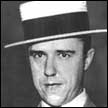 Alvin Karpis, 1936
(AP) A vast quantity of literature exists about the FBI and J. Edgar Hoover. Not all of it mentions what happened that day in New Orleans. Where a rendering does appear, it often is limited to a brief paragraph. Nevertheless, in 1936 this event evoked front-page headlines on newspapers nationwide, with follow-up articles that continued for several days, and it did have an immediate, and seemingly long-term, impact on the main principals involved, including the FBI as an organization. |
|
The exact role that FBI Director Hoover played in the Karpis apprehension has remained an issue of enduring interest and speculation since 1936. Except for fragmentary 1936 newspaper reports, for the next thirty-five years only the Bureau account, or derivatives thereof, were available in books and articles about the capture. Then, in 1971, after his parole from prison, Karpiss autobiography was published, telling his story of the action. Perhaps the two most specific arrest versions are from primary participants: Alvin Karpis and E. J. Connelley: After he was paroled from prison in 1969, having served thirty-three years of a life sentence for the Hamm kidnapping, Karpis completed an autobiography in 1971 based on his tape-recorded memories, ending with his capture. Eight years later he also wrote a second memoir about his prison life on Alcatraz, which began with an account of the arrest. Karpis was attributed with total recall, and since he also had thirty-odd years to dwell on it, his arrest narrative is highly detailed, From The Alvin Karpis Story by Alvin Karpis with Bill Trent and On The Rock the prison story of Alvin Karpis as told to Robert Livesey) Some days before the arrest, he and Freddie became aware of individuals moving in and around that stirred their suspicions. Had the feds moved into the apartment above them? Were they being tailed? Or were they overly suspicious? The afternoon it all came to a head, it was very hot. Karpis, without his jacket and gun, and Freddie went out to the car, which was parked on Jefferson Parkway. I also noticed two guys on the sidewalk. They were beefy, tough-looking men in suits, both in their fifties. They didnt look like FBI men, and Freddie and I walked past them to the car. I told Freddie that Id drive. I unlocked the door and slid behind the wheel. Freddie walked around to the other side and, after I opened his door from the inside, he climbed into the seat beside me. I wheeled down my window to get some air. Then I put the key in the ignition and turned it. I started to push the starter with my foot and, at that exact moment, a car cut sharply in front of our car and stopped at the curb. Five men climbed out very quickly. For one brief, silly moment, I thought they were from a car pool and were just getting back from their offices. Then I heard a voice at my window. All right, Karpis, the voice said, just keep your hands on that steering wheel. I turned my head slightly to the left and my temple bumped into the barrel of a gun. It was a .351 automatic rifle. I caught a quick glimpse of the guy holding the gun, and the thought flashed through my head that he fitted Freddies description of the guy whod come to look at the furniture. I held my head steady, looking straight out the window. I had no choice. Two men were leaning over the hood of the car that had cut in front of us. Each of them was aiming a machine gun at my head. Three other men were crouched in the street. They had pistols, drawn and ready. None of these guys had yet bothered to identify themselves. But then I didnt need hints. The whole operation had FBI written all over it. Out of the corner of my right eye, I could see Freddie sliding quietly out his door. Nobody paid any attention. He made it to the sidewalk and disappeared from my sight. The guy with the rifle was getting more excited about me by the second. Okay, Karpis, he said, get out of the car and be damn careful where you put your hands. I slid out of the seat, keeping my hands in plain sight. I stood up on the street and, as I did, I heard voices call out from above me. I looked up and saw three or four guys leaning out of the windows of the apartment above Freddies. They were calling to the other agents. Stop that man on the sidewalk, one of them was hollering. Stop him. Hes getting away. He was talking about Freddie, who had made it about one hundred feet down the street. He was walking casually as if he had nothing to do with the whole messy business. But he hadnt walked far enough. He was caught. One of the guys with the machine guns sprinted after him and led him back to the group around the car… I turned slightly and I was facing a man holding a Thompson machine gun. He was wearing a Palm Beach suit and a Panama hat and he looked cool and collected. He seemed to be in charge. (Note: this probably was David Magee)… By that time, the action had attracted a huge crowd. There were a couple of dozen FBI agents and at least a hundred spectators. The commotion was terrific. But I could see that some of the men with the guns had turned their attention to another chore. They were looking over toward the corner of the building and they were waving their arms. I heard one guy shouting, Weve got him. Weve got him. Its all clear, Chief.
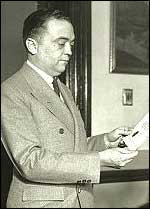 J. Edgar Hoover with award
for capture of Karpis, 1936 (CORBIS) A couple of others shouted the same thing. I turned my head in the direction they were looking. Two men came out from behind the apartment. Theyd apparently been waiting in the shelter of the building, out of sight, while the guys with the guns had been leveling at Freddie and me. They began to walk across the lawn and sidewalk to the crowd. One was slight and blonde. The other was heavy-set, with a dark complexion. Both were wearing suits and blue shirts and neat ties. They walked closer, and I recognized the dark, heavy man. Id seen pictures of him. Anyone would have known him. He was J. Edgar Hoover. |
|
I knew at that moment, for sure, that the FBI had finally nailed me. The narrative went on to describe how none of the agents had brought handcuffs, so the cool guy with the machine gun took off his tie and that was used to bind the prisoners wrists. (A minimum of four people are credited with donating their tie: Clarence Hurt, David Magee, Hoover, and Karpis. The New Orleans newspapers reported it was David Magee.) Public Enemy #1 was eventually put into a car driven by Clarence Hurt, with another agent sitting next to the right front door, and Karpis between them. Director Hoover and Tolson were at window seats in the back with Connie, who looked plenty scared, in the middle. They drove to the Bureaus New Orleans office where Hoover and Buchanan talked with the prisoner. First, Hoover asked Karpis if it was a relief that it was all over with. He replied that he was glad the tension was over, but he wasnt very happy about being caught. He wished silently for another five year run. Hoover also said, Youre lucky to be alive. The first series of questions Hoover asked, which proved he had some of his priorities queued correctly, were intended to locate all the Karpis machine guns. Concerning the arrest, Buchanan told Karpis, it could have been a lot worse! We were going to shoot that goddamn place apart when you surprised us by walking out the front door onto Canal Street. Lucky for you we had to change our plans rapidly. There were twenty six of us armed with every weapon from machine guns to those new gas shells…We had our execution squad out – rough, tough veterans who know their business…the two men standing in front of the apartment when you came out were Texas Rangers… Clarence Hurt was there too. They are all recruited because of their reputations in shootouts. You did all right in this, Karpis. We knew you were in that ground floor apartment. We werent going in until we knew you were all dead…we planned to pull your bodies out, not take you alive…count yourself a lucky son of a bitch youre still alive. The only substantial difference in the arrest details between the two Karpis books was that he claimed in the second book (and also in a television interview in 1976) that He not the agents – had been first to spot J. Edgar Hoover peeping around the corner of the building and then some of the agents followed his gaze and began calling out to Hoover that it was safe to advance. It may be speculated that if the two fugitives had left the apartment via the Jefferson Davis Parkway door, which might have been a few steps closer to their car than the Canal Street exit, and/or the exact timing of the FBI car blocking in the Plymouth was delayed by mere seconds, allowing Karpis to start the motor and put the car in motion, then the result could have been a car chase through the streets of New Orleans. If Karpis and Hunter were a few seconds later in their exit, as Buchanan and Hoover said, they had an excellent chance of being killed in the FBIs armed invasion. |
(From FBI New Orleans Barker-Karpis File #7-15 FOIPA #445856)
Earl Connelley, the ever-present agent who functioned as the main FBI operating boss throughout most of the Karpis manhunt and arrest, wrote a summary report of these activities dated May 18, 1936 – seventeen days subsequent to the capture.
Connelleys report resumes sometime after 2:00 p.m, May 1st after he (and Brantley) went to the surveillance site and made his own positive i.d. on Fred Hunter,
…At the New Orleans office all men to participate in this raid were fully advised as to the activities of all persons involved in the raid, and a diagram of the premises and immediate vicinity was prepared on the blackboard for their full information…the general plan of raiding the house was briefly as follows:
Special Agent Tollett was to remain at the observation point in the vacant house across the parkway, and Special Agent Bowman was to leave the observation house and join the two squads, which were to take and maintain the rear of these premises, this rear raiding squad to consist of the following:
Assistant Director Mr. Clyde Tolson and Agents Baldwin, Glavin, McNulty, Neal, Peyronnin. This squad was divided with one group to be established at the rear end of the house on the backside; one group at the front end of the house on the backside.
Agents Toulme, Bain, Heavrin and Lunsford to be established, two men in an automobile on the far corner of Canal and Jeff Davis Parkway; two agents in a car to be established on the corner directly across Canal Street on the corner of Jeff Davis Parkway – these two cars to be in such position as to be able to take up the pursuit, should the subjects escape from the house and try to leave in an automobile.
The two rear groups or squads were to maintain their positions to prevent the escape of the subjects from either the front of the house or the back side of the house, and to withhold their fire until directed by the raiding squad, which was to enter from the front unless, of course, some individual in escaping had cleared the house and it was necessary to pursue him.
Special Agent in Charge D.W. Magee was to be established across the street from the house at a drug store, to be available at the telephone, in order to advise the New Orleans Police, should any shooting occur, and in particular to request police officers to keep traffic cleared, this being a very heavily traveled thoroughfare, both as to Canal Street and Jeff Davis Parkway.
To raid the place if necessary, and to control the possible exit of subjects from the front of this house, either through the garage to the rear, or the windows or doors facing on Jeff Davis Parkway, Mr. J. Edgar Hoover, Director, Special Agents In Charge E.J. Connelley and Dwight Brantley, and Agents C.O. Hurt, and W.L. Buchanan were to take care of the raiding of the house and the entering of the house, if necessary, and the actual taking into custody of the individuals if they submitted to arrest.
It was planned to have the five above indicated agents immediately move into position to take the place when the raiding squad at the rear of the house signaled that they were definitely in location.
Agent J.V. Blake, as the squads moved into position, was to enter the second floor apartment of Mr. R.J. Reid, in order to block anyone who might leave from the rear of the Karpis apartment, and try to go up the stairs into the upstairs apartments.
(Note: the next paragraph is all one sentence and represents Connelleys account of the actual seizure, including Hoovers whereabouts at the moment of impact)
At the approximate time all the Agents moved into position, and just prior to the signal that they were ready for a move, Agent C.O. Hurt and Special Agent In Charge E.J. Connelley were established on the opposite corner of Canal and Jeff Davis Parkway, followed by a car occupied by Mr. J. Edgar Hoover, Agent W.L. Buchanan, and Special Agent In Charge Dwight Brantley, subjects Karpis and Hunter came out of the apartment and started to enter the Plymouth coupe, and Agent Hurt and this Agent immediately crossed Canal Street, and blocked their car into the sidewalk, covering them at the same time as we left our car, and Mr. Hoover, together with Agents Brantley and Buchanan, immediately moved across Canal Street to block their car in at the rear and also cover these individuals with their guns, at the same time that Agent Hurt and myself covered them.
The blackboard diagram of the building and vicinity was prepared by Connelley (no surprise), and a few weeks later Magee mailed photographs of it to Hoover.
The FBI and Hoover were distrustful and wary of other police agencies that might contain corrupt tipsters paid off by Karpis. Therefore, the Bureau did not inform the New Orleans police-or any other local agencies-about their raid plans.
The Toughest Mob We Ever Cracked by J.Edgar Hoover with Ken Jones, from The FBI In Action.
Originally published as a magazine article in the 1950s, this colorful chronicle may have value because it claims to tell the story from Hoovers viewpoint,
…Karpis, the prototype of the cold and ruthless killer, had sworn he would not be taken alive. We did not expect to take him easily and we planned the raid carefully. It was approximately five-fifteen oclock in the afternoon of May 1, 1936. Four assistants and I were to enter the front door. The other squads were deployed in the rear and on both sides of the building. The signal for action was about to be given but it had to be delayed when a man on a horse moved leisurely into the lane beside the through traffic.
We waited, eager to avoid attention, until he had passed on down the street and then moved forward. As we did so, two men stepped from the doorway and walked briskly down the steps. We recognized Alvin Karpis. Again our timing was thrown off. As the fugitives walked toward their car, a small boy on a bicycle scooted between the pair and our vantage place. Fearful that the child would be caught in the crossfire if any shooting started, we moved out and hurried forward, demanding their surrender as the two men were entering the car.
The last thing in the world that Alvin Karpis expected to see was the head G-man and a squad of what he had called sissy agents! The tough hoodlum turned ashen. His expression was a curious mixture of amazement and fright. Neither he nor his shaking companion made an effort to resist. There was no gunplay. Like their entire breed, their courage was the kind derived from getting the drop on their victim. It oozed away when they were on the other end of the gun.
We placed Karpis, who told me that he never thought the Bureau would take him alive, and his companion under arrest…
Lending slight credence to this account is the man on a horse interlude (which also appears in other renditions) because it places them in the lane beside the through traffic. This clearly represents a knowledge of Jefferson Davis Parkway.
Hoovers multiple usage of the pronoun We could easily be interpreted as all the raiding agents rather than just himself, and the passage, when read carefully, does not explicitly insist that Hoover was among the very first agents to seize Karpis and Hunter-even if it seems to give that impression.
The deployment of the FBI squads here basically agrees to the Connelley outline, although lacking an explanation of Hoovers transition from car to foot.
J. Edgar Hoover, The Man and the Secrets, by Kurt Gentry, 1991.
…Agents had already staked out the apartment, on Canal Street, where theyd been informed Karpis was staying, and Inspector E.J. Connelley, who now headed the specials squad, diagrammed the building and nearby streets on a blackboard in the New Orleans field office, assigning agents to the roof, fire escape, and every possible exit. When the team assembled at the scene, however, the unexpected happened: Karpis and Hunter sauntered out of the apartment, crossed the street, and got into their automobile.
According to the official FBI version – recounted in dozens of articles and books-as soon as Karpis slipped into the drivers seat, Hoover ran to his side of the car, and Connelley ran to the other side, where Hunter was sitting. There was a rifle on the backseat. Before Karpis could reach for it, Hoover lunged through the open window and grabbed the fugitive by the collar. Stammering, stuttering, shaking as though he had palsy, Hoover would recall, the man upon whom was bestowed the title of Public Enemy Number One folded up… Although those special agents who participated in the capture were well aware that the Directors version wasnt exactly the way it happened, none ever publicly disputed the official account.
There are classic features of arrest lore contained here, which were disputed by Karpis. On the matter of the rifle in the back seat, he wrote, We were in a 1936 Plymouth coupe that had no back seat. We had two rifles, but they were wrapped in a blanket and locked away in the luggage compartment.
He asked, rhetorically, How could Connelley have dived through the passenger side of the car when my friend Freddie Hunter was sitting beside me? He surely would have blocked Connelleys way. (Other versions have Connelley diving in from the passenger side.)
A potential resolution to the Connelley entry is found in Karpiss same memoirs, wherein he described Hunter as sliding out of the car and walking slowly away…this might have cleared the right (passenger) side for Connelley – or someone else-to enter. An eyewitness account printed in the Newspapers verifies Karpiss story of Fred Hunter walking further down a sidewalk in an escape attempt. A resident in the building saw Hunter being marched back to the corner by two agents with long guns.
There are several discrepancies between the various sources such as the number of agents at the scene (at least five different totals were stated); or the exact time of the capture; whether or not the fugitives were armed; and if they were inside the car, or walking to it. As is common with eyewitness testimony, conflicts may have arisen due to perceptive contrasts and the quickness of the entire denouement.
Furthermore, the two primary sources, Karpis and the FBI, were masters at deception and manipulating the truth, which makes speculation based on their statements risky guesswork.
One secure element of the story is the identity of the first agent to move in on Karpis; the man with the . 351 rifle at the drivers window. He was Clarence Hurt. This information supposedly originated from the FBI agents, and is supported by Jack Hurt, Clarences son. When queried in 1999 about the voice at my window passage in Karpiss autobiography, he exclaimed, That was my Dad…and we still have the rifle.
The next agents credited with also being instrumental during the custody moments are E.J. Connelley and/or Dwight Brantley. All three agents in this first wave, plus Hoover, came out of the two blocking cars. There is a disagreement between Karpis and Connelley about the FBI car that blocked the front of the Plymouth: Connelley wrote that only he and Clarence Hurt were in it, but Karpis said, five men climbed out very quickly.
The debate about the exact whereabouts of J. Edgar Hoover commenced the next morning when newspapers featured it in their coverage. The New York Times May 2nd headline told the Nation:
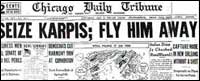
It is unclear how the New York Times, or other papers, determined the Himself part. Both the Associated Press and United Press reports said that Hoover had flown down from Washington to direct or lead the capture. These two verbs, or the synonym supervise, were used in other headlines and articles when referring to Hoover. But there are no quotes from Hoover or anyone else – in a sampling of the daily papers suggesting that Hoover had been among the first to actually take the bad men into custody. In fact, the reports did not even include the details that emerged later in books, magazines, and in Agent Connelleys official memo of May 18, 1936. The headline term Hoover Himself seems to be a semantic stretch.
It may be argued that, similar to a high-ranking military general leading a charge, but not physically positioned in the front line; it was inadvisable for Hoover to be among the initial group of agents moving in on Karpis. But that principle simply did not apply to this case. People wanted to know Hoovers proximity to the point of custody.
Karpis wrote, Over the years in prison, a lot of people questioned me about my arrest. U.S. attorney generals, senators, congressmen, and prison officials visited me and every last one of them asked the same question. Did Hoover really arrest me personally? My only reply to them was, Why dont you ask Mr. Hoover?
Then, with the publication in 1971 of the Karpis book contending that the FBI chief was absent the specific arrest spot on the street, but rather was hiding behind the building, it became Hoover vs. Karpis all over again.
There is little doubt that Karpis believed his own story to be true. After he was paroled, he wrote private letters to Fred Hunter in the 1970s in which he complained about Hoover taking credit for the arrest.
Fred Hunter also said Hoovers involvement was phony and that Hoover was nowhere nearby. Hunters friends said he was upset over Hoovers pictures in the newspapers regarding the capture.
Most of the quoted comments Hoover made to reporters in the following days emphasized the we effort:
They were in an apartment on the first floor of the building and were leaving to enter an automobile when the agents surrounded them…the agents called upon them to surrender and they were taken without the firing of a shot.
we nabbed them after they entered their car, there was a rifle in the back seat but Karpis or Hunter didnt have a chance to reach for it…neither carried pistols.
they had no opportunity to resist, our men who were concealed about the entrance to the place, were upon them before they could get into action. Six of the agents pointed sawed off shotguns at the pair and they gave up at once.
Upon his return to Washington, Hoover was asked by a reporter waiting outside his office, You led the raid in New Orleans, didnt you?
I did, he answered, but it was a we job and not an I job.
The E.J. Connelley version had a synopsis in which he condenses the taking into custody sequence in a long run-on sentence that is capable of being interpreted ambiguously regarding Hoovers role at the exact moments of seizure:
…On 5/1/36 Connie Morris and Fred Hunter were observed at this place and later they were joined by Karpis. Thereafter raid was conducted upon these premises, exclusively by Bureau personnel and Mr. J. Edgar Hoover, Special Agents In Charge Connelley and Brantley and Agents C.O. Hurt and W.L. Buchanan, at approximately 5:30 p.m., 5/1/36, took into custody Alvin Karpis and Fred Hunter as they left 3343 Canal St., to enter an automobile on Jeff Davis Parkway, in front of the apartment….
Connelleys synopsis can be read as both pro-Hoover, or non-Hoover depending on whether the punctuation mark after his name should be a period or a comma. (A very tenuous piece of evidence.)
Another speculation: if Hoover was indeed in the second car which Connelley said blocked the fugitives car in the rear, Karpis may not have noticed him, because he could have been pre-occupied with Clarence Hurts rifle pressing on his temple.
A contrary scenario might be that after blocking the Karpis-Hunter car, and while Brantley and Buchanan stepped out ready for action, Hoover raced for shelter behind the building…
Or it could have happened some other way.
What is the certain, absolute truth?
You had to be there.
|
A few days later, agents drove eighteen-year-old Connie Morris to the Baton Rouge, Louisiana train station in the middle of the night. The FBI did not charge her with any crime and she returned to either Oklahoma or Texas-having relatives in both states. Connie Morris was an alias; born in 1917, she might still be alive and have an untold story of her own. But her trail ends more than sixty years in the past, and it is very cold. Fred Hunter served sixteen years in prison for a combination of the train robbery, and harboring Alvin Karpis. Paroled in 1953, he returned to the Hot Springs/New Orleans area and resumed his gambling interests. He died in the mid-1980s, and was over eighty years old.
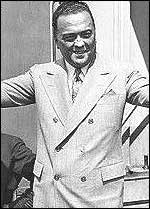 Hoover, ‘Public Hero # 1’
(CORBIS) Just a day or two after the arrest, J.Edgar Hoover received an 11% salary increase (to $10,000), and was acclaimed Public Hero # 1. A measure of Adulation and Respect instantly accrued to him and lasted for decades. On the late night of May 1 or early morning of May 2, 1972, Hoover died at his home in Washington just hours after the precise 36th anniversary of the arrest in New Orleans. He was seventy-seven. |
|
Alvin Karpis was paroled to Montreal in 1969 and four years later moved to the Costa del Sol (suncoast) in Spain. He died there in August, 1979 at age seventy one. The initial report from Spain said it was possibly a suicide, as sleeping pills were found. A brief correction was issued days later by the police in Spain, stating the death was from natural causes. Someone close to the situation believed that the actual cause was either an accidental mixture of alcohol and sleeping pillsor foul play. There was no autopsy. Now, back to that intersection of Canal and Jefferson Davis Parkway. A parking lot currently occupies the corner where the apartment building stood in 1936. Every day, unknowingly, people park and walk upon the footsteps of The Director and Old Creepy and History. The two statues on the Parkway commemorating the Civil War should be joined by another monument, with inscription reading: At this site, on May 1, 1936, the first G-Man, J. Edgar Hoover, was among a score of agents who participated in the FBIs arrest of the last Public Enemy, Alvin Karpis. This closed the era of the notorious and wild criminal gangs of the 1930s. And it gave an intangible boost to the FBIs evolution into one of the worlds most powerful law enforcement organizations under Hoovers complete control and unchallenged direction. Alvin Karpis said of J. Edgar Hoover, I made that son of a bitch J. Edgar Hoover said of Alvin Karpis, a dirty yellow rat |
Acknowledgements
The first person to thank is Cindy Davies, who kept this project going simply by asking about it. Next is Tom Hadley who provided names leading to a network of Fred Hunters friends; the third person deserving special thanks is Melissa Moyzis who did a great deal of research.
The following people also helped: Jack Hurt, L.D. Melville, Paul Taylor, Robert Livesey, Claude Hicks, Jess Harta, Arne, Clyde Peters, Jonathan Graham, Debra, Charlie Wilson, Lauren, and everyone who listened to me talk endlessly about this article.
Published Sources
A & E Biography Video- Ma Barker; Crime Family Values
FBI Barker-Karpis file #7-15 (New Orleans extract)
Gentry, Kurt, J. Edgar Hoover – The Man and the Secrets. 1991
Hoover Foundation, J.Edgar Hoover, 33 Grand Cross. Internet article
Jones, Ken, The FBI In Action. 1957, New American Library
Karpis, Alvin with Bill Trent The Alvin Karpis Story. 1971
Karpis, Alvin as told to Bill Livesey, On the Rock – The Prison Story of Alvin Karpis, 1980
Owens, Ron, Oklahoma Justice: the Oklahoma City Police. Turner Publications, 1975.
This Monday, TV interview with Karpis, 8/23/76, Canadian Broadcasting Corp.
Time Magazine, 5/4/36
Newspapers of May 1936:
ChicagoTribune
New York Times
New Orleans Times
Picayune, and several others.